

Another tourist has learned the hard way that Yellowstone’s wildlife is not to be messed with. On the morning of June 10, a 30-year-old man from Randolph, New Jersey, was injured by a bison in the Upper Geyser Basin area near Old Faithful. According to park officials, a group of visitors got too close to the animal and the bison reacted—goring the man. It’s the second Yellowstone bison goring this season.
The visitor was treated for minor injuries and taken away by emergency responders. The whole thing is still under investigation, and no photos or videos have been released.
Scoreboard for Yellowstone bison goring for three years
As mentioned, this is already the second time someone’s been injured by a bison in Yellowstone this year. Last year saw two similar incidents, and there was one in 2023.
Park rangers are again reminding visitors that Yellowstone’s animals are wild, unpredictable, and not part of a petting zoo. Bison, in particular, can be deceptively calm—until they’re not. They’re massive, fast (up to 35 mph), and have seriously injured more people in the park than any other animal.
What went wrong?
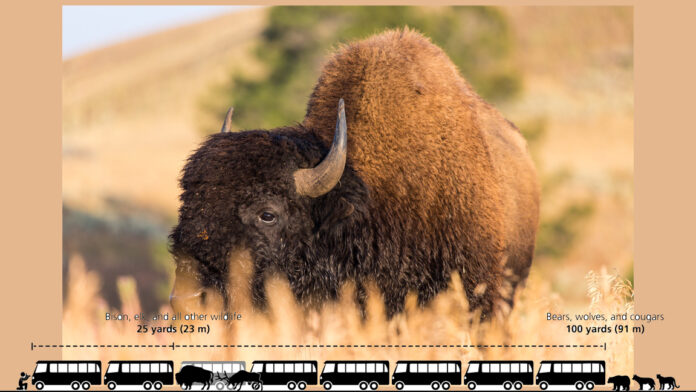
As in many of these Yellowstone bison goring incidents, it seems people just got too close. Yellowstone rules are clear: Stay at least 25 yards away from bison, elk, moose, and other large animals—and at least 100 yards from predators like bears and wolves. If an animal approaches you, you need to back off, not stand there for the perfect selfie.
Tips for RVers and campers
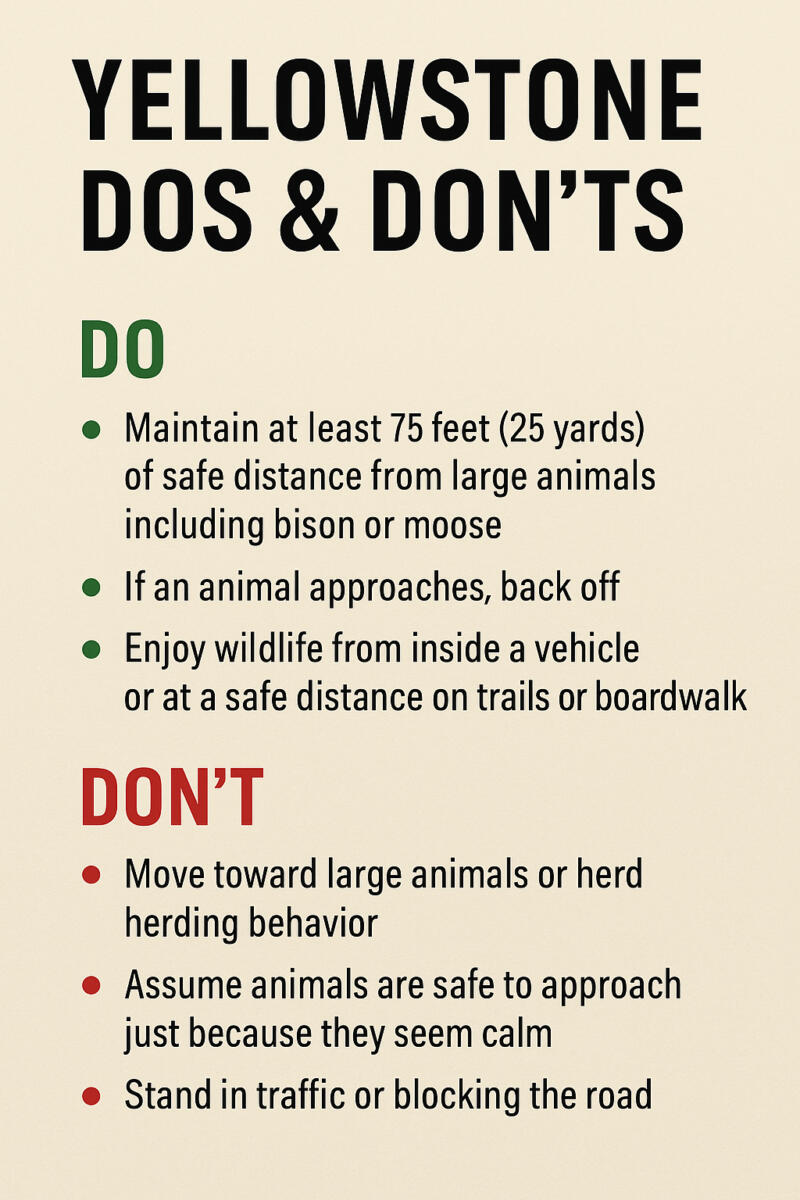 If you’re visiting Yellowstone in an RV or camping nearby, treat every wildlife encounter seriously. That bison in the meadow may look peaceful, but if it feels crowded or threatened, things can go bad fast. Stay inside your vehicle if animals are near a road, and don’t walk toward wildlife—even if others are doing it.
Yellowstone officials are urging everyone to take the Yellowstone Pledge—a simple commitment to respect the park, its wildlife, and fellow visitors.
Bottom line: Enjoy the park, take your pictures from a distance, and remember—this isn’t a zoo, it’s wild country.
RELATED
• Popular geothermal area in Yellowstone National Park closed for summer
• Driver 2.5x over blood alcohol limit in fatal Yellowstone-area wreck
• Food-conditioned grizzly bear trapped, killed in Yellowstone
• Florida man gored by bison at Yellowstone National Park
RVT1213

Having been around wildlife my whole life, I think 25 yards is too close for tourists to get to Bison or Moose and Elk. Large ungulate cows with calves can be especially defensive. At 25 yards you’ll barely get turned around to run if they decide they’ve had enough of you and charge.
Stupid should HURT!
Just take down all the warning signs and the problem will solve itself. Yes, the gene pool will be a little bit smaller, but all the idiots will be eliminated.
I worked for the San Diego Zoo for over 20 years and at one time we had an exchange program with our keepers and Australia. When the keeper from Australia was here and saw our signs on the fences warning to not put your finger/arms etc. over, “wild” animals – the keeper asked us why we needed such signs? In Australia, people knew that “wild animals” were just that and if they were stupid enough to put themselves in harms way, then they suffered the consequences. Period. Too bad we’ve spoiled our society to the point they no longer know how to think for themselves, and then sue us when they don’t.
CFS
Thank you, Russ and Tina for the account of how little sense and self-discipline one can have. 🙁 I am unable to have the slightest sympathy for this touring moron. Similarly, I cannot convince myself that he or others will learn anything from this episode. Have a wonderful weekend and safe travels!
That is what is known as “earning a Darwin Award”, aka “adding chlorine to the gene-pool”. Enjoy the wildlife from a distance!