

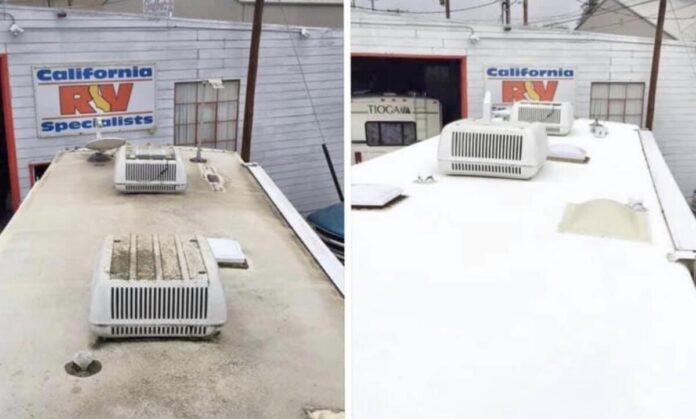
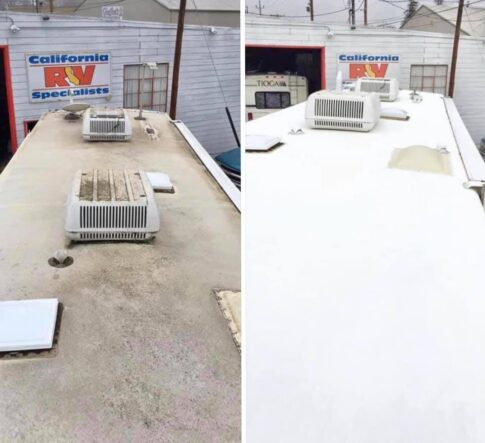
Join me in the RV shop as I explain more about applying a roof coating to your RV. Doing so can offer several benefits, helping to protect and extend the life of your RV roof.
I use the KOOL SEAL® Tundra Rubberized Roof Coating.
Here are some advantages of a roof coating on your RV
Waterproofing
One of the primary benefits of an RV roof coating is its ability to create a waterproof barrier. This helps prevent water from seeping into the roof and causing damage, including leaks, rot, and mold growth.
Leak prevention
A quality roof coating can help seal existing small leaks and prevent new ones from forming. This is especially important for RVs, as water leaks can lead to serious structural damage and compromise the integrity of the vehicle.
UV protection
Many RV roof coatings contain UV-resistant properties, protecting the roof from the damaging effects of the sun. UV rays can cause the roof material to deteriorate over time, leading to cracks and leaks.
Heat reflection
Reflective roof coatings can help reduce the heat absorbed by the RV, contributing to a cooler interior. This can be particularly beneficial in hot climates, improving energy efficiency and comfort inside the RV.
Extended roof lifespan
By providing a protective layer, a roof coating can extend the lifespan of your RV’s roof material. It helps prevent premature aging and deterioration caused by exposure to the elements.
Reduced maintenance costs
Regular application of roof coatings can reduce the need for extensive roof repairs and maintenance. This can save you money in the long run by preventing costly issues associated with water damage.
Seam reinforcement
Roof coatings can reinforce seams and seals, which are common areas where leaks may occur. This added layer of protection helps maintain the integrity of the roof structure.
Flexibility
Some roof coatings are designed to be flexible, allowing them to expand and contract with the RV’s movement. This flexibility is crucial in preventing cracks and ensuring that the coating remains effective over time.
Ease of application
Many RV roof coatings are designed for easy application. They can be rolled, brushed, or sprayed onto the roof surface, making it a relatively straightforward DIY project for RV owners.
Energy efficiency
Reflective roof coatings not only protect the roof but also contribute to the overall energy efficiency of the RV by reducing heat absorption. This can result in lower cooling costs during hot weather.
Before applying a roof coating, it’s essential to thoroughly clean and inspect the roof, addressing any existing issues. Additionally, choose a coating product that is compatible with the specific roofing material of your RV, and follow the manufacturer’s instructions for application and maintenance. Regular inspections and reapplications, as recommended by the product, will help ensure the continued effectiveness of the roof coating. Check with your local RV repair shops for details and products that they use.
More from Dustin
Make sure you check out my website, California RV Specialists, and our YouTube channel for more helpful information, and see our published articles on RVtravel.com and other social media pages.
##RVDT2265

Can Koolseal Tundra be used on a roof that was already coated with Dicor Extended Life 100% Silicone? What kind of silicone self-leveling lapseal do you recommend?
Yes it can with 100% adhesion and performance. Silicone over Silicone, no problem.
How does Koolseal Tundra compare to Dicor Extended Life 100% Silicone roof coating?
And which is the better product for fiberglass roofs?
There are only a couple of silicone manufacturers in America. Kool seal and Dicor, and Premium, and Uniflex draw out of the same vats as everyone else and then private label the product, and then market it as “special”, plus mark it up a little extra based on business model. Some have higher solid content than others. Low solid is about 58% and high solid is about 92%, both by volume.
They both work, like coke vs Pepsi the tundra has a shine to it and the Dicor flat.
As I am sure Dustin and others will tell you. Recoating a roof is fairly easy. The devil is properly preparing the roof for that coating. And if you don’t do the prepwork you will have wasted time & money doing the recoating. Hint: completely drape the RV walls with plastic drop clothes. Prepwork can be messy and while the plastic costs money and time to put up, it is MUCH easier than cleaning the walls following the roof prep
It’s all in the prep work that’s for sure.
I heartily endorse the Dicor for Fiberglass roofs. It is easy to use and dries hard and has a slight rough finish making is easier to walk on. Wear old clothes and soft sole shoes! Have a pail of water and rags for brushes and your hands! Be sure to do the recommended prep and seal around fixtures with a brush first. I did mine 5 years ago – still perfect! (PS: Don’t get it on your camera or fone! – Ask me how I know this….)
Thank you for this great information
Xylene is pretty good for cleanup and spills. Use a low-medium nap roller that won’t lint it up the finished roof by shedding. No need for any fabric with silicone, just at the details. Butyl tape is a must, if you can find one with polyester backing, good product. Sherwin-Williams sells a good one.
Thanks for sharing
Your article today was very good. Very thoughtfully with the content.
Thanks for sharing with us.
Thanks everyone for helping out. Please keep in mind that I’m running the shop M-F from 7am-5pm so I get behind easily and am unable to reply right back.
Thank you, Dustin, and others for this wealth of information that can be applied to our roof!