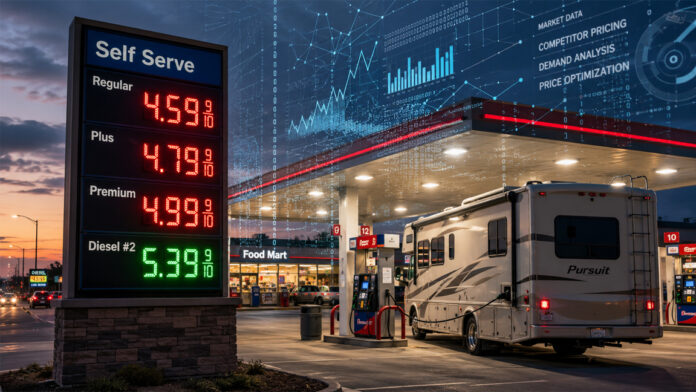
Every RVer has watched fuel prices climb and wondered who—or what—is setting the numbers on the sign. A new California gas pricing lawsuit says the answer may increasingly be software instead of old-fashioned competition.
The case doesn’t accuse every gas station of using the software, and it doesn’t prove the allegations. But it raises questions about whether computers are quietly changing the way gas stations set fuel prices.
The lawsuit focuses on software, not the price of oil
A proposed class-action lawsuit filed in federal court in California names Kalibrate, a fuel-pricing software company, along with major fuel retailers including BP, Circle K, Marathon Petroleum, 7-Eleven, Walmart and Albertsons as defendants. The plaintiffs allege the companies used shared pricing software in ways that reduced competition and allegedly helped keep gasoline prices artificially high. The defendants deny wrongdoing or have not publicly admitted any improper conduct.
The lawsuit says Kalibrate’s software analyzes fuel prices, market conditions and other data before recommending what participating stations should charge. The plaintiffs argue that when competing stations rely on the same recommendations, prices can begin moving together instead of competing against each other. Those allegations haven’t been proven in court.
Imagine two gas stations across the street from each other. Instead of each manager deciding whether to cut prices, both rely on recommendations from the same software. Plaintiffs argue that this reduces the incentive to compete on price. The companies dispute that claim, and no court has determined whether any laws were broken.
“Fuel is one of the biggest costs of owning an RV.”
Why RVers should care
Fuel is one of the biggest costs of owning an RV. Whether you tow a travel trailer or drive a big diesel motorhome, even a small increase at the pump can add hundreds of dollars to the cost of a long trip.
The gas pricing lawsuit does not claim every gas station uses algorithm-driven pricing software, nor does it suggest software alone determines pump prices. Crude oil prices, refining costs, fuel taxes, transportation expenses, seasonal demand, and local market conditions all continue to influence what drivers pay.
If the plaintiffs ultimately prove that shared pricing software reduced competition, the case could have implications well beyond California. Courts are increasingly being asked to decide where technology that helps businesses set prices crosses the line into unlawful coordination.
For now, this is simply a lawsuit—not proof that anyone did anything wrong. But as more businesses adopt sophisticated pricing software, courts will likely play a larger role in deciding where technology ends and illegal coordination begins. Whatever the outcome, the gas pricing lawsuit could influence how courts view the growing use of pricing software in the fuel industry.
Sources
Reuters
Transport Topics
RELATED
Higher gas prices could affect next year’s Social Security COLA
RVT1267b