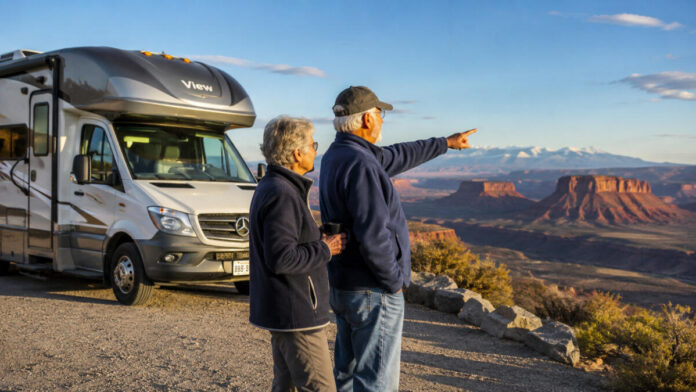
Spend time in RV parks, snowbird destinations, or popular retirement travel areas and you’ll find plenty of RVers in their 70s who are still traveling extensively. For many, the biggest change isn’t whether they travel, but how they travel.
That’s not exactly news. RV travel has long been popular with retirees.
What’s more interesting is how many RVers in their 70s are continuing to travel—and how many are changing the way they do it.
For some, that means fewer 400-mile driving days. For others, it means staying a week or a month instead of moving every few days. Many are choosing comfort over mileage and experiences over trying to check destinations off a list.
They’re still traveling. They’re just doing it differently.
The road gets a little shorter
Ask longtime RVers about their early years on the road and you’ll often hear stories about ambitious travel schedules.
Cross-country trips. Long driving days. Moving every night or two.
For many RVers, those habits begin to change with age.
A day that once involved six or eight hours behind the wheel might now be limited to three or four. Instead of rushing to the next destination, travelers are more likely to linger where they are.
That slower pace often reduces stress and allows more time to enjoy the places they came to see in the first place.
“Many RVers in their 70s are still exploring the country. They’re just doing it at 55 mph instead of 75.”
Longer stays are becoming the goal
Many experienced RVers eventually discover something surprising: Constant movement can be exhausting.
A slower schedule means fewer hookups and un-hookups, fewer setup days, and less time spent planning routes or securing reservations.
It also creates opportunities to become part of a community, even temporarily.
That’s one reason seasonal stays remain popular with retirees. Whether it’s a winter in Arizona, a summer near the Oregon coast, or a month near grandchildren, many RVers are spending more time in fewer places.
Comfort starts winning
Another shift is the growing emphasis on convenience.
Some RVers downsize to make driving easier. Others move to larger rigs that provide more living space during extended stays.
The goal isn’t necessarily covering more ground. It’s making travel more comfortable and enjoyable.
That can mean choosing campgrounds with full hookups, avoiding difficult driving routes, or scheduling more rest days between travel days.
Many experienced travelers learn that they don’t have to prove anything to anyone.
Still exploring
None of this means older RVers are parking their rigs permanently.
If anything, many retirees say the freedom that comes with retirement allows them to travel more than they did during their working years.
The difference is that they’re often traveling on their own terms.
Instead of asking how far they can go in a day, they’re asking whether they need to leave at all.
That’s a mindset many younger RVers eventually discover for themselves.
The lesson
One of the biggest myths about aging is that adventure has to stop.
Walk through an RV park and you’ll find plenty of evidence to the contrary.
Many RVers in their 70s are still exploring the country. They’re still discovering new places. They’re still making plans for next season.
They’re just doing it at 55 mph instead of 75.
Sources
• RVBusiness
• RV Industry Association demographic research
RELATED
- Road-ready gadgets that make RV life easier, especially for seniors
- Essential RVing tips for seniors
- 3 essential self-defense tips for seniors
- Senior RVers: The one very important exercise every senior needs
- How senior adventurer deals with solo camping fears
- Why RVing seniors should go back to ‘school’
RVT1266b