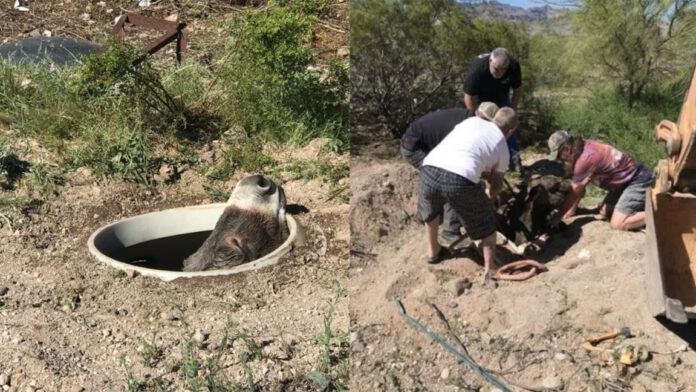
A wild burro rescued from a septic tank at an Arizona RV park may sound like one of those strange “only in the desert” stories. But wildlife officials say the incident points to a growing reality across parts of the Southwest: More wild burros are wandering into RV parks, neighborhoods, and developed snowbird areas as human activity spreads deeper into desert habitat.
The latest rescue happened near Kingman, Arizona, where a burro became trapped inside a septic tank at an RV park in the Golden Valley area. Crews from the Bureau of Land Management, local responders, and neighbors worked together to pull the animal safely out. According to officials, the burro was exhausted but survived the ordeal.
The story quickly drew attention because of the unusual setting. But for many Arizona RVers and snowbirds, wild burros in RV parks are no longer especially rare.
Why burros are showing up in RV parks
Wild burros naturally roam large areas of desert land across Western Arizona and nearby states. But as more RV parks, housing developments, and seasonal communities expand into those areas, encounters between humans and burros are becoming more common.
And RV parks can unintentionally attract them.
Water sources, landscaping, pet dishes, trash, shade structures, and even damp utility areas can draw animals into developed spaces—especially during hot, dry stretches. Once burros become accustomed to easy access to food or water, they often return repeatedly.
Officials with the Bureau of Land Management have warned in recent years that habituated burros are increasingly wandering into residential areas, campgrounds, and roadways throughout parts of Arizona and Nevada.
That creates problems not only for the animals, but for RVers and other folks as well.
A safety issue for RVers and snowbirds
Most wild burros appear calm around people, especially in tourist-heavy areas where they have frequent human contact. But wildlife experts warn they are still large, unpredictable animals capable of biting, kicking, or charging when stressed or cornered. A friend of ours, an older and very petite woman, was nearly knocked down in her garage when a carrot-hungry burro wandered in. It could have been a serious health issue had she not escaped into the house.
The bigger risk for many RVers may actually happen on the road.
Burros are especially active during cooler morning and evening hours, which overlaps with the times many RV travelers like to drive. In parts of Western Arizona, drivers occasionally encounter burros standing directly on highways or crossing roads with little warning.
That can become particularly dangerous for larger RVs towing vehicles or travel trailers, where sudden swerving may create rollover risks.
“They look gentle and almost domesticated—but a full-grown burro can weigh hundreds of pounds and appear on a dark highway with almost no warning.”
Simple steps RVers can take
Wildlife officials generally recommend that RVers avoid feeding burros, even casually. Animals that associate campgrounds with food often lose their natural caution around people.
There are also a few practical steps RV park owners and RVers can take to reduce problems:
- Keep trash secured.
- Avoid leaving pet food or water outside overnight.
- Inspect septic and utility covers regularly.
- Use caution driving at dawn and dusk in burro country.
- Never attempt to approach or handle wild burros.
That septic tank detail may sound unusual, but uncovered or weakened utility areas can become hazards for both wildlife and pets in desert parks. This may mostly apply to folks owning septic tanks in burro country, but if you notice an issue in an RV park, be sure to let management know.

The rescue near Kingman ended well. But officials say it serves as another reminder that desert wildlife and human development are increasingly colliding across popular snowbird regions.
And for RVers who spend winters in Arizona’s open desert country, those encounters may only become more common.
Sources
AZFamily report on the burro rescue
Bureau of Land Management rescue summary
RELATED
- Conservation experts will decide burned Brighty the Burro’s future
- Brighty the Burro: A symbol of the Grand Canyon’s spirit, damaged but not gone
- 11 burros found dead in Death Valley from unusual cause
- BLM says Lake Havasu burros must go
RVT1260b