

George Orwell warned that Big Brother is watching you. His novel, “1984”, had the masses under surveillance through telescreens—two-way televisions in homes. Perhaps those living in the Orwellian society about which he wrote could find privacy in their cars. Not so today. Your car may be spying on you. Only it’s not “Big Brother” who knows your driving habits, it could well be your car insurance company.
Data sellers’ delight
Social media posts and chit-chats are filled with reports of folks who’ve had their car insurance rates skyrocket—and yet have good driving records. When pressured, many have learned from insurance company representatives that data sellers are turning over troves of bits and bytes of information harvested from car computers. In a nutshell, your car may be spying on you.
How can this be? Whatever happened to privacy? This week, The New York Times published a major piece on just how the car-rats-you-out game works. And the sad part is, you’ve probably given your blessing to your car or pickup maker to sell your personal information—and you may not even know it.
Your car may be spying on you: You may have let it
 Here’s the case of one man the Times reported on. After the insurance for his Chevy Bolt shot up 21%, Kenn Dahl learned his LexisNexis® report factored in. That company is a data broker that used to make its money tracking accidents and traffic tickets. But the data that swamped Dahl wasn’t for tickets. His 258-page LexisNexis report told insurance companies about every trip his car made in the last six months. Every trip date, each start and end time, and distance driven. What else? Any speeding, hard braking, or sharp accelerations.
The Times report says, “The trip details had been provided by General Motors — the manufacturer of the Chevy Bolt. LexisNexis analyzed that driving data to create a risk score ‘for insurers to use as one factor of many to create more personalized insurance coverage,’ according to a LexisNexis spokesman, Dean Carney. Eight insurance companies had requested information about Mr. Dahl from LexisNexis over the previous month.”
Not just GM
Don’t sigh in relief if you own something other than a General Motors product. Other car companies have similar arrangements with data brokers. LexisNexis gets driving habit information from Subaru, Kia, and Mitsubishi. LexisNexis crowed in a 2022 press release that it collects information from 10 million-plus vehicles. Subaru says it gives LexisNexis odometer data when an owner turns on their Starlink system and authorizes data-sharing.
 LexisNexis isn’t the only vehicle data scavenger. Another firm, Verisk™, says it gets data from more millions of vehicles, including those made by Honda, Hyundai, and Ford. For its part, the Times reports, “Ford ‘does not transmit any connected vehicle data to either partner,’ said a spokesman, Alan Hall, but partnered with them ‘to explore ways to support customers’ who want to take part in usage-based insurance programs. Ford will share driving behavior from a car directly with an insurance company, he said, when a customer gives explicit consent via an in-vehicle touch screen.”
Permission in the fine print
You may not need to tap a touch screen to give your permission for your vehicle data to be sold off. Remember sitting in that nasty little back room at the dealership? You probably sat there with the “sales manager,” who shoveled reams and reams of papers at you to sign. Did you read every single word of that legalese before putting your John Hancock on the line? Eh, probably not. But buried in those thousands of lines of gibberish, you probably signed permission for your data to be brokered off.
And even those touch screen “go-aheads” can be tricky. If you have a Honda and use their “Driver Feedback” app, you’d have to pore through 2,000 words of legalese to discover that while “your data will never be shared without your consent,” in those 2K words, you’ll find by “accepting” you DO give your permission for Honda to share your data with data broker Verisk. And, hang on, here’s another chiller: You may not have given a touch-screen permission—someone else may have. Someone on the dealer lot may have given “your” OK, because there are sometimes kickbacks for “sales” of data.
Speeding. Hard braking. Fast acceleration. These aren’t the only reports that can come from the use of modern technology in your vehicle. Your car may be spying on you in other ways.
“007 entertainment system”
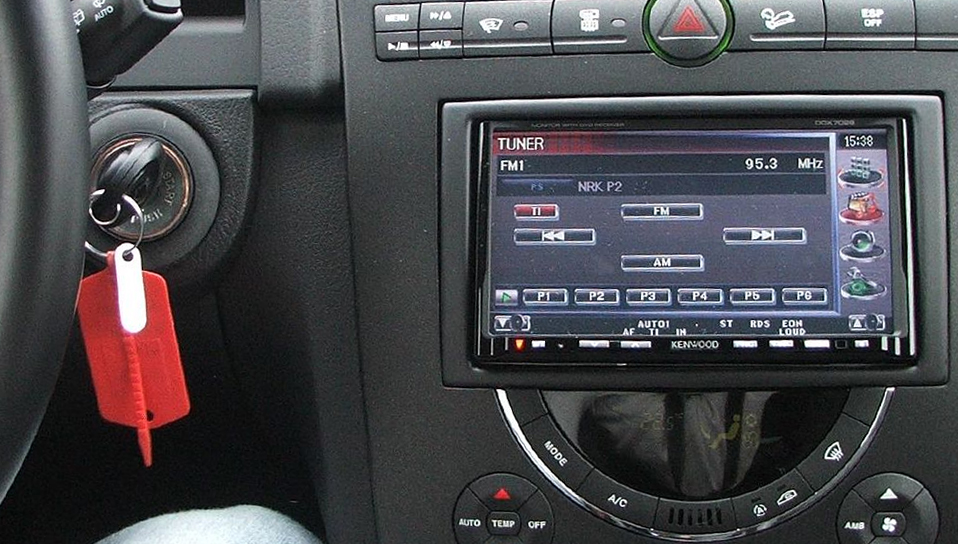
Do you allow your smartphone to fraternize with your vehicle’s Bluetooth or USB connection? Your “entertainment system” may be 007 in disguise. That system may be able to access your phone directory, call logs, pictures, text messages, photos, and location data. While your car insurance company may not be interested in this stuff, a data broker, with a police-held court order, can turn it over to law enforcement.
And don’t forget your vehicle’s “black box,” or event data recorder (EDR). The EDR keeps an eye on how fast you go, or the speed at which airbags deploy. While these EDRs don’t stream data off to some big data warehouse, they can be “interrogated” by someone, say, when your rig has been in a wreck.
Is your RV a spy, too?
What about RVs? Does your motorhome spy on you? We don’t have the specific details, but it wouldn’t be surprising at all to find that recently built Class C units can tattletale your data. Built on a van chassis, the electronics are probably included. And Class A units? Well, here’s a hint. If any vehicle offers internet connectivity, we’d rate it a suspect. Just as your car may be spying on you, so it goes for vehicles that are part of “the internet of things.”
Outing the spy?
Is your flesh creeping yet? How can you protect your privacy from vehicle spying? If you’ve already bought the vehicle, you may have already given your consent to “sharing” your data. Dig out copies of all those forms you signed, grab a magnifying glass and a BIG cup of coffee. You’ll probably be here for a while, reading your way through the fine print. If you plan on buying a new car, truck, or motorized RV, make yourself a pest. READ everything. It could be a fair payback for those clowns who try to sell you undercoating and protection policies. Don’t let them leave the room—tell ‘em you may have questions.
Since federal law requires data brokers to “show you what they’ve got on you,” you may want to request copies of the data. Here’s where you can request copies.
Remember, when you stick the key in the ignition, or push the start button, Big Brother is Watching You.
Had an experience with a spying car? We’d love to hear about it. Write us, russ [at] rvtravel.com.
##RVT1148b

I don’t trust Google in my car, it always asks for access to my phone directory. Sorry I bought a GMC truck with Google.
I ditched Google several years ago. I don’t trust them at all. I went to Microsoft but they are getting just about as bad.
I bailed from MS years ago…use only Linux based machines now…never looked back.
We drove very basic cars mostly – stick shifts, a/c-necessity in FL- radios- for years. When we bought the Carship Enterprise we ventured into the ;and of bells and whistles. Thanks for the headsup
Just one more reason to keep up our 2005 class C and our 2013 manual shift towed
We’re in the same club — that is, if I’m not too old for you. :>) I have a 2001 class C and a 2005 manual shift car.
Watch out for the “ten year limit” on the greedy RV “resorts”.
We have 2014 and 2016 Fords. Both ‘say’ our connection stuff (SYNC) has expired. Not sure exactly what that means, but none of it works. Hopefully, that is a good thing.
This all comes under the heading of SCARY!
Make that VERY SCARY !
Thank you, Russ and Tina! 🙂 I subscribed to a program with our insurer, Nationwide. They sent me a unit that plugged into the diagnostic port of the 2016 Jeep. I think it stayed there three months and then I returned it to them. It did not change my insurance rate, but might have lowered them but for my car’s technology. A “braking assist” feature was active and made the car brake hard three or four times because the rear camera interpreted tall weeds as a “wall.” I disabled the “feature” and successfully backed into the “wall” of weeds in order to turn around in our driveway. Technology is NOT always my/your friend. Safe travels! 🙂
Thank you, Russ and Tina! 🙂 Our 2022 New Aire has bluetooth capability and is connected to our wifi. So, it IS spying on us, or it is CAPABLE of spying on us? I’ll follow the links you so graciiusly and helpfully provided and see what they have on us. Thank you and safe travels! 🙂
What this piece fails to acknowledge is the possibility that that same data going to the government. In 1984 Big Brother was the state not corporations. Whatever our fear of corporations should pale in comparison to the power of our government.
Sadly, personal privacy is a thing of the past. If you have a cell phone or an internet connection with “smart” devices in your home or RV, your privacy has been compromised. Even without these devices, we are tracked by every credit/debit card purchase we make, and are recorded by cameras everywhere we go. We all live in a fishbowl, with an ever increasing number of spying eyes upon us. This is a fact of life in 2024 on planet earth.
If you dwell on this, it will drive you crazy. Fortunately there is a medication you can take for this condition! IDGARA (I Don’t Give A Rat’s A$$). As I’ve said before; If you’re traumatized at the sight of a naked, fat, old man, IT AIN’T MY FAULT!
Agreed Sven, it is a fact of life in 2024.
The bigger question is, should it be?
Look at the bright side, sure you have no privacy, that’s a given in today’s world. But, if your car gets stolen, perhaps the police should be able to track it down. Yes? I wonder if the data sharing includes sharing it with the person it describes?
If my car is sharing data with my insurance company my rates should be discounted. 🙂
The grubby thieves want to make money not hand it out.
I’ve had Allstate Insurance since 1973. Never have had an issue with the any claims. Including the totaling of my 2006 trailer last year, due to water damage from Ian. Back in 2012 my agent asked me if I wanted to signup for their Drive Wise tracking option. I signed up for it and have gotten between 5% and 12% savings off of my premiums every 6 months since then. It uses an app on my cell phone. If you are not the driver in your vehicle or a passenger in another vehicle, you can delete the trip.
It tracks you with the following items:
Speed, up to 80 is ok
Time of Day
Hard Braking
Cell phone, can delete if you are not the driver
Starts tracking at 15 mph
Many newer cars, with all the safety cameras, judge your driving on the safety devices warning bells going off. Unfortunately, these manufacturers can’t get it right, these things never stop. I told my wife about this problem then took her for a ride to give her the full effect. Now there are recalls for the brakes locking up for no reason due to the sensors. I wonder what this will cost me in insurance premiums?
Thank you for the inside track info Russ! I know cars have had, for years, the ability to record data – similar to heavy aircraft, to analyze crash data; and insurance companies asking for participation in these programs – but I didn’t know about this involuntary program! I guess we need one more law – good grief. Sure has cooled my looking for a new car! I have a 1987 El Camino and a 2007 Cadillac STS. Do you know how far back this spy program goes or how can I check it?
…. looking at the site links you noted – how much of that data will be entered into their system to add to the file? Hmmm?
Here’s a comment from the other side of the coin! I received a $185 premium reduction on my recent 6-month insurance bill as a result of my insurance company monitoring my driving habits.
Is a $185.00 savings worth having that data used against you for one errant day of driving? That data could be analyzed by someone looking for a loophole or reason to take action against you (civil or criminal). That savings wouldn’t get you in the door to talk to an attorney.
Orwellian for sure. We have entered 1984, including Orwells “Newspeak”. Illegal Aliens are now Newcomers. Welcome to 1984 and the dystopia that will follow. Let’s welcome the Newcomers. Newcomers….. really!
Ha,ha fooled you! My 2003 Honda CRV doesn’t have that type of electronics. No Bluetooth, key start. No panic buttons. And why do I care. Never speed. Don’t drink alcohol. Smoke. Boring
Another big reason to drive a 60’s model pickup or car.
Excellent article!
The insurance companies are BUYING the information, NOT selling it. Your headline is wrong.
Thanks, Ron. I’ve just changed it, since I think you’re correct. But I’m double-checking with Russ (in the morning), since my brain isn’t functioning at this time of night. Obviously my brain wasn’t functioning when I proofed the post for typos, either.😲 But I just checked the edits on it, and that was not Russ’ doing, i.e., someone else changed his title. Just sayin’. Have a good night. 😀 –Diane at RVtravel.com
This is a generational thing: Boomers like myself (and I suspect most people reading this) find this invasive and creepy. But younger generations that were weaned in an era of reality TV and then social media where people now very publicly broadcast the most insane and intimate aspects of their lives for anyone to see on the Internet probably don’t give it a second thought.
Here’s what really sucks–companies seem to have no interest in doing business with someone who refuses to share their data. Basically every phone/tablet/computer OS and app mandates you allow it to share your data or it will refuse to work. Same with cell phone providers. It’s basically in the same legalese that forces you to sign an arbitration clause (“you agree not to sue us no matter what evil we do to you”). If you don’t sign these agreements, you don’t get to use the thing or service you’re buying. I read somewhere that our data is more valuable to companies than the profit from our original purchase. UNTIL WE CONSUMERS STOP ACCEPTING THESE TERMS, this will continue.
…Continued… And I’m guessing the government has little interest in fixing this, since they too might purchase our data (I’m not pointing fingers at any one party here). If you want to see a scary scenario where our consent to data sharing could get out of hand, watch a few episodes of Black Mirror on Netflix, especially the most recent season’s “Joan is Awful” episode, which btw also shows what can happen with today’s available AI. I’m not sure how we can fix this beyond not buying stuff that requires our consent, but alternatives may not exist and good luck convincing the rest of the population to do the same.
I started reading science fiction in the 1940s. I think it was in the 1950s that I read 1984 and based on the technology of the time, it was purely science fiction. Also about then, when we had bulky television sets, very few of which had color capability, one of the impossible fiction items included in a story had pictures on the wall with moving images. What about our digital TV sets that can now hang on a wall? Surveillance to the extreme, look at China and North Korea.