

By Dave Helgeson
Comet, Montana, is this month’s featured ghosted place in Ghost Town Trails.
Comet had been on my radar for years, ever since the early 1970s when ghost towns were in vogue. Many books were published during that time, further fueling the craze. Those books included Sunset’s Ghost Towns of the West, a series of ghost town books by Lambert Florin and others. Folks flocked to see these towns from years past. Comet, Montana, was no exception. However, unlike many of the other old mining towns that were on public property, Comet was on private property. The owner of the property took exception to visitors trespassing, vandalizing the town, and carrying away relics. Stern warnings were posted against trespassing, fences were strung, and signs posted that visitors were not welcome. Even those that wanted to view the site from the public road were chastised. One ghost town book even subtitled the heading for Comet, “So heed this warning!”
History of Comet, Montana
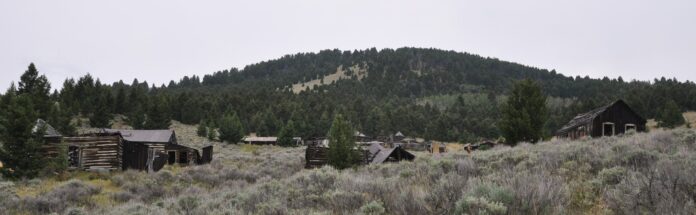
Sitting on the eastern slope of the Continental Divide between the towns of Basin and Boulder, Comet, Montana, is one of the state’s most intact ghost towns. Neither restored nor preserved, the site is located on private land but, at this time, remains open to the public.
Mining began in what would become known as the High Ore Mining District as early as 1869, when a man named John W. Russell began to prospect in the area. However, after working on his claim for five years, Russell sold it to the Alta-Montana Company in 1874. The new company began to invest in mining operations and soon built a 40-ton-per-day concentrator, a mill process that separates the ore from the dirt and rocks.
A town begins to grow
Two years later, in 1876, the town of Comet was surveyed and platted as more and more people began to move into the area. The following year, the post office opened in Comet, but growth came slowly to the town.
In 1879, the Alta-Montana Company invested more than $500,000 in developing the Comet and nearby Alta Mines. However, their efforts were unsuccessful in turning a profit due to the high costs of transportation. But, director and major stockholder of the Alta-Montana Company, Samuel T. Hauser, was determined to make a go of the Comet Mine. In 1883 he formed the Helena Mining and Reduction Company, which bought the assets of the struggling Alta-Montana Company and again began to invest in the Comet Mine.
Expansion
The following year, the Helena Mining and Reduction Company constructed a new smelter, one of the largest of its kind in Montana territory, at Wickes, some six miles northeast of Comet. He then built a 100-ton concentrator and a tramway to carry the concentrate to the smelter. But it was when Hauser introduced the Northern Pacific Railway, to construct a branch line between Helena and Wickes, that Comet really began to grow.
Comet’s heyday
Soon, mining operations were expanded again, adding more mining equipment and hiring more men. Comet’s heyday years were during the 1890s, when the mine became profitable enough to even weather the silver panic and depression of 1893. At this time, the town boasted some 300 people, a school, which taught more than 20 children, numerous businesses and homes, and more than 20 saloons.
However, by the turn of the century, the ore was beginning to play out, and the mine sold several times over the next several years. By 1913, the town had become a ghost.

A second chance for Comet, Montana
Things changed again in 1927 when the Comet and the Gray Eagle Mines were purchased by the Basin Montana Tunnel Company. It made more improvements, including building a 200-ton concentrator, described at the time as “the most modern in Montana.”
With better technology, the mines were buzzing again, employing about 300 men and weathering the depression years. In the 1930s, the operation was the second-largest mining venture in Montana, after Butte. Mining operations continued until 1941, at which time most of the equipment was sold, the people moved away, and Comet became a ghost town for good.
Over the years, the Comet mine produced some $20 million in lead, zinc, iron, copper, silver, and gold ore and was the richest mine in the district.
Special thanks to LegendsofAmerica.com for this concise history on Comet, Montana.
Our visit to Comet, Montana

Recent online posts concerning Comet told of a change of ownership and visitation. Visitors were now welcome to view Comet from the public road without fear of being chased off. Supporting photos of these posts were all taken from the public road with barbed wire fence in the foreground.
When we were recently traveling with our RVing friends through Montana in the vicinity of Comet, I thought it was time to pay Comet a visit. We camped just off the freeway with the plans to pay Comet a quick visit the next morning before moving on down the road. Since we would only be viewing the town from the road, basically a “drive by” in our tow vehicle, we didn’t pack lunch or bring flashlights or jackets. I figured the visit would take no more than an hour out of our schedule, including drivetime.

Scores of buildings
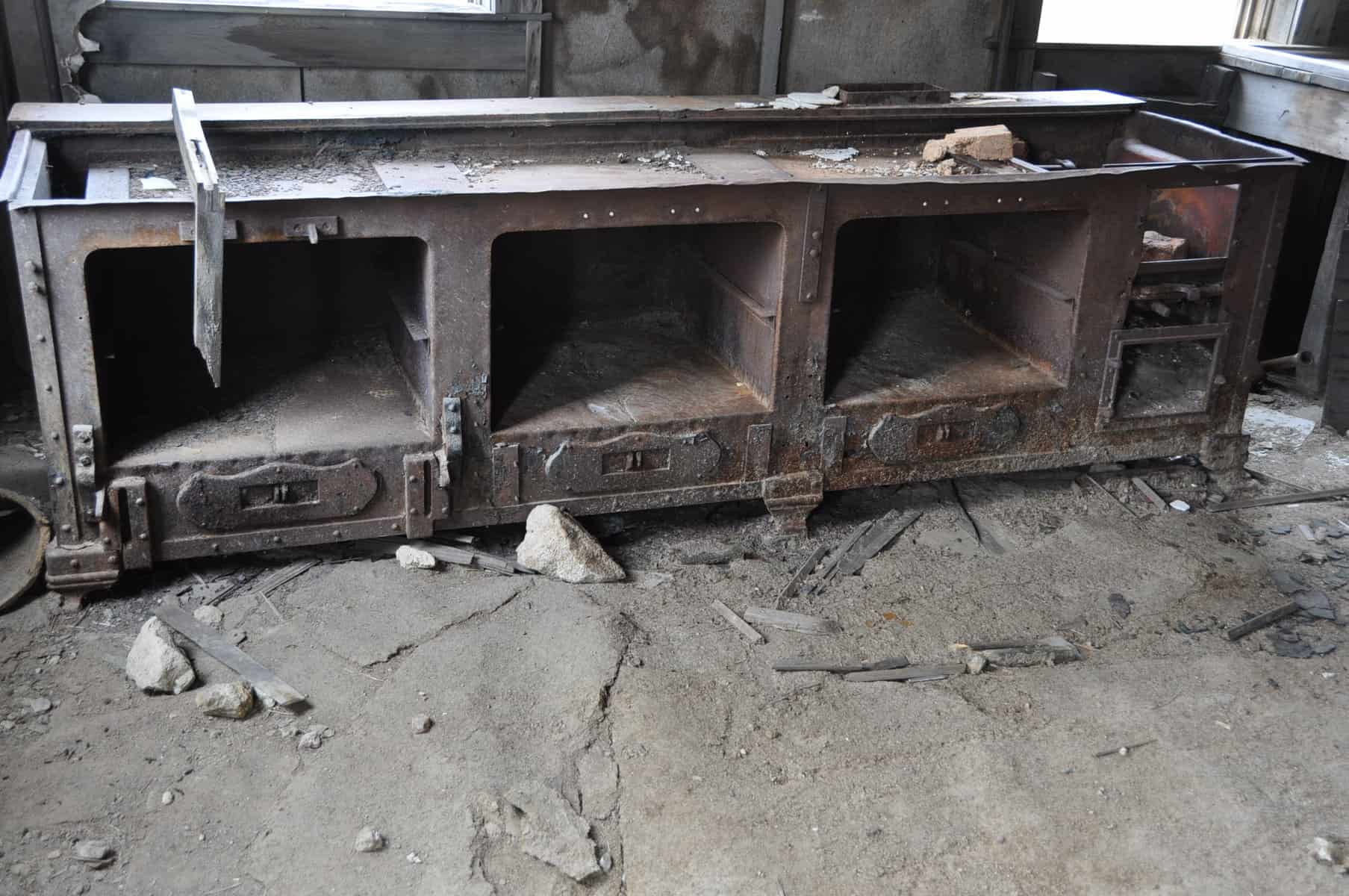
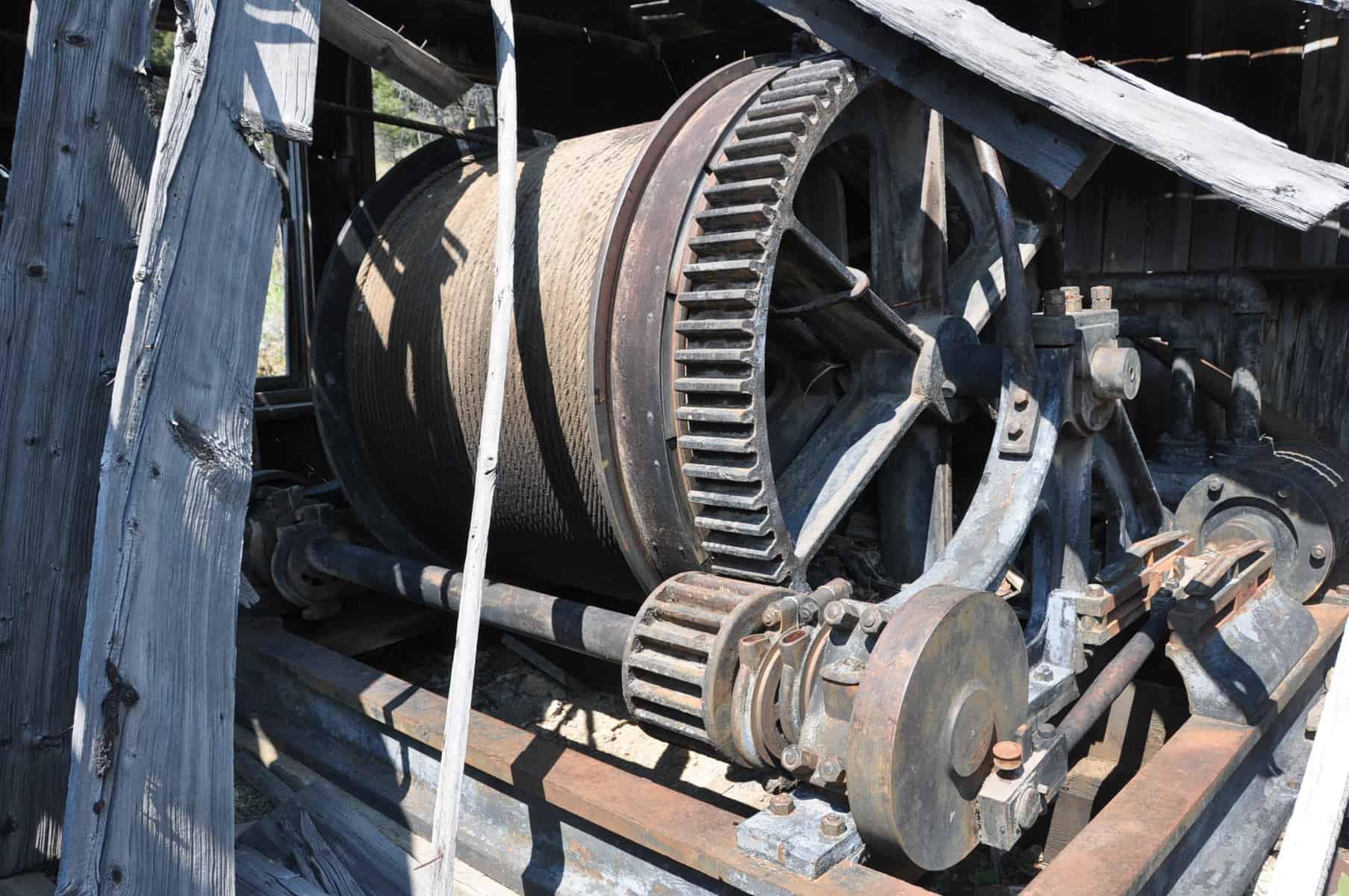
Arriving at the site, we were greeted by scores of buildings, including: a boarding house, processing mill, ore loading facility, miner’s bunkhouse, retail businesses and more. There were zero “No Trespassing” or “No Visitor” signs. The fence I had seen in pictures was there to control cattle, not limit public access.
Even though we didn’t come prepared with coats, lunch or lights, we spent HOURS exploring the old town. Given all the interesting things to see, the cold and hunger of not being prepared faded as we explored one building after another. While there is a single occupied residence in town, no one asked us to leave. Our visit turned out to be a pleasant, unexpected surprise and a nice introduction to ghost town exploring for our friends.
Getting there
Comet, Montana, is located a little over five miles northwest of Boulder, Montana at: N46 18.625 W112 10.195. Easiest access is via High Ore Road off I-15 exit 160.
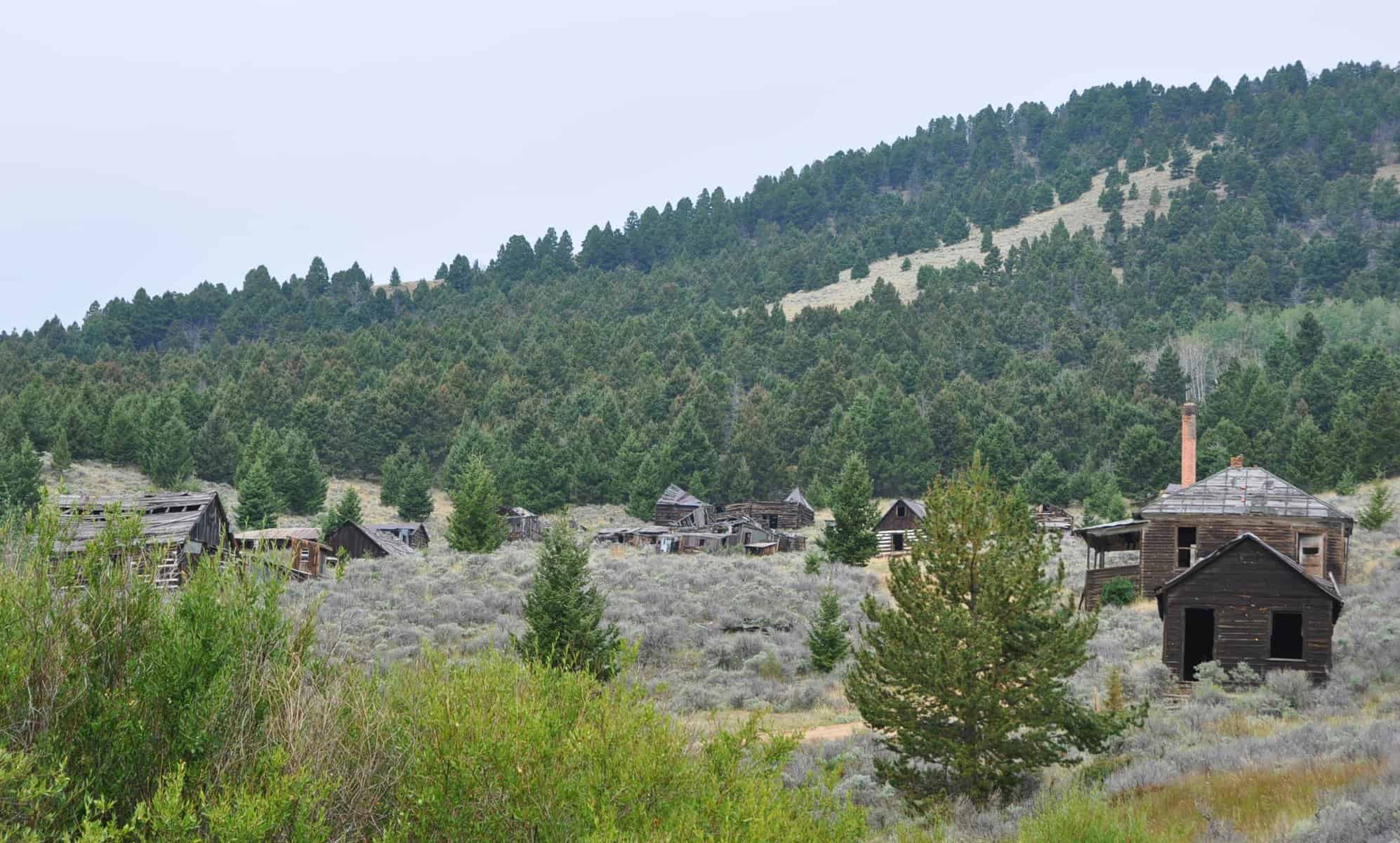
- Upon arriving you will find the old mine site and mill buildings on the south side of the road. Residences and retail establishments including the two-story boarding house are on the north side of the road.
- Note: A few of the buildings along the north side of town are located behind a fence near an occupied residence. Please respect the fence line and the privacy of the occupied residence.
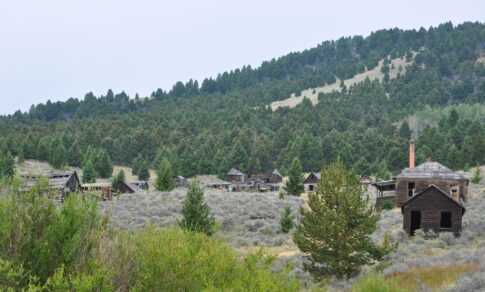
Residential area. Photo: Cheri Helgeson
Camping options
Campground: RVers that are prepared to dry camp will find the Galena Gulch Campground off the same I-15 exit (exit 160) that leads to Comet. It is a convenient place to spend a night while visiting Comet with your tow vehicle or dinghy. The campground contains picnic tables, fire rings and vault toilets. Campsites are spacious, fairly level, graveled spaces with grass and some shade trees. Two graveled loop roads offer access to the campsites and are big rig friendly, as are the campsites. Sorry, but there are no pull-throughs. Seven of the sites have direct access to the Boulder River. Currently, there is no fee to camp.
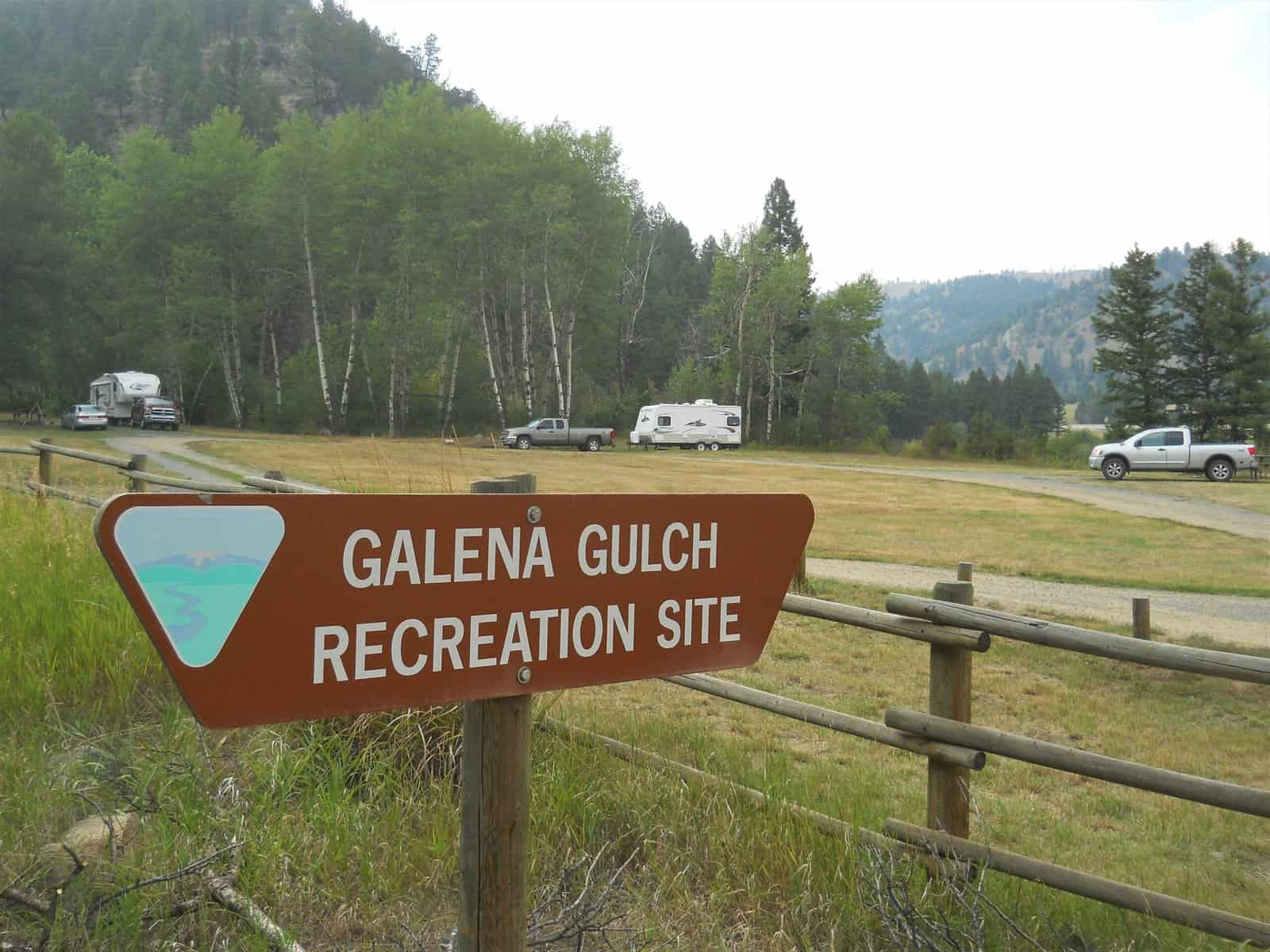
To reach the campground: Take Exit 160 (High Ore Rd) from I-15 and travel east/southeast on the paved access road along the north side of the freeway for about three-fourths of a mile, then turn right (southwest) on Galena Gulch Road passing under the interstate. Next, cross the bridge over the Boulder River to the campground on your right. There is a 14-day stay limit. Those of you navigating by GPS will find the campground at: N46° 15.257 W112° 11.025. There is no potable water or dump station at the campground.
A free dump station (donations encouraged) and potable water are in the nearby Boulder City Park at: N46° 14.310 W112° 07.060.
RV Park: Alhambra RV Park is the closest RV park to Comet.
Boondocking: There is an abundance of BLM land in the area that allows boondocking. Since the campground was free and close to Comet, the author did not seek out boondocking locations for his visit.
Past installments of Ghost Town Trails you may enjoy:
- Ruby, AZ – Southern Arizona’s ‘best-preserved’ ghost town
- Eureka, Utah – Visit easily accessible old mining town
- Silver City, Utah – Heartbreak and thanksgiving
- Castle Dome City, Arizona – Perfect for nearby snowbirds
- Fort Selkirk, Yukon Territory
- Coolidge, MT – ‘Montana’s Mystery Camp‘
- Ballarat, California
- Greenhorn, OR – Oregon’s smallest incorporated city
- Elkhorn, Montana – The cover photo of popular “Ghost Towns of the West” book
- Tunnel Camp, Nevada
- Bonnie Claire, Nevada
- Tumco, California
- Mackay’s Mine Hill, Mackay, Idaho
- Does picturesque Civil War-era Fort Macomb, LA, look familiar?
- Ghosts of the Yankee Fork, Idaho
- Independence, Montana
##RVT1115
Bodie Town, California is another great ghost town.
Ghost towns are great to visit but please, take nothing but pictures.
Yeah, it might be tempting to take that bottle, rail spike or artifact but then what? It sits in a junk drawer until the value of its memory fades and then winds up in a landfill. A sad epitaph for something that braved the passage of many eras.
That excited emotion that drives you to want to carry something out can be overwhelming. Leave the item so the next visitor can savor the same. Don’t be intrusive, disrespectful or destructive and leave nothing behind.
Context is everything. If you research the history prior to going, it’s amazing. If you research afterwards, you might regret not exploring deeper.
Thank you, Dave! How fascinating! Seems you will soon, if not already, be in a position to publish your own book of ghost towns. Or perhaps create a website? Have a great week and safe travels!