

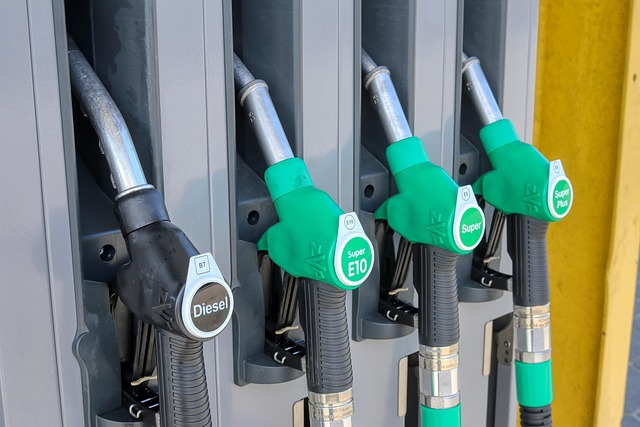
Before you roll into your next gas stop, know this: Many gas stations legally tack on a hefty $1 per gallon surcharge for credit card transactions.
This practice is driving up costs for RVers already grappling with slim fuel budgets.
Florida
Take, for example, Florida. Federal courts have invalidated Florida’s statewide ban on credit card fees. This means, stations can charge as long as they disclose it up front. The surcharge typically covers interchange fees—the cost stations pay to card networks. However, some stations also use the fee to pad their profit margins.
The hidden pump price premium
On recent runs, RVers report seeing two prices. There is a lower “cash” rate and a higher “credit” rate—sometimes a full dollar apart.
Pat Igo, a Florida business owner, discovered his pump’s digital display showed a $3.19 per gallon rate. However, when Igo went inside to pay, the price had jumped to $4.19 because he used his credit card. Many motorists call this a “bait and switch,” noting that tiny stickers or footnotes at the pump fail to give fair warning.
State law vs. federal rulings
Florida Statute 501.0117 once prohibited credit card surcharges. Federal courts struck down that ban as unconstitutional. As a result, Florida merchants—including gas stations—can impose a surcharge. Interesting fact: The state law still lists a ban on the surcharges. However, it’s effectively unenforceable. Businesses are free to surcharge at will.
Disclosure requirements
Legally, stations must clearly disclose any surcharge before you swipe or insert your card. Expert advice warns drivers to look for conspicuous signage both at the pump and inside the station. Failure to disclose properly can violate card network rules—even if state law allows the fee.
Profit motives
Beyond simply covering fees, some station owners view surcharges as a revenue stream. This is particularly true in tourist-heavy corridors where cash transactions are less common.
Critics argue that chains lacking these fees (e.g., Chevron, Shell) enjoy a competitive edge. This prompts surcharge-implementing stations to defend the practice as “industry standard.”
Impact on RVers
For RVers logging 10,000 miles or more annually, an extra dollar per gallon equals hundreds of dollars in added expenses. One RVer estimated he is paying an additional $200 each fill-up cycle due to the surcharge. That’s money he could otherwise have used to fuel side trips or pay campsite fees. Another traveler shared warnings on social media after being surprised by a $1-per-gallon fee. She urged fellow RVers to double-check pump pricing before swiping.
Practical tips for RVers
• Use cash or debit cards: Debit transactions often avoid surcharges and paying cash locks in the lower advertised price.
• Join fuel clubs: Networks like Pilot Flying J offer discounts to members, sometimes absorbing interchange fees altogether.
• Download pump price apps: Services like GasBuddy let you compare credit vs. cash prices in real time.
• Ask inside: If signage is unclear, step indoors and confirm the credit surcharge before fueling.
Calls for reform
Consumer advocates and some lawmakers are petitioning for legislation mandating clearer disclosures or reinstating enforceable bans on surcharges.
Not just Florida
In addition to Florida, most U.S. states permit credit card surcharges. However, there are a handful that outright prohibit them: Connecticut, Maine, Massachusetts, Oklahoma and Puerto Rico.
Other states impose strict disclosure rules. Merchants in Maine and New York, for instance, are legally required to post both their cash price and the higher credit card price prominently at the pump or point of sale. Likewise, Colorado, Minnesota, New Jersey and New York have statutes mandating clear, on-site disclosure of any per-gallon surcharge before the transaction is completed.
New York’s law goes further by specifying that the exact dollar amount of the surcharge be displayed alongside the advertised retail price. This ensures that drivers aren’t ambushed at the register.
Across states that allow surcharging, credit card networks cap the fee at the merchant’s actual processing cost—typically no more than 3–4%. They also require advance notice of the surcharge rate, although the format of that notice can vary by jurisdiction.
Be aware
RVers need to be aware of the credit card surcharge practice and exercise caution when fueling up!
RELATED
- California’s gas prices could hit $8 gallon, more states could follow
- RV need gas? Costco extends fuel station hours for more access
- Gas vs. diesel: Which is better?
RVT1209b


Interchange fees are normally 2-5% paid to the credit card companies for administrative fees to use their cards.
Some large chain gas stations that have their own cards may discount the price by up to 10%.
The ones around here post both prices on their signs. We have some privately owned stations that take 5¢ off if paying with cash.
I wonder how many charging the high fees see a slow down in sales.
I’m in Indiana and most of the gas stations charge 5 cents more a gallon for using a credit card. Fortunately the cash and credit price are usually advertised on their signs.
Most fuel stations in New Mexico have a 10 cent per gallon higher price when using a credit card. The prices are shown as (for example) $2.84 “Easy Pay” (i.e, cash) and $2.94 “Credit”. The prices are normally shown on signage outside the stations.
We travel all over the country & I’ve never seen more than 15 cents difference between cash & credit prices on gas. And you failed to mention any of the good discount apps like Upside or Mudflap or Open roads for diesel. I save anywhere from a few cents to 70 or 80 cents per gallon with these apps in addition to a 4% rebate on my Costco Visa card that I pay with. I think this article is a little fear mongering. Only an idiot would pay a dollar per gallon to use a credit card, so I can’t believe this much of a charge will become a widespread practice.
That was the point, Fred. The reason this article raised a red flag was because stations in Florida were recently found charging exorbitant surcharges and customers had no way of knowing–stations did not clearly post the high surcharge rate. As the travel season ramps up for many RVers, I wanted our readers to stay alert for this unconscionable practice. Safe travels to you!
We have not encountered this when fueling but a credit card commission charge has become common at many restaurants.
I’m confused. For the last umpteen years There has been a cash price and a credit price on the pumps and signs. CASH meant cash or the station brand credit card and CREDIT meant a non-station brand credit card. The difference in price has always been a few cents. I guess I don’t get out much anymore. ?
When using our DP, we only fill up at truck stops. We usually can’t pay at the pump with a card, so we always go in and pay cash and get the reduced rate. If a station charged a dollar more for a card transaction, that would be the last time I ever used that station.
The greedy credit card companies, Banks, credit unions and merchants charge you for using a credit card. People need to start paying cash. Even our greedy government force us to pay them with credit cards.
Unfortunately Cash/Credit surcharges aren’t limited to just fuel.
Surcharges are popping up in restaurants and campgrounds.
This trip alone we’ve seen “Invoicing fees”, “Processing fees”, “Waste Disposal fees”, “Utility Surcharge fees” and an attempt to charge a “WiFi Access fee” even though we use our StarLink exclusively. Campgrounds are doing this to give the appearance of a better price and then hit you with surcharges once you’ve agreed to reserve or drove all the way out there. I fear it’s only worsening….
Agreed. I’m seeing it on everything. I also see the inverse–some businesses list a cash “discount” of 3-4%.
A particular restaurant I go to charges a small fee for credit cards. I get cash back from Discover. As it is it’s a wash. If I know they charge fees than I stop at the Credit Union and withdraw cash at no fee.
I’m used to paying a few cents more for using my card, but wow, $1.00 per gallon?!? Good thing to be aware of, thanks Gail! For those of you who use the Love’s app to save $0.10 per gallon, here’s another tip. If you have a AAA membership you can link it to the Love’s app and get another $0.03 off per gallon off for $0.13 total. (Those are gas discounts by the way, I think diesel discount are higher.) Not always, but there’s been times when the Love’s discount made their price cheaper than the Costco near me. Gas Buddy is my go-to pricing app, by the way.
My husband and I just ran into the $1.00 credit card surcharge this week in the Santa Rosa Beach, Fl area. We left 2 gas stations because of it. I understand paying the cc surcharge, but in an article I read the other day one station owner said “I can charge anything I want”. Hope he has a savings account because i predict his business is headed for a slump.
Debit cards are not as secure as credit cards and many stations charge them the same as credit cards..
That is an old myth. Debit cards have the exact same protections as credit cards when they are used as credit cards (no pin).
Thank you for the warning, Gail! This is certainly alarming news. Have a great week and safe travels!
For the RV we use the Open Roads card to get discounted diesel at truck stops. I will see if this happens when we refuel the Jeep that we tow. Have a great day and safe travels! 🙂
Fake news!
I don’t understand the second-to-last paragraph: “Across states that allow surcharging, credit card networks cap the fee at the merchant’s actual processing cost—typically no more than 3–4%.” If that’s the rule, how can a gas station charge $1/gallon more for credit?
I live in Florida and often see a 5 or 10 cent surcharge for credit cards. I choose not to buy my gas at those places. I buy most of my gas at Sam’s Club or Love’s, both of whom don’t add a surcharge and give me a better price anyway.
We live in FL. I’ve seen the 10c a gallon difference, but never a surcharge like $1 a gallon. I had heard in many states, the stations cannot charge more for CC. But they can offer a “discount” for cash, and that is what many do. But still, buying all my gas with cash, would be a big hassle. Have to go in, tell them how much, give them the money, then go back to get any change due. Not to mention having to now carry around (take out from ATM’s) a whole bunch more cash than normal. From the sound of this article, it looks like the “push to a cashless society” will be on hold.
Now I have to carry thousands of dollars in cash to pay for premium unleaded to feed my turbo F-150 engine ?