


Dear Dave,
We use a Surge Guard surge protector when we are on the road. We have used one type or another since we began RVing. When we downsized to a 26-foot Class C in 2019, I purchased a Surge Guard 34830. We downsized again in 2022, into our 2023 Winnebago Travato, and I am still using this surge protector. It is working fine and we have not had a problem with it. Due to age, should this item be replaced? Does it have a “shelf life”? I have written to Surge Guard on this and have not received a response.
Thank you for your column. Very helpful to us out here. —Richard, 2023 Winnebago Travato
Dear Richard,
Great question. I haven’t seen or read anything indicating that a surge protector has a specific “shelf life”. Instead, its lifespan depends on how many electrical surges it has absorbed over time.
Most RV surge protectors use metal oxide varistors (MOVs) to absorb excess electrical energy. Every time an MOV absorbs a surge, it degrades slightly. The protector’s joule rating (a measurement of energy) indicates how much surge energy it can absorb over its lifetime before the MOVs are no longer effective.
Generally speaking, the higher the joule rating, the more surge protection the unit can provide before it needs to be repaired or replaced. Some lower-cost models are essentially “one-and-done” devices that must be replaced after a significant surge. Higher-end models often have replaceable surge modules, allowing you to restore the unit without replacing the entire protector.
Hughes Power Watchdog
According to Hughes, the Power Watchdog only requires replacement of the internal surge module after it has experienced one major surge or multiple smaller surges that have exhausted the module.
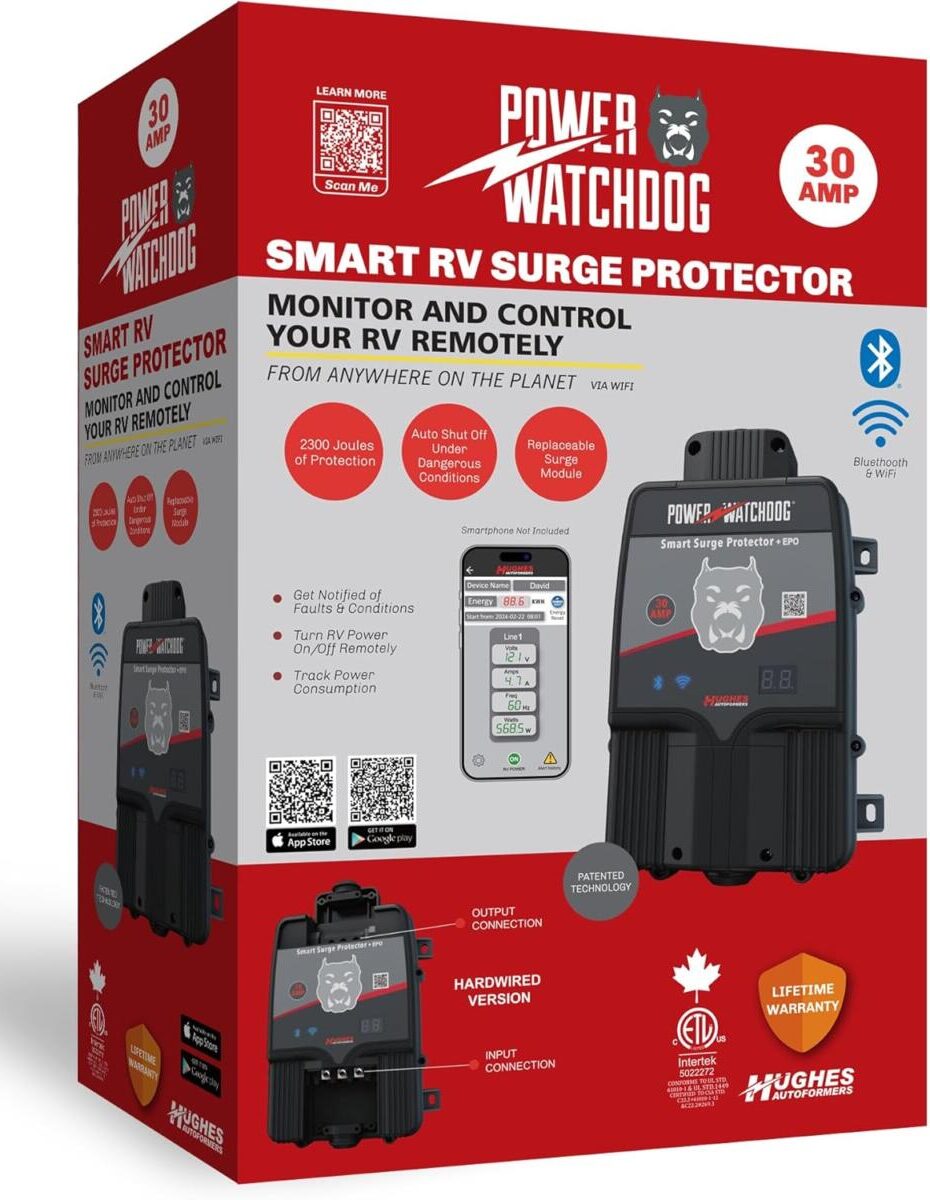
When the surge module has failed, the LCD display will show a red-faced dog icon along with an E9 error code indicating the module needs replacement. However, the unit’s other functions—including voltage monitoring, wiring diagnostics, and electrical management system (EMS) protection—continue to operate.
Replacement modules typically cost around $40 and are designed for easy installation by simply unplugging the old module and inserting the new one.
Another nice feature is that the power cord (pigtail) can also be replaced if the plug becomes badly corroded or the prongs are damaged.
Southwire Surge Guard
With the Southwire Surge Guard, the entire unit must be replaced if the display indicates “Surge Failure” or “Surge Expended,” as the surge protection circuitry has reached the end of its useful life.
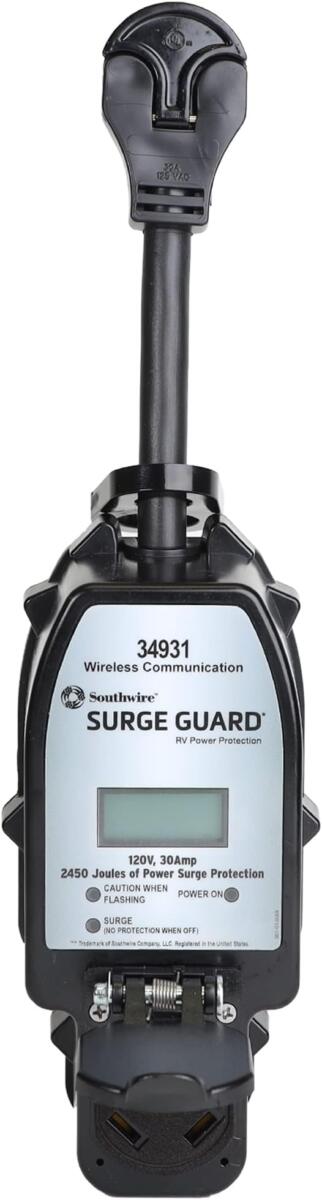
Southwire also recommends replacing the entire unit every 3 to 5 years, noting that the internal MOVs gradually degrade each time they absorb a surge.
Personally, I’m not entirely convinced that replacement should be based strictly on age. I know several RV owners who have used their Surge Guards for more than 10 years without any issues. In my opinion, the determining factor is not the calendar, but the number and severity of surges the unit has absorbed. However, that’s difficult to measure because there is no “joule counter” that tracks remaining capacity.
For that reason, I recommend periodically verifying pedestal voltage with a multimeter and paying attention to any warning messages displayed by the surge protector. If the unit indicates its surge protection has been exhausted, it’s time to replace the surge protection components or the entire unit, depending on the model.
More posts on surge protectors from Dave
- Do I need a surge protector when plugging into a portable generator?
- What is the difference between a surge protector, EMS, and EPO? Do I need one?
- I need a 30-amp surge protector. Which do you recommend?
- Why can’t I get power through my Smart Surge Protector?
DAVE HAS ANSWERED MORE THAN 1,200 readers’ maintenance and repair questions. Read a directory here. There is so much to learn!
Dave Solberg is a leading expert in the RV industry and the author of the “RV Handbook.”
HAVE A QUESTION FOR DAVE?
Send your inquiries to him using the form below.
RVDT2948
