


Dear Dave,
We’re beginning our 5th year full-timing in our Vilano. I suspect we may soon need to replace our two 12-volt batteries. I would like to know what to look for in choosing replacement batteries. I’d also like to know the correct procedure to remove the old batteries and install the new ones, including the do’s and don’ts and things to watch out for. Thanks. —Bob, 2018 Vanleigh Vilano 325RL
Dear Bob,
The best batteries for your Vilano 5th wheel depend on how much boondocking or dry camping you plan to do and for how long. I assume you currently have Flooded Lead Acid (FLA) batteries, since you are looking to replace them after 5 years. So let’s look at those first.
Since you have two 12-volt batteries, you would have somewhere between 160-240 total amp hours, as they would be connected parallel which is positive to positive, negative to negative. That gives you a 12-volt bank but doubling the amp hours of the individual batteries. They were most likely installed by the dealership and could be Group 24, 27, or 31, which are the different amp-hour types. But keep in mind you only should draw them down to 50%.
If you are not going to dry camp often and wanting to do it for a week, another set of the 12-volt FLA is the cheapest option. Since your refrigerator is absorption, it can run on LP. You would be able to dry camp for a couple of days depending on other items you might be using.
6-volt versus 12-volt RV batteries
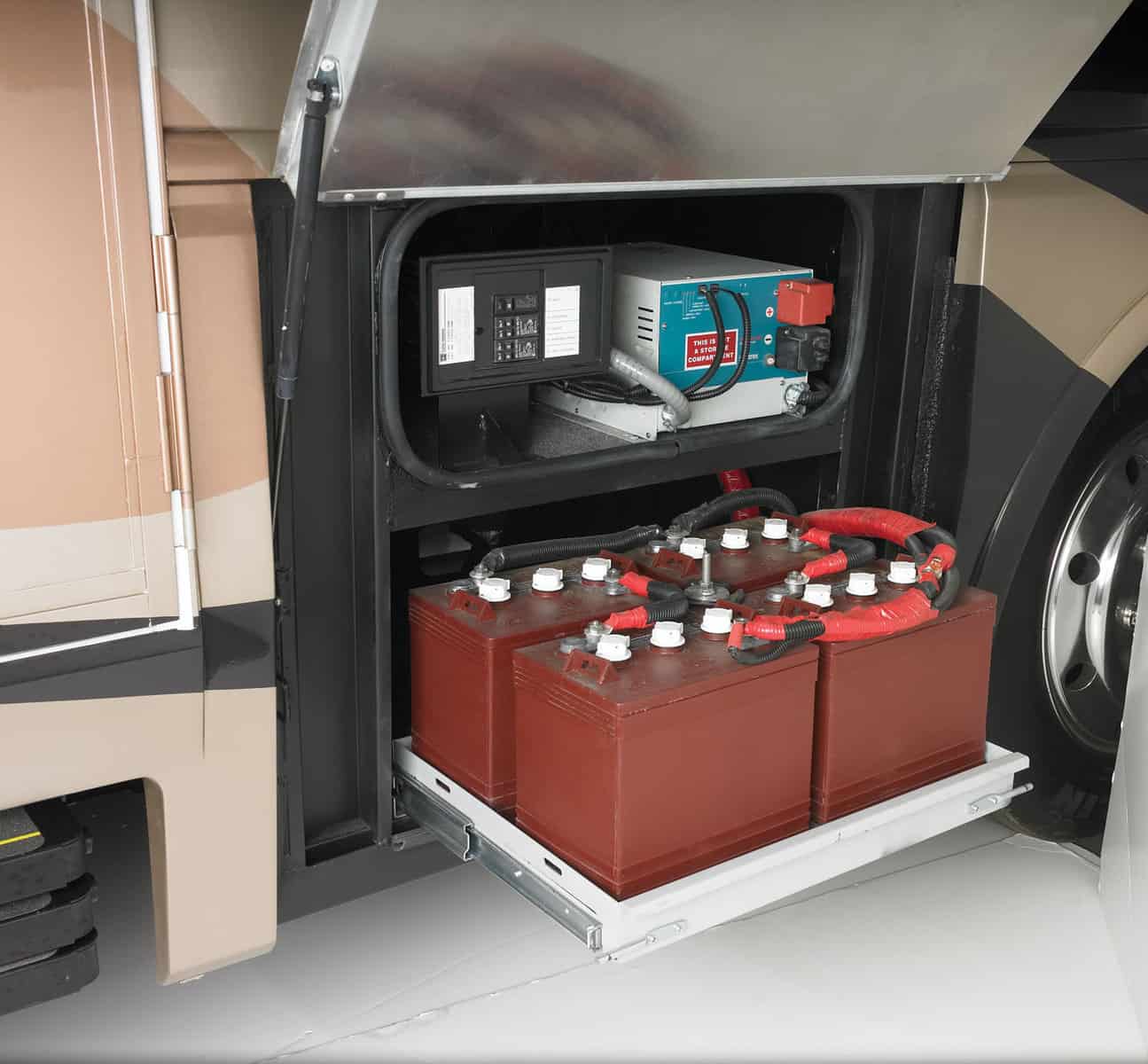
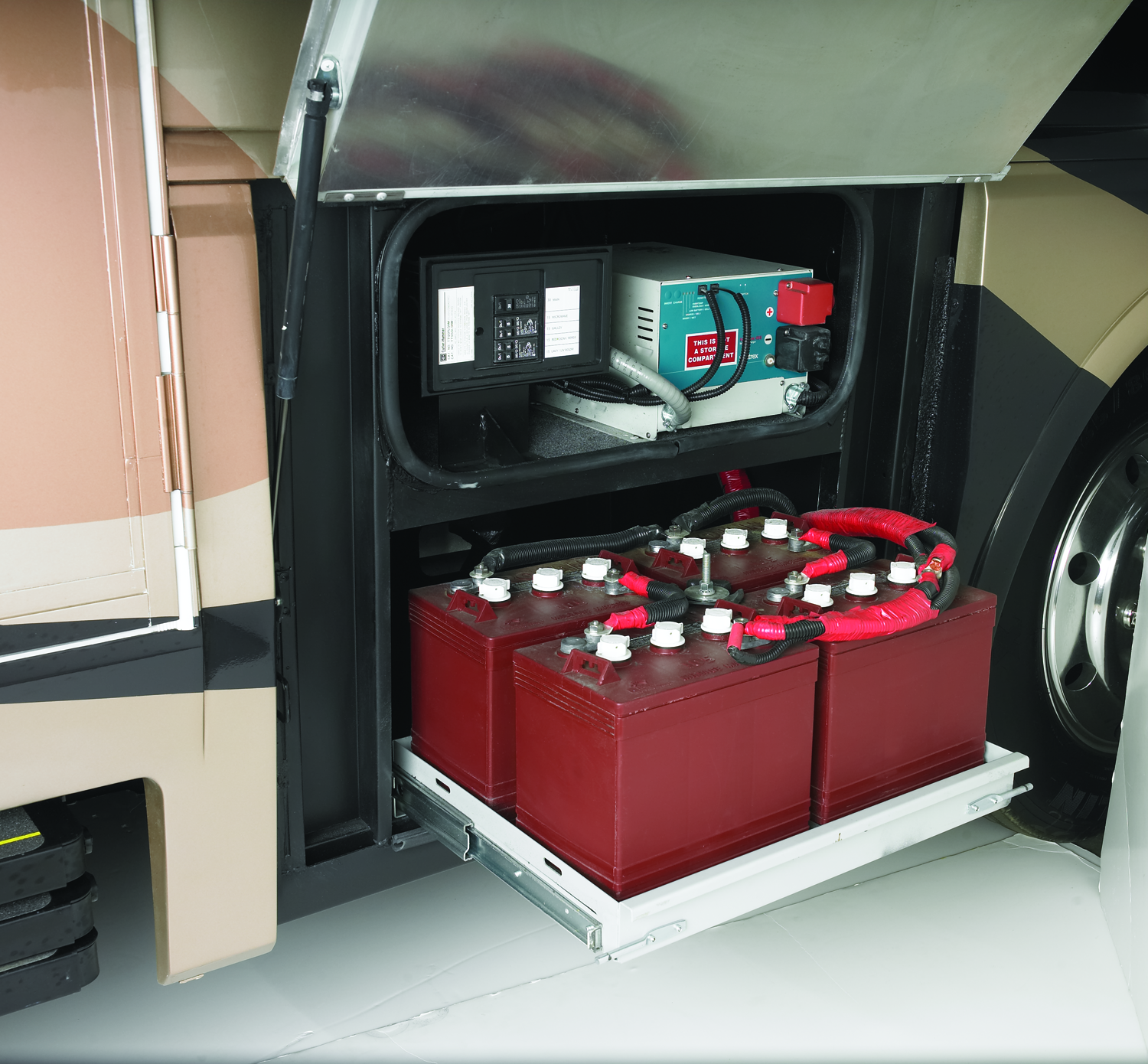
Many of the bigger rigs like to install 6-volt batteries as they have more cells and last more cycles over a period of time. You need to have two connected in series, which is positive to negative, giving you a 12-volt bank. However, it does not double the amp hours. A 6-volt battery typically has 232 amp hours and a 12-volt would be at 80-100 amp hours.
My preference is 12-volt batteries, and I’ve done a little research into what makes a good battery. I have talked with several manufacturers and battery companies and the discount stores that sell a $89.95 battery which is basically disposable. They have thinner lead plates, poor solder connections, and don’t last very long. If you are never going to dry camp and not planning to keep the rig several years, they might do the trick.
Winnebago uses NAPA Auto Parts batteries due to the superior materials used and the quality of the service network. Everyone I have talked to are pleased with them. The only issue with FLA batteries is they need to be charged properly to reduce sulfation. That is most likely why you are looking at changing yours.
How to avoid sulfation of batteries
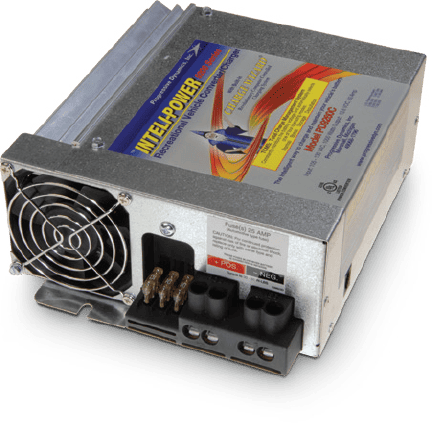
Sulfur coats the plates when the power is drawn. An initial bulk charge is needed at 15 volts or higher to break up the sulfation, then an equalizing charge, and the final float charge. If your rig has the typical converter, it will not perform this and they will sulfate as the charger does 13.6 volts initially until the battery reaches 12.6 volts and then goes to a float or maintenance charge. Only units like the Progressive Dynamics with Charge Wizard or large invertor with a charger have the multi-stage charger for battery conditioning.
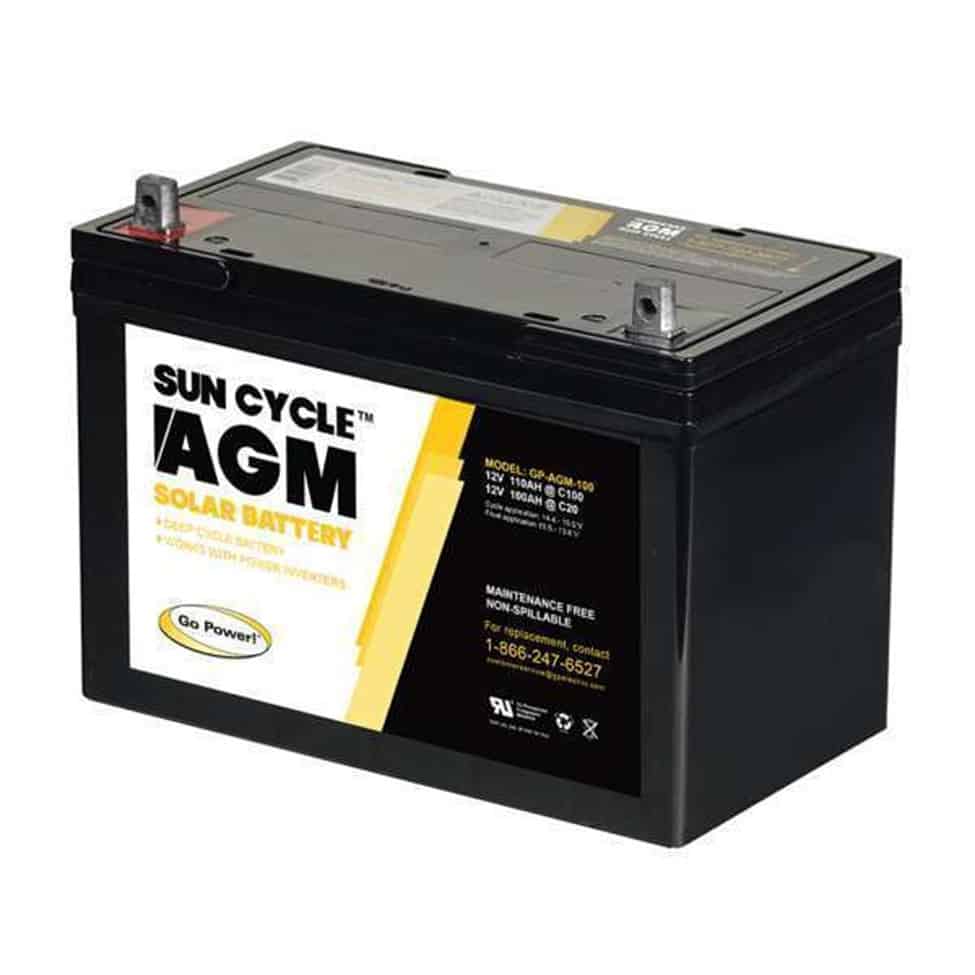
Another option is to go with Absorbed Glass Mat (AGM) batteries, which are less prone to sulfation but also can only be drawn down to 50%. Some of the more popular manufacturers are Trojan, Lifeline, and recently Go Power! has also gotten into the AGM market—all with good products.
Should you go lithium?
The advantages of Lithium Iron Phosphate Batteries are you can draw them down to almost 100% of amp hours. Quality lithium batteries will have a 10+ year warranty, and they will cycle more than 3,000 times. They also do not gas, so they can be put almost anywhere.
The disadvantage is the cost, which can be 3-4 times more than FLA. However, if they last twice as long and give twice as much power, they are a good option if you plan to do a lot of dry camping. Plus, you need a converter/charger that will provide 14.6 volts at the charge, otherwise you don’t get the full benefit.
If you are interested in lithium, check out this article about finding a quality battery company.
Also, check out this three-part deep dive, and you will know more about lithium than you wanted!
Correct procedure for R & R
First, take a picture of your current setup, as there will be additional cables and connections for several items. Here is the rat’s nest we encountered with a 2015 Thor and were so glad we took a picture.

Here is what the new lithium battery looked like.
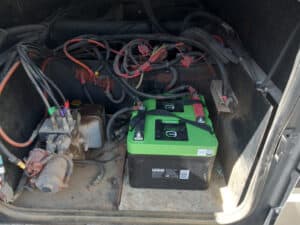
I have always removed the negative cables first to prevent touching a positive to a ground source, and cleaned all the connections with a wire automotive battery brush. I also like to brush the new terminals to make sure it has a good metal connection. Connect the positive cables first, then the negative.

I also like to spray the connection with CRC Battery Protection Spray, which you can get at Amazon here.
You might also enjoy this from Dave
What are the types of RV house batteries and what do the acronyms stand for?
Dear Dave,
Readers appreciate very much your RV tech wisdom. Could you provide an article on the various battery types available for RVs, those useful for solar power when off-grid and what all the acronyms mean? Thanks. —Colin, 2020 Jayco 26.7
Read more from Dave here.
RVDT2734
The price of LifePo4 (lithium) batteries has fallen so much, using FLA is becoming archaic even if you rarely boondock. You can get more amp hours in the same footprint with less weight, more reserve capacity and faster recharge times. No corrosion and decaying battery clamps to deal with and they don’t need a vented compartment. I’d recommend upgrading just for those reasons alone.
Certainly if buying a new RV, lithium support would be high on my list. The cost associated with converting from FLA/AGM to lithium is still pretty steep. And my AGM batteries have held up quite well.
The other thing negative about lithium is you cannot charge them when below freezing – one of those costs for many purchasers will be a thermostat controlled battery warmer.
Living in CO I was very concerned about the ability to charge below freezing. I just got a pair of 100 Ah LiTime batteries with Bluetooth and self heating that will allow charging to -4. Although I don’t ever imagine we will encounter that temp, we have been in the teens and twenties.
I agree, Jim.
Another cost to lithium is if your charger cannot properly support them.
My RV is wintered in my unheated RV shed and there will be many nights and even days that are below zero F, not to mention below freezing. With a house bank of 8, and many cables, I’m not removing them and reinstalling each fall and spring.
With proper charging and a quality AGM, my batteries last a long time…12 years on the last set. We don’t do boondocking so for us…and anyone else…there are cost and usage factors in the decision. Lithiums are good for some, but not right for everyone.
You don’t need to remove lithium batteries in the winter, nor do you need to keep them on a charger. They only self-discharge at around 1-2% per month, so with a 50% charge, they can sit all winter without any maintenance.
As for charging, the worst-case scenario with an older charger is that it will only charge lithium batteries to around 85% of their rated capacity. That’s still provides a hefty power increase compared to FLA or AGM. The battery management system (BMS) built into the batteries determines when they accept a charge or not, so there’s nothing to worry about.
If your rig will be stored for lengthy periods with the battery(ies) but without frequent access, go AGM rather than FLA. Or in the case of our small camper, the battery cannot be accessed without also removing the propane tank. Repeated replacement of dry FLA batteries will quickly cost far more than a quality AGM battery.
First step in battery replacement is to turn off the battery connection switch. I’m surprised Dave didn’t mention that. Another consideration is to use stainless steel hardware for corrosion protection with lock nuts or Nord-Lock washers to prevent the connections from coming loose.
Dave doesn’t say why he prefers 12v FLA batteries over 6v. Could he provide his reasons for that?
I believe in the past he has mentioned that if one battery in a pair fails, the remaining battery still provides usable power..
The prices of quality lithium batteries have dropped significantly over the past few years. There are a number of affordable high quality batteries out there. Depending on your rig, you may have to upgrade your converter, but the advantages are tremendous. Having an app on your phone to be able to see the exact state of charge, as well as being able to use all the available power before having to recharge is a big plus, as well.