

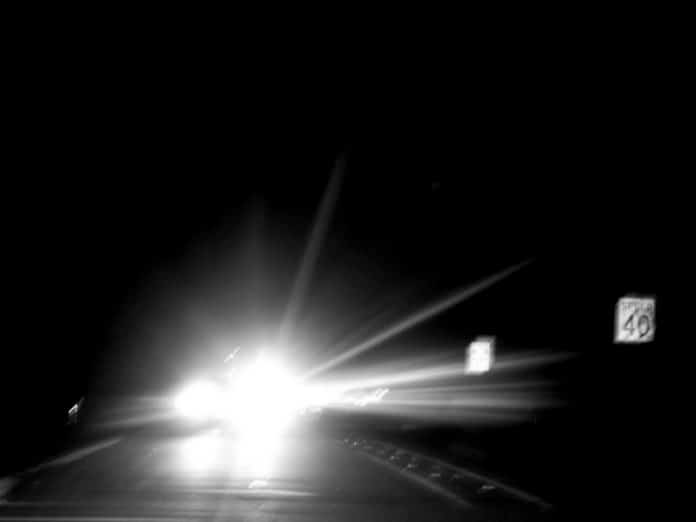
Is it just me, or are headlights too bright? Some nights it feels like everyone else’s headlights are trying to blind me!
Turns out, modern LED and HID lights are whiter and more intense than old halogens. When those beams hit your eyes at the wrong angle (or bounce off a dirty windshield), they don’t just annoy, they make night driving genuinely risky.
Changed for the worse
Headlight technology has changed since I first learned to drive. Lights have moved from yellowish halogens to HID and now LEDs. LEDs are much more efficient and can put a lot more light where manufacturers want it. However, that concentrated, blue-white light also produces stronger discomfort glare for many drivers—like me.
Think about this: A typical halogen low beam might be roughly 1,000 lumens. OEM LED systems commonly push 3–4 times that. Some aftermarket retrofit bulbs advertise far higher numbers, which can overwhelm other drivers.
Worrisome
You are not imagining the problem. In the U.K., a large RAC (Royal Automobile Club) survey found 89 percent of drivers say at least some car headlights are too bright. Many reported that they have to slow down until their vision recovers from the intense glare.
In the U.S., public comments and earlier NHTSA (National Highway Traffic Safety Administration) surveys show a longstanding pattern of complaints about headlight glare going back decades. Survey numbers show that glare causes drivers to avert their eyes or lose contrast sensitivity for several seconds. That’s a long time at highway speed.
What manufacturers and safety groups say
Auto groups and many auto makers point out that better illumination can reduce crashes by improving visibility. Programs that combine visibility with glare control (IIHS headlight ratings, or the newer adaptive systems) show real safety benefits when done right. (IIHS is the Insurance Institute for Highway Safety.)
AAA and IIHS have both studied advanced systems and noted big potential gains from “smart” or adaptive driving beam (ADB) headlights. They illuminate the road without blinding other road users.
Meanwhile, regulators in the U.S. updated rules to allow certified adaptive driving-beam systems, but wide adoption takes time. So, you get the tension: Brighter light helps you see, but if the distribution, height, or aftermarket tinkering is wrong, it can blind others.
Aftermarket bulbs, recalls, and legality
A big part of the headlights’ problem comes from retrofit bulbs and assemblies that weren’t designed for the vehicle’s optics. Federal standards focus on whole-headlamp assemblies, not just raw lumen claims.
The NHTSA has said many aftermarket LED retrofit bulbs don’t meet the rules for replaceable light sources. There have been recalls where retrofit LED bulbs exceeded flux limits and increased glare. That’s why many safety experts and regulators warn against swapping LEDs into housings meant for halogen bulbs.
Bottom line: Factory-designed LED assemblies that meet FMVSS (Federal Motor Vehicle Safety Standards) are different from random high-lumen retrofit bulbs you buy online.
Advocacy and regulation
Grassroots groups and petitions calling for limits on blue/bright headlights have gathered tens of thousands of signatures. Advocates are pressing federal agencies for tighter controls and more study.
Regulators have moved a little bit (for example, permitting ADB technology). Still, lawmakers, safety advocates, automakers, and consumer groups continue to hash out the balance between visibility and glare.
Practical techniques for RVers
RVers have both advantages and disadvantages when it comes to headlight over-brightness and glare. Special advantages may include bigger rigs and higher seating. Special vulnerabilities include long travel days and fatigue.
Here are practical tips you can use tonight—and every time you’re behind the wheel after dark.
• Choose your driving windows and routes with light in mind. If you can, pick routes with consistent street lighting, and avoid long, unlit stretches late at night when glare recovery matters most. Minimize long nighttime driving stretches if you don’t feel comfortable with heavy glare. (We plan our travel days to arrive well before sundown.)
• Slow down and give yourself space. Bright glare temporarily reduces contrast and slows focus recovery. Dropping speed when you see a glaring oncoming vehicle or when glare is frequent gives you the distance you need to react safely. (This is especially important in an RV because your stopping distance is longer.)
• Use the “look-right” trick and keep your eyes moving. Don’t stare at oncoming beams. Train yourself to focus on the right edge of the lane or the fog line when a blinding vehicle approaches. Glance back when the glare passes. That steady, peripheral reference helps maintain lane position without being pulled into the light.
• Keep windshields, mirrors, and visor areas clean and defect-free. Smudges, film, or micro-scratches scatter light and multiply glare. If your RV has a large windshield, clean the inside and outside regularly. Replace worn wipers and scratched mirror glass. Anti-reflective coatings on your eyeglasses and mirror anti-glare treatments can help, too.
• Use your lights deliberately. On back roads or in the country, use your RV’s high beams when safe. The extra distance enables you to see animals or other road hazards. Switch to low beams early when you detect oncoming cars. If your coach has auxiliary lights, make sure they’re aimed correctly and legal for road use.
• Avoid retrofitting high-lumen LED bulbs into housings not designed for them. They’re often illegal and increase glare for others.
• Adjust mirrors and seating to reduce direct glare into your eyes. Small changes in seat height or mirror tilt can make a big difference in how oncoming beams hit your line of sight. If your RV has an adjustable driver seat height, try a small change and test it at night in low-traffic areas.
• Know when to stop. If glare leaves you disoriented, pull off at a safe, well-lit rest area and wait until the effect passes. Fatigue multiplies the danger from glare. If you’re tired, don’t push through long nighttime conditions.
• Consider eyewear carefully. Some drivers use yellow-tinted “night” glasses and swear they work. But the safer step is a current eye exam and glasses with anti-reflective coating if recommended by your optometrist. If you have trouble with glare recovery, mention it at your eye visit. There are clinical steps that may help.
• If you’re an RV owner who maintains your own rig, aim and test your lights. Properly aimed low beams light the road without blinding oncoming drivers. Have a shop check aim and alignment after major suspension work, changes in load, or tire changes.
• When other drivers are the problem, document and report dangerous retrofits, if possible. If you repeatedly encounter vehicles with illegal, glaring retrofit bulbs or dangerously aimed assemblies, note the plate and location. Then report the info to local enforcement or NHTSA. Recalls and enforcement actions have followed complaints in the past.
What about you?
Have you observed a change in headlight brightness over the years? Do very bright or improperly aimed headlights bother you? Tell me in the comments below.
RELATED
- Is flashing your headlights at oncoming traffic legal or illegal?
- It’s time to clean those dirty, yellowed or clouded headlights
- RV mods: Protect your headlights
- Poll: When replacing a headlight, do you routinely replace the other one at the same time?
RVT1251

And, you need to address the effect caused by those 1d1ots who have jacked up their trucks beyond any reasonible height.
Idiot here. Lifted my Jeep to allow more axle travel to help get us to old mining camps whose roads have long since washed out. It’s not at a ridiculous height (by my standard) but the factory high intensity LED headlights will fry your retinas and tan your optic nerve if you look directly into them.
That said, headlights pointed at the sky are useless and it took me a whopping 4.3 minutes after lifting my ride to re-aim them to where they should be.
Unlike a vehicle lifted once and aimed once, hitch heavy RV’ers with no bulge in the front tires of their tow vehicle is what blinds this kid…
Unfortunately, 98% of the guys that have lifted their Jeeps/trucks don’t re-aim their headlights.
I doubt the number is actually 98% but I won’t defend the few that are. Shops that lift know better and folks with the mechanical aptitude to install a kit know as well. To your point though, some guys can’t read instructions and we all suffer the same.
I must be the exception. When I started driving in the 70’s, headlight glare was a real problem for me. Now I have grown up, and older, the head light glare doesn’t bother me as much.
I agree, and I like the LED’s since I can now see the road! Agree on headlight alignment though.
“Lights have moved from yellowish halogens to HID and now LEDs.”
Ah Gail, you must be rather young. My first car, a ’69 Camaro, had incandescent headlights. We used to comment about how “yellow” they were after halogens came out.
Ah these young whippersnappers don’t know what real problems are, do they? Remember stepping on a water bag to spray water on the windshield? And it froze over night? Or the vacuum line on the windshield wiper came off?
How true. My ‘69 Coronet took 4 #2 sealed beams. Ask for a #2 headlight in a NAPA store today and they just look at ya funny.
NHTSA deserves a big F for permitting these super bright lights on the road. On dark two lane roads they completely blind the oncoming driver. Accidents caused by sloppy engineering and lazy regulators.
In the “it’s all about me” USA…..owners are installing bulbs and light assemblies that are only for off road use. These owners could care less who they are blinding. RV owners are among the worse with buying light assemblies that are not DoT certified for highway use.
One major issue is that our federal government has done very little to update the headlight requirements since they were issued in 1967. Technology has advanced but the requirements have kept pace. Movable beams are forbidden in the US and that is one of the things that would remedy this problem.
Only for new cars. Won’t remedy the millions of cars with LEDs already on the road.
It used to be that headlight aim was checked in the annual safety check. Totally ignored now.
Teslas and Ford pickups have really bright headlights. Also seems like a lot of drivers these days are clueless about having their high beams on.
Thank you Gail for the information. I have definitely noticed the difference in driving at night. I was attributing the intense glare to my age. Now I know otherwise.
In NW rural Montana, in addition to “better” headlights, we have people who add LED light bars on their vehicles. They use them instead of or in addition to OEM high beams. There is no safety in looking to the right. Sadly, the law on headlight output is in watts not lumens, so they are well within the watt limit but way over any safe level in actual light output. Often these folks do not dim their high beam/LED bar for oncoming traffic. Add that to wildlife on the highway …
Retrofitting LED into existing headlight housing is a real problem for sure. The OEM housing reflective surface wasn’t meant for LED.
One of the biggest problems is the ‘focused’ beam headlights. They are INTENSE when coming right at you like when a car is turning towards you or cresting a hill.
I used to get blinded before I had cataract surgery. I can actually drive at night now if I have to.
Thank you for the discussion, Gail. Yes, the new, very bright headlights do affect my vision when meeting a vehicle with them. I am curious to see how the features of JT II, which we acquired in late-November and has both auto-dimming headlights and the new, very bright headlights, affect my ability to see when meeting similarly configured vehicles. I also wear glasses with amber lenses when I drive in low-light during the day and at night. They do seem to help. Have a great day and safe travels!