


Dear Dave,
I can’t get hot water in my RV. How much water (city or fresh water tank) do you have to run before you should feel warm or hot water? This is my first travel trailer, and I am no doubt missing something, but don’t know what that is. Thank you. —DA, 2024 Winnebago Micro Minnie
Dear DA,
According to the brochure on the Winnebago website, your rig came with a 6-gallon gas/electric water heater with Direct Spark Ignition (DSI). It has a 14-degree temperature sensor. When the unit is on and the temperature drops below approximately 120 degrees, it will automatically start by either using the heating element on 120-volt power, or a direct spark that ignites a flame for LP.
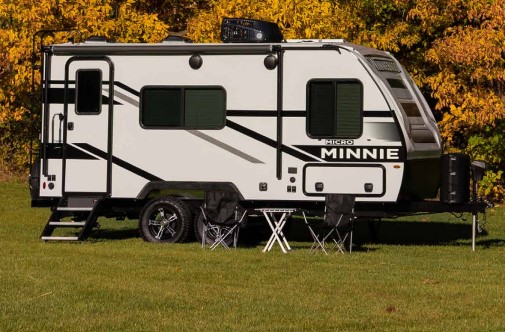
You did not provide the model, and there are ten different floorplans. However, they are relatively small, starting at 20’9” and only going to 25’5”. With such short models, hot water from the water heater tank should get to any sink or shower in a relatively short period of time.
The water heater has a cold water supply line going in and a dedicated hot water line coming out that supplies the faucet and shower. You have a kitchen faucet, shower head, and all but four models have a bathroom sink.
Winnebago typically has great drawings and information on their website, such as 3D parts and plumbing diagrams; however, they only have them for the motorized RVs. The 6-gallon model provides 12,000 Btu on the gas mode. It shows a recovery rate of 10.1 gallon/hour, which is much faster than the electric mode, which is 6.1 gallon/hour.
First thing to check regarding lack of RV hot water
The first step would be to determine if this is happening on both modes. If you are running the unit on the 120-volt mode plugged into shoreline power, it is possible the heating element is not working. If you ran the water heater on the electric mode without water in the tank at any time, it most likely shorted out the element and you are getting ambient temperature water.
However, if it is the same cold temperature on both modes, it is possible the temperature sensor is bad, or the ECO. You should be able to find the water heater and verify it is actually heating using an infrared temperature sensor pointed to the tank. Do not use your hand, as 140 degrees can burn your skin.

If the tank is not hot, your water heater is not working. Since it is a 2024, it should still be in warranty. If it is hot, you have either a plumbing issue or restricted line. If the water tank is hot, there should be a relatively short distance between the tank and any faucet in such a short trailer.
Winnebago uses 1/2” PEX lines, so the hot water from the tank should be to a faucet in less than 15 seconds, if not sooner, pushing the ambient temperature water in the line. Does this happen on all faucets and showers? Are you just opening the hot faucet to test?
Hot water at the tank but not to all faucets?
If you have hot water at the tank and not getting it to all the faucets, I would believe that the plumbing lines have not been installed correctly. You will need to trace the water line coming off the tank to the faucets.
It most likely is a red PEX line and it is possible a cold water line has been connected incorrectly either in-line or at a faucet. Checking water temperature at the tank and at each faucet will help identify where the issue is.
Since this is your first camper, I would suggest spending an overnight at a local campground to work through some of the functions. You will most likely find a great resource of helpful RVers that have been in your same situation that can help walk you through the operations.
You might also enjoy this from Dave
RV’s water heater doesn’t get water hot on LP but does on 120 volts. Why?
Dear Dave,
My Suburban water heater (16 gallons) works, but when it uses propane, the hot water isn’t nearly as hot as it is when heated using 120 volts. Is there a way to increase the water temperature when using propane? Thank you in advance. —Terry, 2018 Arctic Fox 29-5T
Dave Solberg is a leading expert in the RV industry and the author of the “RV Handbook.”
Read more from Dave here.
HAVE A QUESTION FOR DAVE?
Send your inquiries to him using the form below.
##RVDT2484

The OP doesn’t say if this is the first time being used. The water heater valves may be in bypass.
My thoughts exactly.
And if that is the case, they have probably burnt out their electric heating element. Gas should still work….I think.
On my fist MoHo there was a switch & a indicator light for the water heater & if the light stayed on there was an issue, or was it off? But you did have to turn on the water heater! Dave provided all the information to resolve your hot water issue!
Snoopy
In my Grand Design TT, if the outdoor shower is disconnected, but the shower valves are still open, it “short circuits” the hot water. It takes forever for the water to feel even lukewarm. But easy fix. Maybe a sister Winnebago is set up the same way
one foot of 1/2″ interior diameter PEX line holds 0.01 gallons of water. Time how long it takes to fill one gallon of water at your faucet. Typically, RV pumps are rated at 3.5 gallons per minute, but this can vary. So using 3.5 gallons per minute, how long would it take to replace one foot with hot water? (3.5gallons/60 seconds)/.01gallons is roughly 6 seconds per foot. so if you have 20 feet of pipe to the faucet, it would be about 120 seconds or two minutes for the hot water to travel. BUT, you are pushing cold water in a cold pipe, so the hot water cools as it travels. It could be as much as 3-4 minutes before you have hot water at the faucet.
How to improve hot water delivery (sad manufacturers don’t do);
1) Use 3/8″ PEX lines instead of 1/2″. The flow rate of water in an RV is far less and far shorter than in residential construction. Lower line volume and speed delivery of hot water.
2) Mount a remote thermometer on the tank. It is helpful to know if it is hot enough to use BEFORE you start running water down the drain attempting to sense its temperature with your fingers at the tap.
3) Install a return valve next to each fixture to purge the cold water from the hot supply line and get hot water up to the fixture before letting water flow down the drain. Return purged water to the tank.
Thank you, Dave! 🙂 I appreciate you sharing a trouble-shooting order of precedence for this problem. 🙂 Have a great day and safe travels! 🙂
One thing not mentioned is the water heater bypass. If this is the first time being used, it may still be in bypass mode.