


Dear Dave,
I mistakenly used my RV’s fresh water hose as the black tank flush hose and flushed my black tank with it. I noticed after flushing the black tank in the past that there is always some backflow of water from the black tank when you disconnect the hose. Have I contaminated the fresh water hose and should I refrain from using it for fresh water going forward? —Will, 2017 Winnebago Sightseer 33C
Dear Will,
The actual black water flush valve is located on the side of a black water holding tank, which is the toilet or sewage holding tank. Typically, the tank is located somewhere between the chassis rails and not directly on the side. So the valve is remote with a hose that runs from the valve to the hose connection either in a service center or side of the rig.
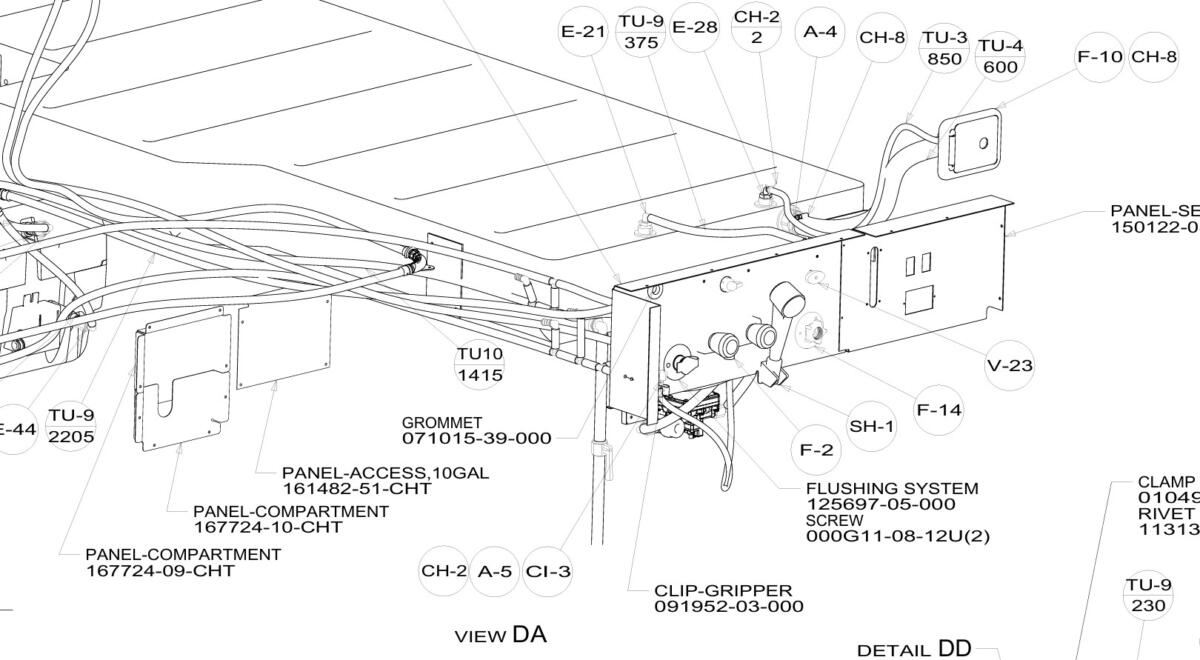
Here is the diagram of your holding tank and plumbing system:
Have I told you how much I love Winnebago questions?
Flushing system
The flushing system is part number 125697-05-000, which consists of the following parts:

The valve (A) is applied to the side of the tank using a spin weld method. Attached to that is the check valve (B), which is a one-way valve designed to not allow water to backflow from the inside of the tank. Then there is an inline vacuum breaker, and the inlet (D) is what you connect your hose to in the service compartment.
What you are experiencing as a backflow when flushing the tank is most likely clean water that is in the line between the check valve and the inlet, so it should be clean water.
This line is also one that most people forget to blow out when they winterize, so it has some water trapped and could freeze and break the line. Then they can’t figure out why there is water coming out of the bottom the next spring when they flush the tank. It is typically hidden in the basement or underbelly.
It may or may not be clean water
In theory, it should be clean water. However, I have learned to never say never or always when it comes to RV design and function. If the check valve was weak, it could allow some backflow. However, I doubt it as the pressure would be flowing into the tank and not back from the tank.
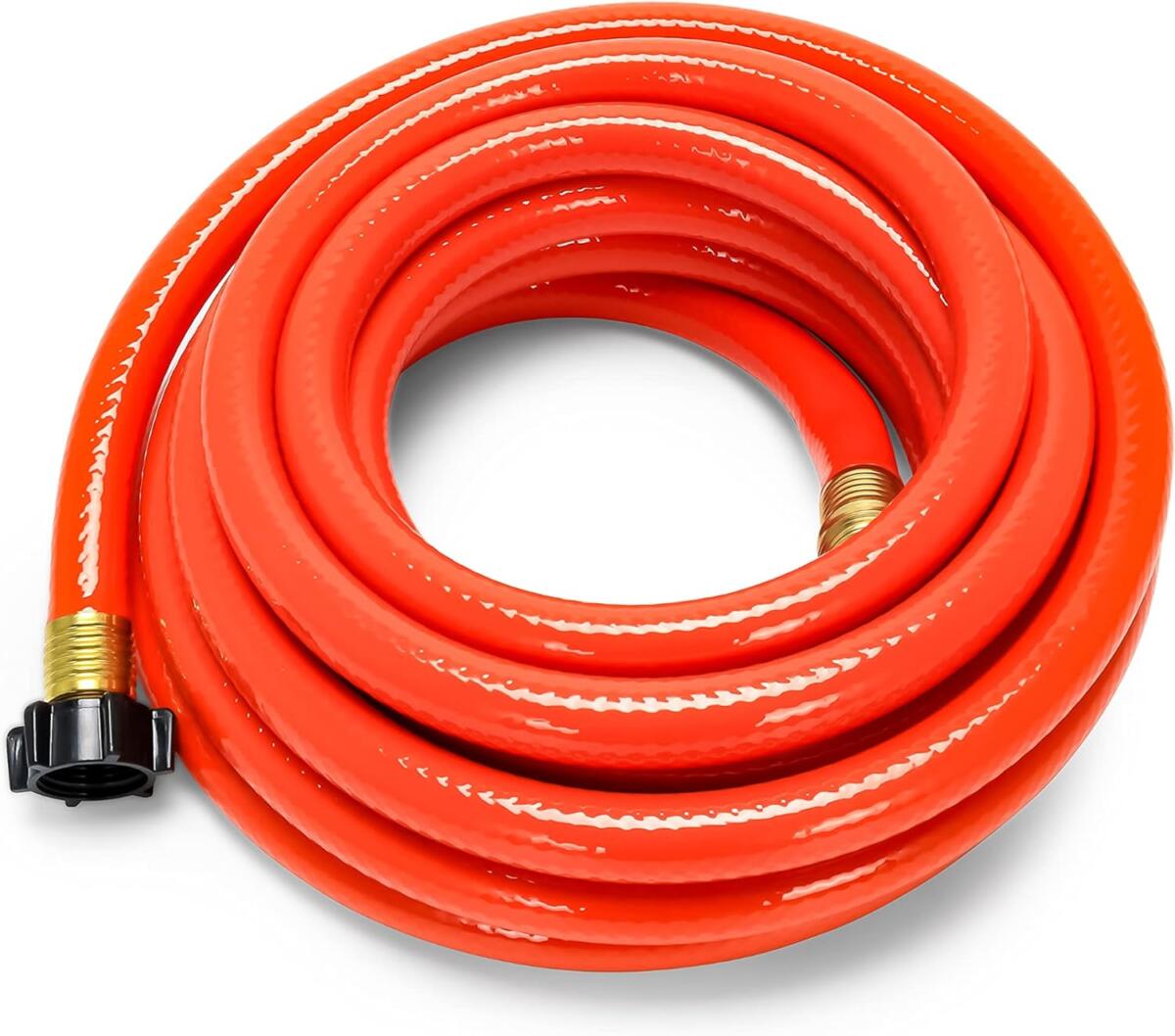
Maybe a new Camco “Rhino” flush hose for about $15 on Amazon would provide peace of mind. Plus the orange/red color would help identify the hoses.
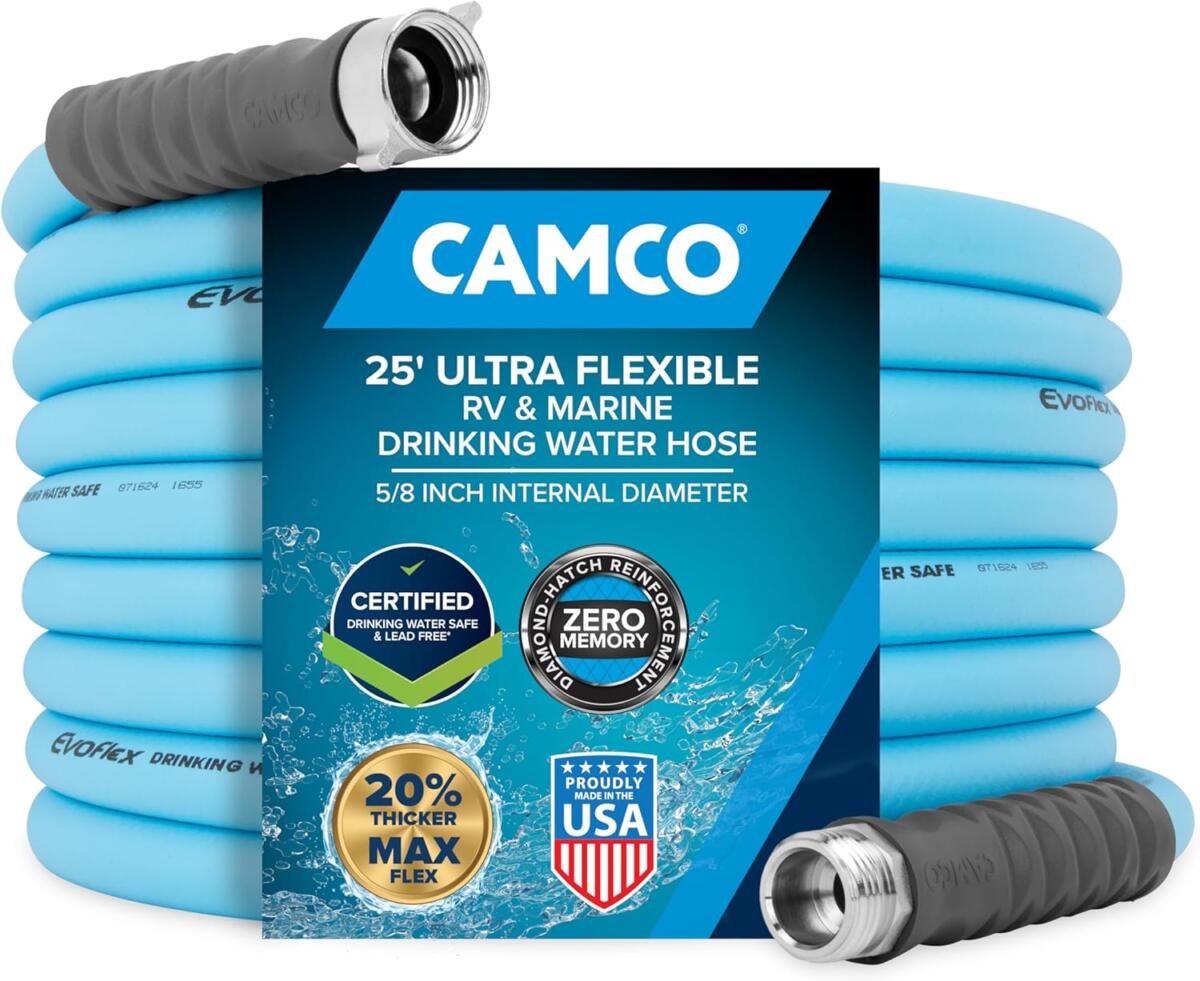
Or make the subject hose your new “flush” hose and get a new Camco EvoFlex hose here.
You might also enjoy these posts from Dave
- How to fix RV’s leaky black tank dump valve
- Where is RV fresh water tank’s low-point drain? I can’t find it
- Your RV’s fresh water system: What you should know
- How to get excessive mold out of RV’s freshwater tank
Dave Solberg is a leading expert in the RV industry and the author of the “RV Handbook.”
Read more from Dave here.
HAVE A QUESTION FOR DAVE?
Send your inquiries to him using the form below.
RVDT2654

EvoFlex hose is a winner! We have a 10 ft and 25 ft. Use what we need.
Same here. We bought one last year. Much more flexible and less affected by temperature than the old white one.
While likely the flush line had only potable water pass through, the owner could play it safe and sanitize that hose. Put some kind of flow restrictor at the end – like a spray nozzle. Put about a 1/4 cup of bleach into the input end of the hose and elevate the input slightly to force the bleach to run further into the hose. Now connect the hose to the potable water spigot and add water at a low volume. The flow restrictor is to cause the hose to completely fill and slowly discharge the bleached water. Make sure the hose output is placed where it won’t cause plant damage or affect dyed materials. Let the hose dribble for about 10 minutes, then remove the restrictor and flush at large volume
The disconnect backflow is probably from the water that is in the line from the connection up to the vacuum breaker which is mounted higher than the connection inlet so that it can function properly. That water should never be contaminated as the purpose of the vacuum breaker will stop any reverse flow from the black tank. It is usually located behind a removable panel that would be in a closet or cabinet and not easily seen. The panel that accesses the shower valve or under the bathroom sink are usual locations for the access panel. It would be relatively easy to access as it would need to be possibly need servicing or replacement
Get a new hose. Why take a chance? And they’re cheaper than a visit to the ER.
Thank you for the comments and discussion, Dave! I would throw the hose away, or use it to water plants, and buy the two hoses you suggested. Have a great day and safe travels!