

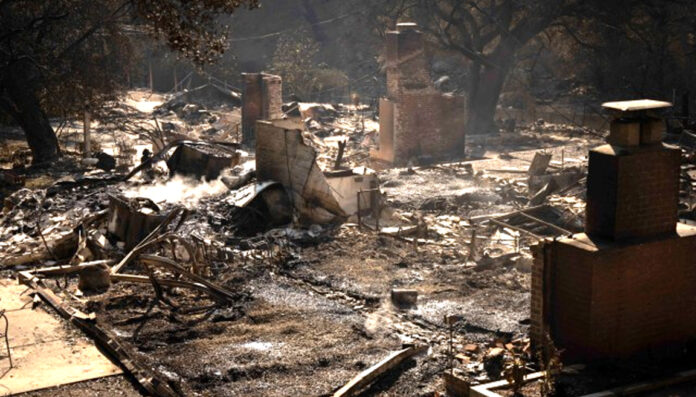
Los Angeles residents affected by the horrific wildfires haven’t caught too many breaks. But the city’s mayor, Karen Bass, has issued one that may help many with recovery efforts. Considered by some as a 180-turn in direction, call them LA fire RVs, the mayor says those whose homes have been wiped out by the fires will be able to live in RVs on their properties during the recovery process.
LA fire RVs: Move them in, instead of out
While LA has been prominent in its efforts at moving “homeless” folks out of RVs in recent months, those made homeless by the fires get a different touch. Mayor Bass fine-tuned an executive order of a local declaration of emergency to facilitate rebuilding in the fire zones when repopulation finally becomes possible.
Under a section of the declaration called “Temporary Housing Solutions,” the new directive says this: “Affected property owners can use recreational vehicles, tiny homes, modular structures, and mobile homes on their properties for up to three years or while an active building permit applies to said property, whichever is longer, during the rebuilding process.”
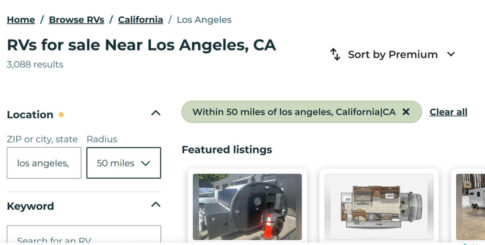
As of Wednesday afternoon, there were a few more than 3,000 RVs advertised for sale on rvtrader.com within 50 miles of Los Angeles. LA fire RVs? Looks like too few for the many.
More articles you might really like
• The 7 red flags of potential bad RV neighbors
• Campground worker explains the 10-year rule and why campgrounds enforce it
• RVers saying goodbye to RVing; ‘Who wants to spend $100 a night to stay at crowded park?’
• Reserved but empty campsites: The campground’s side of the story
• RVer says ‘the kind of folks camping has really gone downhill’
• Why I canceled my Thousand Trails membership after just using it once
RELATED: More posts on wildfires
##RVT1192b


This seems like very good news indeed. I would think that gives about 5 total years or so for modest homes to be rebuilt. 1 year to clean up, 2 years for design, contracting, sourcing and pulling permits and another 2+/- years for construction. A welcome piece of news in this catastrophe.
It will still be tough and especially so If you have a family. Bussing kids to far away schools? Shopping? Etc. But, at least they have some hope using this RV solution and HOPE combined with sweat and resilience can be a powerful thing.
It’ll probably take more than three years just to get the appropriate building permits, unless those in charge of LA loosen up. We’ll see. Looking at those burned home sites, it’ll take a lot of work just to get your RV onto your lot. Terrible situation.
Also, I’m certain, the State of California and local municipalities, will charge some sort of environmental offset tax/fee, etc for picking up and dumping the charred remains of people’s homes. Reactionary? Yes. Probable? Also, yes.
Finally, someone is making sense in dealing with the aftermath of a disaster.
Thank you, Russ and Tina! 🙂 Sounds good, but how soon can they have utilities connected? Until then, they have the benefit of being “home,” but a lot of work to try to live some approximation of whatever they consider “normal.” Water deliveries, fuel for the generator, and filling and emptying a honey wagon will become acquired skills. Still, with all the complications aside, this is a remarkably sensible course for politicians to endorse. Have a great day and safe travels!
Why anyone would need ‘permission’ to live in their RVs on their own property after a fire has destroyed their house….is, utterly, beyond comprehension? If you live in a community where you don’t feel you can do that unless ‘the authorities’ give you ‘permission’, you need to move.
My wife and I sold our home and moved a couple months before the Camp Fire in 2018 destroyed the town of Paradise and most of Magalia a couple years ago. We’ve kept in touch with many friends and former neighbors and those who have not relocated to another part of the country have been going through a multitude of issues with government regulations. For example, they’ve had to deal with removing and disposing of fire debris (homes, trees, burned out hulks of vehicles, etc.). They have had to remove and dispose of 3 feet of topsoil to remove the hazardous materials that leached into that soil. They’ve had to deal with obtaining building permits to get new homes designed up to today’s buil
Probably be easier to relocate after getting the money for the house instead of staying and going thru all that trouble.
“As of Wednesday afternoon, there were a few more than 3,000 RVs advertised for sale on rvtrader.com within 50 miles of Los Angeles. LA fire RVs? Looks like too few for the many.” Yes but RVs are mobile so one isn’t limited to 50 miles. I’m sure some of the aid agencies will distribute donated or low cost RVs. And to those who wonder about utilities, they aren’t that hard to hookup as that infrastructure is already at the property line. Finally, this is LA so adding solar to your RV is a good option either on the rooftop or a quick ground mounted system.
With all the burned up infrastructure (gas, water, sewer and electric lines) that will need to be replaced, wouldn’t occupancy impede mass cleanup?
Perhaps a better solution is construct temporary RV Parks that can provide power, water and sewer rather than encourage folks to live on a patch of scorched earth surrounded by immeasurable hazards.
As folks move out, maybe repurpose the temporary park for transitional shelter for the homeless who don’t want to be homeless.
Temporary RV parks where?
The city owns empty lots and acreage, construct a temporary RV park there perhaps. That’s got to be better than encouraging families who’ve lost everything to live amongst hazards.
L.A. can’t keep RVs off streets but is now concerned with RVs on private property?
Living in an area of toxins is not the answer! Seniors, children, pets can’t be exposed to the wind kicking up all the toxic ash. Sell land & leave the nightmare of YEARS of redtape, no insurance, etc!
I just could not imagine this type of a disaster. We have been through a tornado in north Texas with our business in 2000. We owned the building we were in, but under insured at the time because our business manager just kept renewing our insurance without looking at the details. After it was over we had to get a FEMA loan for 1.5 million to get us up and running again. It almost put us out of business. We survived and sold the property years ago for a great profit. But what a nightmare. Fire has to be the worst.. those poor animals.