

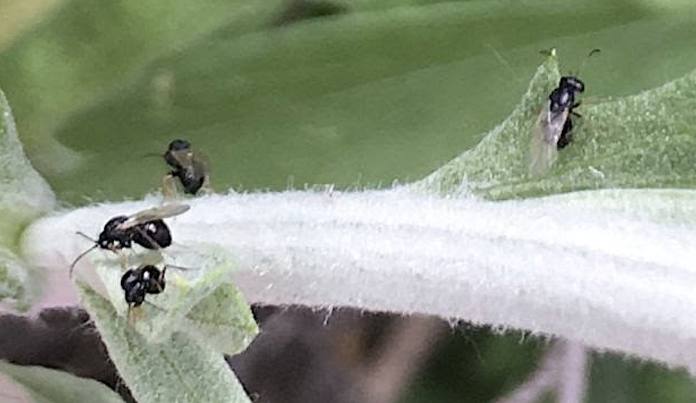
The tiny insects are combating the “Worst Weeds In the West.”
Most of us who spend time in the outdoors are annoyed on occasion by insects. Bees and wasps are at the top of the list of the most disliked and unwanted, especially when they bother us at the picnic table. But sometimes we just need to leave these creatures alone.
Navajo State Park in southwest Colorado is famous for great boating, fishing and camping; but soon it could be renowned for its wasps. Oh, they’re good wasps, about the size of sesame seeds, not the kind that pester us in the campground.
The gall wasps like to set up house inside the stems of the invasive Russian knapweed. Like many non-native plants, Russian knapweed crowds out native vegetation. It can quickly take over pastures and is poisonous to horses. “It’s one of the worst weeds in the West,” explained Sonya Daly of the Colorado Department of Agriculture’s Biological Pest Control Program.
On a small plot of land on the east side of the park, biocontrol specialists are developing a stem gall wasp nursery site. The insectary has been working on using stem gall wasps for natural weed control since 2013. They are very host-specific and will not attack Spotted or Diffuse Knapweed or agricultural crops.
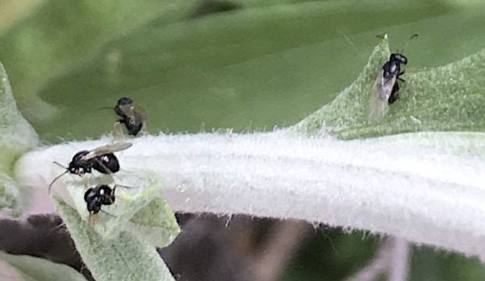 In the spring of 2019, Daly released 200 wasps at a plot on the east side of Navajo State Park which has Russian knapweed infestations. The insects feed within the stems of the plant and eventually impact plant health. “We’ll most likely never eradicate Russian knapweed with using this biocontrol agent; but we can impact the overall plants’ health to hopefully decrease its seedbank by using the wasps,” Daly said. “We want to establish nurseries in every county in the state.”
The Colorado Department of Agriculture currently collects, rears and releases about 20 different species of biological control agents for use against both weeds and insect pests. The “host specific” insects will not damage native vegetation or agricultural crops.

This is how it begins. We live in Florida and a lot of years back, “Love Bugs” were released here and they have been a semi-annual nuisance ever since. They will actually eat the paint off the front of your car if you do not wash them off after splattering them on you vehicle! No thanks! I don’t trust anything that is made in a Lab!
Isn’t this how the China Virus started, made in a lab? Reminds me of the old TV commercial “Don’t mess with Mother Nature”.
Yes it was. That is why it has been dubbed as the Wuhan Virus. You are also right…. Don’t mess with Mother Nature.
Hopefully Dept of Agriculture are correct and the wasp won’t find something else to go after. Reminds me of Gypsymoth in PA
So why do you have a commercial for pest control before AND after the article if the little wasps are to survive?
Google Ads just populate by the subject (or what it thinks it is) automatically. No human intervention.
Yeah, what WEB said. Google auto-inserts ads into articles based on key words in the article, or even maybe what you’ve looked up on the internet before. That’s one reason why, if we write an article about someone dying, I have to remember to turn off the auto-inserted ads for that post or Google will put in ads for caskets, or whatever. 😯 —Diane at RVtravel.com
This reminds me that sparrows were introduced to the US to eat an excess of caterpillars in the northeast that were eating the crops. The organization that brought them here didn’t bother to do their research, which would have shown that sparrows are herbivores. The sparrows proceeded to do more damage than the caterpillars.