

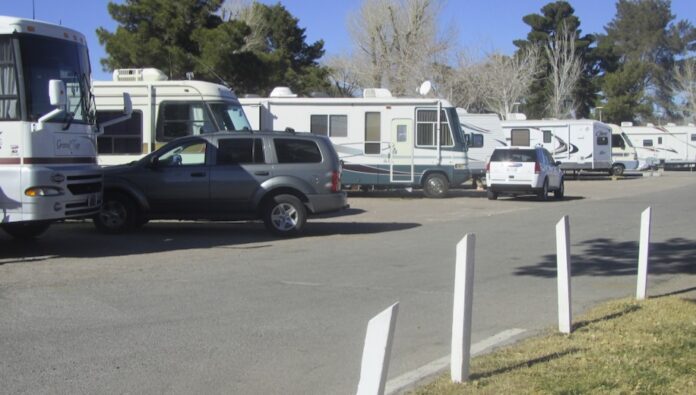
This short report from NBC News brings to light something that most of us who travel by RV already know: Many more people are living in RVs these days, not because they want to experience the great American road trip or spend some time with nature. No, they are living in RVs because it’s the only way they can afford to put a roof over their head.
As rents and home prices continue to climb, a growing number of Americans are turning to RVs as full-time homes. For many, it’s less about adventure and more about affordability.
Watch the short video at the bottom of this article, which sums up what is reported. Here are the highlights:
From mansion to mobile home
One former homeowner described going from an 1,800-square-foot property on four acres to a 22-foot travel trailer. The move, she said, wasn’t by choice but by necessity—parting with horses, furniture, and keepsakes to start over in a smaller space.
Why more are choosing RVs
Post-pandemic housing costs have forced families to look for cheaper alternatives. RV parks offer lower monthly payments and fewer financial surprises. A typical RV spot where this report was made, costs about $400 to $500 a month, compared with $1,200 to $1,500 for a one-bedroom apartment in the same area.
Shifting perceptions
Once viewed mainly as temporary or low-income housing, RV parks are increasingly home to working families, retirees, and those priced out of traditional rentals.
• Pros: lower costs, mobility, and a sense of community.
• Cons: limited space, weather risks, and ongoing maintenance.
Living with less
Full-time RV residents often say the experience reshapes their priorities. With limited storage and frequent repairs, the focus shifts to time, relationships, and flexibility. “I learned more in three months than in 11 years,” said one 11-year-old boy.
Hidden costs
While rent is cheaper, the savings can be offset by high-interest RV loans and frequent repair bills. Warranty work can take weeks or months—an inconvenience when the RV is the only home.
Weathering the risks
RVs offer little protection from hail, wind, and floods, leaving residents vulnerable during severe storms. Some say their faith helps them endure nights when the walls shake.
Redefining home
Despite challenges, many say RV life has brought clarity and calm. Fewer possessions and lower bills can mean more time for family—and less stress about the next rent increase.
For some Americans, the choice isn’t between a house and an RV—it’s between stability and uncertainty.
Watch the short video.
An artificial intelligence service was used to transcribe the audio in this video.
RELATED
- ‘I’m homeless, living in my RV because I can’t afford rent anywhere else’
- Boise, Idaho, pilot program allows city living in RVs
- Los Angeles parking lot brings relief for homeless RVers
- Los Angeles tries again to control RV street parking
- Homeless swarm RV manufacturer’s lot, move into RVs, destroy many
- Reader turned away from Walmarts across the country. ‘The homelessness is staggering’
- A haunting encounter and a personal journey to confronting homelessness
- Compassion or concern for the homeless in ‘our’ campground
- A City of Sedona plan for homeless parking has locals up in arms
RVT1230b

People have got to live somewhere, as dear ol Dad used to say. I’ve seen videos of Australian trailers coming thru 180 mph super typhoon winds, so with enough tie downs at a permanent site one should be safe.
It’s becoming more noticeable at RV parks. It’s not just young people but retirees too.
I live in the Phoenix area. We are in our 79’s 80’s and are unable to do house maintenance like we use to. Every year I’m paying someone to do things I use to do. We could sell our house and easily walk away with $200K and not have any bills. With the $200k we could pay cash for a couple Park Model homes or maybe even 2 single wide manufacture homes. The estimated monthly lot lease would equal what we were paying in a monthly mortgage. But as I said no bills other than small utilities. We both have social security so paying the monthly lease would not be hard. This may be our next step in life with all the cost of living still going up. We would have a winter and summer place to stay.
Again I don’t find this article having anything to do with RV Travel. Folks living in RVs of any nature, and for their own reasons are not campers or RV traveler’s. NBC news will try daily to fill people’s minds on just how tough it is out their in their battle to undermine the currant administration.
This topic DOES have a lot to do with RV travel, due to ripple effects. Since at least 2018, more and more people have been moving from apts/houses to RVs–either by choice (freedom, adventure) or by necessity. This creates congestion and contention for RVers’ resources–campgrounds and trailer parks being more full, public lands (boondocking!) being more congested, Walmart parking lots overrun etc. Also because of this additional traffic and more disadvantaged/uneducated people in the mix, we have more people breaking rules, trashing and dumping inappropriately, bringing crime and chaos into previously peaceful camping areas…
CONT’D…. This leads to a number of parking lots and camping areas being closed off to RVers of all types. And higher prices for the areas that remain open. All of this, in turn, increases the congestion and prices at the remaining open places. In short, the affordable housing crisis is absolutely affecting all aspects of RV’ing. This is regardless of political views or whose administration is in charge. In terms of politics, it’s not a left vs right problem–it’s a poor and working-class vs. the top 1% problem.