Here’s a question worthy of posting on an Internet RV forum: “How much propane will a 15,000 btu RV furnace use in a day?” The question got posted – and it was certainly legitimate enough, but not a soul offered to render an opinion. Perhaps the safest might be: “Too much!”
“How much money will you spend to heat an RV?” is a frequently heard question when the cold weather rolls around and people think about getting away from the house and back to the great outdoors. Sad to say, the question is on a par with, “How much wood could a woodchuck chuck?” There are so many variables: How big is the RV? How well insulated? How cold is it outside? How warm do you want to keep the inside? What size is the furnace — or are you even heating with a furnace?
Here’s a scenario: A couple in Quartzsite, Arizona, were bemoaning how cold a winter trip had been. They have a 40-foot trailer, and based on an eight-day propane consumption history, they came to a nasty conclusion: Using their trailer’s furnace, it would cost them nearly $170 a month to heat if things stayed the way they were over the “trial period.” Needless to say, adjustments had to be made.
How much propane can you use? For them, their furnace is rated at 40,000 btu input, and a 31,000 output. A little math and a little propane background will help. A gallon of propane will supply 91,500 btu. Run their furnace a little over two hours and 15 minutes, and a full gallon of LP is burnt. Put another way, at $2.32 a gallon, for every hour of operation, $1.02 is spent. To add to the insult, 23 cents of that $1.02 is simply “thrown out the window” due to heater inefficiency — if you lived in a perfect world. But by the time you account for heat loss from ducting the heat throughout the rig, the dollars thrown away in this system are almost too painful to contemplate.
The couple finally resorted to closing off the areas of the rig when not in use, keeping the thermostat set at a chilly 50 degrees at night, and running an electric space heater in the areas being used, keeping the fuel hog furnace for use in heating the place up in the morning.
It’s no wonder that many RVers have opted out of using their rig’s factory furnace. Often they use alternative propane heaters: Blue flame, catalytic, or “brick” heaters. Nearly all models of these units are “unvented” meaning they are not connected to the outside. Almost 100 percent of the energy they consume in the form of propane is turned into heat. Keep in mind, to be safe you’ll need to keep a window or vent cracked to bring in oxygen, which translates to a heat loss itself. However, the efficiencies are higher and the equivalent amount of LP used is much less than a built in furnace.
There are other considerations: Putting 100 percent of the heat into the RV also means 100 percent of any combustion byproducts. There’s a whole world of controversy among RVers about just how safe or unsafe unvented heaters are. To that end, if you decide to use an unvented heater, ALWAYS follow the manufacturer’s instructions to the letter. We shop for heaters with oxygen sensors — these will shut down the heater in the event the amount of oxygen in the RV gets so low as to present a health threat. We also insist on having a working, frequently tested, carbon monoxide alarm in the RV.
How much LP will you burn with an alternative heater? When it comes time to refill your LP cylinders, no doubt you’ll moan, “Too much!” but it’ll certainly be less than with your monster furnace.
By Bob Difley If you are planning to head to the deserts in the Southwest this winter for the first time, here are a few tips to help make your winter escape comfortable, safe and stress-free.
Add a few desert guidebooks to your library, such as “Southwest Camping Destinations” by Mike and Terri Church, an excellent guide to the RV resorts, campgrounds, and boondocking locations in the southwestern deserts, and includes places to to and things to see. Another is “Audubon’s Deserts,” a classic on desert geology, climate, wildlife, plants and trees, and wildflowers, with color plates to help identify them. And don’t forget (shameless plug) my “Snowbird Guide to Boondocking in the Southwestern Deserts.”
Be prepared for desert winds — dry but not necessarily hot in the winter. But they do blow sand and if you do not familiarize yourself with where the wind comes from in relationship to your campsite (close windows facing the wind), the weather report (which will predict wind direction and velocity), and what time of day the winds will come up, you could leave for just a short shopping or sightseeing trip and come back to find the windows you left open to provide ventilation have welcomed the dust and sand layer that now covers everything inside.
Arizona is the skin cancer capital. Apply sunblock to all exposed skin whenever you go out. It doesn’t have to be hot to have UV rays do their damage. Desert air is thin, humidity low, not much to filter out those rays. Also wear a broad-brimmed sun hat.
Drink plenty of water. Carry a water bottle with you. The dry air evaporates the moisture right out of you and you need to replace it continuously.
When hiking stay on trails as much as possible. There are all sorts of cacti out there just waiting to thrust their barbs into you if you brush by them too closely (no, “jumping chollas” do not jump on you — but their easily detachable segments will stick to your clothes or skin if brushed).
If you plan to spend some time in a fancy amenity-filled RV resort for at least some part of the winter, be sure to make reservations. Many of the more popular resorts are booked out for the entire winter.
Plan to arrive at state parks midweek when they are not as busy. Many have overflow lots where you can stay a night or two until a campsite opens up. So ask — even if signs or personnel say they are full.
And finally, make an effort to learn about the desert — when and where the spring wildflower bloom begin; the unique native birds and wildlife (you won’t see any snakes, desert tortoises or scorpions — they’re hibernating); the mining and ranching history and historic sites; the untamed, raucous Wild West towns that exploded into being when gold or silver was discovered, then as suddenly turned into ghost towns when the veins ran out; and all the other unique characteristics of this fascinating environment.
You can find Bob Difley’s RVing e-books on Amazon Kindle.
By Chris Dougherty Chris Dougherty is a certified RV technician. Here is a letter he received from a reader while he was serving as RVtravel.com’s technical editor.
Dear Chris,
We have a 2011 Pleasure Way with an Onan Generator (QR2800). It has been exercised regularly but never actually used for more than 30 minutes. Now that we actually need to use it we find that after 30 minutes of running smoothly it surges, sputters, then quits. We have tried fuel cleaner but still the same result. It only has 26 hours on it and received its required 20-hour maintenance, so we really do not want to replace it but we need a reliable generator now. Have we given it some sort of memory by only running it for 30 minutes and not for many hours? —Freda
Dear Freda,
First, I think you have a QG2800, which stands for Quiet Gas, spec HGJBB.
Second, you won’t have to replace it — hopefully, it just needs service. The best people to provide service on this unit are the Cummins Coach Care Centers or their certified dealers and technicians, but I might be able to help.
The generator switch on the generator itself has a small red light which flashes a code, and there should be a chart for the codes in your genset’s owner’s manual. This code will help determine the issue. According to my contact at Cummins Onan, your problem could be ignition coil related, an intake seal issue, or a sensor problem. A technician will be able to take care of that for you.
When we first bought our motorhome, we never figured we’d be out in freezing weather. Freezing means snow and ice and things that just aren’t fun to camp in (we thought). And when we weren’t using our RV (“Howie”), we parked him in our Mediterranean-climate driveway in central California. So we never gave much thought to frozen plumbing problems. We’ve never winterized the rig.
But even in our first year of ownership, we found that cold-weather travel was a secret delight. Beautiful scenery, no crowds, clear crisp frosty mornings. And temperatures near or below freezing. Uh-oh.
Add to that basic problem that we eschew RV parks and crowded campgrounds — our ideal camp is a boondock location with nobody else around, just us and the wide open spaces. Which means no power, no water, no sewer, and no fix-it folks to repair ice-cracked pipes. If we wanted to have the experience, we needed to be able to deal with nighttime temperatures in the 20s or even teens.
Fortunately, our Winnebago/Itasca was designed with enclosed plumbing — there are no pipes or drains exposed to outside air. In addition, the design has a small air bleed from the forced-air heater duct into the holding tanks area. However, this built-in “warmer” had a major drawback — it only worked when the forced-air heater was operating. You know, that noisy, propane-sucking, battery-draining forced-air heater.
With deep concerns about saving our plumbing from solidifying, the first thing I did was install a remote-sensor temperature thermometer in the outside water bay (I used this one, but there are hundreds available). With the display mounted in our bedroom, I could thus check throughout the night on the downward progress of the coldest spot that our pipes were exposed to. When it started to read in the mid-30s, I’d start up the cabin heater and we’d have to live with the noise and propane consumption.
On a few chilly occasions (14 F one night), we gave in and retreated to an RV park, where we could plug in a small electric heater and keep it on “low” inside the water bay. But that was just a workaround. We really wanted to be able to deal with the problem while boondocking, and that much heat would drain our batteries too quickly.
Around that same time, we learned the wisdom of using a radiant heater instead of the built-in forced-air unit, and it worked fine for keeping us warm, at 1/4 of the propane consumption and no battery drain or noise. But too bad, it did nothing to warm the water bay because the air was not being circulated. I knew that I needed to get some heat into that water bay, somehow.
FINALLY, I DID SOME RESEARCH on where all the Itasca water pipes were routed. (This was really easy with the outstanding documentations supplied on-line by Winnebago.) Based on this new knowledge, I identified a spot in my bathroom inside wall where I could mount a small fan. The fan would blow warm cabin air down inside the wall cavity, and out into all the areas where piping runs. I made sure that there were places at the far ends of the cavities, where the air could flow back into the inside of the cabin, so it’s a true recirculation design. (One return spot is under the kitchen sink, one under the bath sink, and one under the bed.)
I tested the airflow using a special meter, but it could be done with a candle flame or small bit of smoke-generating tinder. All that’s necessary is a very modest flow to keep the air moving even a little bit.
Now we use the efficient, quiet catalytic heater to keep the cabin in the 45-55 range (we like to sleep cool). The recirculation fan distributes the air through the hidden spaces, and my remote thermometer assures me that the coldest spot never drops below 35-40 F. The real beauty of this solution is that it consumes so few resources. The fan draws only 0.16A, for virtually invisible battery consumption. And we only have to turn on the radiant heater, and only when the cabin drops to 50 F or less.
HOW TO DO IT If you want to tackle this, you’ll need to be the kind of person they call “handy.” You will need to understand the physical routing of all your plumbing, either from documentation or by inspection. You’ll also need to be comfortable tapping into your vehicle’s 12V wiring.
If you have exposed pipes, the situation is not hopeless. But you will have to shroud them, box them, and/or otherwise insulate them from outside air exposure. Note that most of the common solutions to this issue involve heated pipe wraps or sheets (well beyond the capability of battery support); if you are okay with being tied to power hook-ups, that’s fine. We weren’t, and we opted for a super-low-power solution.
Here are the design issues I considered. You may have others as well: • Recirculation — the design must flow cabin air across all at-risk piping, and back into the cabin. Without this path, the air won’t flow. If the exit is to the outside, you’ll be cooling your cabin down when you least want it.
• Low noise — Depending on where it’s mounted, the fan has to be quiet. Even the low-noise ones sound about like a desktop computer. Aim for a spec of 25db or less.
• RPM — Slower fans are quieter but produce less air. This requires a careful trade-off.
• Bearings — NEVER buy a sleeve-bearing fan; they just don’t last. Get ball-bearing or hydraulic.
• Low power draw — The fan should run off 12V and draw very little from your batteries. Anything below 0.25A should be fine.
• Adequate air — The fan needs to push enough air around to keep the serviced areas above 35 F. The really wimpy fans won’t cut it — look for 40CFM or more.
• Diameter — small fans are noisier and have less airflow than larger fans. Try to stick with 5-inch or larger.
• Color — My mounting location was in the middle of a pale-white wall, and a big black electronics fan (the usually available configuration) would have been pretty ugly.
• Screens — I didn’t want to use a close-weave screen, even though it’s better looking. They reduce airflow too much, so I used a metal grill type.
• Mounting clearance — Fans need about 1/2 their diameter in clearance to achieve their target airflow. You can’t mount one an inch away from a flat surface, because the blades will stall and not produce any flow.
• Control — I used a simple panel toggle switch to turn the fan on and off. I thought about a timer switch, but I’m up several times a night anyway (aging prostate), so it’s no big deal to manage the fan. It’s right above the toilet anyway.
The fan I used was a thin white unit I got off of Amazon, but it’s apparently no longer available. Here’s a link to a similar fan. With a low power draw, I simply found the nearest 12V circuit and tapped into it.
Our nights are quiet again, and the peace of mind helps with my “inner silence” as well. Total cost was about $20 and several hours of figuring and fiddling.
Greg Illes is a retired systems engineer who loves thinking up RV upgrades and modifications. When he’s not working on his motorhome, he’s traveling in it. You can follow his blog at www.divver-city.com/blog
Learn about RV camping, RV travel, RV news and much more. This newsletter, now in its 16th year of continuous publication, is funded primarily through advertising and voluntary subscription contributions from our readers. Thank you!
Issue 773 • Week of Dec. 17–23, 2016
Editor’s corner With Chuck Woodbury Chuck (at) RVtravel.com
I just dumped my motorhome’s holding tanks and I didn’t even go outside to do it. I simply pushed two buttons inside my coach — black tank first, gray tank next — no need to go outside, put on gloves or pull handles. I simply pushed a couple of buttons. Presto! Waste gone!
I’m only one of few RVers around the country with this new automated “Ultimate” waste management system from Drain Master of Hollister, Calif., a few miles from my RV park. For a guy like me, who has dumped his holding tanks a couple thousand times in his lifetime, my new automated system is like a dream come true.
Push these two buttons and your tanks are emptied
The system includes a permanently attached Waste Master sewer hose (far superior, hands down, to anything else on the market), a cam loc adapter to replace the standard (inferior) bayonet hose fitting, a 12-volt electronic dump valve, and a 3×4 inch wall panel with two buttons to push to dump your tanks. The panel can be installed in an outdoor wet bay and/or anywhere inside the coach (mine is in the bathroom beneath the medicine cabinet).
WITH THIS SYSTEM, Drain Master owner and Waste Master inventor Doug Swarts has come up with one of the most innovative, helpful RV products in recent times. It seems to me that many RVers will want this setup. It’s so handy!
I’m working on a video about this and will show it to you next week. Hanging out with Doug has been like going back to school, I’ve learned so much. Some of his stories about RV waste dumping are hilarious, even creepy. I love the one about the woman who left her gray water tank open and then one day starting hearing occasional banging beneath her RV. After a lot of head scratching and consulting with other RVers, she discovered to her horror that a rat had climbed up inside her sewer hose into her gray water tank and got trapped. This is absolutely true! I’ll tell you more later.
If you’re tired of the hassle of dumping your holding tanks and are interested in an automated system like mine, I suggest you email Doug at doug@drainmaster.com or call him at 877-787-8833. He’s a truly nice guy, passionate about his products and inventions, and eager to answer your questions. Learn more, too, at the Drain Master website.
I can’t quote a price because it varies depending upon the coach and other factors. But the Waste Master hose and cam loc adapter is around $150, and worth every penny. Installation of the fully automated system like mine is considerably more, but you’d need to ask Doug for a quote for your particular RV.
For handy RVers, the installation of the “Ultimate” system can be a DIY project. Others can either take their RV to Doug’s shop in Hollister to have it installed or hire an RV technician in their area.
The Waste Master hose and cam loc is available at Drain Masterand Amazon.Camping World has it online and in its stores, but was more expensive when I looked.
I could keep blabbing on and on here about what I have learned in the last few days about waste management and my new system but, alas, I’ve said enough for now. So I’d better get moving. Please stay tuned.
By the way, my friend David Bott just installed the same system as mine. He blogged about it, going into more detail that I have here, and recorded a five minute video displaying the new setup.
P.S. If you’d like to hear what the president of the Recreation Vehicle Industry Association (RVIA) thinks about the state of the RV industry (all is great!) watch this video of his speech at the recent National RV Trade Show.
Is reading this newsletter worth 10 cents to you? Our staff works hard to bring you a valuable newsletter every Saturday. Readers help make it possible with their voluntary subscriptions. Even a pledge of $5 a year is appreciated — that’s less than 10 cents an issue! Many readers pledge more — $10 a year is less than 20 cents an issue! Your contributions make it possible for us to write about important matters, not just fluff to make advertisers and RV industry big shots happy. Enter a voluntary subscription.Use a credit card, PayPal or mail a check.
Reader RVs
What RV do you drive or tow? Send us a photo of your RV (and tow vehicle) with a 150-200 word description of where and how often you travel with it, and what you like or don’t like about it. Include your name(s) and hometown. We’ll post them to RVtravel.com. Send to assistant editor Diane McGovern at Diane(at)RVtravel.com .
CLICK HERE to see this week’s RV Travel Reader RVs.
Reduce air drag and boost fuel efficiency — Airtab® your RV! Just peel and stick Airtabs™ to the rear sides and the rear roof of your RV coach or trailer to create swirls of air that reduce aerodynamic drag, save fuel and improve stability. Airtabs™ dramatically reduce trailer ‘fish tailing’ and crosswinds pressure to RVs from passing trucks, while improving fuel efficiency 2% – 5%! Click on the video.
RV manufacturer Forest River, Inc. has taken umbrage with statements published in RV Daily Report regarding recalls of its products. Early this week an attorney representing the giant RV manufacturer sent editor Greg Gerber a terse e-mail regarding what the company calls “misleading and defamatory” statements. Forest River calls on Gerber to “immediately correct the many misstatements … otherwise Forest River will look at all of its available options, including legal action, to protect its business reputation.” Click here for the full statement.
Sales of new motorhomes in October were a manufacturer’s disappointment, barely staying in the plus column, up only 0.3 percent compared to October 2015. Dragging the figures down, Class A sales crashed 12 percent, while the only light in the report was provided by Class C rigs, showing a 16 percent gain. Not included in the overall figure, sales of new Class B “van conversion” units bombed out, losing 16 percent. Source: Statistical Surveys Inc.
Travel trailer sales kept the overall new towable market afloat in October, says Statistical Surveys Inc. Travel trailers moved out better than 7 percent in comparison to October 2015. Park model sales also shot up 12 percent. On the other hand, pop-up sales deflated 3 percent, racing toward the bottom with fifth wheels, which lost 5 percent. Overall, towable sales managed a 4 percent increase in sales during the month, largely based on the volume of travel trailer sales.
Michigan needs campground hosts for 2017. A stint of 30 hours per week helping folks find sites, answering questions, and doing a bit of light maintenance gets you a spot to park your rig in a state park, recreation area or “rustic forest campground.” You’ll need to show up for two days of training within the first two years of acceptance as a host. More info here, or contact Miguel Rodriguez at 517 284-6127.
Ford’s new 2017 model year F-150 and Raptor pickups that sport a 10-speed transmission have hit a bit of a snag on the way to dealer lots. While the company has rolled 7,500 of the new trucks to dealers, twice as many have been held back to “ensure quality.” It was reported that shipments had been slowed out of concern of some issue with the transmission. The company evidently hasn’t said what the issue is but assures that the bug – or whatever it was – has now been fixed.
How do you operate state parks without state funding? That’s the question Wisconsinstate park managers will have to figure out, as state officials have now removed all state support, and jacked up admission fees to boot. If number crunchers are correct, a deficit of $1.4 million lies ahead. To fund parks, managers are thinking more fee jack-ups, adding more utility hookups to attract additional RVers, even soliciting corporate sponsorships.
Photo: Florida Highway Patrol
If you’re a motorhomer who recently lost an oar on Florida’s Interstate 75, Broward County law enforcement officials say they may have found it – stuck in a car windshield. Christina Theisen, 33, was passing a slow-moving RV towing a boat when an oar on the boat apparently got loose and blasted through her windshield. Her quick instinct to duck possibly saved her life, and she avoided serious injury. The motorhome kept going, but the Florida Highway Patrol says the case is closed unless more information becomes available.
As winter closes in, so go camping opportunities in Illinois. At the state’s southern end, the Shawnee National Forest reported closures of its campgrounds on December 15. Expect reopenings for most of these on March 15.
Wade Maid Holiday Sale! Use coupon code: HolidayRV Save 5% on Beast Wash and all other products. Your RV’s large surface area makes it a beast that collects more bugs, grit, grime, soot and industrial pollution than your car does. And it may have different surfaces of paint, fiberglass, vinyl and aluminum. Click on the video to see Wade clean, shine and protect EVERYTHING with Beast Wash. Click here to buy. Offer expires 1/31/17.Cannot combine with other offers.
More News
Photo: Hopland Fire Department
Hopland, Calif., firefighters were called out for an unusual rescue last weekend. Callers indicated a motorhome stuck in the middle of the Russian River between Ukiah and Hopland. Hitched up to a safety rope, three firemen got to the locked rig to find two dogs on the dashboard, barking – presumably for help. After forcing their way into the rig and providing the victims with leashes, all five then swam back to shore. The rig’s owners later turned up. They said unusual floodwaters had dislodged their coach from a nearby shore.
Don’t look now, but Walbridge, Ohio, RVers may actually get a break from the local council. If it passes, a new ordinance will allow property owners to park RVs in their yards, even in driveways and on corner lots. The rigs can be hooked up to utilities – but no, you won’t be able to live in them. Additionally, the rigs must be licensed and operable, and none may be parked on a street or in an alley.
Management at La Mesa RV, with dealerships in four states, quickly took down some of its Facebook posts that apparently went online without a lot of thinking. The posts were advertisements inviting customers with the hashtag #HappyPearlHarborDay. The opening line of the post read, “Tis the season to visit the Best RVShows across the US if you’re looking for a variety from Motorhomes to Toy Haulers & Travel Trailers.” An official with the company said the posts were made without management review. As to the origin of the hashtag, “We are in the business of selling recreational vehicles, not researching hashtag origins,” said Timothy O’Connor, the company’s chief financial officer. Source: timesofsandiego.com.
Photo: Weston back country on instagram
Cross a Sno-Cat and an Airstream trailer with snowboards, and what do you get? An adventuremobile that will carry you into Colorado’s backcountry in comfort. Experimenters at Airstream took a new Basecamp model travel trailer, stuck it on a pair of snowboards, then hitched it up to a Tucker Sno-Cat and sent a team of adventurers off to test it out. Don’t try this at home!
An intrastellar decision by the Vulcans has determined it is more logical to cease operations of their Twin Valley Campground than to continue. Describing the campground as a “perpetual money-losing machine,” members of the Vulcan County, Alberta, council voted to terminate their agreement to lease the campground, following a one solar-year notification. If any travelers cling onto the idea of visiting there in 2018, they’ll need to communicate with the owners – Alberta, Canada – since Vulcan County bids the campground to “Live long, and prosper – without us.”
A Colorado RV sales manager, Jeffrey T. Mullins, could be facing a long time without RVing. Mullins could be indicted on charges he stole almost $900,000 through his employment with Transwest in Frederick, Colo. The charges allege he took kickbacks from both RV dealers and individuals, and filed false tax forms to evade tax payments. Transwest is the same dealership from which three RVs worth almost $2 million were stolen in October. Mullins is not thought to be connected with that theft, according to the local district attorney’s office.
Fees at Devils Tower National Monument (Wyoming) (a popular landmark for UFO sightings) are heading up come January 1. Campsite fees will rise to $20 for a single site, while group site fees will hit $30. Entrance fees will be $15 per vehicle. No word on entrance charges for UFOs.
An RV industry slogan says, “Life’s an adventure – go RVing!” We add, “Only, use your own RV.” Royal Canadian Mounties got a report a few weeks back of an RV stolen in Alberta – and, as is their habit, they started checking out camping venues. Sure enough, the rig turned up at a Revelstoke, British Columbia, campground. Living behind bars could be the next adventure for two men found in the rig, now arrested for theft.
Keep up with RV Industry news throughout the week at RVbusiness.com.
RV driving on snow or ice
Winter is decidedly upon us. What would you do if you’re driving your rig when suddenly some “not too bad” weather turns cold and the white stuff begins to fall? Can you drive your RV in snow or ice? Should you? We’ve gathered several winter driving suggestions for RVers – and many of these come from the trucking industry, where nasty weather and big rigs often have to mix. Learn more.
More than free camping from BLM — if you hurry!
The Bureau of Land Management provides plenty of free boondocking opportunities on public land throughout the West. But did you know there’s another freebie that the BLM’s California office provides? It’s a huge, colorful, 12-month “planner.” But supplies are limited, so act now.
“Norse god” shows off many defects in new RV In this short video, the owner of a 2015 Thor A.C.E. motorhome transforms himself into the Norse god Thor to show the many defects that came with his new motorhome and the difficulties of getting them fixed. The RV spent 5 of its first 18 months in the shop. Watch as “Thor” describes the frustrations he had dealing with Thor and the Camping World where he purchased the vehicle.
RV too long for that site? Maybe not
When a national park’s or forest’s campground designates a maximum length limitation, what does that mean? You’ve seen it in campground guides and on entry kiosks: “Maximum size 27 feet,” for instance. So, driving a 28-foot Class C, or towing a 28-foot fiver, you crossed it off as a potential camping location Unfortunately, that would likely be making a mistake. Find out why.
The readers write — plenty of strong views
If you’ve been a bit chilled by the weather, you’ve come to the right place. Maybe it’s the cold weather that warms up the opinions. Comments from our readers over the last couple of weeks show there’s no question about where folks stand on some RV topics, including: Vanishing RV fun, RV quality becomes a bone of contention, “gas hog” RVs, and Ban diesels from big cities? Read more.
Last Chance to Save on RV Warranty Coverage
Summer doesn’t last forever, and neither will our best RV protection rates! RV Warranty prices will increase on January 1st, 2017, and some vehicles will become ineligible for any type of coverage. Get your free quote from BBB A+ rated Wholesale Warranties before it’s too late, and roll into 2017 with peace of mind.
Even the simple things — easily clean stainless steel sink
Since it’s cold outside and his RV isn’t going anywhere soon, Rich “The Wanderman” decided to do some additional pre-season cleaning — in this case, the stainless steel lavatory sink. But what to use that’s strong enough to do the job but won’t harm the pipes and tanks? And what’s his secret for an extra special gleam? Find out here.
Full-time RVing: Insurance to meet your needs
One of the big questions of folks making the jump from “sticks and bricks” to a “life on the road” is a good, solid, important one: What about insurance on the RV? Not just “any” insurance company will be able to handle your new circumstances on the road. It’s best to talk to companies that are completely literate and often specialize i
Starting battery croaks in campground
Chris Dougherty, certified RV technician, received a letter from a reader while he was serving as RVtravel.com’s technical editor. It contained several questions including why the under-the-hood engine battery kept going dead when the RV was hooked up to an electric post at campgrounds, and what the metal bar on the battery is for. Read Chris’ response.
Forest River recalls some motorhomes, toy haulers
Forest River is recalling more than 2,800 model year 2015-2017 FR3 motorhomes manufactured September 24, 2014 to May 12, 2016; 2015-2017 Prime Time Spartan toyhaulers manufactured June 10, 2014 to May 31, 2016; 2013-2016 Palomino Columbus toyhaulers manufactured October 4, 2012 to December 4, 2015; and 2015-2016 XLR Thunderbolt and Nitro toyhaulers manufactured May 23, 2014 to November 23, 2016. The vehicles were equipped with certain black, aluminum ladders manufactured by Christianson Industries. The affected ladders have retractable hinges, each with a welded ‘top hat’ that can separate from the hinge. If the hinges separate from the ladder while in use, the ladder may fall from the vehicle, increasing the risk of injury. Learn more.
Grand Design recalls some toy haulers, trailers
Grand Design RV is recalling nearly 2,000 model year 2015-2016 Momentum toy haulers and Solitude travel trailers manufactured July 8, 2014, to August 31, 2015, equipped with certain aluminum black ladders manufactured by Christianson Industries. These ladders have retractable hinges, each with a welded “top hat” that can separate from the hinge. If the hinges separate from the ladder while in use, the ladder may fall from the vehicle, increasing the risk of injury. Learn more.
This week in history Week of Dec. 17–23 Compiled by Dell Bert
1843 — “A Christmas Carol” is published.
1865 — Slavery is abolished in America.
1903 — First airplane flies — 12 seconds, 120 feet (Orville and Wilbur Wright).
1917 — National Hockey League (NHL) opens its first season.
1961 — The Tokens earn a #1 hit with “The Lion Sleeps Tonight.”
1963 — Berlin Wall is opened for first time.
1967 — “The Graduate” opens in New York.
1997 — “Titanic” sails into theaters.
Light up your RV with Boogey Lights! RV accent lighting is all the rage! Just look around the RV park! Enter Boogey Lights®! These robust, super-bright, state-of-the-art LED lights with hi-tech controller technology represent the next generation in LED lighting for RVs. The AWNING & UNDER-GLOW LIGHT KITS are specifically designed to withstand harsh operating environments. Don’t waste your money on junk! Get Boogey Lights! You can even control them with your Smart Phone! Learn more or click the video for a demonstration.
RV Club of the Week Here is an RV club we like. We hope you do, too!
WIT Club
For anyone who owns a Winnebago Industries RV. More than 14,000 members. WIT Club members receive special benefits, gather with other people with similar interests, and travel on a variety of special events called caravans and rallies.
The New TireTraker™ TT-500 with a Lifetime Warranty The new TireTraker™ TT-500 is the most innovative & user friendly TPMS on the market with an unprecedented “Lifetime Warranty”, the only TPMS company in the industry to do so. The TT-500 features a larger, easier to read display, continuous pressure & temperature monitoring, automatic update, & monitoring up to 22 tires on your motorhome, trailer & tow vehicle from 0-232 psi ! Seven day per week sales & technical support, & over 12 years of experience. List price (4 tires) $389. Our price only $289. SAVE $100! (Additional Sensors $35 each). Learn more or order. Read testimonials.
Bumper sticker of the week
The closer you get, the slower I’ll drive.
Funny/clever business slogan
“We don’t want an arm and a leg … we just want your tows!” Seen on tow trucks in different states several years ago.
Have you seen a funny bumper sticker or business slogan? Send it to Diane(at)RVtravel.com
Unique RV overnight stops at wineries and farms With membership in Harvest Hosts® you can stay overnight at 500 wineries, farms and attractions across North America. Harvest Hosts offers an exciting alternative to traditional overnight stops where you can meet interesting people and learn about their lifestyle. Learn more at the Harvest Hosts website, or watch an interview with the founders by RVtravel.com editor Chuck Woodbury.
Upcoming RV Shows See the list of upcoming RV shows for 2017.
Walmart Locator:
Find stores for shopping and overnight stays
This is an invaluable aid for RVers who occasionally spend a night in a Walmart parking lot. State maps identify where the stores are located in the USA. Detailed information includes city or town where each store is located, type of store (Walmart or Supercenter), availability of gas and diesel fuel, distance from Interstate if within 10 miles, and more. Published 2016. Learn more or order.
Photo: Hidden Splendor, Utah, by La Donna & Travis Ward. From Waste & Water Logistics, LLC, Utah, web address: www.igotpoop.com.
Websites of the Week Here are three we like:
German-style Christmas markets in the U.S.
“Ringing in the holiday season, cities across the U.S. are celebrating with their own versions of the traditional German Christmas market. Not unlike the Christmas markets in Germany, each of its American cousins has a flair that is unique to the city or region where it takes place.” There are 30 markets across the U.S. listed here, with foods, crafts, entertainment, and so much more. From Germany.info.
The West’s best quirky attractions
Here are nine strange and fascinating roadside attractions in the West — some are nature-made, some are man-made, but none are necessarily “normal.” From Sunset.com and msn.com.
The funniest slang term from every state
As you’re RVing around the country and hear a term you don’t understand, check it out on this list. How many of these have you heard (or used) before? From thedailymeal.com and msn.com
Here is our “master list” of more than 700 websites we like, which we have compiled over the years.
Good reading from RV123.com
• Watch this video to learn some useful camping hacks!
• This quesadilla recipe is simple but so delicious!
• Take a look at this very unique custom motorhome
Essential for big RVs! 2017 Rand McNally Motor Carriers’ Road Atlas If you drive a big RV — extra long or extra tall — then this truck driver’s road atlas will be a huge help in knowing where you can drive without encountering a low bridge or getting stuck hanging over a cliff. This is an essential aid even if you have a GPS! Coverage: United States, Canada, and Mexico. Learn more or order.
Ask the RV Shrink
Bad location for television in RV
Dear RV Shrink:
We bought a used motorhome recently. We love the layout better than any new models we’ve looked at. The only problem is the location of the TV. I think the engineers put it in the only place they had left. I am surprised they didn’t stick it in the freezer. It is driving my husband nuts. He isn’t an engineer, but he thinks he could play one on TV. Now he wants to play engineer with our TV. He has so many ideas where to put it, I can’t even keep track anymore. Should I just give up and let him do his thing? I’m afraid he will put it somewhere that is worse than where it is now. —Misplaced in Middlebury
Good Sam Campground Guide NOW AVAILABLE. Be the first to get this guide by ordering through Amazon.com. With more than 12,500 locations listed across the USA and Canada, the Good Sam RV Travel & Savings Guide is the only print directory of RV parks and campgrounds. The 2017 edition features an expert rating system with all evaluations completed on site in the past 12 months. Park listings include amenities, services, restrictions, rates, contact info, Good Sam discount locations, hundreds of dollars’ worth of Camping World savings and pages of helpful information. Learn more or order.
RV Tech Tips from Mark Polk
Stopping distances when towing a dinghy
Tests performed on a flat, dry, paved surface using a 34-foot Class A motorhome show that traveling at 50 mph required 132 feet of braking distance to come to a complete stop. Under the same speed and surface conditions but with a car in tow that weighed 4,110 pounds and no braking system, the stopping distance of the motorhome expands to 209 feet. If you are towing a car behind your motorhome, talk to your dealer about a supplemental braking system. You may be breaking the law in some states for the amount of weight you can tow without a supplemental braking system.
Mark Polk is the owner of RV Education 101, the premiere source of educational DVDs about buying, maintaining and using an RV. Learn more.
Two hilarious RV movies!
You can’t go wrong giving either of these DVDs for a holiday gift. “Lost in America” is about a middle-aged couple who sell everything and hit the road in a motorhome. What happens next is hilarious. “RV,” with Robin Williams and Jeff Daniels, is equally funny — an RV movie classic! Order, rent or watch the trailer of “RV.” •Order, rent or watch the trailer of “Lost in America.“
Latest fuel prices Here are the latest U.S. average prices per gallon of gasoline and diesel fuel: Regular unleaded gasoline: $2.24 (on Dec. 12). Change from week before: Up 3 cents; Change from year before: Up 20 cents. Diesel: $2.49 (on Dec. 12). Change from week before: Up 1 cent; Change from year before: Up 16 cents.
Dump your holding tanks without moving your RV
Sometimes it’s a hassle or impossible to dump your RV’s holding tanks without driving your RV to a dump station. That’s where a portable waste tank tote comes in handy. Just empty your RV’s tank/tanks into the tote and take it to the dump station — by foot or behind a tow car, ATV or other vehicle. The tanks come all sizes. Learn more or order.
RV Travel Reader Pets
Do you travel with a pet? We’d love to introduce your pet(s) to fellow readers. Send a photo or two of Fido or Boots and a 150-200 word description of your furry friend(s), along with your name(s) and hometown to Diane(at)RVtravel.com .
Click here to see the last issue of RV Travel Reader Pets.
‘Best club for motorhome owners!’ The Family Motor Coach Association (FMCA) is THE “best club, hands down, for motorhome owners.” That’s the word from RVtravel.com editor Chuck Woodbury, who has been a member for 25 years! The group has many local and special interest clubs, national rallies, valuable member-only web content, and a wonderful monthly magazine. RV Travel readers who click this link to join save $10 off a new membership.
The RV Kitchen with Janet Groene
Catfish Stew Fishing for compliments.
Take a cue from New Englanders, who know that tiny bits of crispy salt pork are the key to a great chowder. It takes a few minutes to cut the salt pork into small dice, but these little nuggets are bursts of flavor that make this more than just another fish soup. Get the recipe.
Bring on the flies! With an Electronic Bug Zapper the insect is doomed Fly swatting is fun with this, not a chore! A single swing of this electronic fly swatter with a powerful 2,000-volt grid eliminates flies, mosquitoes and other flying insects. Toss your old fly swatter and take the modern approach! Plug into any USB device to charge this fly swatter quickly and efficiently. Learn more.
RV Fire Safety Tip
Check your brakes for drag and tires for “softness”
A dragging brake can create enough friction to ignite a tire or brake fluid. Some of the worst fires are those caused when one tire of a dual or tandem pair goes flat, scuffs, and ignites long before the driver feels any change in handling. At each stop, give tires at least an eyeball check. When tires are cool, tap your duals with a club and listen for a difference in sound from one tire to the next. You can often tell if one is going soft. Courtesy:MacTheFireGuy.com
Editor’s note: Choose from a wide selection of fire extinguishers at Amazon.
Endorsed by Roger Marble of RVtireSafety.com! An excellent tire pressure gauge The Accutire MS-4021B digital tire pressure gauge has an easy-to-read LCD display that provides pressure readings from 5-150 PSI. It’s ergonomically designed with an angled head and a rubber-coated easy-grip handle. If you forget to turn off the gauge, don’t worry, it will automatically shut off. The included lithium battery never needs to be recharged or replaced. And all this for less than $13! Learn more or order.
RV Quick Tips
Easy check for water leaks
Check your RV for plumbing system water leaks easily. With water in the fresh tank, turn on your water pump. After it shuts off, signaling the system is pressurized, it won’t turn on again until you “call for water.” If it does turn on, you have a leak.
Correct RV tire pressure saves them
Keeping RV tires at the right inflation saves them. Too much pressure — uneven tread wear. Too little pressure — risk ruining the tires from overheating, plus uneven wear. Tires give off air even without actual “leaks,” so check them before you start out on a trip and at least weekly on the road.
Check the battery’s water level before charging
Need to charge your batteries, but the “water level” is low? Wait until after you’ve charged them, then fill. Exception: If the level is below the top of the plates, fill to just cover the plates, then charge. After charging, complete the “fill up.”
Do you have a Quick Tip? Send it to Diane (at) RVtravel.com and you just might see it here!
Perfect stocking stuffer! Lucy and Desi go RVing Now, here’s the perfect stocking stuffer — Lucille Ball and Desi Arnaz go RVing! In this 1954 classic — in gorgeous Technicolor — the famous couple (as newlyweds) invest in a 40-foot travel trailer and hit the road. The result is hilarious! The scene in which Lucy tries to make beef stew, a Caesar salad and cake in the wobbling, moving trailer is a classic! This DVD is a great gift for your favorite RVer! Learn more or order for only $5.97.
Ask the RV Doctor The RV Doctor, Gary Bunzer, answers your questions
Our P-trap froze!
Dear Gary,
We were recently caught in an arctic freeze. We went to ready our RV today for a trip next week and found our sink drain P-trap in the bathroom frozen shut. We had to pour hot water down the sink in order to melt what appeared to be a solid block of ice. My husband tried to take apart the P-trap at the joint, but it would not budge. Was anything damaged by this? How can we avoid this in the future? We don’t winterize the RV since we use it during the winter some. We’re sure it had something to do with the recent very cold weather system that came through. Thanks for your helpful hints! —Mary D.
Microwave cover collapses for easy storage When heating your food you don’t want to spend 10 minutes later cleaning the splatters inside the microwave. Here’s the solution — perfect for RVers: It pops down flat for easy storage. Lid perforations allow steam to escape to keep food moist. Doubles as a strainer! Learn more or order.
Gizmos and Gadgets
Banish ugly streaks with Star brite® Black Streak Remover
If those ugly black streaks from water run-off bug you, Star brite® has a spray that will get rid of them. Black Streak Remover begins working on contact to eliminate black streaks on side walls or anywhere else. Ideal for removing black streaks or grime from fiberglass, metal, plastic, rubber, vinyl or painted surfaces. Learn more.
Keep the warm air inside with a vent insulator
RVs are meant to be used not just in summer and not just when it is warm and sunny. Achieving comfortable living in your RV when the outside is either too cold or too hot is a challenge. One way to prevent heat from escaping during colder periods or to prevent hot air from entering under a full desert sun is to stop the unwanted flow of heat or cold through your overhead vents. Here’s a simple solution.
Essential equipment for many RVers! Camco TastePURE Water Filter with Flexible Hose Protector
This best-selling product reduces bad taste, odor, chlorine and sediment in drinking water with a 100-micron fiber filter. Its durable in-line, exterior mount filter has a wider body to increase flow. Use it at your campsite to keep sediment out of your RV water tank and to improve the taste and smell of your drinking water for a whole season. Many RVers consider this essential equipment. Learn more or order at a big discount.
Upcoming RV Shows
• Colorado RV Adventure Travel Show, January 5-7, Denver, CO • Greenville RV Show, January 6-8, Greenville, SC • Knoxville RV Show, January 6-8, Sevierville, TN • Wisconsin RV Show, January 6-8, Milwaukee, WI • Houston Boat, Sport & Travel Show, January 6-15, Houston, TX • Indy RV Expo, January 7-15, Indianapolis, IN • Pittsburgh RV Show, January 7-15, Pittsburgh, PA
See the list of all upcoming RV shows.
Cooking with Convection Don’t know how to cook with your RV’s convection oven? Then this book is for you. Beatrice Ojakangas, an authority on convection cooking, explains how to use your convection oven to achieve perfect results in dramatically less time than with a conventional oven – from meat to side dishes to dessert — all at the same time. GREAT GIFT!Learn more or order.
Memorabilia everywhere in Lutes Casino, Julianne G. Crane
RV Short Stop
Lutes Casino in Historic Downtown Yuma Yuma, Arizona
If you want to gamble, this is not that kind of casino. Lutes Casino Restaurant is a fun, historic destination in Historic Downtown Yuma that appeals to both locals and Snowbirds from all over North America who are looking for a casual dining experience with lots and lots of memorabilia covering every surface in the place.
There’s plenty of parking in the back — RVs welcome. Lots of historic sites nearby.
Space heater uses only 200 watts! It’s hard to believe that an electric space heater could use a mere 200 watts — the same as a couple of light bulbs —a fraction of other space heaters. And this one really works! It’s meant to heat a nearby person, not a room (although it will keep the chill off a small bathroom). Put it on your desk or at your feet. It’s perfect for the RVer who’s “always cold.” Click the video by RVtravel.com editor Chuck Woodbury. Or order at Amazon.com.
Joke of the Week
An RVer named Stanley was stopped by a game warden as he was returning to his motorhome with a bucket of live fish. “Do you have a license to catch those?” the warden asked. Stanly replied, “No, sir, these are my pet fish. Every night I take them to the lake and let them swim around for awhile. When they hear my whistle, they jump back into the bucket and I take them back to the motorhome.”
“That’s a bunch of baloney,” said the warden, to which Stanley replied, “If you don’t believe me, then follow me back to the lake to see how it works.” Still suspicious, but curious, the game warden agreed. At the lake, the man poured the fish into the water, where they disappeared.
“Okay,” said the game warden. “Call them back.” “Call who back?” asked Stanley. “The fish,” replied the warden. “What fish?” asked Stanley.
Pre-order now Locate services at Interstate exits The 2017 Next Exit is the most complete USA Interstate highway exit directory ever published for every exit of major and most minor routes. Find what’s located at upcoming exits on your route — gas, food, lodging, camping, shopping, hospitals, Walmarts and much more. A best-seller year after year. Learn more or order.
Videos you’ll like
•Cars of the future as predicted by Disney in 1958
Here’s what cars of the future will look like as envisioned in 1958 by Walt Disney. Jet cars, electro suspension cars and atomic cars will speed across the USA and in underwater tubes beneath the seas to connect continents. And how about highways with radiant heat to melt ice and snow? Watch the video.
•Don’t confuse RV light bulbs with brake bulbs
Mike Sokol and Chris Dougherty discuss a common mistake: using the wrong bulb for an RV light, which could mean trouble! Watch the video.
Visit our YouTube Channel.
More than 500 great videos about RVing!
Random RV Thought Carry candles with you in your RV and car. In a wintertime emergency even the tiny bit of heat they produce can be a lifesaver if you’re stranded in the middle of nowhere.
Trivia
Donner and Blitzen are the German words for thunder and lightning. Rudolph the Red-Nosed Reindeer first appeared in a 1939 booklet written by Robert L. May for a coloring book for Montgomery Ward. Rudolph was at first supposed to be a moose but was changed to a reindeer. Other ideas for his name were Rollo and Reginald. But Rudolph won out!
The Most Scenic Drives in America The newly updated trip planner & travel guide will steer you down the most scenic road every time. From Florida’s Road to Flamingo, to British Columbia’s Sea to Sky Highway, to Cape Cod’s Sandy Shores, each featured road trip is pictured in stunning full color and described in vivid text, keyed to an easy-to-follow map. Whether you choose a drive on a distant road or a back road in your own state, this book is your ticket to North America’s most beautiful byways. Learn more or order.
Worth Pondering
“Our culture made a virtue of living only as extroverts. We discouraged the inner journey, the quest for a center. So we lost our center and have to find it again.” —Anaïs Nin
TODAY’S DEALS ON RV PARTS & ACCESSORIES AT AMAZON.COM. Click.
Readers’ Birthday and Anniversary Greetings
Happy (belated) Birthday! • December 15: To Tom Giamanco from Lori Giamanco. Happy Birthday to my wonderful FULL TIME husband! I love you!
Happy Anniversary! • December 23: To Joan from Lee. Happy Anniversary from your loving husband. You have made my life happier than I deserve. Your suggestion years ago that we purchase an RV was right on! It has been a happy ride being married to you.
• December 27: To Ken from Bonnie. Two years and counting on lots more! Thank you for being so wonderful. (Editor: Sorry to publish this so early, but we wanted to get it in before we pause this feature for awhile.)
We will soon pause this section. So please hold any messages for now.
RV Travel staff Editor and Publisher: Chuck Woodbury. Assistant editor: Diane McGovern. Contributing editor: Russ De Maris. Contributing writers: Greg Illes, Bob Difley, Richard Miller, Richard Mallery, Janet Groene, Roger Marble, Julianne Crane and Chris Guld.
ADVERTISE on RVtravel.com and/or in this newsletter. Contact Chuck Woodbury at Chuck(at)RVtravel.com.
About the RVtravel.com editor Chuck Woodbury has explored America by RV for three decades. In the ’90s he published the quirky travel newspaper Out West, and was an “on the road” writer for the New York Times Syndicate. His book, “The Best from Out West” is available at Amazon.com. Woodbury’s RVing adventures have been profiled on ABC News, CNN, NBC’s Today Show, and in People Magazine, USA Today and in hundreds of newspapers. He is the host of the Better Business Bureau DVD “Buying a Recreational Vehicle,” the definitive guide to purchasing an RV the right way.
Everything in this newsletter is true to the best of our knowledge. But we occasionally get something wrong. We’re just human! So don’t go spending $10,000 on something we said was good simply because we said so, or fixing something according to what we suggested (check with your own technician first). Maybe we made a mistake.Tips and/or comments in this newsletter are those of the authors and may not reflect the views of RVtravel.com or this newsletter.
Our offices are located at 610 5th Ave. S, Suite F, Edmonds, WA 98020.
This website utilizes some advertising services. Sometimes we are paid if you click one of those links and purchase a product or service. Regardless of this potential revenue, unless stated otherwise, we only recommend products or services we believe provide value to our readers. Amazon and the Amazon logo are trademarks of Amazon.com, Inc . RVtravel.com is a participant in the Amazon Services LLC Associates Program, an affiliate advertising program designed to provide a means for sites to earn advertising fees by advertising and linking to Amazon.com.
RVtravel.com includes links to other websites. We cannot control the content and/or privacy policies of those sites. Please be aware when you leave this newsletter or any other section of RVtravel.com to read the privacy statements of any of those websites that collect personally identifiable information. Our own privacy policy applies only to RVtravel.com and its affiliated blogs.
In this short video, the owner of a 2015 Thor A.C.E. motorhome transforms himself into the Norse god Thor to show the many defects that came with his new motorhome and the difficulties of getting them fixed. The RV spent five months of its first year-and-a-half in the shop. Watch as “Thor” describes the hassles he encountered with Thor and the Camping World where he purchased the vehicle.
You’ll laugh your way through this video, even though the subject matter is downright depressing. Wrote the frustrated owner: “We made this video to make light of a very trying and unfortunate situation, just to ease ourselves of the incredible inconveniences suffered for months on end.”
Forest River is recalling more than 2,800 model year 2015-2017 FR3 motorhomes manufactured September 24, 2014 to May 12, 2016; 2015-2017 Prime Time Spartan toyhaulers manufactured June 10, 2014 to May 31, 2016; 2013-2016 Palomino Columbus toyhaulers manufactured October 4, 2012 to December 4, 2015; and 2015-2016 XLR Thunderbolt and Nitro toyhaulers manufactured May 23, 2014 to November 23, 2016.
The vehicles were equipped with certain black, aluminum ladders manufactured by Christianson Industries. The affected ladders have retractable hinges, each with a welded ‘top hat’ that can separate from the hinge.
If the hinges separate from the ladder while in use, the ladder may fall from the vehicle, increasing the risk of injury.
Forest River will notify owners, and dealers will install a remedy kit to correct the issue, free of charge. The recall is expected to begin January 6, 2017. Owners may contact Forest River customer service at 1-574-206-7600. Forest River’s number for this recall is 51-11102016-0271.
Send a photo of your RV and a 150- to 200-word description of it, how and where you use it, and what you like or don’t like about it, to Diane (at) RVtravel.com . Be sure to include your name(s) and hometown, or if you’re a full-timer. (These are posted in the order received.)
The RVs of RVtravel.com readers and how they use them
Issue 68; Posted Dec. 17, 2016
Ted Sudtell, Full-timer
I tow a 2006 36-foot Teton Experience fifth wheel with a Volvo heavy-duty truck, on which I haul a Smart car. I have been doing this for nine years full-time. I got the truck when I decided the “dog was going to wag the tail, not the tail wagging the dog.” I travel with my dog. She is the only one who will put up with me, plus she likes a new front yard every few weeks.
My thoughts on towing a fifth wheel:
PROS:
• The heavy-duty trucks are very reliable. I started with 500,000 miles and have put 250,000 miles on it. • The engine should do another 300,000. The mileage is at 9 to 10 mpg. The tanks are 200+ gallons, which means very few stops for fuel.
• For the size, a fifth wheel is more maneuverable and can turn tight corners.
• The Teton is very well built but very heavy. Mine is 36 feet and 21,000 lbs.
• For the length it is very spacious.
• The truck allows me to carry 100 gallons fresh water and 100 gallons extra black. I can dry camp over a month while living like I was hooked up.
CONS:
• The effort and money to build the truck bed the way I wanted it.
• The total length in RV parks is 64 feet.
• When I get somewhere I want to stay a while — it’s too hard to set up and take down.
I am seriously thinking of changing things. The fifth wheel is quite an effort to set up. I keep looking at motorhomes that look a lot easier. Also, after nine years I’m not sure if I want to keep this up. There is a lot of exciting living to do. I have towed to Alaska four times and it keeps calling me — I may just move up there and travel down here for a few months.
Mike and Carlene Pardina, Oakdale, California
We have had a few RVs over the years: pickup campers and travel trailers in the 1970s through the 1990s. Then for about 15 years … nothing. I retired in 2014, and still had the bug. When I was working I did not have more than three weeks’ vacation a year for over 40 years. So when the wife retired in June of this year, that was all the excuse we needed.
The result was the 31’11” Forest River Rockwood Signature fifth wheel, shown in the picture, which was taken in Elko, Nevada. It has three slides, an island kitchen, and a 42-inch main TV. We love the dining and kitchen areas. It has a layout that is wide open and is one of the best we have ever seen. We researched fifth wheel layouts for six months. We purchased the rig from a long-time dealer in Los Banos, California. The salesman had been there over 30 years! He made the purchase easy. This was our pick, and we are not disappointed.
We have over 13 trips under our belt. The best one so far was to Jordanelle State Park, Utah. We are leaving soon for the Southwest U.S, and to the Oregon Coast. Also, Branson, Missouri, is on the calendar.
We love the RV life, and we have met some very nice people in our travels. My F-350 Ford diesel has 250,000 miles on it; however, we are starting to look for a new truck — but I sure love this one. Never had much problem with it.
Love the newsletter, and my wife says, “Send them a check!” (Editor: Great idea, Carlene. Thanks! 😉 )
Here’s what cars of the future will look like as envisioned in 1958 by Walt Disney. Jet cars, electro suspension cars and atomic cars will speed across the USA and in underwater tubes beneath the seas to connect continents. Radiant heat will melt away snow and ice on highways. When visibility is bad, radar will kick in to identify objects ahead. Colored highway lanes will help motorhomes reach their destinations. Prefab overpasses can be dropped into place nearly instantly.
Once in awhile the predictions have come true — “rear view mirrors will actually be television pictures,” the film predicts. What we call GPS is predicted. Self-driving cars, says Disney, are also in the future.
But most of what’s predicted to come has yet to appear and most won’t. This delightful animation is fun. Enjoy!
If you’ve been a bit chilled by the weather, you’ve come to the right place. Maybe it’s the cold weather that warms up the opinions, and comments from our readers over the last couple of weeks show there’s no question about where folks stand on some RV topics. Here we go!
Vanishing RV fun?
Hunting for a campsite? Editor Chuck Woodbury, now on the road full time, has had plenty of “adventures” looking for places to park his motorhome. In a recent story he wrote, “For people like me, who have traveled by RV for decades, RVing today is not as much fun. I was reminded of this in a letter last week from a reader named Paul. There are so many RVs these days, it’s often a chore to find a campsite. Until about five years ago, I never made a campground reservation, never needed to. Now, I make them most often, typically after a lot of time and research.”
Chuck’s comments struck a nerve with plenty of you. Here’s a sample.
B W Odom writes: “We have also noticed more campgrounds converting sites to long-term rentals — essentially becoming a mobile home park with some overnight spots. One local park with a six-month limit simply allows the residents to switch sites every six months to get around the rules.
“For us, there are two other factors pushing our decision: (1) the lack of quality/dependability we are finding in newer RVs, and (2) the lack and accessibility of reliable repair facilities. The upkeep of our RV has become a serious factor in our decision…costs have gone up every year due to increasing labor rates, lack of competent technicians, and poor product quality. Wait times to even get an appointment can be months!
“Surely the $$ that the RV industry is bringing in could be used to provide training and scholarships to put more qualified RV techs into the workplace; and to provide startup assistance for new campground owners or even campground expansions? Or perhaps all of those taxes being taken in for these new RVs being sold could be dedicated to expanding state/local parks?”
Tommy Molnar sounds a slightly different note: “Sometimes we stay in ‘pay parks’ for the necessity of washing clothes or cleaning out the black tank. If the park is in or near a small town, we always walk the town and take in the local flavor: Small mom and pop stores, a museum of local history, or a restaurant known for some specialty item on the menu. It’s still fun for us, but we too are noticing more and more folks out on the road (and in campgrounds). I don’t want to sound like one of those ‘I got mine, now lock the door’ guys, but in a way, that’s how I feel, selfish as that sounds.”
Finally, John Rakoci offers a thought that should give the RV industry folk a pause for thought. “Correct, not as much fun, more expensive, much more crowded. Since we live at the beach in North Carolina being on water is not as important as it is to many and that helps. Being retired is the biggest help of all. We stay home during summer months and I fish the Atlantic. Once school starts again in September we are on the road a lot!
“Florida, where we spend at least two months is very crowded and expensive. We have a campground that we will always reserve a spot for the next year before we leave as we have looked and will continue to but have not found anywhere we like better. We have even more plans for Georgia, Tennessee, and Louisiana. We are still open for Virginia, Alabama and maybe Mississippi this year before schools let out. However, I’m like [others] to a point, when all I can find are tight spots, I’ll quit too.”
RV quality becomes a bone of contention
Sad to say, but predictably, time would fail us if we published every comment received regarding the state-of-affairs when it comes to RV quality control issues. Got ear muffs? You might want to put them on before you read the comments!
DRW speaks from experience. “Too many people are buying the floor plan and the ‘bling’ factor with zero concern about the bones and build quality. My method is to avoid new motorhomes, and look for very high end older coaches that have depreciated into my price range, then update and modify to my taste.
Ellen recognizes the problem, but wonders what to do. She writes, “We’ve been full-time RVing for about eight years now and have bought two rigs in that time and definitely saw a decline in quality over those years.
“I’m wondering, though, how you’ll advise people to be smarter about buying an RV when many of the issues people are finding are behind the walls, above the ceilings? How can one know they’re buying a unit that won’t leak around the windows because the hole for it was made too big? Should you take all the face plates off the electrical switches and plugs to make sure they’re properly anchored? don’t have to take the dashboard apart in my new Jeep to make sure the steering wheel is properly anchored. Yes, buyer beware, but hey! We have to draw the line somewhere.”
James, in South Texas adds, “At the cost of RV’s one would consider workmanship and the manufacturer’s good name would go hand in hand. The recall lists continue to grow, the list of poor workmanship increasing each day, and the number of complaints verbalized and written increasing, why is the RV Industry not listening?”
To which, editor Chuck responds, “The RV industry listens, it just doesn’t care. As long as people buy what a particular manufacturer makes and the competition isn’t any better, then they just keep cranking out bad RVs, or at least ones with many flaws. Consumers must do a better job of shopping for a quality unit. Sadly, Consumer Reports does not rate RVs and there is no other organization that I personally respect that does.”
Which leads us to a related topic: Many of our readers have asked why rvtravel.com doesn’t recommend publications and reviews from say, RV Consumer Group. Here’s why from an answer Chuck provided a reader earlier: “I have mixed feelings about RV.org [RV Consumer Group], and cannot recommend it as a source of quality information. Some people claim the information they have purchased there has been a big help, others say they felt they wasted their money. RVreviews.net seems to be focused on selling information. In either case, my staff and I purposely avoid recommending either of these businesses. We know of no ‘Consumer Reports’ for RVs.”
Nightmare on RV Street
Once again called in to mediate issues for an RVing couple, the RV Shrink deals with “Husband’s dream RV is wife’s ‘gas hog’ nightmare.” Evidently our readers felt there’s plenty of room in the RV world for a “bigger” rig. Or do they?
Jerry X Shay suggests, “Don’t think of gas mileage as ‘driving to work each day.’ Right now we are into our sixth week (of eight weeks) in one spot. Talk about great gas mileage – ha! You will not be driving down the road 365 days a year. As stated, you will drive your McMansion to a destination and then drive your car around to see the sites. Be sure to pencil in the fact that you are on an extended vacation when you RV. You will be paying to park, admission to attractions, you will eat out to try cultural food of the area, attending RV rallies, etc. Gas is not your only financial concern.”
Richard Warnke recommends conservative measures to make your big rig go farther. “Drive with a light foot. No jackrabbit starts. As long as we aren’t holding up traffic, 55-57 mph is fast enough. Don’t use the cruise control unless the road is really level. Watch the road ahead so that we don’t race up to the red light and have to jam on the brakes. In fact, watch the road ahead so that we almost never use the brakes on expressways. (Brakes destroy the inertia one pays to create with fuel.)
“Pay less for fuel. We use the Gas Buddy app on the phone to find good gas prices — of course, making sure our rig and towed can negotiate the gas station. One of our credit cards gives us a 5% rebate on fuel purchases in the USA and Canada, plus 3% on campgrounds. In this way, with limited $$$ resources, we’re able to enjoy full-timing, including driving our motorhome 25,000 to 30,000 miles per year, taking in many beautiful sights of God’s creation.”
Gene Bjerke suggests an alternative: “If your main concern is cost, why are you buying a McMansion? We travel in a top-of-the-line Class B. We get 18-20 mpg, dry-camp frequently, and are perfectly comfortable. If space is most important to you, you have to realize space costs. A smaller rig can be just as comfortable and offer all the amenities at a lower cost. You pays your money and you takes your choice.”
Glen got right to the point on his feelings on the matter. “This is absolute BS. For any of you who have visited Europe, what percentage of their daily drivers are diesel? My bet is it’s the higher percentage because the diesel powered cars get much better mileage compared to gas powered. And this doesn’t seem to take into account DEF [diesel exhaust fluid]”
Still, not everyone’s a fan of “oil burners.” RVGrandma gives her “two-cents” with, “I hate diesel pickups – they are noise pollution in RV parks! I hate getting behind diesel trucks that spew out black smoke causing you to cough. Doing away would be impractical. They just need to set emission standards for diesel like gas powered. Make the truck owners keep them in better working order so they don’t spew out the black smoke, etc.”
In response, Susan Callihan drops in another quarter’s worth. “Diesel vehicles produced prior to 2011 are dirty and smoky IF they are not properly maintained. I’ve been stuck behind many gasoline powered vehicles with the same problem – not properly maintained. However, diesels produced after 2011 are cleaner, with minimal particulate emissions, due to the use of DEF. Let’s not wrap all diesel vehicles in with the older, not maintained ones.”
Others question the practicality of such bans. Cindy, for example writes, “Yes, diesels are favored even in colder climates of northern Europe. And yes, it’s due to a couple of things: (1) mileage and (2) ease of repairs and parts. Most of the diesel cars are actually manufactured in Europe (e.g. Volkswagon, BMW, etc.). Doing away with them would hurt the automotive industry. I don’t believe it would make a great difference in air quality. Let’s face it, it’s NOT practical for everyone to drive an electric car, but that’s what would have to happen. Not practical for commercial trucks at all.”
Winter is decidedly upon us. If you’re the typical RVer, your rig is probably tucked in, taking a deserved winter’s nap. On the other hand, maybe you’re a snowbird or full-timer, and your rig is probably somewhere in the sunshine. But what if you’re somewhere in between and that nightmare scenario develops: You’re driving your rig when suddenly, that “not too bad” weather turns cold and the white stuff begins to fall? Can you drive your RV in snow or ice? Should you?
We’ve gathered several winter driving suggestions for RVers – and many of these come from the trucking industry, where nasty weather and big rigs often have to mix.
First, RVers need to remember that they’re taking a “house” with them. You’ve got a lot of gear inside your rig, be it a motorhome or trailer. Unlike the big truckers, much of your household stuff isn’t lashed down. If you’re rig starts to get out of control, things can start flying – damaging not only your stuff, but seriously wounding (or worse) anybody that happens to get in the way. Recall, too, that your rig (especially a motorhome) is not designed to withstand a lot of twisting and the strain of a sudden “off road excursion.” Put your coach in the ditch, and the damage may be severe or irreparable.
R & T De Maris
For that reason, the first and foremost rule for winter driving in snow or ice is this: Just don’t. Pull off the road, turn up the heat, put on the coffee, and wait until the weather clears and the road crews get the roads back in safe (snow- and ice-free) conditions.
But what if you’re caught off guard and find yourself in a weather system while on the road? First, be prepared. Check your tire inflation. As temperatures drop, so goes your tire pressure. Tire maker Goodyear says tires can lose one to two pounds of pressure for every ten degrees of ambient air temperature drop. Low pressure tires are not only subject to damage, but also don’t have the traction of a properly inflated one. If you’re towing a trailer, make sure your hitch system is properly adjusted, and using a load equalizer system may help you keep better control. Motorhome drivers, your rig probably has standard highway tread tires, and they’re simply not designed for bad weather, particularly for snow. If you think you might be in snow country and just have to continue, consider putting on “winter shoes,” before heading out.
What about equipment? We’ve already touched on highway tires versus traction tires. What about chains? If you’re in an area where the “chains required” sign is up, you’ll have to have them. What about on the trailer? In California, if chains are required on your drive rig, then chains are also required on at least one axle of any trailer that has brakes. The same may be true in other states as well.
Driving an RV in snow makes you subject to the same issues as driving a car – only your problems are a bit larger. And while you may be the world’s most cautious driver, the other guy probably isn’t. People ahead of you may become the worse problem, doing “stupid driver tricks.” But with your rig, you have a lot of weight, and the forward momentum will keep your rig rolling right into the danger they’ve created, so the farther back you can stay from the guy ahead of you, the better.
If worse comes to worst, you may find yourself in a skidding situation. How do you cope with it? For motorhome drivers, it’s much like dealing with a skid in your car. Forget about the old, “turn into the skid” baloney. First you’d have to figure out which way the skid came from. Just LOOK AT WHERE YOU WANT YOUR RIG TO BE, and drive there. Your piloting instinct puts your rig where you look – if you look at where you don’t want to be (the ditch), you’ll be sure to wind up where you don’t want to be. Keep the foot off the brake!
Trailers add an additional element to skidding, and the cause of the skid will dictate how to deal with it.
• Hitting the brakes too hard, locking up your wheels is one way to head into a skid. When driving on snow, keep the speed down, and when braking, go EASY on the brakes. Slow down slowly, if you will.
• Over-steering is the next issue – making turns too sharply. Just like braking in the snow, turning in the snow means easing into steering.
• Over-accelerating: When moving out from a dead stop, ease onto the accelerator very gently until your trailer is “with you,” then give it more fuel.
• Driving too fast: A principal reason for skidding is just trying to take it too fast. Pay attention to the old trucker’s admonition: “Snow? Go SLOW. Ice? No go.” We’ll assume you’re in a snowy condition and you’ve gotten yourself in a skid. What’s happened? If your rear wheels have lost traction, get off the gas, but don’t hit the brakes. Here’s where it can get real scary with a trailer, because if you can’t get it back into control, a jackknife is the likely outcome. Stay off the brakes, look where you want to be, and go for it. As you begin to regain control, the forces involved will then likely push you the other way, and you’ll need to keep working the steering wheel until you’ve finally recovered – or crashed, whichever comes first. Sound scary? Absolutely! All the more reason to try and avoid being out on the roads when the snow falls.
• Stopping in a turn: Let’s say you’re doing well, but then ahead of you there’s an accident. If you’re heading straightforward, a stop is much easier than if in a turn but, sadly, accidents don’t always cooperate. If you’re in a turn and need to stop, what’s to do? Understand that your rig has much more traction when going straight ahead than in a turn. As crazy as it sounds, you may find it better to straighten your wheels, then brake. If there’s flat ground off the road, so much the better. But if there’s a ditch, you may well end up in it. However, it’s easier to pull a rig out of a ditch that’s “nosed in” as opposed to trying to get a big unit out of the ditch that’s gone in sideways. Either way, there’s going to be some nasty repercussions.
• Steep grade ahead: When traction is in question, it’s best to avoid them altogether. But again, if you’re forced into this situation, SLOW WAY DOWN, and do it long before you hit the grade. If you hit the grade too fast, you’ve already committed to a disaster.
Finally, the big disclaimer: Ice and snow on the roads makes driving hazardous for any vehicle. Add in driving an RV makes the hazard increase exponentially. Our strongest recommendation is STAY OFF THE ROAD if ice or snow is present. If you decide to proceed, our suggestions are meant as informational only, based on the best information we could research. We’re not accountable for any misfortune that befalls you if you apply these suggestions.
When a National Park’s or Forest Service’s campground designates a maximum length limitation, what does that mean? You’ve seen it in campground guides and on entry kiosks: “Maximum size 27 feet,” for instance. So, driving a 28-foot Class C, or towing a 28-foot fiver, you crossed it off as a potential camping location, and possibly missed an opportunity to visit what might be a wonderful national treasure or a “nesty” forest campsite beside a tumbling stream.
Unfortunately, that would be making a mistake. The maximum length referred to means that all the campsites in the campground will accommodate that length. But … some will also accommodate longer lengths, sometimes much longer. The people in charge, or at least those that write the rules (probably at the advice of the lawyers), do not want to officially include longer lengths when maybe only three or four campsites will fit longer lengths; and if those are taken but smaller ones remain open, they may get in a tangle with someone with a longer RV urging them to move someone with a shorter rig out of the larger site and into a smaller site.
Not that I blame them at wanting to avoid such hassles. But knowing that does open up some options. If you can fit into the campsite, they cannot tell you to leave. And often, the measurement is made from the wheel barrier at the rear of the campsite to the front. So, when you back in, your overhang extends over the barrier adding quite a few feet to the length that will fit. But watch out for those wood posts that some campgrounds use. Your overhang may not clear them. And there might be several sites that are long enough even without the overhang factor.
When you arrive at a campground that has a stated maximum length, drive around the campground and if you find one you fit into — no extending into the road, into foliage in the rear, or onto other obstructions — take it. It’s unlikely that you will find a host or ranger that will ask your length unless they know exactly which sites are open and whether you will fit in any of them.
In national parks, it’s a bit more difficult, especially on busy holidays and weekends. If the park is filled every day, those that assign campsites may hold to the size maximum to reduce chaos, so plan to arrive early mid-week, before they start to fill up, when you can scout for larger sites on your own.
You can find Bob Difley’s RVing e-books on Amazon Kindle.
We use cookies to ensure that we give you the best experience on our website. By continuing to use our site, you consent to accepting cookies. We NEVER have or will sell reader's data. For more info, please see our privacy policy page.


 If you are planning to head to the deserts in the Southwest this winter for the first time, here are a few tips to help make your winter escape comfortable, safe and stress-free.
 Dear Chris,
 On a few chilly occasions (14 F one night), we gave in and retreated to an RV park, where we could plug in a small electric heater and keep it on “low” inside the water bay. But that was just a workaround. We really wanted to be able to deal with the problem while boondocking, and that much heat would drain our batteries too quickly.


 •Did you miss last week’s RV Travel?
 Is reading this newsletter
 What RV do you drive or tow?
 RV manufacturer Forest River, Inc. has taken umbrage with statements published in RV Daily Report regarding recalls of its products. Early this week an attorney representing the giant RV manufacturer sent editor Greg Gerber a terse e-mail regarding what the company calls “misleading and defamatory” statements. Forest River calls on Gerber to “immediately correct the many misstatements … otherwise Forest River will look at all of its available options, including legal action, to protect its business reputation.” Click here for the full statement.



 An intrastellar decision by the Vulcans has determined it is more logical to cease operations of their Twin Valley Campground than to continue. Describing the campground as a “perpetual money-losing machine,” members of the Vulcan County, Alberta, council voted to terminate their agreement to lease the campground, following a one solar-year notification. If any travelers cling onto the idea of visiting there in 2018, they’ll need to communicate with the owners – Alberta, Canada – since Vulcan County bids the campground to “Live long, and prosper – without us.”
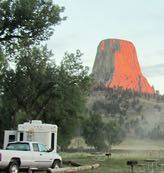 Fees at Devils Tower National Monument (Wyoming) (a popular landmark for UFO sightings) are heading up come January 1. Campsite fees will rise to $20 for a single site, while group site fees will hit $30. Entrance fees will be $15 per vehicle. No word on entrance charges for UFOs.
 Keep up with RV Industry news
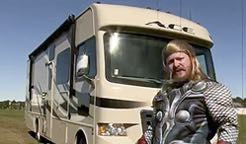 “Norse god” shows off many defects in new RV
 RV accent lighting is all the rage! Just look around the RV park! Enter Boogey Lights®! These robust, super-bright, state-of-the-art LED lights with hi-tech controller technology represent the next generation in LED lighting for RVs. The AWNING & UNDER-GLOW LIGHT KITS are specifically designed to withstand harsh operating environments. Don’t waste your money on junk! Get Boogey Lights! You can even control them with your Smart Phone!
  The new TireTraker™ TT-500 is the most innovative & user friendly TPMS on the market with an unprecedented “Lifetime Warranty”, the only TPMS company in the industry to do so. The TT-500 features a larger, easier to read display, continuous pressure & temperature monitoring, automatic update, & monitoring up to 22 tires on your motorhome, trailer & tow vehicle from 0-232 psi ! Seven day per week sales & technical support, & over 12 years of experience. List price (4 tires) $389. Our price only $289.

 Unique RV overnight stops at wineries and farms

 Give gift cards for your


 Good Sam Campground Guide

 Two hilarious RV movies!
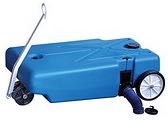


 The Family Motor Coach Association (FMCA) is THE “best club, hands down, for motorhome owners.” That’s the word from RVtravel.com editor Chuck Woodbury, who has been a member for 25 years! The group has many local and special interest clubs, national rallies, valuable member-only web content, and a wonderful monthly magazine. RV Travel readers who click this link to join
 Bring on the flies!

 Endorsed by Roger Marble of RVtireSafety.com!
 Now, here’s the perfect stocking stuffer — Lucille Ball and Desi Arnaz go RVing! In this 1954 classic — in gorgeous Technicolor — the famous couple (as newlyweds) invest in a 40-foot travel trailer and hit the road. The result is hilarious! The scene in which Lucy tries to make beef stew, a Caesar salad and cake in the wobbling, moving trailer is a classic! This DVD is a great gift for your favorite RVer!
 Microwave cover collapses for easy storage
 When heating your food you don’t want to spend 10 minutes later cleaning the splatters inside the microwave. Here’s the solution — perfect for RVers: It pops down flat for easy storage. Lid perforations allow steam to escape to keep food moist. Doubles as a strainer!


 Cooking with Convection
 It’s hard to believe that an electric space heater could use a mere 200 watts — the same as a couple of light bulbs —a fraction of other space heaters. And this one really works! It’s meant to heat a nearby person, not a room (although it will keep the chill off a small bathroom). Put it on your desk or at your feet. It’s perfect for the RVer who’s “always cold.” Click the video by RVtravel.com editor Chuck Woodbury.


 The Most Scenic Drives in America

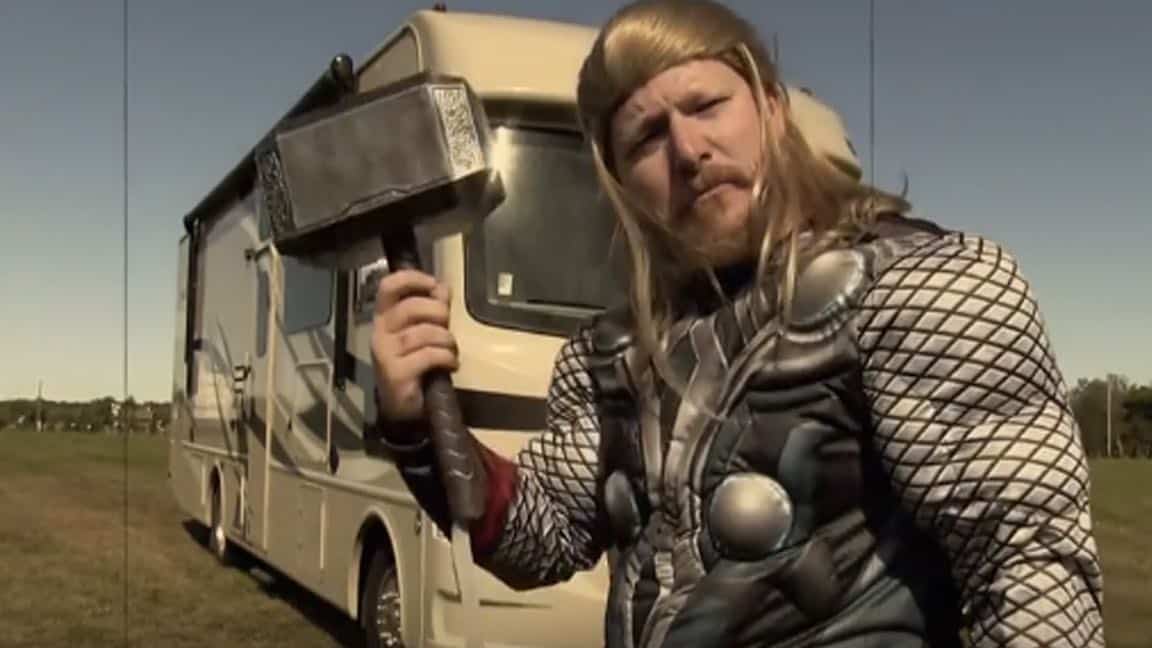

 Forest River is recalling more than 2,800 model year 2015-2017 FR3 motorhomes manufactured September 24, 2014 to May 12, 2016; 2015-2017 Prime Time Spartan toyhaulers manufactured June 10, 2014 to May 31, 2016; 2013-2016 Palomino Columbus toyhaulers manufactured October 4, 2012 to December 4, 2015; and 2015-2016 XLR Thunderbolt and Nitro toyhaulers manufactured May 23, 2014 to November 23, 2016.
 We have had a few RVs over the years: pickup campers and travel trailers in the 1970s through the 1990s. Then for about 15 years … nothing. I retired in 2014, and still had the bug. When I was working I did not have more than three weeks’ vacation a year for over 40 years. So when the wife retired in June of this year, that was all the excuse we needed.
 Hunting for a campsite? Editor Chuck Woodbury, now on the road full time, has had plenty of “adventures” looking for places to park his motorhome. In a
  Sad to say, but predictably, time would fail us if we published every comment received regarding the state-of-affairs when it comes to
  Once again called in to mediate issues for an RVing couple, the RV Shrink deals with “
 We heard plenty off coughing from our readers when the