Home Blog Page 2141

RVers crowded out in Yellowstone. What to do?

Dear RV Shrink:
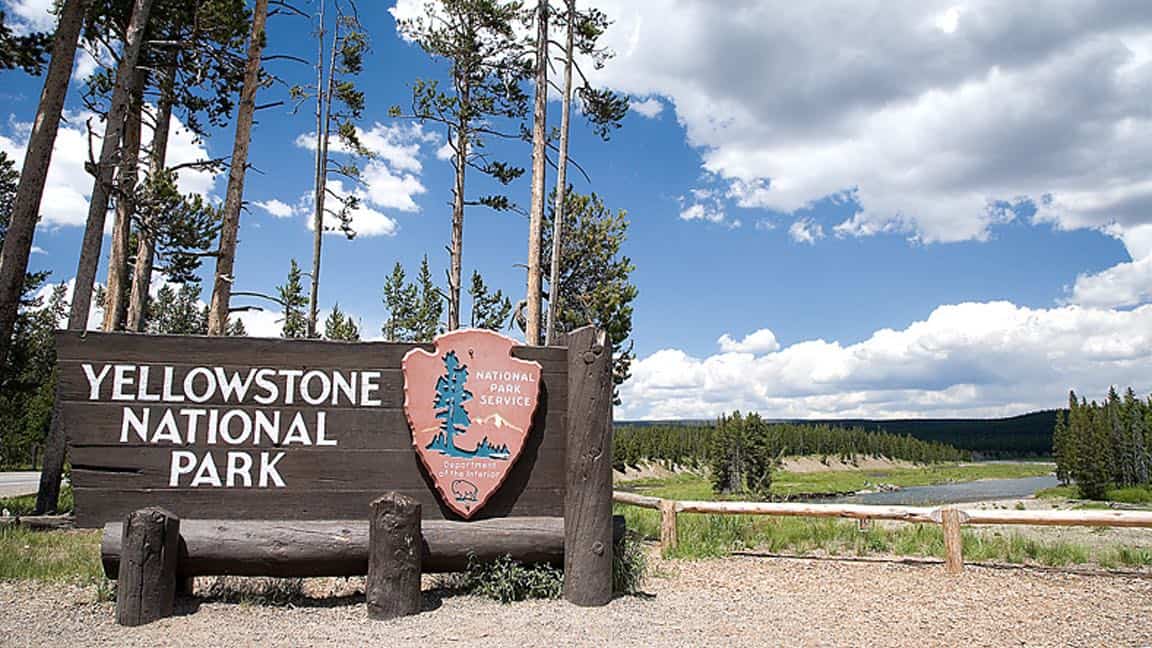
rvshrinkWe are in Yellowstone and we don’t have a reservation. We had no idea that half the world would be here visiting the same time we arrived. We cannot find a place to camp and have no choice but to leave the park and pay commercial rates on the fringes.

I want to stay and fight the crowds, but my husband wants to leave and try again sometime in the future with reservations. I say we will run into the same problem everywhere else — let’s stay and fight.

Is this what we have to look forward to as we begin our grand retirement adventure? —Crowd Control in Gardiner

Dear Crowd Control:
I feel your pain. Last year more than 4 million people from all over the world visited Yellowstone. The park superintendent was quoted in the May issue of National Geographic. He basically said numbers of visitors would have to be limited or plan on irreparable damage to the resource. Even off-season it is hard to explore Yellowstone. Getting a camping site is only the beginning. You then have to fight for a parking space at every attraction trailhead.

You will eventually learn to time your visits to some of the most popular attractions in America. Off-season will be better, but not trouble-free. Spring and fall find many campgrounds not open or already closed for the season. This leaves fewer sites for all those lucky enough to travel during those seasons.

Even though I hate making reservations, I always do at Yosemite and Yellowstone. It has almost become a necessity. Many parks in Utah are the same way spring and fall. People from around the world fly into Vegas, rent some type of RV and balloon the visitation numbers to Utah’s many natural wonders.

It is not as bad as it sounds. It can be managed, but when people first start traveling with an RV, often they have never considered this situation. You will learn to deal with it.

We seldom move on busy weekend days like Friday and Saturday. On Sunday many people are heading home after a weekend of camping, and numerous spots open up early. We find Sunday a great day to snag sites in busy areas.

Yellowstone is so large you almost have to stay in several different geographical areas to tour the park. Border towns do have commercial parks, but it is not as enjoyable as staying in park campgrounds and getting the real feel of incredible Yellowstone.

Leaving or playing campground bingo on the computer, trying to snag a site, is your option. Just don’t give up visiting this special place. —Keep Smilin’, RV Shrink

Let Alfred (free app) watch your house while you’re RVing!

0


By Chris Guld, Geeks on Tour

Alfred: Free Home Security Camera App

If you have a house that will be empty when you’re traveling, you’ll like Alfred!

Alfred is a free app and the only hardware it needs is an old smartphone or tablet that you’re not using anymore. Your house will also need a good, always on, Internet connection with WiFi. It started as an Android only App but recently released an iOS version. The Android version has a few more features, but both work.

The Camera(s)

  1. Using an old phone or tablet, connect to WiFi and download the Alfred App from the play store. Install Alfred and log in using your Google account.
  2. Set that phone in a location where it has a good view of what you want to watch, plug it into power and turn on the Alfred app. This is your Camera – just leave it on, using Alfred, all the time.

The Viewer

  1. With your current Android phone, install Alfred and log in to your google account so you can view what the camera(s) are seeing – this phone is your Viewer.

That’s it! And it’s Free! Alfred also handles sound, it could be a baby monitor where you hear the baby crying, or you could shout at burglars! Note: the iPhone camera does not support 2-way talk. It also has motion detection and can send a notification to your phone when something is happening. When the motion detector triggers a notification, it will also automatically record the camera stream for 5 seconds. You can manually record the view anytime.


##rvt750


Conserve water and never step into a cold shower again!

By Bob Difley

SlhowermiserHow many times have you wanted to stay out camping another day or two, but ran out of fresh water or found out that your gray water tank was full and had to be dumped?

Have you ever thought about how much fresh, clean water gets wasted going down the drain, from the time you turn on the shower until you’re willing to step in, waiting for it to get warm?

What if there was a way to solve both of these issues?

With SHOWERMI$ER, there is. The SHOWERMI$ER simply connects to your shower outlet. By flipping a small lever, you can redirect the cold water back into the fresh water tank, before it even comes out of the showerhead. This water would normally go down the drain, filling up your gray water tank. SHOWERMI$ER, with its unique and patented color-changing ability, will show you that hot water has arrived to the showerhead. Just flip the small lever back to release the water and step into your nice warm shower, without wasting a drop.

SHOWERMI$ER connects anywhere on the non-pressurized side of the fresh water system. You simply remove the shower head, attach the SHOWERMI$ER unit, line up and mark where the return line will be, and then drill only one hole in the shower wall through to the inside wall where the other plumbing is maintained. Using the provided lock washer, tighten the SHOWERMI$ER snugly against the wall.

Using a return line with a 1/2″ female pipe thread fitting, attach the return line to the SHOWERMI$ER unit. Lastly, connect the other side of the return line to anywhere it is convenient on the non-pressurized side of the fresh water system.

What comes in the Kit:

1 SHOWERMI$ER unit
1 diverter valve (chrome or brushed nickel)
1 custom-threaded through-wall pipe
1 lock nut & washer to secure unit tightly against the shower wall

Learn more on the SHOWERMI$ER website

You can find Bob Difley’s RVing ebooks on Amazon Kindle.

##bd07-16

Furkot: A funny name for a great trip planner


A trip plan on Furkot.com

By Chris Guld  GeeksOnTour.com

There is no perfect Trip-Planning system, but that doesn’t stop us from continuing to look for one! Here’s a list of systems we have used:

  1. Streets & Trips (we even have a full set of tutorial videos on using this one)
  2. RoadTrippers – see article Roadtrippers for Trip Planning
  3. RVTripWizard – see article RV Trip Wizard for Planning your RV Travels
  4. Google Maps – not really a trip-planner, but everything else! Google’s My Maps and Custom POI Files, Mapping and Sharing Your Travels with Google My Maps

The latest system we are checking out is Furkot.com. It is a free website. There is no mobile app, but the mobile website works fine on either iPhone or Android. Furkot is not specific to RVs. It is generally for cars and motorcycles who need to book motels/hotels along the way. But campgrounds are in there as well and it is based on Google Maps so all the data in Google is available.

Yes, you need an Internet connection to plan your trip, but then it can be available offline for reference.

Planning a Trip with Furkot

It works a lot like Streets & Trips – that’s a good thing since we were so accustomed to S&T:

  1. Start a Trip by entering your beginning and your end destination. One additional feature that I haven’t seen in any other system is a checkbox to make it a “Round Trip.”
  2. Furkot automatically enters tentative night stops based on your settings for when you start and stop your day and how far you want to go. When you enter your own stops, the tentative ones will disappear. I LOVE this feature for showing us exactly where we need to be looking for our overnight stops.
  3. Dates: a feature that was always sorely missing in S&T was any kind of calendaring. With Furkot, it not only shows the date you will arrive/leave any given stop – you can also point to any place along your route and see what time of day you’ll be there! Here is what the “Plan” drawer looks like. Notice the Days and dates for each stop. And, if you change the start date, or the number of nights at any stop – the dates recalculate for every other stop. There is even a feature to “Lock” a date. So, for example, if you need to arrive in time to attend a wedding, you can lock that stop’s date and it will not let you recalculate other items in a way that gets you there late!

Navigating a Trip that was Planned with Furkot

Furkot is not a navigation system, it is a planning system. That makes a lot of sense to me. I see them as very different things. We use a Rand McNally RVND7720 to navigate with the RV. It is always on the dashboard, and it has only one job to do. Each day as we set off on the road, we’ll look at our plan and enter just today’s destination into the Rand McNally. Then, we trust it to avoid low bridges, and propane restricted tunnels etc. We also use Google Maps on our phones. With Furkot, I can see our plan on the phone, tap on one destination and tap on Navigate. That takes me to Google Maps and it starts navigating to that destination. Good enough for me!

If you are the type of traveler that wants your entire route imported from your plan to your dashboard GPS, they’ve got you covered!

Furkot’s export options

We’ll try it out

We leave for a 3 month journey at the end of the week. We will use Furkot and write more about it in future articles, and on our Facebook Page. Let us know if you give it a try by using the comments below. If you’re looking for a trip-planning system, you owe it to yourself to take a look at Furkot. They have an extensive help system that explains everything you need to know.

Chris Guld is President and Teacher-in-Chief at GeeksOnTour.com. She has been in computer training and support since 1983 and owned a Computer Training Center called Computer Savvy from 1983-1996. She has been a Fulltime RVer, popular seminar presenter at RV Rallies, and regular contributor to RVTravel, for many years.

How to protect your home from burglars while RVing (video)

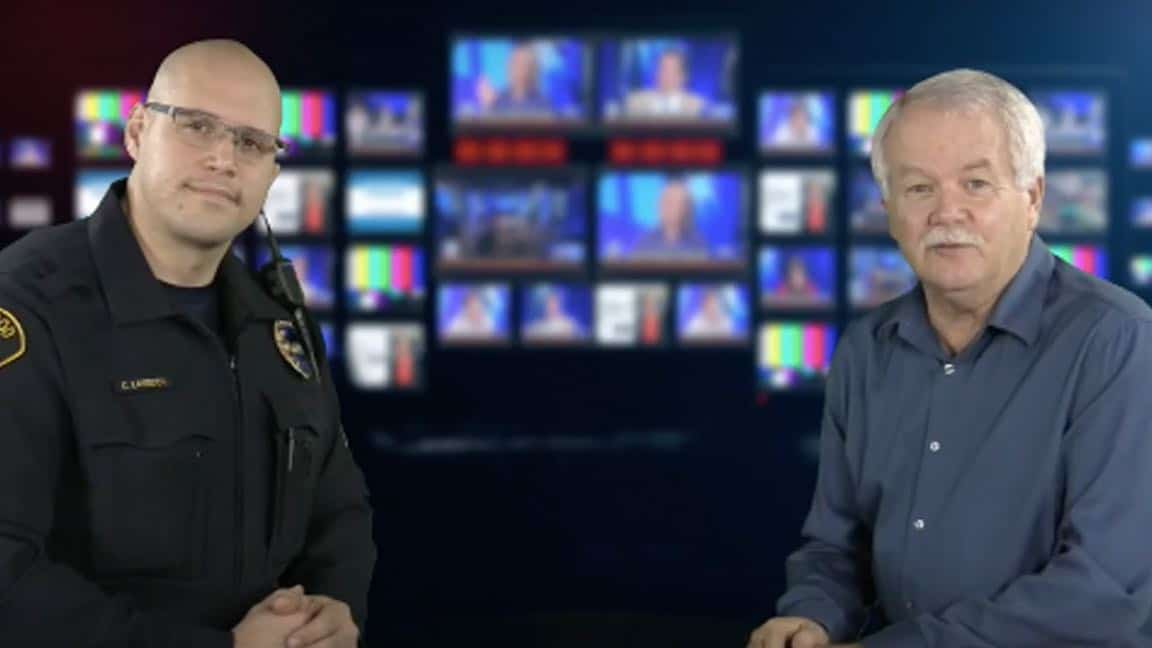
RVers who are on the road don’t want to “advertise” that their home is unoccupied, inviting burglars. In this video, RVtravel.com editor Chuck Woodbury interviews Sergeant Cole Langdon of the Lynnwood, Wash., Police Department about how RVers can help protect their homes from robbers while they’re away.

Replace cheap device-charging cables with Kevlar

By Bob Difley

Kevlar charging cable for electronic devices

RVers on the go can sometimes handle their stuff in a rather rough manner. This is especially true with the various cable and charge cords for our multiple electronic devices, as evidenced when they just stop charging for no apparent reason.

A group called Nonda is attempting to help those brutal cord handlers with its new 4-foot, ZUS Kevlar Cable, a strong durable cable that in recent tests by a German test lab bent the cable more than 15,000 times without it breaking.

The secret is in the Kevlar, the same stuff used by the military to make bulletproof vests and ballistic helmets. So go ahead, play tug-of-war with your rottweiler, use it as a tow cable for your Porsche, or run over it with your RV just because you can – and it will still work. It will likely be the last charging cable you will ever buy (it has a lifetime guarantee).

Watch the video to see proof.

 Learn more on Nonda’s Indiegogo page where you can currently buy one for shipping beginning this month (July 2016).

 You can find Bob Difley’s RVing ebooks on Amazon Kindle.

##bd07-16; ##rvt750

Readers Speak Out!


To read RVtravel.com editor Chuck Woodbury’s comments about this in RV Travel issue 752 click here.

What’s your opinion of these two issues affecting RVers?

  1. Has it become harder lately to find a site at a campground or in an RV park than it was 5 years ago?
  2. How would you describe the quality of the workmanship on your RV? This question for RVers who have purchased a new RV in the last few years.

Please leave a comment on one or both these questions. Try not to exceed 200 words unless necessary.

RV holding tank care

Dear Gary,
gary-736I think I’ve seen more words written about holding tank care and operation than any other single subject. Your discussion in Family Motor Coaching Magazine about cleaning black tanks was interesting and helpful. In the same issue, there was a description of an all-natural, microbial-based holding tank additive that, at least according to the maker, allows the microbes to digest waste such as proteins, oils, grease and paper, all the while preventing odor.

If this product does what it says, when I know my motorhome is going to be out of service for a couple of weeks, why wouldn’t I empty my black tank and then fill it up with water, dump in the appropriate amount of this product and let those microbes go to work? When I go back on the road, I empty the tank at my first stop and all the microbes and goop go down the drain, leaving me with a shiny, clean tank! There has to be something wrong with this concept but I don’t know what it is. —Rick C., Bradenton Beach, Fla.

Dear Rick,
There is absolutely nothing wrong with your concept, Rick. In fact, it is preferential. Bacteria-infused, enzyme-based tank additives can indeed help break down the solids and consume many of the odor-causing molecules at the root level. Keep in mind, however, it’s not truly designed to clean the holding tanks.

I’m not sure what brand of all-natural additive you saw, but the one I recommend is Pure Power Blue, by Valterra. While I’m not in favor of masking holding tank odors in hopes to not be distracted by them (there are other aftermarket products available that truly eliminate sewer odors in the RV), I am all for letting the enzymes do the dirty work (excuse the pun!). Masking the odor is considered a band-aid where live bacteria actually perform better in the long run.

If you’ve been using caustic chemicals or bleach or other bacteria-killing additives, it might be necessary to first “season” the holding tank to create a livable environment that encourages the good bacteria to be effective. So it may take a couple of flushings to be rid of the chemicals. Read the instructions on the container carefully. Most will come in liquid or solid form. Personally, I feel the liquid additive (at least with Pure Power Blue), works fastest. But you’re spot on with your idea.

##rvt750;##RVDT1189

The ABCs of camping with pets

1

By Chuck Woodbury

Most American campgrounds welcome pets. Most often there is no additional charge beyond the regular campsite fee, but many commercial RV parks charge an extra fee per night, per pet.

While there are few formal rules about camping with pets, most campgrounds do require that pets remain on a leash or be otherwise contained. Many campers bring along a portable pet fence that can be easily opened up at a campsite to allow a pet some freedom and fresh air without being leashed. Amazon sells these.

Most RV parks that allow pets set aside a plot of ground or grass for use as a “pet potty.” RVers are asked to clean up after their pets. Most roadside rest areas also provide such pet areas, which most often double as an off-leash area where a pet can run and sniff to its heart’s content.

Pets are common traveling companions, especially for RVers. Perhaps a third of them bring along a pet or two, most often a dog, but also cats and even caged birds. We have seen a few bunnies, including one being walked on a leash at an Idaho rest area.

The biggest complaint from campers without pets about those with them is uncontrolled dog barking. Some owners leave their campsites to sightsee, hike, fish or shop, and leave their dogs alone inside their RV or tied up outside for hours on end. Fellow campers are often forced to endure barking and howling until the owners return, a terribly frustrating and even maddening experience for those who must endure the noise.

coyote2
U.S. Fish & Wildlife

Even though many campgrounds accept dogs, sometimes they do not welcome all dogs. Jack and Julee Meltzer, authors of “Camping and RVing with Dogs,” believe the best advice for RVers with pets is to always call a campground before showing up with their furry friend. “It may state in a campground directory that a place is dog-friendly, but that may not necessarily be true,” said Julee Meltzer. “It’s not unusual for an RVer to arrive with a large animal only to be told, ‘Oh, we only accept dogs less than 25 pounds.’” BringFido.com has a very comprehensive list of pet-friendly campgrounds worldwide.

Pet owners should also use caution in leaving their pets outside overnight. Rangers at Death Valley National Park keep a tally of such animals that end up as a tasty midnight snack for a hungry coyote.


##rvt750

RV shopping? Avoid buyer’s remorse

0

By Russ and Tiña De Maris

A lively discussion broke out on an RV forum: An RV shopper and his wife had in mind a new toy hauler. They’d done their research, they knew what they wanted. Once on a dealer’s lot, things got a bit thick. A different toy hauler caught their eye, and soon, they’d plunked down a $6,000 deposit and signed off on the contract, and a delivery date was scheduled.

contractBack home the customer started doing a little pencil pushing. The RV he’d just bought turned out to be way over the limits of the towing capability of his pickup truck. In the “heat of the moment” of shopping, he’d forgotten that important factor. He’d done his research for the “first rig,” and it was well within the scope of his tow vehicle, but, oh dear, that new one.
What’s to be done, he asked the forum members. Was there a way he could get out of that contract?

In the dozens of responses he received, emotions ran from calm and collected, to heated – some downright nasty. Both the customer and the dealership were made out to be the villain, and suggestions ranged from simply never picking up the trailer, to biting the bullet and buying a big enough truck to tote the rig.

There’s a lot of elements to the tale, but one thing to be taken away is this: When you’re spending money, particularly big money, go slow, double check, and do your homework. From a legal standpoint, the customer put himself on the line when he signed the dotted line. In the state where the transaction occurred there’s no “cooling off” period – that is, a time frame where you can change your mind, cancel the deal, and get your money back. From a strictly legal standpoint, the buyer is stuck.

On the other hand, there’s Solomon’s advice: “If you have been caught by the sayings of your mouth, take this action then, my son, and deliver yourself … go humble yourself and storm your fellowman with importunities.” We could hope that the RV dealer is reasonable, and would offer some sort of an out. Perhaps a, “Buy a different RV from me, and your deposit applies.”

The reality being that not everyone out there is reasonable, here’s another case of being a smart shopper. When you go shopping for an RV, know your limits. Not just knowing how much you can safely (and legally) tow with your tow vehicle, you have other limits, too. How many buyers have been enamored with a “different” rig that’s only “a little bit more money,” and later found themselves in a world of hurt when they couldn’t make the payments?

Take your time with a decision, and don’t let a pushy salesman (or a pushy heart) force you into an immediate decision. There’s lots of wisdom in “sleeping on it.” It’s not very likely that your ‘dream RV’ will walk off the lot in the next day or two. Even if it does, how much better it become someone else’s heartache and not yours.

##rvt750

Good food, good prices — in places you’d NEVER expect

3

By Russ and Tiña De Maris

Eating on the road at a sensible price usually boils down to cooking something up at camp. After all, you can usually save a ton of money by pulling something out of the fridge and whipping it up, as opposed to hitting a restaurant. But face it, you don’t always feel like cooking.

yelp tage
unnormalized on flickr.com

We feel we’ve mastered the art of eating on the cheap at franchised burger dives. McDonald’s, Wendy’s, Burger King – they’ve all heard our opinions countless times in order to score the “free McOrphaned Whopper” or whatever it is that’s offered on the register receipt as an inducement to score how clean the bathrooms are to how courteous the order taking folks are. But how many burgers can you bite before they all taste the same?

On a road trip we met some new friends in the little burg of Price, Utah. High up (nearly 6,000 feet in elevation) in the coal country, and a long ways from any “big” cities, the restaurant reviews for a lot of the local eateries are anything but complimentary. We’ve learned to be leery of restaurant review trolls, who seem to get their jollies stabbing the wait staff in the back, or greasing the floors of review sites so that the cook will slam face first on the floor.

When the group said, “Sure, join us – we’re eating at the hospital,” we dug back in the mental morgue for a review that we might have read on a joint called, The Hospital. No soap – surgical or otherwise. “The hospital?” “Yeah, sure, on the other end of town, go under the underpass, make the first right, and you can’t miss it.”

Sure enough, a right turn after the underpass showed us the Castleview Hospital, “a 49-bed acute care facility serving Emory and Carbon Counties.” Now picture a group of say 10 folks, dressed in their Sunday best, trooping into a hospital cafeteria on a Sunday afternoon. “Have you folks all been to a wedding?” we were asked. “Uh, noooo – just told there was good grub at a great price,” was all we could stammer back.

And surprisingly enough, it was good grub. Let’s see here, between the two of us we had, mashed potatoes and gravy, with roast beef. A fair sized cabbage roll, a huge green salad off the salad bar, a chunk of lemon meringue pie, a decadent chocolate something with plenty of caramel, and the cheapskate’s mandated two large glasses of ice water. Total bill, out the door? Less than $7.00. And unlike what patients normally expect, the food was not bland, cold, nor unpalatable. In fact, it was pretty good.

So, next time you’re in Small Town America, check out the local bone-pinning facility. They may serve up more than just X-rays and bandages.

##rvt750

Maximize your boondocking site

By Dave Helgeson

You’ve arrived at a selected boondocking site and are ready to set up camp. Unlike a developed campground with a predetermined space to park your RV, you likely have many choices on where and how to position your RV in the boondocks.

Some considerations:

shade tree helgeson– Sun and shade: Will you want your rig in the sun to warm things up, or in the shade to keep it cool? Maybe a combination of morning sun to warm your rig during brisk mornings and shade provided by a tree or hillside to cool your RV in the hot afternoon. In scorching heat it’s best to face the patio awning to the south or west and to keep the refrigerator side of the RV facing north. For those of us with solar panels on the roof, we may opt for full sunshine even in hotter climates.

– Communications: Is there cell phone service where you plan to park? Many times parking around a corner or over a rise will make all the difference. Look for cell phone towers on distant hills. A line of sight typically assures service. Steep hillsides and mountains along with trees are also of concern if you utilize a satellite for receiving TV or Internet reception.

– Level: How hard will it be for you to level your RV at the chosen site? Will the entry steps be on the high or low side of the rig after leveling?

– Hazards: Is there anything that might damage your unit? Be aware of low hanging branches or dead trees that might fall during a windstorm. When parking along a steep slope beware of rocks that might become dislodged above you. Are there any ground clearance impediments that might inflict damage to the underside of your RV when maneuvering into the site?

– Drainage: Will your chosen campsite drain well if it rains? Which way (side to side) should the awning be sloped to keep rain away from the RV entry? If camping in the desert, will your chosen campsite be safe in the event of a flash flood?

Taking Advantage of the View

– Wind direction: Which way does the prevailing wind travel? Can you use it to your advantage? Things to consider are: Smoke from a campfire, cooling the RV, and using the RV to shield you from the wind when sitting outdoors. Aim your RV into the wind if high winds are expected.

– View: How can you maximize the view of your campsite? Many times it’s as simple as parking on the highest place available, or along the edge of a mountain stream, or the perimeter of a high plateau. Aligning views with the RVs picture windows and your favorite seat is always a winning combination.

Just like real estate, good boondocking sites are all about location, location, location. Enjoy!

##rvt750