Dear Gary, I have a 2013 Endeavor 43RFT. The Power Control System Central Monitor Panel is showing that the L1 and L2 voltages are fluctuating 3 volts every one to five seconds, (e.g., 118v then 121v then 118 then 121, etc.). Per Monaco Help Line, I have tightened all the screws in the distribution panel and in the transfer switch. This occurs whether I am on shore power or generator (but not when inverting). Monaco Help Desk could not offer any other help, how about you? My inverter is a Magnum MS-2812 and the transfer switch is Surge Guard 41260. —Jim L., near Huntsville, Texas
Dear Jim, This particular transfer switch does not contain any electronic components and is reliable, so we can rule out any problem with that device. And your inverter likely produces a purer sine wave than that off the grid, so that leaves only the coach loads as the possible suspects since you’ve already addressed the connections (be sure you’ve checked and tightened them all). The next thing to do is to isolate the problem to a specific circuit, then locate the culprit component within that circuit.
Start by powering up the coach (either by shore power or generator), and turning the branch circuit breakers off completely. Monitor the voltage with all the branch circuits disengaged; the voltage should not be fluctuating at this point (if it is, there’s likely a problem with the source voltage itself). Then turn on each breaker one at a time and allow the voltage to stabilize. If the voltage begins fluctuating after turning on a specific breaker … that’s the circuit with the problem.
Surge Guard
Next determine which component(s) that circuit is powering. It will likely be something equipped with an overload device that automatically resets such as the heating element in the water heater. Something is causing the current usage to fluctuate, which results in the voltage variances. If you cannot locate the specific component within that circuit, a voltage drop test can be performed to determine exactly where the current leakage is occurring. It could simply be worn insulation on a conductor somewhere if it’s not the actual “load” causing the fluctuation. Unfortunately, it is best left to a professional electrician, one with an understanding of RV electrical systems, to dig beyond this point.
You might want to refer to the coach wiring schematic to determine which components are on each circuit as a guide and have each component tested independently. Even though it may take a Certified RV Service Technician, the current leakage or fluctuation cause has to be there somewhere! It’s pretty much a divide-and-conquer troubleshooting process.
Dear RV Shrink: We just moved into our new motorhome. One thing I never gave much thought to was noise from all of our belongings banging around as we travel down the road. It drives my wife to distraction more than me.
At first it was annoying — we could hardly talk in normal volumes. After locating and quieting the noisiest problems, we are now down to several more we are working on and some we have not been able to locate.
Does everyone have to put up with this, or did we just end up with a rattletrap? —Looking for sound advice in Sacramento
Dear Sac:
Motorhome sound pollution can be frustrating. There are many things to consider in your case.
Let’s start out with the ride you are experiencing. If your rig is riding rigid, it will make for more noise creation. If you have a good smooth ride, it gets down to how you pack, what you pack and where you pack it.
There may also be mechanical noises you will have to deal with. One notorious culprit is the oven fan vent. It is often a light piece of tin, designed to open with the air pressure from the fan. It can open and close while driving and make a loud tin can noise.
While one of you is driving the other can search, make notes and cure each noise individually until you get to a point that is satisfactory.
Often the biggest offenders will be dishes, pots and pans, utensils and appliances. Each coach is different but the usual suspects can often be identified and brought into compliance by using spacers such as soft material, plastic containers or isolation.
I am sure your sounds are unique just like everyone else’s. Seriously, they can be challenging, but think of it as a game, like I Spy. Slowly, but surely, you will find and cancel out so many tiny noises in the chorus, that you will eventually be able to argue with each other again, driving along looking for your next turn in the road. —Keep Smilin’, RV Shrink
If you’ve been concerned with the safety of your portable generator if accidentally left out in stormy weather or a sudden storm dumps buckets of water on it, GenTent® makes a variety of Safety Canopies — easy-to-install weatherproof covers for safe operations of portable generators in virtually any wet weather conditions.
GenTents have protected families in the hardest hit areas of Superstorm Sandy and every major U.S. storm since. GenTents are used worldwide. Nearly 200 GenTents are already in use by the National Guard CERFP teams across 32 bases covering the U.S., Puerto Rico and Hawaii.
GenTents:
· Help keep generator electrical outlets dry during wet weather, from any angle, including blizzard and hurricane force precipitation.
· Keep portable generator easily movable — with easy access for refueling.
· Keep generators cool naturally — unlike generator dog-houses or other full canvas enclosures, cooling air is not blocked.
· Fit over 1,000 generator makes/models to guarantee the perfect fit for any portable generator.
· Are safe to use — Independent Lab Tests have confirmed its ability to handle 70 mph winds, 18 inches of snow load and rain in excess of 12 inches per day while preserving the portable generator’s natural cooling and fresh air intake.
· Offer outdoor enthusiasts – RVers, boaters, campers, tailgaters — using 3K inverter, the GenTent XKi which expands the popular GenTent safety canopy application with mounting on any sized inverter generator or fully enclosed portable generator.
For some of us, heading out to the amusement park and taking a ride on the roller coaster is just plain fun. When ‘the bottom drops out’ and you’re screaming downhill, the adrenaline rushes — well, it’s really something. But the last place you want to ride a roller coaster is when you’re behind the wheel of your RV. Hitting a steep grade unprepared is anything but fun – for too many, it’s deadly. Are you ready for steep grades?
Not all steep grades are down – and your rig needs to be ready for the uphill climb, too. Ensure your cooling system is up to it. Does your engine coolant need a change-out? How about that radiator? Clear of dirt, bugs or other obstructions? Belts and hoses in good shape? OK, let’s look at the “flip side.” Well, we hope it’s not literally a flip side!
For the down-hilling side, brakes are the major concern. Brake pads (or shoes) in good shape? A quick look at the brake fluid reservoir will give a fast indicator for tow rigs and motorhomes. If the fluid is low, there’s a reason. Either you have a system leak, which needs to be addressed immediately, or your brake shoes or pads are wearing. Either way, check it out before heading off on an RV trip.
On towables, a brake system check includes pulling the wheels and inspecting the brake shoes. It’s a good time to repack the wheel bearings, too, which is a job that should be done each year. Reset the adjustment of the shoes so that your brakes will be ready to brake! Next, check out the upstairs – that means, the one between our ears.
Do you understand road grade signs? It’s more than the silhouette of a big truck pointing down a slant. We’re talking about grade signs that indicate percentage of grade. Some new to RVing don’t yet have a grasp. Put simply, a grade sign indicates is how many feet of fall there is in the roadway over a given distance. For example, a 5 percent grade sign means for every 100 feet of roadway, there’s an average drop of five feet. You quickly grasp that the bigger the grade percentage, the steeper the drop, or climb.
Here’s an important corollary: The longer the grade, the more inherent danger. A real steep hill in downtown Seattle could easily go into double digits of grade, but if it’s only a block or two in length, it’s not nearly as scary as a 6 or 7 percent grade that runs for miles.
Safely tackling steep grades means learning to go slow. Going up hill, you may be able to go fast, but you’re asking a lot from your engine and cooling system. Steep climbs — especially in warm weather — are better made in the cool of the morning. Pulling a steep grade in warm weather is taxing to your cooling system. Keep a close eye on your temperature gauges – engine and transmission (if you’re so equipped). If engine temps begin to climb, shut down your air conditioner. If they continue to rise, roll down your windows and turn on the heater. Yep, the additional heat put off by your heater may be enough to counter a rise in engine temperature. If that doesn’t cut it, PULL OVER. Set your parking brake; don’t shut off your engine, rather increase the engine revs above a normal idle to help cool down the engine. And be sure to pull over before you hit a “red line” temperature!
Before you hit the summit of a climb, check your brakes. Much better to let the upgrade slow and stop you if your brakes are “gone” than to find out they’re gone when you’re headed downhill. And here’s the old trucker’s rule on gearing: Whatever gear you needed to climb the hill is likely the one you’ll need to go down the other side. In some cases with modern drive trains, you may actually need a gear lower.
Engine compression is your friend — the less you need to step on the brakes, the better off you are. Diesel engines have comparatively less “compression braking” ability than a gas engine, so you may need to gear down even more. And be sure to “kick down” to the lower gear BEFORE you need it, else you might not be able to gear down later when your speed is too high.
Use your brakes if you need to, by all means, but keep “geared down” enough so that you can stay off the brakes and allow them to cool between applications. You can come down the hill “too slowly” time after time, but come down the hill “too fast” and you may do it only once! And be sure to slow BEFORE coming into a curve, rather than trying to slow IN the curve. Recommended speed signs for curves are based on a passenger car, not a big RV. So take the curve slower than the posted sign, and begin to accelerate in the curve. Why accelerate in a curve? It’s a matter of physics. Your rig will generally continue to go in the direction it’s going until an outside force acts on it. As you hit a curve, there’s a sideways force that will try and pull you one direction or the other. Giving a little acceleration will help compensate for that side pull, and keep you headed forward.
What if you get into trouble? Let’s say you encounter “brake fade.” You hit the brakes, and they aren’t there. Get off the throttle, and turn off the cruise control. If you haven’t already kicked down in gear, do so immediately. PUMP the brake pedal—you may be able to get a bit of pressure built up to help you slow down. Try using your parking brake. This will likely have very slow results, but it may yield some amount of brake effect. Warn traffic ahead by blowing your horn. If there’s a “runaway truck” ramp, by all means, use it. And if all else fails, use the Jersey barrier to scuff off speed. Most are designed to rub against your tires (as opposed to your paint) to help slow you down. Scraping the side of your rig on a guardrail is better than going over the edge, so it’s a possible last resort.
I once believed boondocking was just about saving the cost of a campground. However, after becoming a boondocker out of necessity (lack of campgrounds in the backcountry areas I like to explore) I discovered it was much more than just saving a buck.
So why do RVers boondock?
Necessity:
· Yes, cost does play into it for some. Those on a limited or fixed income find it difficult, if not impossible, to take extended RV trips when paying $30 a night or more for a space in a conventional campground. · Location can also be a factor in boondocking. For an adventurer like me that enjoys exploring old mining camps, unique geological formations in the middle of nowhere and do a little prospecting too, lack of campgrounds is the norm. Lucky for me, most of the activities I just listed are on public land making boondocking the easy and enjoyable solution over distant campgrounds.
Convenience:
· No advance reservations are needed to boondock · There’s no check-in or check-out time. Arrive when you want and stay as long as you want (within the administering land agency guidelines). · Typically your pet can roam free around your chosen campsite. · When you just need a place to park for the evening and don’t need the services of a campground, boondocking is the perfect alternative. Many private boondocking locations can be found just off major highways.
Choice:
· Many boondocking locations offer outstanding views of the surrounding countryside and the opportunity to see the sunrise, as well as privacy from neighbors because there aren’t any. No need to pull your shades preventing the occupants of the neighboring RV from seeing in your rig and vice versa. · Peace and quiet is what attracts many RVers to boondocking over campgrounds. No barking dogs, loud neighbors or early birds starting (and idling) their engines and pulling out of the campground at the crack of dawn.
No Civilization or People for Miles!
· For me, solitude has become the most enjoyable element of boondocking. It’s just me, my wife and the beauty of God’s creation. No other humans, buildings, or other signs of civilization for miles! I am not alone: A poll taken at RV.net in early 2012 revealed that solitude and peace were the most popular reasons RVers choose boondocking over campgrounds.
Boondocking is Green:
· Boondocking is just that — camping in the boondocks. You need no hookups to power, water or a sewer. Boondockers by necessity conserve their limited supply of water, battery power, holding tank space and fuel. Boondockers consume considerably less resources when boondocking than when living in a conventional home. Boondockers reduce the carbon footprint by charging their batteries with solar power or a wind turbine rather than a fossil fuel burning generator.
“Into every life, some rain must fall.” So said Longfellow, and it seems that every RVer has his or her own share of precipitation. Too often, those showers come in the form of something that breaks and needs repair – and far too often, it’s when you’re in the least position to do something about it.
On a research tour, we had a run-in with our own sort of rain. Coming up California’s Highway 99, a strange “ding, ding, ding” sound made its presence known. At first we thought it was something loose on a semitruck that was at our side, but when the truck got ahead of us, the noise kept pace with us. We pulled off at the next exit and found our LP cylinder support rack had broken, and the “ding, ding” was the sound that a full propane cylinder makes while dragging on the pavement, leaving behind metal scrapings. Happily, we were able to repair the support, but a new propane bottle was in order.
A few days later, another “strange noise” manifested itself. Pulling off the interstate we found not just your typical flat tire, but basically no tire, and not much of a rim on the trailer. After the road service guy put on our spare, we found the damage wasn’t limited to a tire and a rim – the shredded cording of the wiped-out tire had punctured the tire on the next axle. The tire repairman stopped counting holes when he hit a half dozen, so we got two tires and a new rim. When we spun the new rim and tire around, more “odd noises” emanated from the hub – seems that when the tire went, the cords also wrapped around the electrical wiring to the brake magnet, which in turn pulled the magnet loose, and damaged additional brake parts.
Settled down until we could handle all of that, the toilet decided it wanted to get in on the act, leaving a vast pool of water across the bathroom floor. We’d already replaced the water valve in the toilet once before – and the toilet lid had a big crack in it. It’s not just an esthetics thing, mind you. Sit on the toilet lid and you’ll get a free butt pinch every time. Really, it was time to replace the toilet. At the same time, we also did battle with another water leak – this one between the fresh water tank and the outside fill port.
There was little we could do to save much money on the tire situation. Since we could sit for a couple of days, we saved a couple of bucks by ordering a tire and wheel combination – rather than buying them separately. The brakes? After digesting the cost of the individual parts for repairs, it turned out to be nearly as cheap to simply replace TWO full brake assemblies, including new shoes, backing plates, etc., all put together and ready to simply slap into place. Of course, that came because we ordered the assemblies from a Midwest supplier, and we had to allow time for the units to come in by UPS truck.
But that toilet. Have you priced RV toilets lately? A call to the Big Gorilla of the RV supply industry revealed no big sales on toilets. A visit to our friendly local RV dealer suggested we might be able to skate by for $150 or so. Even the RV salvage yard quoted a minimum of $75 for a used plastic throne. It was with some amount of despair we pondered our alternatives. And then, perhaps by divine inspiration, the light turned on. Check out craigslist.
Listed on the local Internet classified page, right up at the top of the search results for “RV toilet” was a used China bowl unit. “Foot pedal has crack,” warns the advert. We quickly dialed the seller and inquired. Seems that the toilet had been leaking water into the bowl unless one firmly pulled up on the foot pedal. He’d called the manufacturer, who’d sent him a repair kit, but he was too much in a hurry to leave on an RV trip to “fool with” installing the kit, so he popped nearly $300 for a new toilet, and yes, he’d sell us his old toilet (with the repair kit) for $25. The cracked foot pedal, he allowed, still worked.
Mind you, he’d placed the advert 27 minutes before we looked it up – after he and his wife had left home for a few days out of town. So, it was another “wait a bit” and make the drive to pick the unit up. Turns out, the “crack” in the foot pedal really wasn’t – the foot pedal was fine, and after a half-hour investment in figuring out how all the parts went together, we have a pretty much “good as new” toilet – and our posteriors are no longer pinched.
By Chris Dougherty Chris Dougherty is a certified RV technician. Here is a letter he received from a reader while he was serving as RVtravel.com’s technical editor.
Dear Chris, We live in Florida, where high humidity is always present. We own a 25-foot Hi-Lo trailer that I try to keep lowered and covered during the winter months. We use a Damp Rid Large Room dehumidifier and run a 12 volt fan to circulate the air. Even with all this we still have musty smells when I check the condition of the Damp Rid container. I’ve had to remove the ADCO cover and raise the trailer to try and improve the inside condition. Any ideas? —George P.S. Great site, enjoy every issue.
Dear George, First, thank you for the compliment! We are working hard to bring everyone the best information we can!
Florida is a tough environment when it comes to humidity and mildew. Once mildew sets in it’s hard to get rid of.
Here are a few thoughts. First, I always look at soft goods like carpeting first. Any of those will hold it, as will wood products. Have you had any leaks in the unit? Concealed moisture breeds mildew, and it can grow in the wood underneath the linoleum, or in the walls or ceiling. Check the outside seals carefully, and check for any rot on interior panels and surfaces. If you can’t find any rot, I would open the unit up and remove everything (on a nice day or two of course) and spray every surface of the inside of the unit with a mildew removing solution, like a bleach and water mix in a spray bottle — just be careful about sensitive dyes and fabrics.
Lastly, keeping the unit closed up may be a contributor if the damp air is stagnant. I would consider some type of forced air ventilation that brings fresh air in and pushes old air out. I’m not certain that the chemical dehumidifier is of adequate strength to combat tropical moisture like this.
Practical Sailor did a test on a number of cleaners and mildew removers. Of the products they tested which I use every day, and did during most of my 23 years in emergency services, is Spray Nine. Home Depot and Lowe’s both sell it, and according to Practical Sailor, it is also good at removing mildew. -CD
Editor: Spray Nine products are available at Amazon.
WASHINGTON: Here is our monthly summary of RV recalls for June 2016 and related equipment we feel are of interest to our readers. This information has been gleaned from the U.S. National Highway Transportation Safety Administration. This is NOT a complete list of all vehicles and related equipment recalled.
UNITED STATES RECALLS
RECREATION VEHICLES
Forest River, Inc. (Forest River) is recalling certain model year 2007-2014 Solera and Coachmen Prism vehicles, built on Mercedes-Benz and Freightliner Sprinter chassis. Upon deployment of the driver’s frontal air bag, excessive internal pressure may cause the inflator to rupture. In the event of a crash necessitating deployment of the driver’s frontal air bag, the inflator could rupture with metal fragments striking the vehicle occupants potentially resulting in serious injury or death. Forest River will notify owners, and either Mercedes-Benz or Freightliner dealers will replace the driver frontal air bag inflator, free of charge. Parts are not currently available. Interim notices will be sent beginning June 28, 2016. A second notice will be sent when remedy parts are available. Owners may contact Forest River customer service at 1-877-496-3691 or may call the Sprinter/Takata hotline at 1-877-496-3691. Forest River’s number for this recall is 51-04262016-0182.
Forest River, Inc. (Forest River) is recalling certain model year 2016-2017 Forester and Sunseeker recreational vehicles manufactured from February 29, 2016, through April 20, 2016. These vehicles are equipped with a shower door that may not meet the flammability standards. Thus, these vehicles fail to comply with the requirements of Federal Motor Vehicle Safety Standard (FMVSS) No. 302, “Flammability of Interior Materials.” Failure to meet the flammability standard of FMVSS 302 could enhance the spread of a flame in the event of a fire, increasing the risk serious injury. Forest River will notify owners, and dealers will replace the shower doors, free of charge. The recall is expected to begin on or about July 12, 2016. Owners may contact Forest River customer service at 1-574-206-7600. Forest River’s number for this recall is 34-05052016-0184.
Forest River, Inc. (Forest River) is recalling certain model year 2016 Stealth Evo recreational vehicle trailers, models CSJT280RKS and CSJT290QBS, manufactured January 7, 2016, to March 18, 2016. The affected vehicles may have had tires of the wrong load range installed which may result in premature tire failure. As such, these vehicles fail to comply with the requirements of Federal Motor Vehicle Safety Standard (FMVSS) number 110, “Tire Selection and Rims and Motor Home/Recreation Vehicle Trailer Load Carrying Capacity Information for Motor Vehicles with a GVWR of 4,536 kilograms (10,000 pounds) or less.” Unexpected tire failure increases the risk of a crash. Forest River will notify owners, and dealers will supply new correct tires and rims, free of charge. The recall is expected to begin July 18, 2016. Owners may contact Forest River customer service at 1-909-873-3777 extension 52. Forest River’s number for this recall is 67-05192016-0199.
Forest River, Inc. (Forest River) is recalling certain model year 2014-2016 Charleston Class A motorhomes manufactured from September 16, 2013, through September 25, 2016, and built on certain Daimler Trucks North America LLC (DTNA) chassis. On certain motorhome chassis built with a heavier, adjustable foot pedal, the brake activation signal to certain towed devices may not deactivate when the motorhome service brakes are released. If the brake activation signal to a towed device remains active when the motorhome chassis service brakes are released, the brakes on a towed device may remain engaged. As a result, the brakes could drag and overheat, potentially resulting in a fire. Additionally, following drivers may be confused by the motorhome’s actions, increasing the risk of a crash. Forest River will notify owners, and DTNA dealers will modify the affected brake assemblies, free of charge. The recall is expected to begin on or about July 11, 2016. Owners may contact DTNA customer service at 1-800-547-0712. Forest River’s number for this recall is 40-05132016-0196.
Forest River, Inc. (Forest River) is recalling certain model year 2016-2017 Flagstaff trailers manufactured from August 11, 2015, through October 27, 2015, and Work N’ Play trailers manufactured from October 25, 2015, through May 6, 2016. The MB Sturgis liquid propane (LP) regulator on the vehicles may allow propane gas to leak into the regulator sight glass causing it to degrade and potentially crack. If the indicator sight glass cracks, propane gas may leak out. In the presence of an ignition source, a fire could occur. Forest River will notify owners. A remedy plan has not been determined. The recall is expected to begin August 11, 2016. Owners may contact Forest River customer service at 1-888-291-6665. Forest River’s number for this recall is 51-05312016-0205. Owners may also contact the National Highway Traffic Safety Administration Vehicle Safety Hotline at 1-888-327-4236 (TTY 1-800-424-9153), or go to www.safercar.gov.
Grand Design RV, LLC (Grand Design) is recalling certain model year 2016-2017 Imagine and Reflection recreational trailers manufactured January 15, 2016, to May 4, 2016. The MB Sturgis LP regulator on these vehicles may allow propane gas to leak into the regulator sight glass causing it to degrade and potentially crack. If the indicator sight glass cracks, propane gas may leak out, increasing the risk of a fire. Grand Design will notify owners, and dealers will replace the LP regulator kit, free of charge. The recall began on June 6, 2016. Owners may contact Grand Design customer service at 1-574-825-9679. Grand Design’s number for this recall is 910006.
Heartland Recreational Vehicles (Heartland) is recalling certain model year 2017 trailers manufactured February 29, 2016, to May 5, 2016. The certification labels have incorrect tire pressure information, failing to comply with the requirements of 49 CFR Part 567, “Certification.” Improper inflation can cause the trailer tires to become overloaded, resulting in poor handling and increased risk of a crash. Heartland will notify owners, and dealers will replace the certification label, free of charge. The manufacturer has not yet provided a notification schedule. Owners may contact Heartland customer service at 1-877-262-8032. Heartland’s number for this recall is 99-01-25.
Heartland Recreational Vehicles, LLC (Heartland) is recalling certain 2016-2017 trailers manufactured September 28, 2015, to April 30, 2016. In the event that the main trailer connection fails, the weight of the trailer could break the safety chains. This would allow the trailer to separate from the vehicle, increasing the risk of a crash. Heartland will notify owners, and dealers will replace the chains, free of charge. The recall began on June 2, 2016. Owners may contact Heartland customer service at 1-877-262-8032.
Jayco, Inc. (Jayco) is recalling certain model year 2017 Jay Flight trailers manufactured May 6, 2016, to May 9, 2016. The weight ratings on the tire labels are incorrect. Thus, these vehicles fail to comply with the requirements of Federal Vehicle Safety Standard (FMVSS) No. 110, “Tire Selection and Rims.” Incorrect weight ratings on the tire label could cause the operator to overload the vehicle and lead to premature tire wear, increasing the risk of a crash. All affected units are in dealer inventory. Dealers will be provided new, corrected labels. The recall began May 27, 2016. Owners may contact Jayco customer service at 1-800-283-8267. Jayco’s number for this recall is 9901299.
Keystone RV Company (Keystone) is recalling certain model year 2016-2017 Keystone Outback recreational trailers, model 326RL, manufactured February 24, 2016, to April 21, 2016. These vehicles have a television mounting bracket that may not be properly secured to the wall. The improperly secured bracket may allow the TV to fall, increasing the risk of injury to an occupant nearby. Keystone has notified the affected owners. Dealers will re-install the TV bracket with larger screws, free of charge. The recall began on May 13, 2016. Owners may contact Keystone customer service at 1-866-425-4369. Keystone’s number for this recall is 16-251.
Keystone RV Company (Keystone) is recalling certain model year 2016-2017 Keystone Summerland recreational trailers, models 1700FQ, 1750RD and 1800BH, manufactured April 8, 2016, to April 20, 2016. The trailers may have been manufactured with ST215/75R14 Load Range C tires rated for 1870 lbs., when they should have been manufactured with ST215/75R14 Load Range D tires rated for 2200 lbs. Vehicle owners may inadvertently overload the tires which may result in tire failure, thereby increasing the risk of a crash. Keystone has notified owners, and dealers will replace the tires with ones of the proper load rating, free of charge. The recall began on May 25, 2016. Owners may contact Keystone customer service at 1-866-425-4369. Keystone’s number for this recall is 16-253.
Lakota Corporation (Lakota) is recalling certain model year 2014 Luxe trailers. The affected trailers are equipped with certain Frigidaire KG series convection microwaves, model CFMV154CLS, that may start on their own and begin heating when unattended. If the microwave starts on its own and there are contents inside, a fire could result. Lakota will notify owners, and dealers will replace the membrane/keypad component, free of charge. The recall began on June 3, 2016. Owners may contact Lakota customer service at 1-574- 848-1636 or service@lakotatrailers.com.
Pacific Coachworks is recalling certain model year 2016 Rage’n toy haulers, model 27FBX, manufactured April 1, 2015, to April 30, 2016. There may be an incorrect Cargo Carrying Capacity (CCC) value printed on the Federal Information label, allowing the vehicle to be overloaded. As such, these vehicles fail to comply with the requirements of Federal Motor Vehicle Safety Standard (FMVSS) number 120, “Wheel and Rims – Other Than Passenger Cars.” If the vehicle was loaded to the incorrect CCC on the label, the vehicle would be overloaded, possibly causing tire failure, and increasing the risk of a crash. Pacific Coachworks will notify owners, and dealers will issue a corrected Federal Information Tag with the correct CCC information, free of charge. The recall began in June 2016. Owners may contact Pacific Coachworks customer service at 1-951-686-7294.
REV Recreation Group (REV) is recalling certain model year 2016-2017 Holiday Rambler Endeavor motorhomes, models 40DP, 40G, 40E, 40G and 40X, manufactured November 23, 2015, to April 7, 2016, and Holiday Rambler Endeavor XE motor homes, model 37PE, manufactured November 17, 2015, to April 6, 2016. The affected vehicles have a section of framework that may rub, or cause the mud flap to rub, against the front passenger-side tire, resulting in excessive tire wear. Additionally, steering may be restricted. Excessive tire wear may result in tire failure. Restricted steering can affect control of the vehicle. Either condition increases the risk of a crash. REV will notify owners, and dealers will inspect the tube steel skirt framing and remove the diagonal section if present, and install additional screws to secure the mud flap. This repair will be done free of charge. The recall began in June 2016. Owners may contact REV customer service at 1-800-509-3417. REV’s number for this recall is 160429REV.
Spartan Motors (Spartan) is recalling certain model year 2007-2015 Spartan K3 and MM motorhome chassis manufactured September 21, 2006, to March 23, 2015. In the affected vehicles, the flexible exhaust tube may tear, allowing hot exhaust to blow against other components or materials. If hot exhaust gas contacts other components or materials, it can increase the risk of a fire. Spartan will notify the motorhome manufacturers that purchased the affected chassis, and Spartan dealers will inspect the alignment of the tubes, correcting them and replacing any that are torn. These repairs will be performed free of charge. The recall began in June 2016. Owners may contact Spartan customer service at 1-517-543-6400. Spartan’s number for this recall is 16014.
Thor Motor Coach (TMC) is recalling certain 2017 Tuscany, Tuscany ZTE, and Venetian motorhomes manufactured March 15, 2016, to April 7, 2016. The isolator relay cable for the chassis battery was improperly installed which could cause sudden, unexpected loss of power. If the motorhome experiences an unexpected loss of power, it can increase the risk of a crash. TMC will notify owners, and dealers will correctly install the isolator relay cable, free of charge. The recall began on June 28, 2016. Owners may contact TMC customer service at 1-877-500-1020. TMC’s number for this recall is RC000114.
Thor Motor Coach (TMC) is recalling certain model year 2014-2016 Tuscany motorhomes manufactured February 28, 2013, to August 31, 2015 and built on chassis supplied by Daimler Trucks North America. On certain motorhome chassis built with a heavier, adjustable foot pedal, the brake activation signal to certain towed devices may not deactivate when the motorhome service brakes are released. If the brake activation signal to a towed device remains active when the motorhome chassis service brakes are released, the brakes on a towed device may remain engaged depending on brake configuration of the trailer. As a result, the brakes would drag and possibly overheat, potentially resulting in a fire. Additionally, following drivers may be confused by the motorhome’s actions, increasing the risk of a crash. TMC will notify owners, and Daimler Trucks dealers will modify the affected brake assemblies, free of charge. The manufacturer has not yet provided a notification schedule. Owners may contact TMC customer service at 1-877-855-2867 or Daimler Trucks at 1-800-547-0712. TMC’s number for this recall is RC000116.
Tiffin Motorhomes is recalling certain model year 2014-2016 Allegro Phaeton and 2015-2016 Allegro Bus trucks manufactured October 1, 2014 to August 1, 2015, equipped with certain ZF RL77 / 80EM independent front steering axles equipped with Bosch 8018 steering boxes. The boxes were manufactured using incorrect internal spacers that can cause premature wear in the connection between the steering wheel and the front axle. The steering wheel’s connection to the front axle could fail resulting in a sudden loss of steering ability, increasing the risk of a crash. Tiffin will notify owners, and dealers will inspect and replace the steering box if necessary, free of charge. Owners are urged not to drive their vehicles until they have been inspected. The manufacturer has not yet released a schedule for this recall.
Winnebago Industries, Inc (Winnebago) is recalling certain model year 2015-2016 Winnebago Tour and Itasca Ellipse motor homes manufactured August 29, 2014, to November 4, 2015 and built on a Freightliner chassis. In the affected vehicles, the steering box may have been manufactured with an incorrect spacer with insufficient height that can cause too much play, causing the connection to wear between the steering wheel and the front axle. The steering wheel’s connection to the front axle could fail resulting in a sudden loss of steering ability, increasing the risk of a crash. Daimler Trucks of North America will notify owners, and Freightliner dealers will inspect and replace the steering gears, as necessary, free of charge. The manufacturer has not yet provided a notification schedule. Note: Owners are urged not to drive their vehicles until they have been inspected. Owners may contact Freightliner at 1-800-547-0712.
Chrysler (FCA US LLC) is recalling certain 2016 RAM 1500 trucks manufactured February 19, 2016, to March 3, 2016. The front halfshafts may have been incorrectly manufactured causing them to fracture without warning. A fractured halfshaft may damage underbody components and create road debris, increasing the risk of a crash. Chrysler will notify owners, and dealers will replace both front halfshafts, free of charge. The manufacturer has not yet provided a notification schedule. Owners may contact Chrysler customer service at 1-800-853-1403. Chrysler’s number for this recall is S32.
Chrysler (FCA US LLC) is recalling certain model year 2016 Dodge Grand Caravan and Chrysler Town and Country vehicles manufactured March 16, 2016, to March 17, 2016. The nuts on the third row seatbacks were incorrectly torqued and may become loose. If the third row seatback becomes loose, it may separate from the seat frame, increasing the risk of injury. Chrysler will notify owners, and dealers will re-torque the third row seatback nuts, free of charge. The recall was expected to begin June 30, 2016. Owners may contact Chrysler customer service at 1-800-853-1403. Chrysler’s number for this recall is S37.
Chrysler Group LLC (Chrysler) is recalling certain model year 2016 Jeep Cherokee vehicles manufactured October 3, 2015, to March 22, 2016. The right halfshaft may have been incorrectly manufactured causing it to fracture without warning. A fractured halfshaft may disconnect from the drive axle, increasing the risk of a crash. Chrysler will notify owners, and dealers will replace the right halfshaft, free of charge. The manufacturer has not yet provided a notification schedule. Owners may contact Chrysler’s customer service at 1-800-853-1403. Chrysler’s recall number is S39.
Chrysler Group LLC (Chrysler) is recalling certain model year 2016 Jeep Cherokee vehicles manufactured September 30, 2015, to October 2, 2015. The left halfshaft may have been incorrectly manufactured causing it to fracture without warning. A fractured halfshaft may disconnect from the drive axle, increasing the risk of a crash. Chrysler will notify owners, and dealers will replace the left halfshaft, free of charge. The manufacturer has not yet provided a notification schedule. Owners may contact Chrysler’s customer service at 1-800-853-1403. Chrysler’s recall number is S38.
Daimler Vans USA, LLC (DVUSA) is recalling certain model year 2010-2011 Mercedes-Benz Sprinter, 2009-2011 Freightliner Sprinter, and 2009 Dodge Sprinter vehicles, originally sold, or that have ever been registered, in Alabama, California, Florida, Georgia, Hawaii, Louisiana, Mississippi, South Carolina, Texas, Puerto Rico, American Samoa, Guam, the Northern Mariana Islands (Saipan), and the U.S. Virgin Islands. Vehicles not originally sold or ever registered in these states are not subject to this safety recall. These vehicles are equipped with certain air bag inflators assembled as part of the passenger frontal air bag modules, and used as original equipment or replacement equipment. In the event of a crash necessitating deployment of the front air bags, these inflators may rupture due to propellant degradation occurring after long-term exposure to absolute humidity and temperature cycling. An inflator rupture may result in metal fragments striking the vehicle occupants resulting in serious injury or death. DVUSA will notify the Freightliner owners, Mercedes-Benz will notify their owners and Fiat Chrysler will notify the Dodge owners. Dealers will replace the passenger frontal air bag modules, free of charge. Parts are not currently available. Owners will be sent an interim notification around June 30, 2016. A second notice will be mailed when remedy parts are available. Freightliner owners may contact DVUSA customer service at 1-877-762-8267. Mercedes-Benz owners may contact Mercedes-Benz customer service at 1-800-367-6372. Dodge owners may contact Fiat Chrysler customer service at 1-800-853-1403.
Ford Motor Company (Ford) is recalling certain model year 2007-2011 Ford Ranger vehicles, 2006-2011 Ford Fusion, Mercury Milan and Lincoln Zephyr/MKZ vehicles, 2007-2010 Ford Edge, Lincoln MKX vehicles, 2005-2006 Ford GT vehicles, and 2005-2011 Ford Mustang vehicles originally sold, or ever registered, in Alabama, California, Florida, Georgia, Hawaii, Louisiana, Mississippi, South Carolina, Texas, Puerto Rico, American Samoa, Guam, the Northern Mariana Islands (Saipan), and the U.S. Virgin Islands, or “Zone A.” Additionally, unless included in “Zone A” above, Ford is recalling certain model year 2007-2008 Ford Ranger, Edge and Lincoln MKX vehicles, 2006-2008 Ford Fusion, Mercury Milan and Lincoln Zephyr/MKZ vehicles, 2005-2006 Ford GT vehicles and 2005-2008 Ford Mustang vehicles originally sold, or ever registered, in Arizona, Arkansas, Delaware, District of Columbia, Illinois, Indiana, Kansas, Kentucky, Maryland, Missouri, Nebraska, Nevada, New Jersey, New Mexico, North Carolina, Ohio, Oklahoma, Pennsylvania, Tennessee, Virginia, and West Virginia, or “Zone B.” Any vehicle not included in “Zone A” or “Zone B” is not included in the safety recall. These vehicles are equipped with certain air bag inflators assembled as part of the passenger frontal air bag modules, and used as original equipment or replacement equipment. In the event of a crash necessitating deployment of the front air bags, these inflators may rupture due to propellant degradation occurring after long-term exposure to absolute humidity and temperature cycling. An inflator rupture may result in metal fragments striking the vehicle occupants resulting in serious injury or death. Ford will notify owners, and dealers will replace the passenger frontal air bag inflator, free of charge. The recall is expected to begin July 11, 2016. Owners may contact Ford customer service at 1-866-436-7332. Ford’s number for this recall is 16S26.
General Motors LLC (GM) is recalling certain model year 2007-2008 Cadillac Escalade, Escalade ESV, Escalade EXT, Chevrolet Avalanche, Silverado 1500, Suburban, Tahoe, GMC Sierra 1500, Yukon, and Yukon XL vehicles originally sold, or ever registered, in Arizona, Arkansas, Delaware, District of Columbia, Illinois, Indiana, Kansas, Kentucky, Maryland, Missouri, Nebraska, Nevada, New Jersey, New Mexico, North Carolina, Ohio, Oklahoma, Pennsylvania, Tennessee, Virginia, and West Virginia. Vehicles not originally sold or ever registered in these states are not subject to this safety recall but may be covered under recall 16V-381 depending on the vehicle model year and the vehicle’s sale and registration locations. These vehicles are equipped with certain air bag inflators assembled as part of the passenger frontal air bag modules, and used as original equipment or replacement equipment. In the event of a crash necessitating deployment of the front air bags, these inflators may rupture due to propellant degradation occurring after long-term exposure to absolute humidity and temperature cycling. An inflator rupture may result in metal fragments striking the vehicle occupants resulting in serious injury or death. GM has not yet determined a remedy plan nor provided a notification schedule. Owners may contact Cadillac customer service at 1-800-458-8006, Chevrolet customer service at 1-800-222-1020, or GMC customer service at 1-800-462-8782. GM’s number for this recall is 49152.
General Motors LLC (GM) is recalling certain model year 2007-2011 Cadillac Escalade, Escalade ESV and Escalade EXT, Chevrolet Avalanche, Silverado 1500, Suburban and Tahoe, GMC Sierra 1500, Yukon and Yukon XL vehicles, and 2009-2011 Chevrolet Silverado 2500 and 3500 and GMC Sierra 2500 and 3500 vehicles originally sold, or ever registered, in Alabama, California, Florida, Georgia, Hawaii, Louisiana, Mississippi, South Carolina, Texas, Puerto Rico, American Samoa, Guam, the Northern Mariana Islands (Saipan), and the U.S. Virgin Islands. Vehicles not originally sold or ever registered in these states are not subject to this safety recall but may be covered under recall 16V-383, depending on the vehicle model year and the vehicle’s sale and registration locations. These vehicles are equipped with certain air bag inflators assembled as part of the passenger frontal air bag modules, and used as original equipment or replacement equipment. In the event of a crash necessitating deployment of the front air bags, these inflators may rupture due to propellant degradation occurring after long-term exposure to absolute humidity and temperature cycling. An inflator rupture may result in metal fragments striking the vehicle occupants resulting in serious injury or death. GM has not yet provided a remedy plan nor a notification schedule. Owners may contact Cadillac customer service at 1-800-458-8006, Chevrolet Customer service at 1-800-222-1020, or GMC customer service at 1-800-462-8782. GM’s number for this recall is 49151.
General Motors LLC (GM) is recalling certain model year 2015-2016 Chevrolet Sonic and Trax, and 2013-2015 Spark vehicles equipped with a Bring Your Own Media radio. The affected radios may fail to provide an audible warning chime when the driver fails to fasten their seatbelt or if the driver leaves the key in the ignition. As such, these vehicles fail to comply with the requirements of Federal Motor Vehicle Safety Standard (FMVSS) numbers 208 “Occupant Crash Protection” and 114 “Theft Protection.” Without audible indicators, the driver may not fasten their seatbelt, increasing the risk of injury during a crash. GM will notify owners, and dealers will update the radio software, free of charge. The manufacturer has not yet provided a notification schedule. Owners may contact Chevrolet customer service at 1-800-222-1020. GM’s number for this recall is 45340.
Jaguar Land Rover North America, LLC (Land Rover) is recalling certain model year 2007-2011 Land Rover Range Rover vehicles originally sold, or ever registered, in Alabama, California, Florida, Georgia, Hawaii, Louisiana, Mississippi, South Carolina, Texas, Puerto Rico, American Samoa, Guam, the Northern Mariana Islands (Saipan), and the U.S. Virgin Islands, or “Zone A.” Additionally, unless included in “Zone A” above, Land Rover is recalling certain model year 2007-2008 Land Rover Range Rover vehicles, originally sold, or ever registered, in Arizona, Arkansas, Delaware, District of Columbia, Illinois, Indiana, Kansas, Kentucky, Maryland, Missouri, Nebraska, Nevada, New Jersey, New Mexico, North Carolina, Ohio, Oklahoma, Pennsylvania, Tennessee, Virginia, and West Virginia, or “Zone B.” Vehicles not originally sold or ever registered in either Zones A or B are not subject to this safety recall. These vehicles are equipped with certain air bag inflators assembled as part of the passenger frontal air bag modules, and used as original equipment or replacement equipment. In the event of a crash necessitating deployment of the front air bags, these inflators may rupture due to propellant degradation occurring after long-term exposure to absolute humidity and temperature cycling. An inflator rupture may result in metal fragments striking the vehicle occupants resulting in serious injury or death. Land Rover will notify owners, and dealers will replace the passenger frontal air bag assemblies, free of charge. Parts are not currently available. Owners will be sent an interim notification around July 31, 2016. A second notice will be mailed when remedy parts are available. Owners may contact Land Rover customer service at 1-800-637-6837. Land Rover’s number for this recall is P081.
Kia Motors Corporation (Kia) is recalling certain model year 2006-2012 Kia Sedona vehicles manufactured from June 15, 2005, through August 14, 2012 and originally sold in, or currently registered in Alaska, Connecticut, Delaware, Illinois, Indiana, Iowa, Kansas, Kentucky, Maine, Maryland, Massachusetts, Michigan, Minnesota, Missouri, Nebraska, New Hampshire, New Jersey, New York, North Dakota, Ohio, Pennsylvania, Rhode Island, South Dakota, Utah, Vermont, West Virginia, Wisconsin and the District of Columbia. In the affected vehicles, the front lower control arms may break due to corrosion from salt water exposure such as from road salt use. A broken control arm can result in the loss of control of the vehicle, increasing the risk of a crash. Kia will notify owners and dealers will replace the front lower control arms on 2006-2007 models. 2008-2012 models will either have their front lower control arms replaced or additional anti-corrosion coating will be applied. These repairs will be performed free of charge. The recall is expected to began on July 25, 2016. Owners may contact Kia at 1-800-333-4542. Kia’s number for this recall is SC133.
Nissan North America, Inc. (Nissan) is recalling certain model year 2013-2014 Pathfinder vehicles manufactured June 20, 2012, to June 13, 2013. The brake light switch may have been installed incorrectly causing the relay to make intermittent contact and repeatedly cycle. This may result in the relay remaining in the “ON” position, causing the brake lights to remain illuminated even when the brakes are not applied. Additionally, the brake light switch may interfere with the brake-shift interlock, allowing the driver to shift the vehicle out of the “Park” position without depressing the brake pedal. If the brake lights remain illuminated, other drivers may fail to stop when the vehicle actually brakes, increasing the risk of a crash. If the driver inadvertently shifts the vehicle out of the “PARK” position without depressing the brake, the vehicle may roll away, increasing the risk of injury. Nissan will notify owners, and dealers will inspect the brake light switch and, as necessary, replace the relay, free of charge. The recall is expected to begin on July 25, 2016. Owners may contact Nissan customer service at 1-800-647-7261.
Southeast Toyota Distributors, LLC (SET) is recalling certain model year 2016 Toyota Camry and Highlander, 2015-2016 Toyota Tundra, Scion FR-S, and tC vehicles. The Load Carrying Capacity Modification Label may not reflect the correct added weight of the installed accessories. As a result, these vehicles fail to comply with the requirements of Federal Motor Vehicle Safety Standard number 110, “Tire Selection and Rims for Passenger Cars.” An incorrect label may lead an owner to overload the vehicle, increasing the risk of a crash. SET will notify owners, and provide a corrected label for placement over the inaccurate label, free of charge. The recall will begin on July 14, 2016. Owners may contact SET customer service at 1-866-405-4226.
Please note: This is only a list of recalls we feel may be of interest to the RVing community. There may be other recalls which may affect you — please make it a point to visit appropriate government sources for more information.
What is a recall? When a manufacturer or the National Highway Traffic Safety Administration (NHTSA) determines that a car or item of motor vehicle equipment creates an unreasonable risk to safety or fails to meet minimum safety standards, the manufacturer is required to fix that car or equipment at no cost to the consumer. That can be done by repairing it, replacing it, offering a refund (for equipment) or, in rare cases, repurchasing the car.
What should I do if my vehicle is included in this recall? If your vehicle is included in this recall, it is very important that you get it fixed as soon as possible given the potential danger to you and your passengers if it is not addressed. You should receive a separate letter in the mail from the vehicle manufacturer, notifying you of the recall and explaining when the remedy will be available, whom to contact to repair your vehicle or equipment, and to remind you that the repair will be done at no charge to you. If you believe your vehicle is included in the recall, but you do not receive a letter in the mail from the vehicle manufacturer, please call NHTSA’s Vehicle Safety Hotline at 1-888-327-4236, or contact your vehicle manufacturer or dealership.
Thank you for your attention to this important safety matter and for your commitment to helping save lives on America’s roadways.
This newsletter is copyright 2016 by RVtravel.com.
In this short video from the Better Business Bureau, RV salesperson Susan Graham provides a few tips about what a good RV salesperson should ask someone who is interested in buying an RV. For example, when the salesperson is talking with a couple, is he or she paying attention to both persons or just one? If only one, then that’s a red flag to seek out another salesperson.
(July 9, 2016) — Forest River is recalling certain model year 2016-2017 Flagstaff trailers manufactured from August 11, 2015, through October 27, 2015, and Work N’ Play trailers manufactured from October 25, 2015, through May 6, 2016. The MB Sturgis liquid propane (LP) regulator on the vehicles may allow propane gas to leak into the regulator sight glass causing it to degrade and potentially crack.
If the indicator sight glass cracks, propane gas may leak out. In the presence of an ignition source, a fire could occur.
Forest River will notify owners. A remedy plan has not been determined. The recall is expected to begin August 11, 2016. Owners may contact Forest River customer service at 1-888-291-6665. Forest River’s number for this recall is 51-05312016-0205.
Owners may also contact the National Highway Traffic Safety Administration Vehicle Safety Hotline at 1-888-327-4236 (TTY 1-800-424-9153), or go to www.safercar.gov.
Learn about RV camping, RV travel, RV news and much more. This newsletter, now in its 15th year of continuous publication, is funded primarily through advertising and voluntary subscription contributions from our readers. Thank you!
Issue 750 • Week of July 9-15, 2016
Editor’s corner With Chuck Woodbury Chuck (at) RVtravel.com
Happy RVers enjoying their RV. But for others, the happiness may be more elusive.
Every weekday, I receive RV industry newsletters from RVbusiness.com and RVdailyReport.com. I also get news releases from RV manufacturers as well as from companies that make products for RVs and RVers. I believe I know the mood of the industry pretty well from these newsletters and other sources, plus the readers of this newsletter.
Right now, the industry couldn’t be happier. RVs are flying off sales lots. RV makers and dealers are making a lot of money. Wherever you look, it’s a rosy picture (the demise of EverGreen RV being an exception). However, from a consumer’s perspective, it’s less flattering.
Critics of the industry complain that to keep up with the current sales frenzy, manufacturers are cranking out RVs so fast that quality has suffered. I get letters often from readers about problems with their new RVs. In some cases, these buyers must wait weeks or months to get repairs or even just a necessary replacement part. In some instances, they never get their problems fixed.
Frankly, because of what I’ve heard and read lately about bad quality, I bought a used RV last month rather than a new one as I have in the past. I figured the previous owner would have worked out the bugs and, frankly, it’s nice getting an RV that looks like new for half the price of one that really is new.
My friend Greg Gerber, the editor of RV Daily Report, is running a series titled “The RV Industry Death Spiral,” where he runs down, point by point, how “the current [RV manufacturer’s] business model is simply unsustainable.”
He notes that people in the RV industry:
• Know what’s going on, are in denial, and remain hopeful the problems will simply fix themselves.
• Don’t want to know what’s going on and keep their heads firmly planted in the sand ignoring many very obvious signs.
• Are aware of the problem, know it won’t end well, but are simply choosing to ride the wave as long as they can.
Now, Greg can be a bit “doom and gloom” at times, and he has no crystal ball, but his series may spur further discussion about what needs to be done to keep you and me, RV consumers, happy — with well-built RVs that roll off the line working properly. You can read the first segment in Greg’s series here.
In his second segment, he continues …
“Manufacturers are competing intensely against each other to produce RVs that are built cheaply, with cheaper components so they can be sold at what I call the ‘mythical price point.’ . . . that price at which RV manufacturers, and in some regard dealers as well, believe is the absolute highest price consumers are willing to pay for a recreation vehicle. Add one more quality component and RVers will run away.
“For example, a 360 Siphon vent is an effective $10 [wholesale] part that can eliminate RV odors, which people who actually use RVs know is a consistent problem. But, many manufacturers won’t install the simple device. Why? It will push them out of the mythical price point.”
If you would like to learn even more about the problems with new RVs watch this 17-minute video, which consumer rights attorney Steve Lehto headlines “Why you should not buy an RV.” After citing one bad RV buying experience after another, he ends with some helpful buying advice.
I know most of you love your RVs (me, too) and by shopping carefully and intelligently we purchased them with few problems that couldn’t be easily fixed. But for today’s buyer, it’s a crazy time, with a glut of poorly built units on dealer lots for eager buyers who don’t do their homework. For we consumers it means we must be extra careful to not end up with a lemon.
By the way, I am intentionally not mentioning specific manufacturers here — the good, the bad or the ugly. I’m not knowledgeable enough to comment on individual companies. If you really want to keep a close watch on the industry, you might start by subscribing to the free online editions of RVbusiness.com and RVdailyReport.com.
LEAVE A COMMENT: If you have a comment about this issue, feel free to submit it using the form at the bottom of this page.
THIS WEEK’S CONTEST Win an Emergency Solar Hand Crank Self-Powered AM/FM/NOAA Weather Radio
We’re giving away up to two of these cool weather radios with the winners picked at random out of a maximum of 450 entries. The contest ends at midnight Sunday (PDT) or earlier when both prizes have been awarded. You can only enter once, so do it now so you don’t miss out! You’ll know instantly if you win. It takes about 20 seconds to participate. Only residents of the 50 United States or the District of Columbia are eligible to enter. Good luck! We’ll announce the winners next week.
Saturday, 11 a.m (PDT): The contest is over. We have our winners. We’ll announce them next week.
Happy Birthday! Happy Anniversary!
Wish your special someone a Happy Birthday or Happy Anniversary and we’ll post your well-wishes and your short comment right in this newsletter. It’s super easy to leave your greeting. Remember — we need to receive it prior to the Saturday before the big day. Just click here.
See this week’s greetings near the bottom of this newsletter.
Dish TV Discount Program for Military and Veterans
DISHForMyRV.com is your partner for getting DISH HDTV in your RV. We offer the hardware solutions including a wide variety of portable satellite antenna solutions. Our specialized agents are experienced with RV setups and equipment and are knowledgeable in the DISH Pay As You Go programming options. This month we are honoring our Military Active Duty and Veterans with our new Military Discount program. Learn more.
Is reading this newsletter worth 10 cents to you?
Our staff works hard to bring you an entertaining and informative newsletter every Saturday. The readers of the newsletter help make it possible with their voluntary subscriptions. Even a pledge of $5 a year would be appreciated — that’s less than 10 cents an issue! Many readers pledge more — $10 a year is less than 20 cents an issue! If you care to chip in, please know we will be very appreciative. Just contribute what you think is fair. Enter a voluntary subscription.Use a credit card, PayPal or mail a check.
Reader RVs
What RV do you drive or tow? Send us a photo of your RV (and tow vehicle) with a 150-200 word description of where and how often you travel with it, and what you like or don’t like about it. Include your name(s) and hometown. We’ll post them to RVtravel.com. Send to assistant editor Diane McGovern at Diane(at)RVtravel.com .
CLICK HERE to see this week’s RV Travel Reader RVs.
How can you end the “military” RV shower?
You know the routine, constantly turning off the shower to conserve hot water. That’s because most RVs have tank heaters with limited hot water. You never have to run out of hot water with a hybrid instant hot water heater. Find out how the Truma AquaGo® gives you a real shower in your RV. Learn more here.
Wholesale shipments of RVs to dealers continue to surge ahead, says the RV Industry Association. Overall, sales were up more than 13 percent in May, compared to May 2015. Class C motorhomes took the lead, up 23 percent, with travel trailers showing a strong growth of close to 13 percent.
Oklahoma State Senator Dan Newberry recently received an endorsement from the Oklahoma Recreational Vehicle Association. The endorsement comes on the heels of Newberry’s successful efforts to kill a bill that would have rolled recreational vehicles into the state’s existing “lemon law.” The bill would have required industry to buy back an RV that was not satisfactorily repaired after a reasonable number of efforts. The association says they’ll be keeping a close eye on next year’s session to ensure the bill isn’t reintroduced.
High fire danger in parts of Utah has led the U.S. National Park Service to hike up restrictions in several popular sites. Arches and Canyonlands national parks and Natural Bridges and Hovenweep national monuments have shifted to fires only in designated fire grates in developed campgrounds and picnic areas. Smoking is now permitted only in enclosed vehicles, parking lots or developed areas cleared of flammables within three feet. And, no surprise – fireworks are still prohibited.
As we reported in Breaking News last week, after weeks of rumors, Thor Industries formally announced July 1 that it has bought out RV builder Jayco for $576 million. While Thor says Jayco will remain “a wholly owned subsidiary” of the company, not everyone is cheering the acquisition. According to rvdailyreport.com, 86 percent of RV manufacturing in the U.S. is now controlled by two companies – Forest River and Thor. Only 1 in 6 RV building companies are independently owned.
Outdoor recreationists are using social media to promote the lifestyle, but a stupid trend appears to be taking hold: selfies-with-wildlife. Last week, officials in Utah were aghast to find a video of a camper with a whitetail deer fawn tucked into her jacket. The woman and her friends had found the fawn, picked it up, and then had taken it back to their campsite.
The Washington State Department of Natural Resources (DNR) has instituted a burn ban on DNR-protected lands east of the Cascade Mountain crest effective July 2 through Sept. 30. The ban applies to all outdoor burning on all state, county, city and private land under DNR fire protection, including all state forests, DNR-managed forestlands and DNR campgrounds. It does not include federally owned lands such as national forests and national parks. In 2015, more than a million acres burned across the state. So far in 2016, there have been 234 wildfires throughout Washington state, 202 of them caused by humans.
photo: fs.usda.gov
Wishing to go to Wish Poosh? Sorry, the popular campground near Cle Elum, Wash., is shut down for the second season in a row because of tree root rot. Officials with the U.S. Forest Service who have evaluated the trees say that root fungus has hit at least 400 trees and the likelihood of them falling is too great to allow the public to camp. The Service says it wishes it could take the Wish Poosh trees out – but has to wait for approval from the U.S. Fish and Wildlife Service.
Officials with Oregon’s Willamette National Forest want your thoughts about proposed fee increases next spring. Fees would rise at 11 campgrounds, three group campgrounds, and at lookouts and cabins. Example: You’d pay $12 per night at Indigo Springs Campground next year for what’s presently free. Fees haven’t changed since 2008; meanwhile, the budget allocation has dropped 40 percent since 2009. Comment until October 15 by email to WillametteRecFeeComments@fs.fed.us .
RVs & Electric Bikes – the perfect match! An Electric Bike is the perfect, simplest and most affordable way of sorting all the ‘challenges’ of RV’ing. Get around camp effortlessly, visit the sites or town nearby without unhooking or simply enjoy a fun ride with fellow campers! Click here to discover our electric bikesand get free shipping & returns, and 0% financing on any new EVELO.
More News
More plague found: This time it’s in the San Jacinto Mountains, southeast of Banning, Calif. Ground squirrels in Dark Canyon and Marion Mountain campgrounds tested positive for the disease and state health authorities are advising visitors to take precautions to protect themselves from the danger.
Photo: Time Warner Cable News
A freak incident involving a motorhome towing a barbecue near Macedon, N.Y., has left one person dead. A motorhome towing what some describe as a “pig cooker” hit a bump in the road, whereupon the trailer tore loose from the tow hitch and struck a car traveling in the opposite direction. A passenger in the car was killed outright.
A Harlingen, Texas, newspaper, the Valley Morning Star, recently published comments from RV park owners and operators regarding their “Winter Texan” season of snowbirds of 2015–2016. Many expressed serious concerns about their future, as a large percentage of their patrons come from Canada. The rough economy for Canadians seriously cut back visits this year, some reporting they won’t be back unless there’s a turnaround. Other park owners noted the younger generation of RVers is not stepping up to fill the places of older ones who no longer travel.
photo: water.weather.gov
A flood from an unusual source has chased campers out of the Mendenhall Lake Campground near Juneau, Alaska. In the first major glacier outburst flood, called a jökulhlaup, since 2014, campers were evacuated just prior to the big 4th of July weekend. A depression above the Mendenhall Lake filled with rain and melted glacier and began draining into the Mendenhall Lake on June 30, causing flooding.
British Columbia residents have long complained about an inability to reserve a campsite in one of their own provincial campgrounds. Here’s part of the reason: A firm called Canadian Camping Adventures has two employees whose job is to scope out the government’s reservation website and snap up premium campsites as soon as they become available. The sites, which typically sell to the public for $18 to $35, are then resold to European tourists for $70 per night. Government officials say they’re aware of it and see no harm, as the practice helps promote tourism.
If you were on the road over the 4th of July weekend, you probably know how difficult it was to find a campsite. A campground host at the Redstone Campground near Carbondale, Colo., got a taste of it the Sunday before. A man, evidently infuriated that he couldn’t get a campsite, pulled a gun on the host. Police tried tracking him down, but no luck.
An Arizona RV dealer has vanished and more than just the police want to find him. Back in 2010, Claude Thomas Kennedy was found guilty of fraud in a bogus motorhome sales scheme and had been ordered to pay close to a half million dollars in restitution. Not only did Kennedy skip out on restitution, in 2016 more RVers alleged that Kennedy was back to the same trick. In May Kennedy was cited for contempt of court, given until June to pay a $100,000 fine or go to jail. He hasn’t done either – and his “whereabouts are unknown.”
Ready to plan
your next camping vacation?
The CampUSA™ App allows you to quickly search, book and camp at more than 170 Encore and Thousand Trails RV resorts and campgrounds nationwide! Click here to see how it works!Download the app and receive 10% off your next stay! Use code CAMPUSA.
Keep up with RV Industry news throughout the week at RVbusiness.com.
The New TireTraker™ TT-500 with a Lifetime Warranty The new TireTraker™ TT-500 is the most innovative & user friendly TPMS on the market with an unprecedented “Lifetime Warranty”, the only TPMS company in the industry to do so. The TT-500 features a larger, easier to read display, continuous pressure & temperature monitoring, automatic update, & monitoring up to 22 tires on your motorhome, trailer & tow vehicle from 0-232 psi ! Seven day per week sales & technical support & over 12 years of experience. List price (4 tires) $389. Our price only $289. SAVE $100! (Additional Sensors $35 each). Learn more or order. Read testimonials.
RV Quick Tips An easy way to save money on propane
From the “So tight he squeaks when he walks” department: Turn off your oven pilot light when not in use. Save propane = save money.
Easier cleanups for possible spills while traveling
Don’t let your plants go to pot while traveling. Put potted plants (and other “messy” items) in the shower stall. If they tip over, it’s a much easier clean-up.
Protect the microwave oven’s glass turntable
Rattling down the road could cause a crash for your microwave oven’s glass turntable. To keep everything safe, Mike Feldman says his family wedges a piece of swimming pool noodle between the turntable and the top of the oven’s insides. Thanks, Mike!
RV Armor has tough skin! RV Armor’s tough skin was featured recently in Trailer Life. Read the full story here. RV Armor offers a unique, liquid applied roof system that is Guaranteed for the Life of the RV! No more maintenance, seams or headaches. Nationwide mobile service. We come to you. To learn more, call 1-855-782-7667 or click here.
How to stop rodents from destroying your RV!
While prepping for a trip recently, Rich “The Wanderman” found lots of evidence that mice (or some other small critters) were munching on his beloved Vellux blanket. He had that problem before and resolved the issue, but they recently found a new way into his RV. Here’s how he found their new entryway and what he did about it, with lots more suggestions if you have critters squatting in your motorhome. [Editor: Did you know a “squat” can be the lair of a small animal?] Learn more.
The ABCs of camping with pets
Pets are common traveling companions, especially for RVers — perhaps a third of them. Most American campgrounds welcome pets. Most often there is no additional charge beyond the regular campsite fee, but many commercial RV parks charge an extra fee per night, per pet. While there are few formal rules about camping with pets, there are some basic rules and common courtesies to follow when you take your pets camping with you. Read more.
Quick (but important) TPMS test and a couple of tips As the use of tire pressure monitoring systems in the RV world continues to spread, Roger Marble, RV tire expert, is noticing a number of comments from RVers on accuracy and reliability of different systems. He is in the process of making a test fixture to check pressure and possibly temperature reporting. While doing some initial runs he isn’t always seeing numbers that he’s expecting, especially when it comes to temperature readings, and thinks it might be a good idea for everyone to do one test on their own unit. Find out how here.
Good food, good prices — in places you’d never expect
Eating on the road at a sensible price usually boils down to cooking something up at camp. After all, you can usually save a ton of money by pulling something out of the fridge and whipping it up, as opposed to hitting a restaurant. But face it, you don’t always feel like cooking. On a trip awhile back, Russ and Tiña De Maris were introduced to a new “food joint” by some new friends, and they were very pleasantly surprised! Read more.
America’s Largest RV Show runs September 14–18, 2016 See, compare and shop over 1300 new RVs from virtually every major manufacturer! Visit hundreds of vendors including campgrounds, accessories and services. Attend seminars covering subjects for the beginner to the seasoned RV enthusiast. Location is Hershey, PA. For more information, click here.
Maximize your boondocking site
You’ve arrived at a selected boondocking site and are ready to set up camp. Unlike a developed campground with a predetermined space to park your RV, you likely have many choices on where and how to position your RV in the boondocks. Here are some things to consider while setting up from veteran RVer and boondocker Dave Helgeson.
RV shopping? Avoid buyer’s remorse What to consider before you go RV shopping and why you should stick with your original plan — learn from this buyer’s costly mistake. Learn more.
Finding RV sewage leaks
Chris Dougherty is a certified RV technician. Here is a question he received from a reader while he was serving as RVtravel.com’s technical editor: “I suspect we have a leak in our black water system between the toilet and tank, which sits directly below the toilet. I can see the pipe that goes straight down to the tank … that is where I suspect the leak may be. …” He’s wondering how the system is built so he can attempt to fix it. Read Chris’ response.
How you might run ST-type tires at 75 to 80 mph In this article from tire expert Roger Marble, he explains tire speed ratings versus their operation speed, i.e., what does the speed symbol molded on a tire really mean? Also, what is the difference between the load capacity of ST tires compared to LT-type tires, and what does physics have to do with a reduction of tire failures? Roger explains.
Washing your RV when on the road
If you pull your rig in the wintertime (or in bad weather), you know the drill: Doesn’t matter what color your rig was when you started out, it’s probably an entirely different one at the “other end” of the road. If that means your back yard at home, then it’s just a matter of getting up the gumption to wash the rig. But for those on the road, washing the RV while traveling can become a big issue. Here are some options.
New and Interesting Finds at Amazon.com. This is fun!
This week in history Week of July 9-15 Compiled by Dell Bert
1806 — Zebulon Pike expedition sets out to explore American Southwest.
1914 — Babe Ruth makes Major League Baseball debut.
1962 — Bob Dylan records “Blowin’ in the Wind.”
1985 — Live Aid concert raises $127 million for famine relief in Africa.
1986 — Columbia Records drops Johnny Cash after 26 years.
1988 — “Die Hard” debuts, making Bruce Willis a movie star.
Reduce air drag and boost fuel efficiency — Airtab® your RV! Just peel and stick Airtabs™ to the rear sides and the rear roof of your RV coach or trailer to create swirls of air that reduce aerodynamic drag, save fuel and improve stability. Airtabs™ dramatically reduce trailer ‘fish tailing’ and crosswinds pressure to RVs from passing trucks, while improving fuel efficiency 2% – 5%! Click on the video. Click here for more information about using Airtabs™.
Put out your campfires — all the way out — folks. If not, they can come back to life, and that can cause forest fires!
RV Clubs Here are some RV clubs from our extensive directory which you may be interested in:
Fleetwood Motorhome Association
Fleetwood Motorhome Association is the official owners’ club of Fleetwood RV. The association is open to all owners of motorhomes built by Fleetwood RV and American Coach. There are three chapters and more than 1,000 members.
National United Methodist Campers
It’s not necessary to be a Methodist to join or have a good time with these fine folks. This group has been around since 1975. They have several chapters across the country which hold campouts throughout the year, with an annual national rally.
Family Motor Coach Association (FMCA)
Largest club for owners of self-contained motorhomes, with about 75,000 members. Many regional and special interest chapters. Frequent local rallies, annual area rallies and one huge annual national rally. Many membership benefits and services, including discount programs, mail forwarding, roadside assistance, monthly magazine — everything to do with RVing and more.
RV Parts and Accessories
Give Dyers a try on your next purchase of RV parts or accessories. Large selection, great service, low prices and fast shipping. Visit our website.
Bumper sticker of the week Ban pre-shredded cheese; Make America grate again. —Seen at the Seattle (Wash.) Wallingford Chevron (viaThe Los Angeles Post)
Funny/clever business slogan Seen on the back of an 18-wheeler in La Plata, Md.: “A load on our truck is a load off your mind.” —Thanks to John Taylor!
Have you seen a funny bumper sticker or business slogan? Send it to Diane(at)RVtravel.com
Wow! Ice cubes shaped like cats!
You’ll be the hit of the RV park cocktail party when your guests or friends notice that their ice cubes are shaped like cats! How cool is that? If you love cats or know someone who does, then what possible reason could you have for not ordering the most adorable ice cube tray molds on earth? Learn more order.
Upcoming RV Shows
See the list of upcoming RV shows for 2016.
Websites of the Week
We like these websites. Check ’em out. More next week.
Here is a sample: 24 tricks to survive hot summer nights (without AC) Be sure to check out the rest of the list — several items relate specifically to summer.
Best guide to using the Internet on the road This comprehensive guide to mobile internet covers cellular data, public WiFi, satellite, ham, cable/DSL, enhancing signals, installation, managing bandwidth, traveling to Canada & Mexico, entertainment options, cellular phone plans and much more. If you’re on the road a lot and need the Internet, this is the best guidebook by far about to how to use it & get the most from it. Learn more or order.
Good reading from RV123.com
• On the Road Again: Memorial Day Weekend At Cedar Key
• The Dos and Don’ts of Overnight Parking at Wal-Mart
• This baked bean recipe from scratch is sure to be a hit with your fellow campers!
Super clean your holding tanks! Extreme Cleaner by Happy Campers cleans, softens and helps dissolve and remove all types of sewer waste, toilet tissue, crud, sludge, light corrosion and scum buildup. Highest concentrated, most active (powerful) sewer tank and sensor cleaner on the market. Recommended for winterizing, annual clean out, and removing persistent odors caused by chemicals or medications obstructing your tank treatment. Often helps restore poor working sensors. Learn more or order.
Ask the RV Shrink
RVers crowded out in Yellowstone — What to do?
Dear RV Shrink:
We are in Yellowstone and we don’t have a reservation. We had no idea that half the world would be here visiting the same time we arrived. We cannot find a place to camp and have no choice but to leave the park and pay commercial rates on the fringes. I want to stay and fight the crowds, but my husband wants to leave and try again sometime in the future with reservations. I say we will run into the same problem everywhere else — let’s stay and fight. Is this what we have to look forward to as we begin our grand retirement adventure? —Crowd Control in Gardiner
Eliminate gray water
tank odors for less than $8
Gray water tanks can produce nasty odors, too. Using the latest technology in quick dissolving biodegradable tablets, Elemonate deodorizes your gray tank, freshens sink and drain lines and dissolves grease and organic sludge buildup in the drain lines of your sink and gray tank. Learn more or order.
RV Tech Tips from Mark Polk
What to do if your RV has a flat tire
In the event of a flat tire avoid heavy brake action — slow down gradually, hold the steering wheel firmly and move slowly to a safe area off of the road. Try to park on a hard, level surface and turn your emergency flashers on. DO NOT attempt to change a motorhome tire by yourself. RVs do not come equipped with jacks. Some motorhome tires can weigh in excess of 100 pounds. Call for professional help.
Mark Polk is the owner of RV Education 101, the premiere source of educational DVDs about buying, maintaining and using an RV. Learn more.
Latest fuel prices Here are the latest U.S. average prices per gallon of gasoline and diesel fuel: Regular unleaded gasoline: $2.29 (on July 4). Change from week before: Down 4 cents; Change from year before: Down 50 cents. Diesel: $2.42 (on July 4). Change from week before: Down 3/10 cent; Change from year before: Down 41 cents.
An inspirational book about RVing “Travels with Charley in Search of America” When you ask most RVers if there was one book that inspired them to take up RVing, it’s John Steinbeck’s classic road tale, “Travels with Charley.” The famous author set off in the early 1960s in a home-built camper with his poodle, Charley, to “find America.” And what he found makes for a delightful read. Get this for yourself or as a gift. Learn more or order.
RV Travel Reader Pets
Do you travel with a pet? We’d love to introduce your pet(s) to fellow readers. Send a photo or two of Fido or Boots and a 150-200 word description of your furry friend(s), along with your name(s) and hometown to Diane(at)RVtravel.com .
Click here to see the last issue of RV Travel Reader Pets.
It’s Spring: Time to change your water filter! Camco TastePURE Water Filter with Flexible Hose Protector This best-selling product reduces bad taste, odor, chlorine and sediment in drinking water with a 100 micron fiber filter. Its durable in-line, exterior mount filter has a wider body to increase flow. Use it at your campsite to keep sediment out of your RV water tank and to improve the taste and smell of your drinking water for a whole season. Many RVers consider this essential equipment.Learn more or order at a big discount.
The RV Kitchen with Janet Groene
Salmon Pancakes With Dill Dip Canned salmon makes a quick meal.
Canned salmon is one of the most important back-up foods in the RV pantry. Make it into chowder, salmon loaf, salmon salad or these hot, crusty cakes. Get the recipe.
Easily brew a single cup of coffee This is great for RVers! Brew a single cup of coffee without the high cost of an expensive coffee maker with the MyJo Single Cup Coffee Maker! Just fill reservoir with hot water from tea kettle, or heat water in a microwave. Assemble, place K-Cup pack in base, attach the water reservoir and pump. Click the video for a short demonstration or learn more or order at a big discount.
App of the Week
Furkot: A funny name for a great trip planner There is no perfect trip-planning system, but that doesn’t stop Geeks on Tour from continuing to look for one! They have used several systems, and the latest one they’re checking out is Furkot.com. It is a free website. There is no mobile app, but the mobile website works fine on either iPhone or Android. Campgrounds are listed, and it is based on Google Maps, so all the data in Google is available. Learn all about Furkot in Chris Guld’s article.
The special offer for RV Travel readers is back!
Become a member of Geeks on Tour and get a 20% discount. Click here.
Locate services at Interstate exits The 2016 Next Exit is the most complete USA Interstate highway exit directory ever published for every exit of major and most minor routes. Find what’s located at upcoming exits on your route — gas, food, lodging, camping, shopping, hospitals, Wal-Marts and much more. A best-seller year after year. Learn more or order.
Ask the RV Doctor The RV Doctor, Gary Bunzer, answers your questions
RV holding tank care
Dear Gary,
I think I’ve seen more words written about holding tank care and operation than any other single subject. Your discussion in Family Motor Coaching Magazine about cleaning black tanks was interesting and helpful. In the same issue, there was a description of an all-natural, microbial-based holding tank additive that, at least according to the maker, allows the microbes to digest waste such as proteins, oils, grease and paper, all the while preventing odor.
If this product does what it says, when I know my motorhome is going to be out of service for a couple of weeks, why wouldn’t I empty my black tank and then fill it up with water, dump in the appropriate amount of this product and let those microbes go to work? … —Rick C., Bradenton Beach, Fla.
Keep your food cool with this RV fridge fan Every RV refrigerator should have one of these! This small refrigerator fan from Valterra Products will help keep the food in your RV fridge cool and from spoiling. It cuts down initial cool-down time by 50 percent. Runs for more than 30 days on 2 D batteries. Don’t leave home without this! Learn more or order from Amazon.com.
Boondocking tips with Bob Difley
Check around for gray water dumping facilities
When you arrive at no-hook-up campgrounds, like the Forest Service, Corps of Engineers, state parks or BLM, walk through the campground or ask the host if they have gray water dumping facilities. Often these are no more than a pipe set flush with the ground surrounded by a shallow concrete basin. Typically there may be several scattered around the campground, usually adjacent to a drinking water source. If you find one, use it rather than adding your gray water (which you collect in a plastic tub) from dish washing and rinsing, teeth brushing, hand washing, and pasta cooking to your waste tanks.
Endorsed by Roger Marble of RVtireSafety.com! An excellent tire pressure gauge The Accutire MS-4021B digital tire pressure gauge has an easy-to-read LCD display that provides pressure readings from 5-150 PSI. It’s ergonomically designed with an angled head and a rubber-coated easy-grip handle. If you forget to turn off the gauge, don’t worry, it will automatically shut off. The included lithium battery never needs to be recharged or replaced. And all this for less than $12! Learn more or order.
Gadgets and Gizmos
Conserve water and never step into a cold shower again! How many times have you wanted to stay out camping another day or two, but ran out of fresh water or the gray tank was full and had to be dumped? Have you ever thought about how much fresh, clean water gets wasted going down the drain while you’re waiting for it to get warm? What if there was a way to solve both of these issues? With SHOWERMI$ER, there is. The SHOWERMI$ER simply connects to your shower outlet. By flipping a small lever, you can redirect the cold water back into the fresh water tank, before it even comes out of the showerhead. Then it will change colors to let you know the hot water has arrived to the showerhead! How cool — we mean, hot! Learn more.
Replace cheap device-charging cables with Kevlar
RVers on the go can sometimes handle their stuff in a rather rough manner. This is especially true with the various cable and charge cords for our multiple electronic devices, as evidenced when they just stop charging for no apparent reason. A group called Nonda is attempting to help those brutal cord handlers with its new 4-foot, ZUS Kevlar Cable, a strong, durable cable that in recent tests by a German test lab bent the cable more than 15,000 times without it breaking. The secret is in the Kevlar, the same stuff used by the military to make bulletproof vests and ballistic helmets. Read more and watch a demo in a short video.
2016 Traveler’s Guide to the Firearm Laws of the Fifty States
Learn how to prepare, carry & transport your weapons during travel in all 50 states, Canada & Mexico. Includes state breakdowns of firearms ownership, semi-auto gun ownership, castle doctrine, right to protect, open carry, concealed carry, state and national parks, permit reciprocity, loaded vs. unloaded, interstate transport restrictions, traffic stops, universal restricted areas, motorhome and RV issues, preemptive local laws & more. Learn more or order.
Stupid predictions
“Computers in the future may weigh no more than 1.5 tons.” —Popular Mechanics, forecasting the relentless march of science, 1949
Improve performance of your diesel engine Diesel Kleen + Cetane Boost is a highly rated, technologically advanced, diesel engine performance improver that cleans injectors, boosts cetane and lubricates fuel injection components. The maximum horsepower formula restores lost power, smooths rough-running engines and improves fuel economy up to 8 percent. Learn more or order.
Videos you’ll like
An unusual “on the road” hobby for an RVer
When you pass by this RVer’s campsite, you’ll do a double take. Watch the video.
Ever feel a tingle when touching an RV? Danger!
Three RV industry experts discuss a situation that can spell disaster if ignored. Watch this!
Useful products for cleaning your holding tanks
Mark Polk of RV Education shows you some products that are helpful in flushing your black water holding tank. Watch the video.
Random RV Thought Always be considerate of your campground neighbors. If your RV has outdoor speakers, don’t blast your music so loud that your neighbors can’t avoid it. They might not share your love of Conway Twitty.
Easily clean those stubborn bugs off your RV The Microfiber Mesh Bug and Tar Sponge has millions of tiny fibers embedded in the microfiber cloth that grabs and holds the dust and dirt. It is so effective it even cleans without chemicals, saving both time and money. The secret of this sponge lies in its unique, double-layer microfiber mesh. Older nylon bug sponges can harm your clear coat, but this one is completely paint safe. Learn more or order.
Trivia “Sometime this year, we will quietly pass a milestone in human history: The majority of the fish we eat will be farm-raised rather than wild-caught.” —New York Times, July 3, 2016
Essential for big RVs! 2016 Rand McNally Motor Carriers’ Road Atlas If you drive a big RV — extra long or extra tall — then this truck driver’s road atlas will be a huge help in knowing where you can drive without encountering a low bridge or getting stuck hanging over a cliff. This is an essential aid even if you have a GPS! Coverage: United States, Canada, and Mexico. Learn more or order.
Worth Pondering “What kills a skunk is the publicity it gives itself.” —Abraham Lincoln
Keep your fridge in order when you travel Tired of stuff moving around in your RV fridge after a day of driving? Maybe a carton of milk has fallen out on the floor one too many times? Here’s the solution. Camco’s RV Double Refrigerator Bar is designed to keep order in your RV fridge during travel. It’s spring loaded to keep items in place. The bar extends from 16″ to 28″. And the good part is the price tag: about $5! (the RVtravel.com staff uses a pair of these in its RV!) Learn more or order.
Readers’ Birthday and Anniversary Greetings
Happy Birthday! • July 12: To Rhonda from Mike. Happy Birthday to my beautiful wife of 48 years. • July 13: To Marie from Ken Lailer. Happy Birthday to my wife on her special day. May all your wishes come true. Love, Ken. • July 15: To Georgeana from Mike. Happy Birthday from your loving husband.
Happy (belated) Birthday! • July 5: To Cammie from RV Pals. Wishing you a Happy Birthday and Happy Travels.
Happy Anniversary! • July 11: To John from Kathy. 30 years ago our luck held out after getting married in Reno on 7/11. Here’s to our retirement years traveling full time in our RV, and maybe Reno here we come again.
• July 14: To Pat from Wyndy. This is our 25th Anniversary together, it is our Wedding Day – looking forward to the rest of our life and travels together. I love you!
• July 15: To Rhonda from Mike. Happy 49th anniversary. It has been a wonderful 49 years together.
RV Travel staff Editor and Publisher: Chuck Woodbury. Assistant editor: Diane McGovern. Contributing editor: Russ De Maris. Contributing writers: Greg Illes, Bob Difley, Richard Miller, Richard Mallery, Janet Groene, Roger Marble and Julianne Crane.
ADVERTISE on RVtravel.com and/or in this newsletter. Contact Chuck Woodbury at Chuck(at)RVtravel.com.
About the RVtravel.com editor Chuck Woodbury has explored America by RV for nearly three decades. In the ’90s he published the quirky travel newspaper Out West, and was an “on the road” writer for the New York Times Syndicate. His book, “The Best from Out West” is available at Amazon.com. Woodbury’s RVing adventures have been profiled on ABC News, CNN, NBC’s Today Show, and in People Magazine, USA Today and in hundreds of newspapers. Nowadays, he lives near Seattle, where he drinks massive amounts of coffee and travels often in his motorhome and sometimes by plane when vast expanses of saltwater would turn his RV into a leaky submarine. He is the host of the Better Business Bureau DVD “Buying a Recreational Vehicle,” the definitive guide to purchasing an RV the right way.
Everything in this newsletter is true to the best of our knowledge. But we occasionally get something wrong. We’re just human! So don’t go spending $10,000 on something we said was good simply because we said so, or fixing something according to what we suggested (check with your own technician first). Maybe we made a mistake.Tips and/or comments in this newsletter are those of the authors and may not reflect the views of RVtravel.com or this newsletter.
Our offices are located at 610 5th Ave. S, Suite F, Edmonds, WA 98020.
This website utilizes some advertising services. Sometimes we are paid if you click one of those links and purchase a product or service. Regardless of this potential revenue, unless stated otherwise, we only recommend products or services we believe provide value to our readers. Amazon and the Amazon logo are trademarks of Amazon.com, Inc . RVtravel.com is a participant in the Amazon Services LLC Associates Program, an affiliate advertising program designed to provide a means for sites to earn advertising fees by advertising and linking to Amazon.com.
RVtravel.com includes links to other websites. We cannot control the content and/or privacy policies of those sites. Please be aware when you leave this newsletter or any other section of RVtravel.com to read the privacy statements of any of those websites that collect personally identifiable information. Our own privacy policy applies only to RVtravel.com and its affiliated blogs.
This newsletter is copyright 2016 by RVtravel.com
TODAY’S DEALS ON RV PARTS & ACCESSORIES AT AMAZON.COM. Click.
If you are about to buy an RV, you should watch this 17-minute video. Attorney Steve Lehto explains why you are taking a big chance when you buy a new recreational vehicle, including those that cost $100,000 or even $200,000.
The fact is, buying an RV is a lot more complicated proposition than buying, for example, a car. You expect when you buy a car that everything will work. But not so with an RV says Lehto, who points out example after example of RVers who bought new motorhomes or trailers and then spent countless days, weeks or even months getting them repaired, or in some cases NOT getting them repaired.
Why so many problems? Because, says Lehto, in most states there are no lemon laws on RVs like there are on cars. RV manufacturers know it and RV dealers know it, which takes the pressure off manufacturers who routinely turn out defective units. For RV buyers, purchasing a “lemon” can cost a lot of money and cause trouble and heartache.
Of course, hundreds of thousands of people do buy new RVs each year. If that’s you, then watch this video for Lehto’s buying tips. What you learn could save you from making a buying decision you may later regret.
We use cookies to ensure that we give you the best experience on our website. By continuing to use our site, you consent to accepting cookies. We NEVER have or will sell reader's data. For more info, please see our privacy policy page.


 I have a 2013 Endeavor 43RFT. The Power Control System Central Monitor Panel is showing that the L1 and L2 voltages are fluctuating 3 volts every one to five seconds, (e.g., 118v then 121v then 118 then 121, etc.). Per Monaco Help Line, I have tightened all the screws in the distribution panel and in the transfer switch. This occurs whether I am on shore power or generator (but not when inverting). Monaco Help Desk could not offer any other help, how about you? My inverter is a Magnum MS-2812 and the transfer switch is Surge Guard 41260. —Jim L., near Huntsville, Texas
 Start by powering up the coach (either by shore power or generator), and turning the branch circuit breakers off completely. Monitor the voltage with all the branch circuits disengaged; the voltage should not be fluctuating at this point (if it is, there’s likely a problem with the source voltage itself). Then turn on each breaker one at a time and allow the voltage to stabilize. If the voltage begins fluctuating after turning on a specific breaker … that’s the circuit with the problem.

 We just moved into our new motorhome. One thing I never gave much thought to was noise from all of our belongings banging around as we travel down the road. It drives my wife to distraction more than me.

 For some of us, heading out to the amusement park and taking a ride on the roller coaster is just plain fun. When ‘the bottom drops out’ and you’re screaming downhill, the adrenaline rushes — well, it’s really something. But the last place you want to ride a roller coaster is when you’re behind the wheel of your RV. Hitting a steep grade unprepared is anything but fun – for too many, it’s deadly. Are you ready for steep grades?
 No Civilization or People for Miles!
 We live in Florida, where high humidity is always present. We own a 25-foot Hi-Lo trailer that I try to keep lowered and covered during the winter months. We use a Damp Rid Large Room dehumidifier and run a 12 volt fan to circulate the air. Even with all this we still have musty smells when I check the condition of the Damp Rid container. I’ve had to remove the ADCO cover and raise the trailer to try and improve the inside condition. Any ideas? —George




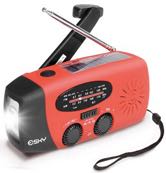

 Featured categories
 Dish TV Discount Program


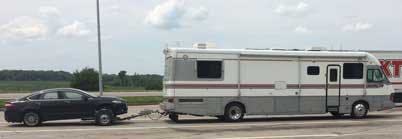

 How can you end the “military” RV shower?
 Wholesale shipments of RVs to dealers continue to surge ahead, says the RV Industry Association. Overall, sales were up more than 13 percent in May, compared to May 2015. Class C motorhomes took the lead, up 23 percent, with travel trailers showing a strong growth of close to 13 percent.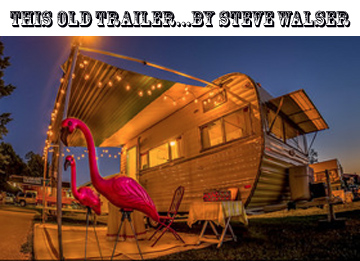

 An Electric Bike is the perfect, simplest and most affordable way of sorting all the ‘challenges’ of RV’ing. Get around camp effortlessly, visit the sites or town nearby without unhooking or simply enjoy a fun ride with fellow campers!



 Ready to plan
  Keep up with RV Industry news
 The new TireTraker™ TT-500 is the most innovative & user friendly TPMS on the market with an unprecedented “Lifetime Warranty”, the only TPMS company in the industry to do so. The TT-500 features a larger, easier to read display, continuous pressure & temperature monitoring, automatic update, & monitoring up to 22 tires on your motorhome, trailer & tow vehicle from 0-232 psi ! Seven day per week sales & technical support & over 12 years of experience. List price (4 tires) $389. Our price only $289.


 America’s Largest RV Show runs September 14–18, 2016


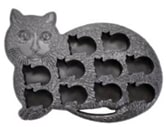


 Super clean your holding tanks!


 An inspirational book about RVing
 It’s Spring: Time to change your water filter!


 Keep your food cool

 Endorsed by Roger Marble of RVtireSafety.com!
 How many times have you wanted to stay out camping another day or two, but ran out of fresh water or the gray tank was full and had to be dumped? Have you ever thought about how much fresh, clean water gets wasted going down the drain while you’re waiting for it to get warm? What if there was a way to solve both of these issues? With SHOWERMI$ER, there is. The SHOWERMI$ER simply connects to your shower outlet. By flipping a small lever, you can redirect the cold water back into the fresh water tank, before it even comes out of the showerhead. Then it will change colors to let you know the hot water has arrived to the showerhead! How cool — we mean, hot!

 Stupid predictions
  Improve performance

 Easily clean those


