Dear Chris,
I am a new RVer and have a new Class C motorhome which we purchased this spring. I have a friend that my wife and I boondock with and as fall comes on, his ability to recharge his fifth wheel batteries by solar panel becomes troublesome due to cloudiness or just plain ol’ reduction in daylight hours. My coach has a 5000-watt generator. Which begs the question: Is it possible for me to run my generator and charge his batteries using heavy-gauge extension cords, just as if he were plugged in at home? If so, would I charge from an outside outlet on the exterior of my coach or from the main source plug (not sure what the official name is, but the one that I would use to plug into shore power with)? —Larry and Becky
Dear Larry and Becky,
When you’re running your generator your shore power cord is disconnected through the transfer switch and will do nothing (provided you have a transfer switch…some coaches don’t.). Plugging him into the exterior outlet on your coach is just fine, as long as he realizes he can’t run much on it. If all you’re doing is giving him enough power to operate the converter/charger then that’s fine. The extension cord you use should be rated heavy enough to handle 15 or 20 amps for the distance you’re going. As long as the cord is adequate, the worst thing that can happen from a load standpoint is you’ll blow the breaker if he draws too much.
Being an occasional “follower” of various RV discussion groups – forums, if you will – we run across some, shall we say, interesting subjects. No doubt there’s plenty of chatter about the best tow service, clever hints for how to prepare quick meals, and the perennial favorite of what’s the best holding tank treatment. Poop is big on RV forums, and you just can’t seem to get anywhere on a forum without stepping right into it.
Which brings us to the point. For those who boondock regularly, a favorite question is how to be able to stay out on the boonies for as long as possible without having to come back to civilization. The big problem for most is holding tank capacity. We’ll spare you the clever ways folks are dealing with excess gray water, but one subject that should concern all of us is how to make that black water holding tank last and last.
One fellow, evidently somewhat new to the lifestyle, commented that he’d been out a few times with his rig without any problems until a recent trip when he had nine people stashed away in his Bounder for a weekend of camping. By the time he got back home, both his grey and black tanks were nigh unto overflowing and the odor was unbearable. What could he do to make things last better?
Ah, cat holes you say? Yes, that bivouac practice of digging a little hole out there in the wild, doing your duty, and then covering it back over, cat-like. We’d hate to see what the area around his Bounder would’ve looked like with cat holes from nine or ten beer-drinking, brats and burger eating cat hole diggers would be like. Something says it would soon be labeled an EPA “Super Fund Site.”
One suggestion made, and we hate to say it – it wasn’t the first place we’ve seen it made – was to simply deploy kitchen trash bags as covers over the open RV toilet. “Huh?” you say? Let us delicately put it: When you need to go Number 1, go find a handy bush. If you must eliminate certain, more hard-core, odoriferous bodily wastes, you do it in a kitchen trash bag that prevents your solid wastes from going down into the black water holding tank. Just do your thing man, tie the bag off, and dump it off later.
We have never, thankfully, had the thankless job of being the campground trash man. Just opening the lid of a dumpster is enough to make knees weak on a hot day. But it’s simply unimaginable to think of dealing with kitchen trash bags loaded with human waste. According to the American Public Health Association, “More than 100 different enteric viruses, including polio and hepatitis are known to be excreted in human feces and these viruses can live for months after the stool as passed from the body.”
For those who say, “There ought to be a law,” in many places there is. In Seattle, for example, a portion of the municipal code reads: “The following shall not be deposited or discarded into any commercial or residential garbage can, container or receptacle: Dead animals over fifteen (15) pounds; sewage; human or animal excrement . . .”
Seems like common sense, and if you will, human decency not to bag and trash your poop.
Learn about RV camping, RV travel, RV news and much more. This newsletter, now in its 15th year of continuous publication, is funded primarily through advertising and voluntary subscription contributions from our readers. Thank you!
Issue 738 • Week of April 16-22, 2016
Editor’s corner With Chuck Woodbury Chuck (at) RVtravel.com
We made it! We have moved to our new server and flipped the switch on our new, improved website. I hope you’ll poke around to see how everything looks. Remember, we’ve got a lot more to post in the coming weeks and months.
Route 66 in Amboy, Calif. There’s a free overnight parking area to the right of where I was standing. I snapped this photo about a year ago.
It’s now a lot easier to find the information you’re looking for, whether about buying a new RV, maintaining the one you have, setting up camp — or even how to keep rattlesnakes from invading your RV (that article is in response to an email we received recently from reader Tim Slack). If you can’t find something using the categories tab on the blue bar at the top of the page, use the search box in the right-hand column — it’s very effective at finding exactly what you’re looking for.
As of today, Saturday, April 16, we have imported about 1,000 articles from our vast archives — all updated, plus new stories we’ve been working on the past week. We have several thousand more articles to bring in plus new features to introduce. Return to our front page every day to scan the “Recent Articles” category to see what’s new.
Thanks to Russ De Maris, Diane McGovern, Greg Illes, Bob Difley and Jody Allcott for working long hours to help get this new website site launched. Special thanks go to our long-time friend and webmaster Zoey Platt, who is responsible for our new look and its new and improved functionality. It’s been a huge effort and I think most of us are a bit tired. But we’ll perk up fast and get back into action next week.
We still have work to do — resuming our reader surveys and starting up two new contests, one of which, Spin and Win, will be showcased on our YouTube channel — exposing RVtravel.com to countless thousands of RVers, and hopefully enticing many to become subscribers.
That’s for this week except to say I am gradually importing years of my Roadside Journal posts to this website — most are not timely, some going back to my days as an on-the-road reporter with my roving newspaper Out West. It’s in this journal where I truly feel myself, writing about whatever is on my mind, which just so happens often is related to RVing, the greatest way to travel in the World.
I hope you enjoy the new website. Please tell your friends!
P.S. As you move about our new website, you will likely notice some glitches. If you come across articles with missing photos or other problems, please let me know where they are so I can fix what’s broken. As always, I appreciate your emails. I’m at chuck(at)RVtravel.com.
Also: Some of our regular features are missing this week. They’ll be back. We got so busy getting the new website up and running that we ran out of time to include everything in this issue.
RVs & Electric Bikes – the perfect match! An Electric Bike is the perfect, simplest and most affordable way of sorting all the ‘challenges’ of RV’ing. Get around camp effortlessly, visit the sites or town nearby without unhooking or simply enjoy a fun ride with fellow campers! Click here to discover our electric bikesand get $100 off, free shipping & returns, and 0% financing on any new EVELO using the code RVTRAVEL during checkout!
Would you pay 10 cents to read this newsletter? Our staff works hard to bring you an entertaining and informative newsletter every Saturday. The readers of the newsletter help make it possible with their voluntary subscriptions. Even a pledge of $5 a year would be appreciated — that’s less than 10 cents an issue! Many readers pledge more — $10 a year is less than 20 cents an issue! If you care to chip in, please know we will be very appreciative. Just contribute what you think is fair. Learn more here.
NO CONTESTS OR SURVEYS FOR THE NEXT FEW WEEKS
Reader RVs
What RV do you drive or tow?Please send us a photo of your RV with a 150-200 word description of where and how you travel with it, and what you like (or don’t like) about it. (If you want, just send us your notes and we’ll put your story together for you.) If you have a photo of it in a scenic setting, that’s great. Be sure to include your name(s) and your hometown (unless you’re a full-timer). We’ll post them to RVtravel.com. Send to assistant editor Diane McGovern at Diane(at)RVtravel.com .
CLICK HERE to see this week’s RV Travel Reader RVs.
You Decide! Tow Dolly or Utility Trailer?
The Tow-Mate aluminum flatbed attachment helps turn a tow dolly into a handy multi-use utility trailer. With the Tow-Mate, your tow dolly can do more than just tow your car; it can haul your golf cart, motorcycle, snowmobile or ATV. It’s lightweight and can be attached or detached in minutes. The patented bracketing system allows it to fit most all brands, models and ages of tow dollies. Click here to learn more about the Tow-Mate and get $100 off your purchase using the code RVTRAVEL during checkout!
Don’t forget: Throughout National Park Week, April 16-24, admission to every National Park is free!
Colorado campers may see fee increases at a couple of National Park venues. Campground fees at Black Canyon of the Gunnison National Park and the Curecanti National Recreation Area will jump. At Black Canyon they’ll increase $4 a night at South Rim, North Rim and East Portal campgrounds. Ditto at Curecanti campgrounds.
RV park owner Gene Baker of Tupelo, Miss., was happy to get a check from Erica Flores Dunahoo for her family’s first month rent – until he learned that Erica, who is white, was married to an African-American. The next day Baker returned the check, and later explained to the media that having an interracial couple in his park would offend his neighbors. Asked what he’d do if another mixed-marriage couple wanted to stay at his park, Baker said he’d shut the park down. The matter is under investigation.
GM announced Friday it is recalling more than 1 million model-year 2014-2015 Chevrolet Silverado and GMC Sierra 1500 pickup trucks for a seat belt flaw, including a stop-sale of new 2014 and 2015 pickups still on dealer lots. GM said the recall was prompted by warranty data that showed part of the seat belt can separate over time, but it is not aware of crashes or injuries linked to the defect. Repairs will be free to owners.
The U.S. military wants to expand its training footprint in Washington state. That’s trouble to residents who worry about noise and other impacts from increased takeoffs and landing of the Navy’s EA-18G Growlers at nearby Whidbey Island air station. The noise is already an issue at DeceptionPass State Park. On a bad night, reports the Seattle Times, the park may refund $500 to $1,000 in camping fees from park guests who leave early. “If you are a camper with little children, it can just destroy the experience you are trying to have,” said Jack Hartt, manager at the park, the state’s most visited.
Dispersed camping in Colorado’s White River National Forest is going to get a bit more restricted. Officials with the Dillon Ranger District want to shut down overnight camping along portions of the road between Montezuma and Keystone. In a largely urban area, the camping has become too popular with folks who stay for long periods of time, often leaving trash, human waste, and even abandoned RVs behind.
With weaker sales of Class A motorhomes, Indiana rig builder Newmar Corporation has laid off an undisclosed number of employees. The company suggested a sales sag is “related to pre-election activity and the fluctuation of the stock market.”
Camping in Wisconsin? The state’s governor just signed a new law (AB174) that frees private campground owners, operators, and their employees in ways that might affect you. Here’s the fine print: Such individuals “are immune from civil liability for property damage or for the death of or injury to an individual that is caused by or occurred during use of the campground, unless the property damage, death, or injury is caused by a willful or wanton act or omission of the owner or operator of the campground or of an employee or agent of the campground or campground owner or operator.” How that plays out in practice will no doubt come up in some future court action.
Camp host needed – Silver City, N.M. This position shows an opening now through the end of March 2017. Bring your RV, hook up to full utilities including phone and propane. Open and close gates, smile, answer questions, maybe some litter and weed picking. Call Brian Martinez, Natural Resource Specialist at 575-388-8301.
In Colorado’s Rocky Mountain National Park the term “bug spray” applies to more than DEET. Tree-killing beetles are being given the unwelcome mat treatment from late this month through Memorial Day in the form of insecticide spraying in some park areas. Of particular interest: Aspenglen Campground, Moraine Park Campground, Hollowell Park and Upper Beaver Meadows picnic areas. All will be sprayed with carbaryl-based pesticides.
Clean your RV… with beastly-good results! Your RV’s not your car, it’s your “beast.”
Your RV’s large surface area makes it a beast that collects more bugs, grit, grime, soot and industrial pollution than your car does. And it may have different surfaces of paint, fiberglass, vinyl and aluminum. Click on the video to watch Wade clean everything with Beast Wash as it cuts through slime and grime. You’ll see the difference. SALE! 5% off – Use code:RVTravel16when ordering.
More News Lady Lake, Fla., is home to a BIG RV park – Recreation Plantation has 850 sites. Now it wants to get even bigger – expanding by 232 sites and adding a swimming pool, clubhouse and pickleball courts. The local zoning board will decide if it can proceed.
Morro Bay, Calif., city officials are seeking input from residents on a local hot-button issue: RV parking. Currently city code prohibits parking RVs and boats on private property, but unless there are health and safety concerns officials aren’t enforcing it. Now the city is soliciting public opinion to seek a solution.
There’s good and bad news at Iowa’s Lake Manawa State Park. First, a move to dredge sand from the lake for improved clarity is progressing. The bad news – a proposal that would have replaced 73 existing sites with 51 full-hookup sites has stalled. The park closed the old sites in November, planning to move them. But that’s off due to wetlands concerns. No camping this year – and the future is uncertain.
There’s no peace in Palestine, Texas. Purple Peacock Resort owners Butch and Phyllis Manuel have ignited an uproar among locals after announcing that RVers may now go au naturel at their resort. The Peacock’s tanning and pool areas will be “clothing optional,” when the park opens around Memorial Day. Reaction to the news has led to plenty of “hot” commentary in the local media.
As we reported last week, wildfire broke out in Arizona’s Havasu National Wildlife Refuge on April 6 and quickly jumped over the Colorado River and into California. Along the way, some two square miles of brushland went up in smoke, and RVers at Pirate’s Cove Resort had to be evacuated. As of press time, the fire was reported to be nearly contained, with Pirates Cove back to normal.
IEDs – improvised explosive devices, the bane of soldiers serving in the Middle East — are getting closer to home. RV park guests in San Leon, Texas, discovered a “suspicious device” at the Bayshore RV Park. Authorities brought in appropriate removal experts and the IED was safely taken away. No suspects.
Boondocking RVers who rely on solar panels curse the rain – but that may soon end. A Chinese research group is experimenting with solar cells that utilize graphene – a form of carbon – to produce power from raindrops. Since rain is not pure water but contains salts, when in contact with graphene, positively charged ions pair with negatively charged ones from the salts, creating a “pseudo-capacitor.” Evidently the potential difference is sufficient to produce a flow of electrons.
A new twist on an old scam fooled a Lawrence, Kan., woman, who spotted a 2006 RV for sale on Craigslist for $2,500. The woman answering the phone gave a sob story involving a dead husband and an RV full of happy memories. Just pay me — not with a Western Union transfer — but with Apple iTunes gift cards. The “customer” forked over a total of $3,500 in gift cards (“seller” needed more for “insurance”) only to, of course, never get the rig. A “reverse image” search showed the photo of the rig was ripped off from a legitimate RV dealer website and posted as bait on the Craigslist ad.
More “brilliant” crooks surfaced in Pflugerville, Texas: Four teenagers broke into a home, and after they failed to open a safe they settled for stealing pocket change off a dresser. Once outside the home, they decided to “chill” inside the owner’s RV – and help themselves to some cereal. A suspicious neighbor confronted them — they ran but were caught right away by police. One of the charges? Engaging in organized crime. Probably should be “dis-organized.”
The last roof your RV will ever need. Guaranteed!
“RV Armor took care of our problems and did our roof replacement while we stayed in our RV. Their service gave us great value savings and came with a lifetime, unconditional, parts and labor warranty, which is also transferable.” —Happy customer Don Fredericks. Financing available! RV Armor: The Ultimate RV Roof.
Try “call forwarding” to make your life simpler
Here’s a handy tip from reader Steve Willey: Get “call forwarding” on your home (or office) phone, for about $2.50 a month. Then, before you leave on a trip, just dial three digits on your cell phone and all calls to your home or to the cell will ring on the cell phone. You’ll discover many more advantages to this system as you use it. Thanks, Steve!
Navigating parking lots with a big RV
It can be no small chore driving in, around and out of a parking lot with a big RV, as Jim Twamley observes in this article. If you drive or tow a king-sized RV, Jim’s advice may come in handy. Read more.
An additional type of fire extinguisher may be worthwhile
Consider fire extinguisher “aerosol spray” systems for your tow vehicle, and extras for inside your RV. Less expensive and lighter than conventional blasters, they’re said to discharge much longer, too. These won’t substitute for a good powder-type extinguisher, but may be the backup that saves your bacon.
Are AGM or lithium in your RV battery’s future?
If you thought you knew a lot about batteries, be prepared to go back to school in the near future: Batteries are getting better, some lasting far longer than of those most of have used for years. See what’s happening in the world of RV batteries by clicking here.
How to keep rattlesnakes out of your RV
RVer Tim Slack emailed us recently from Arizona with a question we hadn’t heard before: “Are there any reasonable ways to keep snakes away from the vicinity of an RV? We’re in rattlesnake territory and yesterday had a 3-foot diamondback heading for our cat in her outdoor playpen.” Read more.
It’s very important to keep your RV sealants fresh
The most frequent cause of damaging RV water leaks isn’t the roof itself – rather, it’s the sealants around vents, trim, windows, etc. Sealant doesn’t last forever, and your RV warranty requires you to keep sealants fresh. Read more.
Reduce air drag and boost fuel efficiency — Airtab® your RV! Just peel and stick Airtabs™ to the rear sides and the rear roof of your RV coach or trailer to create swirls of air that reduce aerodynamic drag, save fuel and improve stability. Airtabs™ dramatically reduce trailer ‘fish tailing’ and crosswinds pressure to RVs from passing trucks, while improving fuel efficiency 2% – 5%! Click on the video.
For your safety — battery/crank-powered radios
Rich “The Wanderman” has been giving some thought lately to failures, as in equipment when traveling in his RV. Like what to do if there is a weather emergency and you have no power — battery or otherwise — and you need a weather update. Why, just crank up your emergency radio. Read more.
Travel trailer tire “blowout” — but not quite
RV tire expert Roger Marble recently received a letter from a reader describing a travel tire failure. The reader wondered what caused the “blowout” and why his tire pressure monitoring system didn’t alert him until a few seconds after the “blowout.” Read Roger’s response here.
This week in history
Ernie Pyle
1838 — Naturalist John Muir is born.
1897 — First Boston Marathon held.
1945 — WWII journalist Ernie Pyle killed at Okinawa.
1956 — Grace Kelly and Prince Rainier marry.
1964 — Ford Mustang debuts at World’s Fair in Flushing Meadows, N.Y.
2008 — Danica Patrick becomes first woman to win Indy race.
2012 — Dick Clark, host of “American Bandstand” and “New Year’s Rockin’ Eve,” dies.
RV Clubs Here are a couple of RV clubs from our extensive directory which you may be interested in:
GMC Motorhome Clubs.
A long list of GMC motorhome clubs, as well as GMC specialty clubs.
Fulltime Families.
“The best resource for your family’s full time RV adventures and aspirations.” Benefits include discounts on services and products, a family-friendly campground directory, and year-round activities across the country.
Light up your RV with Boogey Lights! RV accent lighting is all the rage! Just look around the RV park! Enter Boogey Lights®! These robust, super-bright, state-of-the-art LED lights with hi-tech controller technology represent the next generation in LED lighting for RVs. The AWNING & UNDER-GLOW LIGHT KITS are specifically designed to withstand harsh operating environments. Don’t waste your money on junk! Get Boogey Lights! You can even control them with your Smart Phone! Learn more or click the video for a demonstration.
Bumper sticker of the week
Be nice to your kids — They’ll choose your nursing home.
Funny/clever business slogan
“We just keep rolling a lawn,” — JB Instant Lawn, Portland, Oregon
Have you seen a funny bumper sticker or business slogan? Send it to Diane(at)RVtravel.com
The New TireTraker™ TT-500 with a Lifetime Warranty The new TireTraker™ TT-500 is the most innovative & user friendly TPMS on the market with an unprecedented “Lifetime Warranty”, the only TPMS company in the industry to do so. The TT-500 features a larger, easier to read display, continuous pressure & temperature monitoring, automatic update, & monitoring up to 22 tires on your motorhome, trailer & tow vehicle from 0-232 psi ! Seven day per week sales & technical support & over 12 years of experience. List price (4 tires) $389. Our price only $289. SAVE $100! (Additional Sensors $35 each). Learn more or order. Read testimonials.
Upcoming RV Shows
See the recently updated, long list of upcoming RV shows for 2016.
Websites of the Week
We like these websites. Check ’em out. More next week.
Good reading from RV123.com •Devil’s Lake State Park.
•Featured App: VHS Camcorder.
•Ham, Egg and Cheese Breakfast Sandwiches
Visit our YouTube Channel. More than 500 great videos about RVing!
Ask the RV Shrink
Dear RV Shrink:
I want to cross the border into Mexico to have an eye exam and maybe see a dentist. My wife thinks I should also get my head examined. She thinks everyone who goes to Mexico is never heard from again. I have heard that many people cross the border for dental, eye and prescriptions. Am I missing something? We are in an RV park right near the border. Do you think it is worth a trip to save a few bucks? How do I convince my wife it’s safe? —Borderline yahoo in Yuma
RV Parts
and Accessories
Give Dyers a try on your next purchase of RV parts or accessories. Large selection, great service, low prices and fast shipping. Visit our website.
RV Tech Tips from Mark Polk
Cleaning roof vent screens
Roof vent screens can be cleaned from the top of the RV. Some roof vent screens can be easily removed for cleaning. You can vacuum the screen with a small hand-held vacuum cleaner, or lightly brush the screen using a soft bristle brush. Lubricate the roof vent gears annually with light, water-resistant grease.
Mark Polk is the owner of RV Education 101, the premiere source of educational DVDs about buying, maintaining and using an RV. Learn more.
Temperature gun is ‘essential equipment’ for many RVers! Just aim this non-contact IR temperature gun to measure the temperature of your refrigerator, tires, A/C output, or, heck, even your oven (and the list goes on). It turns on and begins reading the temperature in Celsius or Fahrenheit with one press of the trigger. A laser light aids in aiming, and can be turned on or off. Many RVers consider this essential equipment. Learn more or order at a huge discount.
Latest fuel prices
Here are the latest U.S. average prices per gallon of gasoline and diesel fuel. Regular unleaded gasoline: $2.07 (on Apr. 11)
Change from week before: Down 1 cent; Change from year before: Down 34 cents Diesel: $2.13 (on Apr. 11)
Change from week before: Up 1 cent; Change from year before: Down 63 cents
2016 The Milepost
This is THE mile-by-mile guidebook for RV or auto travelers headed to Alaska, the Yukon Territory, British Columbia, Alberta and the Northwest Territories. First published in 1949 as a guide about traveling along the Alaska Highway, today’s Milepost includes more than 600 pictures and more than 100 maps, and details every place travelers might eat, sleep or pull off the road for scenic viewing. Learn more or order.
Upcoming RV Shows
• Kitchener RV Show & Sale, April 15–17, Kitchener, ON, Canada
• Spring Hall of Fame RV & Camping Show, April 21-24, Elkhart, IN
• BC Interior RV Show, April 22-24, Penticton, B.C. Canada
• Puyallup RV Show, April 28-May 1, Puyallup, WA
Complete list of upcoming shows in the USA and Canada. Click here.
Essential equipment for many RVers! Camco TastePURE Water Filter with Flexible Hose Protector This best-selling product reduces bad taste, odor, chlorine and sediment in drinking water with a 100-micron fiber filter. Its durable in-line, exterior mount filter has a wider body to increase flow. Use it at your campsite to keep sediment out of your RV water tank and to improve the taste and smell of your drinking water for a whole season. Many RVers consider this essential equipment. Learn more or order at a big discount.
Random RV Thought
When camping in the desert or forest, do not leave your poodle or other small pet leashed and alone outside. This is especially true at night. Coyotes love to dine on poodles and other small critters. If you leave Spot or Fifi outside overnight, you may end up with only a leash and collar in the morning.
Easily brew a cup of coffee This is great for RVers! Brew a single cup of coffee without the high cost of an expensive coffee maker with the MyJo Single Cup Coffee Maker! Just fill reservoir with hot water from tea kettle, or heat water in a microwave. Assemble, place K-Cup pack in base, attach the water reservoir and pump. Watch the video for a short demonstration or learn more or order at a big discount.
Trivia In 1949, dockworkers unloaded two tiny German cars at the port of New York. They looked like bugs, and their engines were in the wrong end. But they were well built, thrifty and fun. Volkswagens were different from American cars, and that was part of their appeal — especially for young people. Ten years later, America imported 120,000 “Bugs” a year. A small but growing number of people wanted something different.
Just published for 2016 Locate services at Interstate exits The 2016 Next Exit is the most complete USA Interstate highway exit directory ever published for every exit of major and most minor routes. Find what’s located at upcoming exits on your route — gas, food, lodging, camping, shopping, hospitals, Wal-Marts and much more. A best-seller year after year. Learn more or order.
Worth Pondering “If you say there are elephants flying in the sky, people are not going to believe you. But if you say that there are 425 elephants in the sky people will probably believe you.”— Gabriel Garcia Marquez, Writer
Keep your fridge in order when you travel Tired of stuff moving around in your RV fridge after a day of driving? Maybe a carton of milk has fallen out on the floor one too many times? Here’s the solution. Camco’s RV Double Refrigerator Bar is designed to keep order in your RV fridge during travel. It’s spring loaded to keep items in place. The bar extends from 16″ to 28″. And the good part is the price tag: about $5! (the RVtravel.com staff uses a pair of these in its RV!) Learn more or order.
Joke of the week
Wife: “The two things I cook best are meat loaf and apple pie.” Husband: “Which is this?”
Keep your food cool with this RV fridge fan Every RV refrigerator should have one of these!
This small refrigerator fan from Valterra Products will help keep the food in your RV fridge cool and from spoiling. It cuts down initial cool-down time by 50 percent. Runs for more than 30 days on 2 D batteries. Don’t leave home without this! Learn more or order from Amazon.com.
RV Travel staff
Editor and Publisher: Chuck Woodbury. Assistant editor: Diane McGovern. Contributing editor: Russ De Maris Contributing writers: Greg Illes, Bob Difley, Richard Miller, Richard Mallery, Janet Groene, Roger Marble and Julianne Crane. Office manager: Jody Allcott.
ADVERTISE on RVtravel.com and/or in this newsletter. Contact Chuck Woodbury at Chuck(at)RVtravel.com.
About the RVtravel.com editor Chuck Woodbury has explored America by RV for nearly three decades. In the ’90s he published the quirky travel newspaper Out West, and was an “on the road” writer for the New York Times Syndicate. His book, “The Best from Out West” is available at Amazon.com. Woodbury’s RVing adventures have been profiled on ABC News, CNN, NBC’s Today Show, and in People Magazine, USA Today and in hundreds of newspapers. Nowadays, he lives near Seattle, where he drinks massive amounts of coffee and travels often in his motorhome and sometimes by plane when vast expanses of saltwater would turn his RV into a leaky submarine. He is the host of the Better Business Bureau DVD “Buying a Recreational Vehicle,” the definitive guide to purchasing an RV the right way.
Everything in this newsletter is true to the best of our knowledge. But we occasionally get something wrong. We’re just human! So don’t go spending $10,000 on something we said was good simply because we said so, or fixing something according to what we suggested (check with your own technician first). Maybe we made a mistake. Tips and/or comments in this newsletter are those of the authors and may not reflect the views of RVtravel.com or this newsletter.
Our offices are located at 610 5th Ave. S, Suite F, Edmonds, WA 98020.
This website utilizes some advertising services. Sometimes we are paid if you click one of those links and purchase a product or service. Regardless of this potential revenue, unless stated otherwise, we only recommend products or services we believe provide value to our readers. Amazon and the Amazon logo are trademarks of Amazon.com, Inc . RVtravel.com is a participant in the Amazon Services LLC Associates Program, an affiliate advertising program designed to provide a means for sites to earn advertising fees by advertising and linking to Amazon.com.
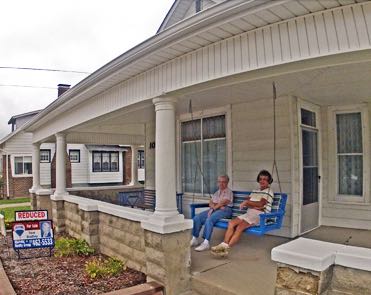
Passing through tiny Kennard, Ind., yesterday I came across these women on a front porch. I stopped in my lane right in the middle of the highway, which was also the main street. There was no other traffic. I jumped out of my RV. “May I take your picture?”
Yes, they said. I think they may have thought I was crazy, jumping out of my motorhome like that, asking to take their picture. They didn’t know that I had been looking for someone sitting on a front porch for a few days, which would mean for a few states.
You don’t see many front porches today, much less people sitting on them.
That’s a shame. I think the disappearance of front porches has a lot to do with how isolated people are from one another these days. We don’t know our neighbors. Back in the old days, sitting on a front porch was an important way people socialized. They sat on the porch, sipped an ice tea, and chatted with their neighbors as they walked by on their way to the grocery store, or maybe were out for a stroll.
Then came air conditioning and TV, and everybody moved inside. Porches sat empty and new houses did away with them all together. People sat in their fenced back yards. Nobody saw anybody any more. It was easy to go years without even knowing your neighbors.
The woman on the left said she had just sold the house. She and her husband lived there 47 years, but he died recently. She sold it for $42,000 (she originally asked $69,000). She’ll move into a condo, she said, looking sad. Her husband made many improvements including an 800-square-foot addition in the back. “He was real handy,” she said. Where I live near Seattle, a nice house like this would go for $300,000 or more.
I wished people still had front porches and still used them. I think our country would be a better place.
Dear RV Shrink:
I want to cross the border into Mexico to have an eye exam and maybe see a dentist. My wife thinks I should also get my head examined. She thinks everyone who goes to Mexico is never heard from again. I have heard that many people cross the border for dental, eye and prescriptions. Am I missing something?
We are in an RV park right near the border. Do you think it is worth a trip to save a few bucks? How do I convince my wife it’s safe? —Borderline yahoo in Yuma
Dear Yahoo:
Everyone has their own comfort level when traveling. It is very common for U.S. and Canadian snowbirds to cross into Mexico and save hundreds, even thousands of dollars on health care. A way to make your wife more comfortable with the idea would be to talk to fellow travelers. If you are in a park near the border, park management would be a great place to start. They will probably even give you some references across the border.
We are in Poncho Villa State Park in Columbus, New Mexico this week. My wife just went to Palomas, Mexico a couple miles down the road, had an eye exam, and bought two pair of glasses for $150. I have been telling people they found Guacamole in one eye, but she doesn’t see the humor in it.
Our friends went to the dentist while we were at the eye doctor’s office. They had new crowns for about a quarter of what it would cost in the U.S. and found everything very professional.
When all the doctoring was over, we met at the famous “Pink Store.” In just a few hours we enjoyed free drinks, good food, excellent service, inexpensive prices, and the friendliest people in Mexico. It’s hard to find a downside to that. —Keep Smilin’, RV Shrink
The RV Shrink is not really a psychologist (or professional RV technician). But he does knows a lot.
Read more by the RV Shrink
Many of us were taught the “proper” rules for the dinner table. Put your napkin on your lap. Don’t burp. Say “please,” when asking for the condiment dish. Etiquette, says the dictionary, “implies observance of the formal requirements governing behavior in polite society.” We’d like to think that RVers make up “polite society,” but unless we were raised by an RVing family, we may not know all the ins and outs. There are certain politenesses that apply in the campground.
Here’s an area that buffalos some RVers: Not claim jumping. From our own experience in boondocking, we were looking for our “perfect place,” on the desert in Arizona on public land. After finally figuring out a spot, we carefully laid out a couple of items–a folding chair, an ice box, to indicate we would return here to set up camp. When we came back we found our gear parked on the road just outside the site, and a utility trailer parked smack in the middle of the site. Some days later the utility trailer was moved, and an RV was parked in its place.
Not looking for a Hatfield-McCoys situation, we just let it go. Still, it rankled us heavily, because typically, when you leave gear in a site, it’s accepted the site is occupied. Yeah, it seems these ‘good folks’ knew that, but they wanted the site more for themselves (or a friend perhaps) enough to become rather boorish in their behavior.
So for the record: If you find gear left in a spot, or a sign that says, “Site Occupied,” it means just that. Find yourself another piece of paradise. In many public campgrounds, a tag hanging on the post that reads, “RESERVED” means the same thing. You’d think this would be simple, but there are those who apparently don’t get it.
On another occasion, we were camped in a “beach front” site next to the Pacific Ocean. Our awning was rolled out and a “grass carpet” set up so we could kick back in our folding chairs and watch the surf roll up on the rocks below. Ah, paradise! But paradise was repeatedly disturbed by troops of young people who would cut across our “turf” to make a shorter pass to the beach access trail. We did our best to politely admonish these ones, all to no avail. Before we left the site, who should likewise cut through our camp but the parents of these charming little brats. The apple fails not to fall far.
Yes, it may well technically be “public land,” but when someone has parked their RV there in accordance with the rules, the area around their rig and within their designated campsite really is “theirs.” That certain politeness says we don’t go tramping through that area, and helping our children (and grands) to understand these same principles is appreciated by all.
We might add, if your dog wanders, chain him up. And when you walk him, take along your poop scooping gear and clean up after him. There’s nothing quite so memorable as stepping out in the middle of a dark night for a deep meditation on the stars of the heavens and suddenly wandering into a pile. It will bring you back to earth in an instant.
What’s a blue boy? Well, we’re not talking about silly Cousin Dexter who locked the door behind him when he went out to look at the snow in Minot. Seriously, though, a blue boy for boondocking RVers is probably the greatest thing since sliced bread.
Blue boys are portable waste tanks that allow RVers to leave their rig parked while still getting waste water out to a proper dump station. Dubbed “blue boy” because many commercially produced tanks for this use are fabricated from blue colored plastic. You’ll see a couple of different varieties. Most are equipped with a pair of wheels at one end and a wagon-tongue or draw bar apparatus that allows one to tow the tank behind a vehicle using a hitch ball.
Once at the dump station, one lifts the blue boy, pivoting it on its wheels to dump the tank out through a 3″ port. It’s this same port, in conjunction with an RV sewer hose, that allows you to dump your RV. Here’s how it works:
A sewer hose with a bayonet fitting on each end is connected to the blue boy and to the RV’s dump port. A small cap on the blue boy allows for air to be blasted out as waste is dumped in from the RV. As you would at a dump station, dump the black water into the blue boy first. It’s not likely the portable tank will be big enough to absorb the entire “load” of your black water, you do well to leave a wee bit of head space in the blue boy to allow you to “top off” the tank with gray water, thus rinsing your hose.
The real trick when first learning how to fill a blue boy is to gauge when you’ve enough fluid in the portable tank–and not too much! Icky fluids can quite vigorously blast out of the “air hole,” and create a bit of a mess.
The wheels typically found on blue boys aren’t all that skookum, particularly if you tow your blue boy over rocky ground. Many RVers end up replacing the factory wheels with pneumatic tires from a hardware store. Other RVers simply mount their blue boy on a hand truck (as in used for furniture moving) and tow the hand truck to the dump station. Of course if the distance is large or requires a trip down the highway, you’re better off loading the blue boy on a truck (we prefer using a ramp for this procedure) and driving to the dump station.
You’ll find blue boys for sale at RV part suppliers and on the Internet.
photo credit: on handtruck and on trailer, R&T De Maris
Send a photo of your RV and a 150 to 200 word description of it, how and where you use it, and what you like or don’t like about it, to Diane(at)RVtravel.com. Be sure to include your name(s) and hometown, or if you’re a full-timer. (These are posted in the order received.)
The RVs of RVtravel.com readers and how they use them
Issue 52; Posted Apr. 16, 2016
From Richard Forlani, Valatie, New York
This is my 28-foot Bullet trailer, which I tow with a Ford F-150 with EcoBoost engine (great engine for trailering). In the picture we were stuck in an unexpected snowstorm in Fort Stockton, Texas … after leaving New York to avoid the snow in January 2016. (After last winter in Valatie, N.Y., I promised never again!) We made it to Death Valley just fine … parked overnight at a Love’s truck stop.
I have 200+ watts of solar panels on the trailer. We were not plugged into any electric for eight weeks and did just fine with lights, heat, hot water, charging phone and computer, and listening to the radio.
My wife, Jackie, and I did much RVing, including hosting at Camden Hills State Park, Maine, and many cross-country trips. This was my first trip without her (she passed last February). My faithful traveling companion on this trip was a rescued lab mix named Sweet Emily. I was rather apprehensive before the trip, but once I hooked up the trailer and got behind the wheel I was fine. Of course, there were a few lonesome moments but Emily took care of most of them.
On this trip I was on my way to meet dear friends in Death Valley. Alex was the best man and wrote the ceremony at our wedding 44 years ago at Fallen Leaf Lake at South Lake Tahoe, California. Alex’s wife’s name is Suzanne. Yes, it was a hippie wedding and, yes, we wore flowers in our hair. My first trip out West was in a 1961 Volkswagen van. For many years Jackie and I had a blog: 2hippies2pups.blogspot.com. It still exists in cyberspace. I took the pictures and she did the writing and computer work, so now I just put the pictures on Facebook for others to enjoy.
My plans are to winter in California and Arizona, and summer in the Sierras and upstate New York and Canada. I’ll spend time in between with my grandchildren in Kingston, New York.
Life is what happens … while you’re making other plans.
From Mark and Kathy Hufstedler, Rochester Minnesota
We made a huge jump from tent camping to a 2004 36-foot class A Gulfstream Independence in 2011. We really enjoyed sitting up high and having the freedom of one of us being able to get up and get a beverage, make a sandwich, etc., all without having to stop. However, the noisy and fully taxed front engine V-10 coupled with the busy steering had us looking for a diesel pusher.
We found the perfect fit in our 2004 Itasca Horizon with a 350 HP Cummings. The TV is directly across from the couch, and all of the nice amenities have allowed us to really enjoy our travels.
Even with fuel prices relatively low, some of the highest costs of RVing come in the form of fuel purchases — and RVers need every break they can get. Instead of focusing on the technical issues of fuel economy, let’s talk about how to actually save money at the fuel pump.
Much of how you save fuel dollars is on where you buy the fuel. Comparing fuel prices station by station makes sense, but who wants to drive all over a strange town comparing prices, then finding out the first station you saw had the best price? Internet fuel price comparison services make a big difference. gasbuddy.com uses volunteer price watchers to post updated prices on fuel. Log on using your personal computer, or if you’re portable equipped, there’s an ap for ipods.
Are you a warehouse club member? Sams? Costco? Warehouse club members often pay much less then area fuel stations on a gallon for gallon basis. The trouble is, many of the warehouse outfits only provide gasoline, not diesel. But warehouse retailers aren’t the only ones who give loyalty rewards: Grocery stores like Safeway, Kroger, PriceChopper and others have loyalty programs. Safeway gives its customers a three-cent per gallon discount without having to make any purchases. Other stores give discounts based on the amount of purchases made in the store over a given time frame. Here you’ve got to watch closely–are you paying more for groceries to get the discount, than the actual discount itself?
You’ll also find loyalty discount programs from RV clubs. Good Sam members get a card that offers cents off gasoline and diesel purchases at Flying J and Pilot fuel stops. Sometimes that’s a great deal–at other times you may find that you can by fuel at another station nearby at their “full” price and do better than you would with the discount at these stops. Another card Good Sam offers is a branded credit card — use it to make fuel purchases, save even more per gallon.
The payment medium used can also make a difference in fuel prices. Some oil companies offer a discount to customers using their “branded” credit card. In other cases credit cards may offer discounts on gas, regardless of where you purchase the fuel. Here again, watch closely. Will you have to pay an annual fee to the credit card company that may outweigh the actual savings? Watch the inserts from your credit card company, too. One of our credit card companies offered a $20 rebate if we purchased $100 worth of fuel from Shell stations over a three month period. We bought our $100 worth, and haven’t seen a Shell pump since that time–we could do better elsewhere.
We do have a different credit card that offers us two-cents cash back on every dollar we spend on fuel purchases. With no annual fee, it’s a great deal — provided we pay off the purchases at the end of the month, avoiding finance charges. When we have a BIG trip that we figure might be too tight to pay for, we forgo this card and the “cash back” option and put fuel purchases onto a lower interest rate card.
Finally, in some cases you may save money by paying cash over swiping a credit or debit card. If you’re fueling up a big rig and popping out three or four hundred dollars, consider the risks of losing the cash. And if you do pay cash, don’t wind up “blowing” your savings by picking up something you might not have otherwise bought if you’d stayed with your rig and paid at the pump.
One RVer who prides himself on safe driving, had an unforgettable experience with a California Highway Patrol officer. Pulling a 28′ fifth wheel, the RVer who hasn’t had a traffic ticket in years, was pulled over and ‘read the riot act’ by the officer for driving too slowly on a two-lane stretch of northern Cal highway. What’s better–faster than the limit? Slower than the limit? At the limit?
Searching the Internet reveals this question to be one of the most debated and controversial ones among Americans. Site after site decry those who would drive slower than that of most of the traffic as the ones most likely to cause an accident. How-to sites make suggestions on getting slow drivers to pull over–from flashing headlights, honking horns, and gesticulating wildly.
What’s the reality? It depends on who you believe.
Here’s a quote from one site: “The last shred of pretense that speeding laws contribute to safety on the highways has just been tossed in the trash can of scientific balderdash. There are theories around about how driving slower gives a driver more time to stop, so less accidents will happen. This sounds like it might be true, like most balderdash.”
Then there’s a news release from the Oklahoma Department of Public Safety: “Statistics tell us is that drivers need to slow down,” says Chris West, a highway patrol captain, referring to Oklahoma’s death toll during the holiday season in 2006.
Obviously there’s deep water. To wade on in, we look at information provided by the AAA Foundation for Traffic Safety.They report on a study called, “How Risky is It? An Assessment of the Relative Risk of Engaging in Potentially Unsafe Driving Behaviors.” Study researchers put cameras and “black boxes” in the cars of 109 drivers for 12 or 13 months and looked at what happened. During the study, 82 crashes, 761 near-crashes, and 8,295 other driving-related incidents were captured.
The greatest increase in traffic accidents was for those who either drove while drowsy, or for those who drove “significantly faster” than surrounding traffic. The increase of risk for both behaviors? The likelihood of an accident was 2.9 times higher in both cases, than for those who did not speed, and who drove while alert.
But what about those who drive slower than surrounding traffic? Hard statistics are difficult to come by, but there’s no shortage of anecdotes from frustrated drivers who pour out their rage–much more safely–in blogs. Driving slower than the prevailing traffic can cause hang ups, particularly if the driver is puttering along in the “hammer lane,” on the leftmost side of the highway.
What’s to be done? The consensus is clear: If you need to drive slower than the prevailing traffic speed, stay to the right, it’s as simple as that. That’s an “easy do” if you’re rolling along a multi-lane highway or freeway. It gets a little dicier when on the two-lane roads that transect much of the country’s scenic areas. While many are there to appreciate the beauty, plenty of drivers aren’t interested in the leaves, cows, mountains, etc, but are just going from Point A to B as quickly as they can.
Where possible, PULL OVER and let the traffic pass. Keep an eye on the rear view, and when you see traffic stacking up (say three or more cars) by all means, avail yourself of a pull out.
It’s a good question: With the price of motor fuel rising again, is it wise to carry full fresh water tanks, particularly when heading over mountain passes? Is there any advantage either way–full or empty?
Getting more miles out of that costly tankful of diesel or gasoline is the smart thing to do. Since it takes more fuel to push around more mass, will keeping the fresh water tank empty–or near empty–help with fuel economy? That’s a “depends” kind of question. Here’s the scoop from Uncle Sam’s fuel economy watchdogs:
“An extra 100 pounds in your vehicle could reduce your MPG by up to 2 percent.” Sounds pretty serious, with water scaling in at about eight pounds a gallon, a full 40 gallon tank coming in at over three times that weight could give you some pause. But here’s the other side of the equation: “The reduction is based on the percentage of extra weight relative to the vehicle’s weight and affects smaller vehicles more than larger ones.” If you’re tooting around in an SUV pulling a flyweight pop-up trailer, a full water tank could cause you some concern. A one or two percent loss could easily translate to the equivalent of paying four to eight cents more per gallon of fuel–for a smaller, lighter RVing combination.
On the other hand, if your rig is already a heavyweight, like a big motorhome or a large travel trailer or fifth wheel, the extra water weight may not amount to much. So what are the pluses of carrying fresh water in your tank?
It is one less thing to worry about at the end of the travel day. If you pull into camp (or your favorite Walmart on the way), you’ll know you have plenty of water to shower off the road dust with. If you fill up before you leave home, you’ll know the quality of the water in your tank, and hopefully won’t have misgivings about drinking it, either from the standpoint of taste or safety.
If you decide to forgo carrying water in your tank, where might you look for fresh water ‘down the road’? Some RVers will slip into a state park, paying the “day use fee” (if not outright staying overnight) and fill up in the park. Others look for potable water supplies where they dump their holding tanks. Be sure it’s labeled as potable though! Some ask if they might fill up at a service station or store. If you’re doing a big fill, it might be good for the RVing image to offer to pay for the fill up.
Peruse a campground directory, look over information on the Internet, some of the terms used in connections with campgrounds can be a bit confusing, particularly when it comes to “utilities.”
If you’re new to RVing, you’ll need to know this when you plan your trips. First, here’s a rundown on what “utilities” there are.
Power or electric means you can plug your RV into what many refer to as “shore power.” Shore power operates things like your microwave oven, air conditioner, and often, television or other entertainment goodies.
Water means a direct hookup of water to your RV. Many RVers call this “city water,” and with it you’ll usually have water at pressures like you’re used to at home. You’ll also have all the water you want without draining your own fresh water storage tank.
Sewer provides a direct way of getting rid of “black water,” or that which comes from the RV toilet, and “gray water” which comes from sinks and showers. Word of caution: While you can directly hook up and get rid of all the gray water you like while connected to a park sewer, DON’T leave your black water valve open. Dump your black water tanks only when at least two-thirds full, or risk getting a nasty clog in the black water tank.
Now to the details on electricity “Shore power” may be designated by “amp” or “service” ratings. What power do you need? Much depends on your RV. A big rig may ask for “50 amp service.” If your park or campground offers 50 amp service, you’ll be able to run just about anything electrical item you have on your rig, and as many of them as you want, at any one time. But other parks may offer 30 amp service, or even 20 amp service. Does that mean you can’t stay there if your rig “plugs into” 50 amp service?
Not at all. So-called “step down” adapters will let you plug a 50-amp RV power cord into a 30 amp campground receptacle (or even a 20 amp). You’ll need to be more conservative about how much power your run. If your rig has two air conditioners, you’ll only be able to operate one of them at a time; you may have to shut down the air conditioner while you use the microwave oven to fix dinner. Mind you, you may not be able to run your air conditioner at all if you “adapt” down to a 20 amp service.
The reverse is also true. Many RVs are equipped with a 30 amp shore power plug, but they too, can stay at a site that only provides 50 amp service with a “step up” adapter. There will be no harm whatsoever in plugging into a “larger” service than your rig requires–you won’t “burn it out.”
On to other campground designators: “Water, sewer, electric” means you can hook up to all of these. Some offer a combination of such, like “water and electric,” which simply means you’ll need to let your holding tanks collect sewage and gray (sink and shower) water while you stay on. Look for a “dump station” designator at places like these, to make sure you can get rid of all that stuff when you leave.
“Standard” sites are a bit more difficult to sort out. When you find this listing for a public campground (say a state park or national park campground) it typically means there are no utilities of any sort. That means you’ll need to rely on your RV’s self-contained abilities. You won’t be running the air conditioner unless you have a generator to make your own “shore power.” Come prepared with a full tank of fresh water, and your waste water tanks empty.
You may think that having no utility hook ups is really “roughing in,” but unless the weather is really so hot you need air conditioning (or so cold you need to run the heat all night) you’ll soon adapt to doing with a little less. And some of the greatest scenery is away from utility hookups. Called “boondocking,” many RVers will tell you this is why God created RVs in the first place–to get out and see his creation.
We use cookies to ensure that we give you the best experience on our website. By continuing to use our site, you consent to accepting cookies. We NEVER have or will sell reader's data. For more info, please see our privacy policy page.


 Which brings us to the point. For those who boondock regularly, a favorite question is how to be able to stay out on the boonies for as long as possible without having to come back to civilization. The big problem for most is holding tank capacity. We’ll spare you the clever ways folks are dealing with excess gray water, but one subject that should concern all of us is how to make that black water holding tank last and last.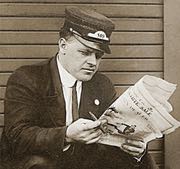


 Featured categories
 An Electric Bike is the perfect, simplest and most affordable way of sorting all the ‘challenges’ of RV’ing. Get around camp effortlessly, visit the sites or town nearby without unhooking or simply enjoy a fun ride with fellow campers!

 What RV do you drive or tow?
  Please send us a photo of your RV with a 150-200 word description of where and how you travel with it, and what you like (or don’t like) about it. (If you want, just send us your notes and we’ll put your story together for you.) If you have a photo of it in a scenic setting, that’s great. Be sure to include your name(s) and your hometown (unless you’re a full-timer). We’ll post them to RVtravel.com. Send to assistant editor Diane McGovern at Diane(at)RVtravel.com .
 Don’t forget: Throughout National Park Week, April 16-24, admission to every National Park is free!


 Boondocking RVers who rely on solar panels curse the rain – but that may soon end. A Chinese research group is experimenting with solar cells that utilize graphene – a form of carbon – to produce power from raindrops. Since rain is not pure water but contains salts, when in contact with graphene, positively charged ions pair with negatively charged ones from the salts, creating a “pseudo-capacitor.” Evidently the potential difference is sufficient to produce a flow of electrons.


 RV accent lighting is all the rage! Just look around the RV park! Enter Boogey Lights®! These robust, super-bright, state-of-the-art LED lights with hi-tech controller technology represent the next generation in LED lighting for RVs. The AWNING & UNDER-GLOW LIGHT KITS are specifically designed to withstand harsh operating environments. Don’t waste your money on junk! Get Boogey Lights! You can even control them with your Smart Phone!
 The new TireTraker™ TT-500 is the most innovative & user friendly TPMS on the market with an unprecedented “Lifetime Warranty”, the only TPMS company in the industry to do so. The TT-500 features a larger, easier to read display, continuous pressure & temperature monitoring, automatic update, & monitoring up to 22 tires on your motorhome, trailer & tow vehicle from 0-232 psi ! Seven day per week sales & technical support & over 12 years of experience. List price (4 tires) $389. Our price only $289.
  •Devil’s Lake State Park.

 RV Parts


 In 1949, dockworkers unloaded two tiny German cars at the port of New York. They looked like bugs, and their engines were in the wrong end. But they were well built, thrifty and fun. Volkswagens were different from American cars, and that was part of their appeal — especially for young people. Ten years later, America imported 120,000 “Bugs” a year. A small but growing number of people wanted something different.


 Keep your food cool with this RV fridge fan
 About the RVtravel.com editor
 Passing through tiny Kennard, Ind., yesterday I came across these women on a front porch. I stopped in my lane right in the middle of the highway, which was also the main street. There was no other traffic. I jumped out of my RV. “May I take your picture?”

 Here’s an area that buffalos some RVers: Not claim jumping. From our own experience in boondocking, we were looking for our “perfect place,” on the desert in Arizona on public land. After finally figuring out a spot, we carefully laid out a couple of items–a folding chair, an ice box, to indicate we would return here to set up camp. When we came back we found our gear parked on the road just outside the site, and a utility trailer parked smack in the middle of the site. Some days later the utility trailer was moved, and an RV was parked in its place.
 Blue boys are portable waste tanks that allow RVers to leave their rig parked while still getting waste water out to a proper dump station. Dubbed “blue boy” because many commercially produced tanks for this use are fabricated from blue colored plastic. You’ll see a couple of different varieties. Most are equipped with a pair of wheels at one end and a wagon-tongue or draw bar apparatus that allows one to tow the tank behind a vehicle using a hitch ball.
 A sewer hose with a bayonet fitting on each end is connected to the blue boy and to the RV’s dump port. A small cap on the blue boy allows for air to be blasted out as waste is dumped in from the RV. As you would at a dump station, dump the black water into the blue boy first. It’s not likely the portable tank will be big enough to absorb the entire “load” of your black water, you do well to leave a wee bit of head space in the blue boy to allow you to “top off” the tank with gray water, thus rinsing your hose.
 The wheels typically found on blue boys aren’t all that skookum, particularly if you tow your blue boy over rocky ground. Many RVers end up replacing the factory wheels with pneumatic tires from a hardware store. Other RVers simply mount their blue boy on a hand truck (as in used for furniture moving) and tow the hand truck to the dump station. Of course if the distance is large or requires a trip down the highway, you’re better off loading the blue boy on a truck (we prefer using a ramp for this procedure) and driving to the dump station.
 We made a huge jump from tent camping to a 2004 36-foot class A Gulfstream Independence in 2011. We really enjoyed sitting up high and having the freedom of one of us being able to get up and get a beverage, make a sandwich, etc., all without having to stop. However, the noisy and fully taxed front engine V-10 coupled with the busy steering had us looking for a diesel pusher.
 Much of how you save fuel dollars is on where you buy the fuel. Comparing fuel prices station by station makes sense, but who wants to drive all over a strange town comparing prices, then finding out the first station you saw had the best price? Internet fuel price comparison services make a big difference. gasbuddy.com uses volunteer price watchers to post updated prices on fuel. Log on using your personal computer, or if you’re portable equipped, there’s an ap for ipods.
 Searching the Internet reveals this question to be one of the most debated and controversial ones among Americans. Site after site decry those who would drive slower than that of most of the traffic as the ones most likely to cause an accident. How-to sites make suggestions on getting slow drivers to pull over–from flashing headlights, honking horns, and gesticulating wildly.
 Getting more miles out of that costly tankful of diesel or gasoline is the smart thing to do. Since it takes more fuel to push around more mass, will keeping the fresh water tank empty–or near empty–help with fuel economy? That’s a “depends” kind of question. Here’s the scoop from Uncle Sam’s fuel economy watchdogs:
 Now to the details on electricity “Shore power” may be designated by “amp” or “service” ratings. What power do you need? Much depends on your RV. A big rig may ask for “50 amp service.” If your park or campground offers 50 amp service, you’ll be able to run just about anything electrical item you have on your rig, and as many of them as you want, at any one time. But other parks may offer 30 amp service, or even 20 amp service. Does that mean you can’t stay there if your rig “plugs into” 50 amp service?
 Not at all. So-called “step down” adapters will let you plug a 50-amp RV power cord into a 30 amp campground receptacle (or even a 20 amp). You’ll need to be more conservative about how much power your run. If your rig has two air conditioners, you’ll only be able to operate one of them at a time; you may have to shut down the air conditioner while you use the microwave oven to fix dinner. Mind you, you may not be able to run your air conditioner at all if you “adapt” down to a 20 amp service.
 The reverse is also true. Many RVs are equipped with a 30 amp shore power plug, but they too, can stay at a site that only provides 50 amp service with a “step up” adapter. There will be no harm whatsoever in plugging into a “larger” service than your rig requires–you won’t “burn it out.”