Home Blog Page 2182

Extend your stay with these battery saving tips

Whether you’re stopping for the night at a Wal-Mart or dry camping for a week in the outback, you will at some time need to rely on your RV’s 12-volt batteries for lights and some electrical needs. Even if you have a generator, it’s just not practical to run it all of the time you are camping.
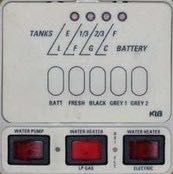
Screen Shot 2016-04-15 at 11.14.41 AMOur purpose in this article is to suggest some ways to help you get the most out of your batteries. Deep cycle batteries used in RVs are designed to cycle hundreds of times, but their lifetime will be considerably shortened if they are allowed to discharge much beyond half of their rated capacity. So it pays to conserve.

Rule number one: avoid using your battery power to produce heat, whether that heat is for hot water, coffee or other 12-volt appliances. It takes a lot of watts to make a little heat. So make sure that you use the LP switch for your water heater; turn off the electrical switch if you have one. And while your furnace uses propane for heat, its blower draws a substantial amount of current.
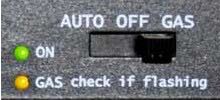
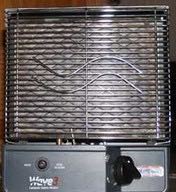
Screen Shot 2016-04-15 at 11.15.06 AMSo if you’re going to need heat, consider a catalytic heater instead. These units burn propane very efficiently and use no power at all. You will need to crack a window though, to provide some fresh air. And never use your oven or stove top for the purpose of heating your RV. Finally, don’t forget to set your refrigerator to run on LP.
Screen Shot 2016-04-15 at 11.15.17 AMSet refrigerator to run on gas
Your 12-volt lighting doesn’t draw a lot of power, but it makes sense to turn on only the lights you will need. For reading it might be better to use a small portable reading lamp.

If your RV is equipped with an inverter for producing 120 volt AC from battery power, here are a few more pointers. Inverters are only about 80% efficient, so try to minimize your use of AC and turn off the inverter when you are not using any AC appliances. The first rule still applies, so instead of using a regular coffee maker, use a tea kettle on the stove to heat water for coffee or tea. A French press makes great coffee or just use a cone filter. Although convenient, microwave ovens need quite a bit of current, so use very sparingly. Hair dryers are another heat producing appliance whose use should be minimized.

Don’t even think about running your air conditioner on inverted power. It will drain a large bank of batteries in a very short time. A generator is the only option if you need air conditioning.

#nrv

Think differently when buying a new RV

1

By Ron Jones

Whether you plan to spend $5,000, $50,000 or $350,000 for that first or fifth RV, you need to look at it “differently” before plopping down your cash.

Screen Shot 2016-04-07 at 6.39.50 PMWalk into any new RV and you will likely see various decorative accessories — i.e., vases, scarves, flowers — tastefully placed to enhance the “look.” My RV doesn’t look like that and yours won’t either. Ignore this sales tactic and try to mentally put your own “stuff” there. Once you seriously narrow your choice to one or two RVs, try this: Politely ask the sales rep to leave. You need to take some time to look at the RV alone.

•Spend some time alone with the rig — allow four to six hours or more.

•Sit down. With the slides out, sit and talk. Every chair is comfortable for a few minutes, so relax for an hour or so-like you would if you are watching TV or visiting. Then trade seats with your spouse or with whoever is along with you. If the RV is a Class A, swivel the driver and passenger seats. Do they work?

•Lie down. Spend 30 minutes on the bed. If you are “elbows-out” sleepers, then do this. Do you have room? Does an elbow hit the light switch? You can change your sleep style for a few nights but not for a few months!

Screen Shot 2016-04-07 at 6.39.33 PM•Slides in and out. Sit. Spend time sitting and moving around with each slide in each position. What is not accessible when a slide is in? Some RVs cannot be used with the slides in. Can you use the bed and bathroom? There are campsites where you cannot put out certain slides due to trees, boulders, etc. Can you watch TV, cook, and bathe with the slides in?

•Coffee pot. Where will you store it with the slides in (traveling) and out (parked)? Can you get to it with the slides in? How about your toaster oven, trash can, computer, shoes, etc.

•Outside stuff. All compartments look big when empty. Stick your head in all of them-what’s hanging down from the roof of the storage compartments? Will your garage-full-of-tools fit? What about that new nine-burner grill? Will you have to move the tools to get to the grill?

•Utilities. Pull the electric cord all the way out, screw on the water hose, and attach the sewer hose-just as if you were really hooking up. Is it easy, difficult, awkward? Did you have to get on your knees or stand on your head? Now put them away. How easy would it be in the dark, kneeling on gravel, and during a cold downpour?

•Leveling. Really do it. Level it. Now move it and level it again.

Looking at an RV is serious work. Spending lots of money for something you really can’t use or are uncomfortable with is not good. Look carefully, choose carefully, and take your time. It’s a big investment.

(This suggestion is one of the more than 500 in All the Stuff You Need to Know About RVing by Ronald Jones and Robert Lowe.)

#nrv

Needed: a new kind of campground

By Chuck Woodbury, editor
RVtravel.com

I wrote this a couple of years ago after returning from a cross country trip in my motorhome. For whatever reason, it did not get published. Until now.

cabellas-738
Free “camping” at Cabella’s.

My trip around the country has been an eye opener. I know far better now why so many RVers choose to stay the night in a Wal-Mart parking lot — or one at Cabellas, Camping World, a Cracker Barrel restaurant or a highway rest area. The price is right — free. Equally important, these places are easy to find.

I have written before how parking overnight like this is not “camping.” And, no doubt about it, that’s true. But, frankly, when night is upon you and you need a place to stay only to sleep, an experience with nature is not a priority. Sleep is the priority. A safe place is important. Most RVers feel comfortable in the parking lots of the above mentioned places.

I carry along the Good Sam Campground Directory to help me find RV parks, but I find it almost useless. It lists many parks — but it largely ignores those operated by local, state and the national government — and according to most everybody, it favors the parks that advertise.

I use my GPS, laptop computer and iPhone to find places to stay. The other day, my iPhone led me to an RV park a few miles off the highway. It looked nice on its website. But at the entrance, there was a junky mobile home office, a junked car and weeds a foot high. I moved on — a few miles and 15 minutes wasted. This happens far too often. So how do you find a decent RV park without driving all over the countryside looking for one? It’s a helluva lot easier to find a Wal-Mart.

free-camp-738
Level sites, water, electric and a dump station for $5 a night along I-90 west of Wall, South Dakota.

To me, when it comes to non-membership camping, KOA is the only game in town for an overnight stop. With rare exception the parks are clean, safe and easy to find. But they are not cheap. I pulled into one earlier this trip. It was not in a destination tourist area but along a busy interstate. “All I need is electricity” I said. “Oh, all our sites are full hookups,” the friendly clerk said. The cost was $54 or $47 with a KOA discount card, which costs $24 a year. She then explained to me about the bathrooms, showers, laundry and swimming pool — all of which I did not want or need. In my case, I needed electricity to run my air conditioner on the hot, steamy day, and a quiet place to write. I paid, but the price was way too high for my modest needs. You know, “one-size fits all” is not a customer-friendly policy.

Someone with some money to invest needs to call me so we can talk about setting up a chain of hundreds of cheap, barebones, no-frills campsites along the highways of America. RVers pay for a level piece of land that’s off the road. It cost extra for electricity (you pay at your site with a parking meter type device for as much power as you need), and water (an extra dollar). If you want to to use a restroom, drop 50 cents in the door each time you enter. A shower is a buck or two. A small office would include vending machines for snacks and beverages. When people check in, they get a bag of goodies — each item paid for by a business for the exposure (and earning the park operator a profit). But these parks could be set up as “self-service,” with someone on call for questions and emergencies. A security service would drive though several times a day and night.

The property for these sites would be cheap. Not prime land. Away from cities. No dump station or anything to do with sewage other than toilets, so no expensive environmental red-tape to deal with to get the business going.

Again, campground owners and operators will say this can’t be done, that it’s a crazy idea. Yeah, and the guys who started Motel 6 were told they were crazy. And Fred Smith was told his idea for Federal Express would not work (imagine if our own post office had been smart enough to create such a service first — it wouldn’t be in such a stink hole of financial trouble today).

Even Sam Walton, founder of Wal-Mart was considered “bush league” by Kmart and other major retailers when he began building his empire in small towns (instead of going head to head with competitors in big cities). Well, Sam buried ’em.

So call me, rich investor. Let’s talk. You’ll make a lot of money and do the RV community a huge service. I’ll settle for a tiny cut for my idea.

Free RV camping at Wal-Mart. How to do it.

0

RVtravel.com editor Chuck Woodbury explains the “unofficial rules” for spending the night in an RV in a Wal-Mart parking lot.

An amazing two-story trailer and the girl who called it home

0

Shirley Wallace’ lived in this two-story Spartan Manor trailer from age three until she went off to college 16 years

Dump your RV’s wastes with a portable waste tank tote

0

Portable waste tanks aren’t required for RVing but they can come in handy. They make emptying your tanks extremely convenient,

Tire problems? It could be your tire’s valves!

0

Tire expert Roger Marble of https://RVtireSafety.com explains why a tire’s valves are so important. Bad valves can

How to level a travel trailer

0

In this RV DIY® Project video Mark Polk of RV Education 101 demonstrates how to level and stabilize a travel

Tire problems? It could be your tire’s valves!

0

Tire expert Roger Marble of https://RVtireSafety.com explains why a tire’s valves are so important. Bad valves can

Take time to ready your generator now — for later!

0

By Russ and Tiña De Maris

Autumn is here. When thinking about your winter layup, don’t miss the needs of your portable generator. While these tips are specific to the popular Honda EU series, the principles apply to all portable power producers.

Fuel goes bad, and the results are hard starts, rough runs and breakdowns. If you’ll be using the generator within two months, fill up your can with FRESH gas and add fuel stabilizer per the instructions on the container. Fill up the generator with this fresh mixture and run it for 10 minutes. Now shut it down and top off the tank. Not using the genny for a few months — up to a year? Use these same instructions, but also drain the carburetor, per your owner’s manual.

More than a year before you’ll wake up that beast? Follow all of the instructions but, additionally, drain the gas tank. If instructions aren’t available for this in the manual, some folks carefully tip over the generator and dump the tank in a catch container. Others simply fire up the generator and run it until it runs itself out of fuel. Check that carb, though — it may die before all is drained.

What else? Good time to change the oil and fill with fresh. Do it while the oil is warm. Pull the spark plug and clean it or replace it as needed. Some, before replacing the plug, shoot a couple of squirts of motor oil into the cylinder and pull the rope a couple of times to lube the rings before layup.

Follow all these suggestions and you’ll be far more likely to have your generator ready to be all fired up next time you need it.

photo: kemeko1971 on flickr.com

Cleaning up looks good and feels good

0


By Greg Illes

We’ve all rolled into a campsite and found trash lying around. Cans and bottles and candy wrappers are the usual offenses, but we’ve seen others as well. A short walk usually produces more, some plastic bags maybe, or a pile of cigarette filters where someone emptied an ashtray. Bottles and cans in the fire ring are a common sight. Like they’re going to burn?

Out in the woods, the offending items are almost always toilet paper. The wind and rain take care of human waste reasonably quickly, but the TP seems to last forever.

After years of such visual abuse, my wife and I started an impromptu ritual — when we first walk the camp, we do it with a plastic bag and disposable gloves. It never takes us more than five to ten minutes to pick up after our thoughtless predecessors. When we finish, we have a neat, tidy camp and a couple of bags of trash to either take to the camp trash bin, or carry out back to civilization.

We don’t particularly like the janitorial duty, but we really enjoy having a clean campsite. We also believe that a little bit of trash begets more. Maybe the dunderheads who leave their trash lying about will be less inclined to litter when there’s no litter there in the first place.

The net result is that we often leave a campsite cleaner than when we entered it. If we all jump on this bandwagon, there will be a LOT of clean campsites out there. And that will make for a better experience for us all.

photo: public domain

Greg Illes is a retired systems engineer who loves thinking up RV upgrades and modifications. When he’s not working on his motorhome, he’s traveling in it. You can follow his blog at www.divver-city.com/blog.

Rules for RV happiness

By Jim Twamley

On the road I’ve met all kinds of RVers, and one couple I met are out having the time of their lives. David shared his philosophy of RVing which he calls, “Six rules for RV happiness.”

1. Any driving day must be limited to 250 miles or five hours.

2. Regardless of rule one, you must stop in time to set up completely in daylight.

3. You must set up for at least 48 hours.

4. Because of the size limitations of their fifth wheel, they limit occupancy as follows: Drinks for six, dinner for four, sleeps two. The sleeper cab of their tow rig acts as the “condo” for overnight guests.

5. The driver does not start the engine until the “navigoddess” knows where they are going and how they are going to get there.

6. If in snow, you’re doing it wrong!

These “rules” might not be “one size fits all,” but they’re certainly worth pondering.

##BG127