Home Blog Page 2183

Dump valve wisdom: Keep ’em closed

By RVtravel.com staff

When you have full hookups, leave both the black and gray water valves closed. This allows solids and tissues to start breaking down and liquefying so they will flow better.

When your black tank is about half full, empty it followed by a good flush from your gray tank. The gray water will thoroughly clean out your dump hose.

When you leave the valves open you are likely to have bad odors, create a buildup just below your toilet discharge valve, accumulated waste will collect in your dump hose causing even more odors, and unflushed matter will collect on the bottom of your holding tank and harden becoming almost impossible to clean out.

Use a board or commercial product (like the Slinky shown in the photo; several types available at Amazon) to lay your hose on that will maintain a slant between your hose outlet and the dump station, to create a better gravity flow and no low spots where waste will collect.

Carry the right hose kit for your RV lifestyle


By Greg Illes

When we take our RVs out into the world, inevitably the day ends and we have to park. After all, there’s Happy Hour, dinner, showers and sleep to deal with, right? Where we park is a pivotal factor in how we are going to spend the next 12-24 hours. Inevitably, our peace and comfort tend to orbit around … our hoses.

No, really. Sure, there’s power and propane to worry about. But if we don’t have the right hoses, we can’t get water, we can’t dump sewage, we can’t observe the necessities of life — RV life — that keep us peaceful and content.

All right, so much for the prose. What do we really need? Here are the essentials:

•  Fresh water hoses
•  Junk water hoses
•  Sewage hoses

The fresh water hoses are what we need to put good, clean water into our tanks and plumbing systems. They should be blue or white, because these are the key colors that clue us that these are hoses that should never be contaminated by impure or nonpotable water. Now, if you always camp at a park and take up only your designated mini-slot, a fresh water hose can be a diminutive 10′ or at most a 25′ length and you’ll be golden. But if you’re headed out boondocking, or staying at a friend’s house in the suburbs, you might need 50′ or even 100′ of extension to reach an available faucet. You can carry the typical big, heavy, 1/2″ or 5/8″ drinking water hoses, or you might choose to pack away the flat hose choices that put a 50-foot hose into the space and weight of a small book. (And, of course, the $155 Gucci hose (see photo) is always an option for the trendy RVer.)

The “junk” water hoses are dedicated to nonpotable water. The purpose of a junk water hose is simply to save your fresh water hose from contamination. Here, junk water hoses only are required for washing and flushing. It’s unlikely that you’ll need 100+ feet of junk water hose, so a 25′ or at most 50′ length should be more than adequate. Always use your junk hose for nonpotable water, and never use your fresh water hose for nonpotable water.

The sewage hoses (“stinky slinkies”) come in 5′, 10′, 15’ and 20′ lengths. In my opinion, the Valterra Viper series (available at Amazon) is the best of the bunch, and the only one I’ve owned that has never leaked. Here again, if you’re in a park, a 10- or 15-footer is probably going to do well for you because you are likely to be parked close to a dump port. But if you’re a boondocker trying to get rid of some gray water, you might need 20 feet or more to reach a ditch or hollow or USFS drain grate.

Most reports are poor for coiled hoses and expandable hoses, so avoid these unless you feel your luck will be different. Buy quality as much as you can — it’s no fun to have a cheap hose start spitting all over you and your rig at your campsite or the dump station.

(Editor: There are lots of RV hoses to choose from, and at great prices, at Amazon.)

photo: Wikimedia Commons

Greg Illes is a retired systems engineer who loves thinking up RV upgrades and modifications. When he’s not working on his motorhome, he’s traveling in it. You can follow his blog at www.divver-city.com/blog.

Keep your cat (and yourself) warm with a “cat” heater

By Russ and Tiña De Maris  

While our own four-footed feline thinks our “cat” heater was made just for her, “cat” stands for catalytic. These flameless heaters are the “cat’s meow” for producing lots of heat with little or no electrical power consumption. They use a specially coated catalyst “bed” or mat to efficiently burn propane. They are flameless after lighting — they do produce a bit of a flare when first being started — as our own cat was rue to find out. She stuck her face right up to the heater and it flared, giving her a close shave and the loss of a few whiskers. She learned quickly and now stays back several inches anytime we’re lighting the thing up.

Catalytic heaters are highly efficient: 95 percent or more of your propane fuel is turned into heat, all of it released inside the rig. Most are small and can mount directly on a wall, as they have very small clearance areas required. They can also be put on legs (cat feet?) and pointed wherever heat is needed. Since they are radiant heaters, they will quickly warm up any object or person in front of them, but they do take time to heat up the house. This is because the radiant heat of a cat heater has to be absorbed by something (or someone) and then gradually released. Think in terms of walls and floors. However, they are practical for heating your rig.

Catalytic heaters do have their drawbacks. Since they are non-vented, meaning that they don’t release anything to the outside of the rig, they will add moisture to your RV air. If you’re in an area of high humidity, a cat heater will add to the dampness. They also draw their air for combustion from inside your rig. The catalytic process requires less oxygen than an open flame, but it is a consideration. It is best to crack a window whenever you run a cat heater, so that the air that is used can be replaced.

The heart and soul of a catalytic heater is its catalytic “bed” or mat. This specially impregnated material is where all the heating takes place. The bed is susceptible to pollutants, so if you frequent areas where air pollution is rampant, the bed won’t last as long as it might otherwise. Contaminants from propane or propane containers can also migrate their way up the propane lines into the catalytic heater, contaminating the bed. Our own catalytic heater has had to be sent in for service when gunk from the propane lines clogged some fine orifices, reducing the heat output significantly.

What’s to be done? Olympian, the maker of a large number of catalytic heaters, has several recommendations. When not in use, catalytic heaters should be kept covered. You can buy specially designed covers from your catalytic heater manufacturer. This tends to keep the airborne pollutants off the cat bed. As far as fuel-borne contaminants, avoid using LP produced in Mexico. The company says this fuel often contains contaminants that can clog orifices and damage catalytic beds.

Olympian suggests propane cylinders be “purged” once a year to remove tank contaminants. This is an operation best performed by an LP dealer. It’s not an expensive operation— and with catalytic beds costing in excess of $100 (not to mention labor charges), it’s cheap insurance.

Cat heaters are rated based on their heat output, measured in BTUs (there they are again, those British Thermal Units!). The greater the BTU output, the higher the cost — but, of course, the larger the area that can be heated.

Most cat heaters use no electricity. This is great for solar and wind power users — stay warm while keeping the batteries for other uses. However, these no-power cats have a drawback: They have no thermostat. Generally, you’ll have a choice of high, medium or low output; but if they’re on, they’re always heating. There are thermostat-equipped cat heaters that do use a small amount of power to control heat output to keep things more comfortable if the inside temperature fluctuates. Still, we’ve learned how to put up with the lack of thermostatic control and can usually tell at bedtime at just what setting to leave our cat heater.

(Editor: Here is a link to catalytic heaters at Amazon, including Olympian.)


Lube those awning rafter locks!

By Steve Savage, Mobility RV Service

If your RV has manual awning (and, yes, many of us still do), here’s something to put on your maintenance list. Don’t forget to lubricate the rafter locks (those little black knobs) so you don’t break them off when they rust in place. What most folks do is let them go too long until they are hard to turn, then they break the knob off trying to force them.

When you try to force them, this is what you end up with (on the left) — the black knob used to be on the rusted end. You can keep from breaking them by lubricating them with a spay lubricant, as pictured to the right. The red tube here is attached to the spray can of lubricant.

If the lock becomes rusted and is difficult to turn, don’t try to force it. Instead, soak as much of the screw as you can see with a rust penetrant like PB Blaster. Then work the lock back and forth by alternately tightening and loosening it.

As a last resort — if it is stuck fast — I normally use a cut-off wheel on my roto cutter, cutting it flush at the awning arm so the part drops through to the inside of the arm. Then lubricate the new one before installing it.

Is your RV fresh water safe?

By Russ and Tiña De Maris

Many of us laughed ourselves silly at the old TV show detective, Monk. The poor guy couldn’t touch door handles with his bare hands, and should someone shake his hand – out came the antimicrobial wipes. Yes, Monk was obsessed with germs.

Sad to say, our modern-day society only contributes to the concerns that many people have about microbes. For RVers, this state of heightened alert may extend to the fresh water tank. Is it safe to leave water in the tank between trips? Is it better to drain the tank and refill it every run? If that’s the case, should we disinfect the system before refilling it?

We’ll make it simple. Our information sources here are the Federal Emergency Management Agency (FEMA). One of FEMA’s chief concerns is making sure Americans are prepared for emergencies. Seeing to it that we have plenty of safe water on hand is just one of their babies.

Here are some underlying principles you can apply when wondering about safe water in your RV:

• First, if you’re filling up your RV tanks with water from a “known” good source (a municipal water supply, as an example) then there’s little worry. Yes, before you fill up the first time, make sure your tanks are properly sanitized.

• Always use a drinking water-safe hose when filling your tank from your safe supply. Keep the tank securely capped to keep out unwelcome pests and road dust. Now settle back and relax. According to FEMA, “Replace the water every six months,” is all that’s required. What about water in your water heater tank? Remember, when you fire up the heater, a lot of bugs are likely to be cooked to death. And if the water supply you originally filled up with is good, then the same “six month” recommendation applies.

• If you’re really worried about water quality, FEMA suggests you purchase commercially produced drinking water, and keep it closed until you need it. It should be good until the “use by” expiration date printed on the bottle.

Check your fuel tank plumbing to ensure a fast, easy fill


By Greg Illes

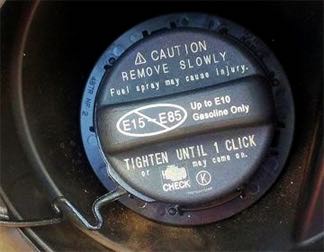
For years I struggled with my fuel filling speed. Sometimes, gas would flow into the tank without complaint. Other times, I couldn’t get more than a trickle before the nozzle would auto-shutoff. It was maddening, especially for those 40-gallon fills, which could take (literally) a half-hour.

Of course, I checked the filler tube for blockages and kinks — there were none. I played with the angle of the spout and the filler neck, too. No help.

Finally, one day when I was checking out something else, I noticed that my filler had an external vent line. This is very common, but because it was hidden by the larger fill tube, I had never noticed it. The vent line had a droop in it, just an inch or so, but it dipped down and then came back up. No leaks or kinks, just a droop.

That droop was key, because it acted like a sink trap and collected gasoline in the dip. When the gas filled the dip, no vapor could get through and presto: trickle fill time. I trimmed off a short piece of the line and reconnected it so that the droop was eliminated. Then I drove the RV to the gas station. Hooray! Full throttle fill, no shutoff. I felt released from bondage. Several tankfuls later, everything is still working great.

If you have no issues with filling your tank, super. But check the lines anyway as a preventive measure. If you do have problems, check both the fill tube (large) and vent tube (small) for smooth, kink-free downhill routing. No dips or droops, please.

Note that some fillers have coaxial venting (my Ford Ranger is one of these). These are much harder to see and troubleshoot, but it is possible with some patience and possibly a bit of disassembly. As always, if you are not comfortable, confident and safe while working with fuel systems, hire a pro.

photo: Mariordo / Wikipedia

Greg Illes is a retired systems engineer who loves thinking up RV upgrades and modifications. When he’s not working on his motorhome, he’s traveling in it. You can follow his blog at www.divver-city.com/blog.

Setting your RV water heater bypass valves

By Steve Savage, Mobility RV Service

One of the common service calls I receive begins with,”The water coming out of the hot water faucet is only hot for a few seconds, then it goes cold.” Only rarely does a call like this result in a service call. I want to explain what’s happening and why you don’t need to spend your money for someone like me — at least until you check a few things on your own.

First, to get any hot water at a faucet, it means you’ll need a full tank of hot water. You won’t get hot water unless the water in the water heater is hot. That means the controls need to be working. Do not replace the module board or any other parts of the water heater. The problem is not a lack of hot water in the water heater. The task is getting it through the faucet.

Most often the problem is simply that the bypass valve or the cold water and hot water valves on the back side of the tank are set incorrectly. Here is a common example: First you’ll need to look at the rear of your water heater. That is often done by removing a panel inside of your RV, but you have to be able to see the backside of your water heater somehow. It is never done by simply dropping the outside door on the water heater.

Let’s suppose you can see the back of the water heater. There is a cold water line connected at the bottom right-hand corner of the heater, and a hot water line at the top right-hand corner. Water goes in at the bottom and out at the top. Attached to those water lines you will see one of three possible combinations of water valves. They have to be set correctly or even with a full tank of hot water you will not get more than a teacupful of hot water at the faucet.

If you see three valves, turn the handle on the top and bottom valves so they’re in line with the water line. Doing that opens the valve and water will flow through the water heater. At the same time, the valve that connects the water line running between the top and bottom water lines, the “bypass” valve, must be closed. It is closed when the handle is turned across the water line to which it is attached. The only time that valve is ever open is when you are winterizing your RV. If you leave it open, you create a path for water to flow without going through the water heater, thus no hot water or lukewarm water at the faucet.

The next case is one is which you have a valve on the cold water line and a bypass valve in the middle, but there is no valve on the hot water line. What you will see instead of a valve is a brass fitting at the hot water outlet on the water heater. This is called a “back check” valve. It allows water to flow out of the top of the water heater but will not allow water to flow in at the top. The rule here for the valve positions is the same. Make sure the bottom valve is open and the bypass valve in the middle is closed.

In the last case, you have a back check valve on the top water heater outlet and a single tee-valve connecting the cold water line and bypass line. The single valve combines the functions of the cold water valve and the bypass valve. Turn the handle in line with the cold water line and the bypass is closed. Turn the handle so it points up and the bypass line is opened and the cold water line is closed. Since in this scenario the bypass valve can be located remotely, you may not find it directly on the back of the water heater, although that is far and away the most common location. Fleetwood, for example, often located it inside the bathroom vanity on some models.

Now here are some things to remember. Give your water heater about two hours before you start checking for hot water. Recovery is slower on electric than gas and you can run both at the same time without hurting anything. If you start out heating the water with one system (electric or propane), once the water is hot and the thermostat opens, you cannot check the other system. For example, if the water is hot on electric, the propane will often not fire because the thermostat has opened. The water has to cool off first, so the thermostat calls for heat before the propane system will fire.

Let’s suppose the valves are correctly open. Are there other possibilities? Yes, but provided you have hot water, anything else is much less likely. Just in case you are wondering how to tell if the water in the water heater is hot, you can do one of two things. The simplest thing to do is just put your hand on the hot water outlet on the back of the hot water heater. If the water is hot, you will have no trouble telling it as the outlet will be hot to the touch. You can also open the temperature/pressure relief valve on the outside, but be careful as that water can be very hot. If you have hot water, you have a water circulation problem, not a water heater problem. That means either a valve closed or, if you have a back check valve, the valve may be broken internally.

Lastly, you might be wondering, if the valves are incorrectly set, why do you get any hot water at the faucet, even though it is brief? Although the water is not circulating through the water heater, there is enough convected heat on the water line to heat the water in the line allowing for a brief rush at the faucet before that supply is exhausted.

Is your four-footed child misbehaving behind your back?

0

By Bob Difley

We’ve all suffered under the slings and arrows of somebody else’s dog’s obnoxious barking. It leads to the old mystery, does a tree falling down in a forest make a noise if no one hears it? Does Fido, who you left behind in the campground while you toured, bark if you aren’t around to hear him?

You may not know that poor Fido is bored and lonely and will respond the only way he knows how, by whining and barking — much to the annoyance of your campground neighbors. And don’t fool yourself that your precious Fido wouldn’t do that. Check it out — set your digital recorder up and leave it at the rig when you make a trip without Bowser — just make sure you’re parked at home, not in a campground.

Here’s my advice: Either take man’s best friend with you or arrange for someone to dog sit. And never leave him tied up outside where he can become tangled in a leash, bite a passerby, escape, or — horrors — become food for a coyote.

You can find Bob Difley’s RVing e-books on Amazon Kindle.

Alternatives to expensive RV toilet sprayers

by Russ and Tiña De Maris

RV toilets, by their design, at times don’t flush quite as cleanly as we might hope. To that end, manufacturers often provide a spray nozzle feature to assist in cleaning the bowl. It’s a Star Trek solution, not because of being high-tech in nature, but it does allow you to deal with Klingons. But what if your biffy doesn’t come equipped with the spray nozzle — are you stuck with stickies? Not at all — you can often add your own spray nozzle.

Some toilet models allow the addition of an after-market spray nozzle kit. Do you flush a Dometic? There’s an after-market kit for that. It includes a spray nozzle, a clip to hang the nozzle on, and an installation kit that includes a vacuum breaker. The purpose of the latter device is to prevent any liquids from the spray nozzle assembly from making their way backwards and back into the RV water supply system. Camping World will sell you one for a little more than $60, but by being smart and shopping around you can beat this price.

Keep in mind, in addition to the issue of these hissing water critters being a bit on the pricey side, some RVers have complained that because the thing is plumbed through the toilet supply line, there can be a bit of a loss of pressure, making your cleaning efforts a bit more difficult.

There are alternative approaches to this matter. Some RVers report (and we personally have experienced) that their shower head will reach out from the shower stall and down to the throne with ease. They just use the shower head to blast away at any undesirable bowl dwellers. OK, this is a really cheap solution, but unless you can hang onto the shower head while holding it over the bowl, then stretch and reach the shower control valves to turn on the pressure, you’re apt to get a few drips on the floor. You pays your money …

Other alternatives? Sure enough. Put a plumbing T in the water line that serves your toilet. Incoming water flows into the T, then one side out to the toilet, and the other to a hose line leading to: (1) a shower head (with appropriate shut off valve), (2) a toilet bowl rinse head, or (3) a garden spray nozzle. The latter seemed like overkill to us but, hey, it does develop quite a stream. One reader assures us that keeping water pressure where it belongs makes the use of garden sprayer a great idea.

But what about a vacuum breaker? If you’re clumsy and apt to drop your new toilet bowl blaster in the pot and leave it there, yeah, you might want to add the vacuum breaker. Otherwise, it would seem pretty unlikely that icky stuff could make its way back into your fresh water system.

Craft a clothing kit for any encounter

0


By Greg Illes

My wife and I have a running joke — she asks me how the weather is going to be, and I tell her that it will be either warm, cold, or balmy. Should be sunny, but it might rain. (Sometimes, I reverse that last one.)

On any given day, we can find ourselves in almost any kind of weather and traversing any imaginable terrain. We’ve taken spontaneous hikes while headed for the supermarket; we’ve been snowed on in August; we’ve gotten sunburn on what promised to be an overcast rainy day. These things have occurred while traveling in our RV, in our toad, on foot and in our inflatable kayak.

Contrary to Mark Twain’s lament, we do talk a lot about the weather, but we actually do something about it, too. We know that the most common advice for versatile wardrobing is “layering,” and we take this to the ultimate.

We layer our clothing, for sure, but in addition we “layer” our entire ensemble. Zip-off pants are hardly elegant, but they can accommodate a wide variety of wind and weather. Lightweight nylon long-sleeve shirts afford great sun protection. They can be buttoned up tight for cold winds, or unbuttoned and sleeves rolled up when temps rise. Down vests are light, compact, and surprisingly warm under a windbreaker.

We also keep extra copies of essentials in the toad, just in case an unplanned impulse strikes us. What essentials? Sun hat, wool cap, hiking staff, windbreaker and a rain poncho. In winter or cold climes, a warm vest. Always a pair of good-fitting gloves for work or warmth. If we start out the day wearing “comfortable” shoes, we make a point of keeping our hiking boots and sandals in the toad. That way, we’re ready for a troop through the woods, or wading along the shoreline — whatever comes our way.

And one last item — although it’s not exactly a piece of clothing — we also keep a ground pad in the toad. If I need to get underneath for a mechanical problem or rough-road issue, I can keep all my carefully-crafted clothing layers relatively clean and reusable by lying on the ground pad instead of dirt/leaves/mud/rocks. It can even double as a “picnic blanket” for an impromptu relaxing snack on a hillside.

You probably have your own ideas about a versatile trousseau. Be creative, let your imagination be your guide, and know that whatever you start out wearing in the morning doesn’t have to be what you are wearing that night. And remember, anything is in style when you’re camping.

Greg Illes is a retired systems engineer who loves thinking up RV upgrades and modifications. When he’s not working on his motorhome, he’s traveling in it. You can follow his blog at www.divver-city.com/blog.

How do I find an owner’s manual for a used RV?

By Steve Savage, Mobility RV Service

The bad news is you probably can’t. The good news is most of the owner’s manuals for early models consisted of nothing more than the collection of manuals that came with the appliances and components when they were installed at the factory. If you have a newer-model RV, perhaps within the last five years, contact customer support for the manufacturer of your RV, if they are still in business.

If they have gone out of business, simply write down the make and model number of the appliance or component in which you are interested, or all of them, if you are putting together your own manual and go the component manufacturers website or search the Internet. Most manuals are available online and can be printed on your home computer. If you have a great deal of patience (we don’t) you can even burn them to disc or keep them in a file in your laptop.

photo: bsabarnowl on flickr.com

Renting an RV? Questions to ask first

0

By RVTravel Staff

Not everyone owns an RV — perhaps you’re “sticking your toe in the water” first to determine whether or not to jump in. Here are some questions you should ask before renting a recreational vehicle, as reported in Arthur Frommer’s Budget Travel magazine (along with some suggestions of our own):

1. Which type of RV is right for me? Motorhome? Trailer?

2. How many people will it sleep?

2. Do I need a special license or extra insurance?

4. Where do I camp and how much does it cost?

5. How much does it cost for the RV?

6. Am I too old or too young for this?

7. When and where do we eat?

8. Where should we go?

9. Which season is best? (Rental bargains await outside of the prime travel season.)

10. What kitchen items, linens and other basic necessities will an RV rental company furnish?