Home Blog Page 2198

Heating our RVs economically in cold times

By Jim Twamley

When winter arrives, we need to warm up. And that often means heating up our RV. So how do we do that economically?

Most every RV is equipped with a whole house propane furnace. These work great and we use ours to heat up the entire RV in the morning or when our small electrical heater is not keeping up. However, this can get expensive, so I recommend you get a good quality portable electric heater with adjustable thermostat and automatic turn-off switch if it gets knocked over (our heater gets knocked over once in a while and the auto-turn-off switch works great).

We use a Patton heater for this purpose. Since you are already paying for the electricity at your site, you might as well take advantage of it and save money on the expense of propane. Also, my wife enjoys pointing this little heater directly at her feet — you can’t do that with a propane heater.

If you do a lot of boondocking (dry camping without hook-ups) you may want to install a ceramic propane heater. I installed one of these units in our last 5th wheel and it worked great. The nice thing about these heaters is that they use much less propane than your whole house heater and they don’t use battery power. Your whole house heater will run down your battery bank in a day or two (even less in some cases) while these ceramic heaters will not.

You can operate these heaters with one panel ignited or two or three, depending on the model you purchase. I recommend you install them permanently, although you can use them in a stand-alone fashion. You need to remember that you need to run a propane hose to the unit, so place it accordingly. Also, when using this type of heater you need to open a vent or window so as to allow adequate ventilation as per the manufacturer’s directions. Some of the newer RVs have a built-in fireplace which also radiates heat and looks good at the same time.

Many RVs also have a heater unit combined with the air conditioner unit. These work great but some people complain that they are too noisy — they also require full electric hook-ups. There you have it — keep warm out there.

Volunteer: Have fun, do good, save on camping fees

0

By Bob Difley

Volunteering for RVers doesn’t just mean camp hosting. Though there are volunteer positions available to students, retirees and for seasonal needs, RVers who bring their houses with them are top-tier candidates for volunteer positions where local housing may not be available and where there is room to park RVs for the volunteers.

Trail maintenance, invasive plant removal, wildlife census, habitat rejuvenation, leading hikes and nature walks, and many more projects are assignments where volunteers are needed. With budgets pared to the bone, these are often activities/chores that may not be included in that all-encompassing list of things that still need doing, but there just isn’t money for hiring.

When a park or other entity such as a wildlife refuge, state park, national forest or wilderness area can get the job done by offering a free campsite as trade without having to pay a full-time employee or account for it in their expenses, everybody benefits.

Often you can find a volunteer position just by inquiring at the location where you would like to volunteer, making it clear why you want to volunteer at that particular place. Volunteers that are eager for certain locations will win out over those just wanting a free campsite anywhere they can get one.

You never know what might turn up if you just ask — or suggest how you might volunteer. There are several websites that run a list of current offerings. Here are a few:

•  At Volunteer Match you can enter your interests and the area where you want to volunteer, and the site will try to match you to a position.

•  At Volunteer.gov, volunteers are matched with available positions.

• The book Volunteer Vacations is also a good resource.

You can find Bob Difley’s RVing e-books on Amazon Kindle.

photo: public-domain-image.com

Easy photo techniques for on-the-road shooting

0


By Greg Illes

There are thousands of how-to books on photography. If you are really into improving your techniques, by all means find some good references and study them. But if you just want some simple tips for better pictures, read on.

First, let’s be very clear: If you want pictures while you are driving you MUST let a passenger take them. No excuses or exceptions. Otherwise, pull over and STOP before you start shooting.

Stopped or parked — If you are still, you will get your best pictures. You have time to compose, frame and shoot, including multiple exposures.

Driving — Sometimes you simply want to snap a shot without all the fuss of slowing down, stopping, parking, etc. Let your passenger do this. Try to shoot forward (through the windshield) to minimize the movement of the subject. Hold the camera close to the windshield to avoid auto-focusing on the wipers or bug splats. Obviously, a clean windshield will produce the best results. If you have to shoot sideways, try to frame distant objects, again to minimize motion (which causes blurring).

Off-center your subject — Place the subject slightly off-center in the frame. It helps to have texture, but not competing objects, in the foreground or background. Especially with people, have the person(s) off-center and the scenery complementing them.

Shoot multiple shots — Digital “film” is cheap and bad shots are one Delete key away. Try several angles and zooms of your subject. You can never see the shot as well in your camera as you will later on your computer.

Use natural framing — Try to get some rocks, tree branches, building frames or whatever into the foreground of your shot. Sometimes even objects lying on the ground can work. These natural framers will help add depth to your photo.

Post-editing — OK, your best shot is not quite that good. Color’s a bit off, and there’s too much blank space on one side. Besides, it’s all tilted at an angle. Turns out, there are some great photo-edit tools for a small amount of money that will let you fix all of those problems and more. If you’re interested, shop the web for products — you will find many to choose from. You can even use Paint in Windows for basic cropping, rotation, resizing, etc.

Our space here does not allow examples of all these elements, but you can start practicing and see your own shots. Compare them to stuff you see from others and on the web, and you will quickly fine-tune and improve your photos.

photo: avs photography on wikidpedia.org

Greg Illes is a retired systems engineer who loves thinking up RV upgrades and modifications. When he’s not working on his motorhome, he’s traveling in it. You can follow his blog at www.divver-city.com/blog.

This single-wheel trailer makes taking your motorcycle a snap

0

By Steve Willey

My Ford E450 chassis motorhome, like most, comes loaded within 200 pounds of maximum rear axle weight. I could not hang a 400-pound motorcycle on a rack behind without adding far more than 400 pounds to the axle load, due to the leverage of rear overhang far behind the axle.

A standard, fully enclosed utility trailer might be great for weather protection but we really needed the ability to back into a driveway to turn around, back into a campground space without disconnecting a trailer, and maneuver back and forth in gas stations, U-turns and parking lots.The answer? This single-wheel trailer does all that. It cannot swing right or left behind the truck, even backing up, because it connects to the RV frame at two points. The wheel under the trailer steers itself like on a stroller or grocery cart. We back up and turn around with no possibility of a jackknife.  And it cannot fishtail going down the road.

The two connections to the vehicle are by two standard trailer hitch balls on a bar that goes in your single receiver hitch. It has optional crank jacks on the front corners so these regular ball hitches can be released, jacks cranked up, giving you the ability to roll the whole trailer aside by hand. The single wheel supports over half the trailer load, which is about a 600-700 pound limit.

This trailer came as a metal mesh flatbed platform. I added the plywood floor, motorcycle wheel tracks and a front wheel chock, and then added railings around for tie-down support. The railing tie-down angle works much better than tying straight down to floor hooks, which have to be so tight to hold the scooter vertical that it can damage the fastener points. I added lightweight loading ramps from discountramps.com. Note they are three-piece, but not folding. The three sections lift easily and their pins drop into matching holes on the edge of the trailer floor.

I purchased this outfit from smarttrailers.com, shipping from Florida for about $1,500. They make bigger and heavier models, too.

How to full-time RV on a small budget by conserving fuel

By Curtis Carper

Very clearly the cost of fuel is the largest expense when it comes to living the RV lifestyle. Many would love to travel the country, heading off on a whim to see all the grand sights this country has to offer.

The one-time expense of an RV is enough of a budget buster — but when a stop at the gas station runs into $300-$400, the realization that you may be running out of money just as fast as you’re running out of fuel puts the skids to many a retirement dream of travel for those living on a modest budget.

During your working years, the need to get back to where you came from in a timely manner was paramount. The fortunate may have two to three weeks of freedom but, nontheless, your income is derived from your career, so it’s back home and back to work after your break from reality.

Once you retire, life slows down. The time schedule becomes a thing of the past and the need to go back lessens or completely disappears. Finally you have reached the time where you can stop and smell the roses. This is the secret to fulltime RVing on a modest budget. What’s the hurry? You don’t have to be there any sooner that when you get there.  A week, a month, a few months.

The secret to stretching your fuel budget is to not drive — at least not all at once. For myself, when I travel across the country I make use of Walmart parking lots, truck stops, and other free-for-the-night places to sleep. Most towns with a Walmart have more than one establishment that will allow you to spend a night on them, so to speak. Sometimes you can find city parks that specifically allow you to stay one night to help encourage you to repay the favor by eating at a restaurant or shop at the local retail establishments.

Amazingly enough, about 50 miles down the road there is likely to be another small town with the same free amenities where you can spend a couple nights without anyone noticing. If you only drive a short distance at a time and try to spend two to three days in each town, before you know it next month’s retirement check has arrived, and you still haven’t used all your fuel allotment from last month. Once your body adjusts to living life in the slow lane, your mind will automatically find interesting sights and things to do at every spot you choose to spend a couple days. Every town has its own story, its own history. Take the time to meet a few locals and talk about what makes their town special.

You’re retired now — no need to rush off. Kick back and take the time to see as much as you can. When you only drive short distances you arrive well rested and relaxed. You actually learn things about the places you stay, and most of all you will meet interesting people. Your travels will be more rewarding, and surprisingly they will also become more affordable. The more time you spend stopped, the more you will learn to enjoy the fulltime RV lifestyle.

Whip up your own multi-spice rack — with a pill case!

0

By doityourselfrv.com

Campground cooking is becoming a more popular RV activity. More RVers are beginning to don their chef hats right in the confines of their RV kitchen — or right outside. The more elaborate a meal, dish or item you try to make, then many times the more ingredients it requires.

If you are full-time in your RV then you probably have a well-stocked kitchen (if needed), as it is your only kitchen. But what are the part-timers and more recreational RV chefs to do? It can be expensive and a poor use of space to have a fully stocked kitchen all the time.

We picked up a clever tip from fellow RVer, Kim, and decided to give it a try. She recommended that RVers who don’t regularly RV but occasionally want to make something that requires special spices create their own “spice organizer.” At the heart of it is a pill organizer doing double-duty as a portable spice rack.

Pill cases vary in size and number of compartments, in much the same fashion as your meal may require a varying amount of herbs and spices. This is a great alternative to the Tic Tac RV spice rack — and it couldn’t be simpler to get started. All you need is a pill case that has enough compartments to fit your needs. A typical weekly case should be enough for most meals, and this is the one we chose for our portable spice rack. Fill each compartment with your chosen herbs and spices. We used a mini-spoon for this part. Close and store in a plastic baggy. Pack it into your camping gear for the trip.

The only thing to watch out for is the quality of the pill case. Ideally, get a high-quality version that has air-tight compartments. The version we purchased was bargain-priced and it is not airtight. It will leak some spices and herbs that are finely ground if you turn it over.

Hope you part-time RV chefs find this useful. Happy camping!

Dealing with RV air conditioner “freeze-ups” 

By Steve Savage, Mobility RV Service

This time of year we get calls for air conditioner service. Often the caller is all worked up because he or she thinks that since their air conditioner has stopped working, there must be something seriously wrong. That’s often not the case — it’s often just a freeze-up.

The scenario for an air conditioner coil freezing up goes something like this. Your air conditioner or air conditioners were working and gradually, over the course of a hot day with high humidity, airflow out of your ceiling vents first drops off and then falls to zip. Finally the compressor may stop running and it seems as though the air conditioner has quit. What is going on?

The giveaway for the diagnosis in this case is the airflow slows and then quits entirely. That sequence of events is not the signature of fan motor failure — it signals ice buildup on the evaporator coil inside your air conditioner. For those who have never looked up into their air conditioner, if you removed the filter you see from inside your RV and look up into it, you will see a finely finned cooling coil. That is the evaporator coil and it gets very cold — so cold that it approaches the freezing point of water. It is the water running down that coil and into a drain pan that drips off the roof of your RV when the air conditioner is running. You can only see it from inside your RV so there is no need to go up onto the roof and take the cover off the air conditioner. You can fix this problem from inside your RV and best of all, you do not need any tools.

First, a little bit more about what causes coil icing. The first thing an air conditioner does is remove what is called “latent” heat, also known as the humidity from inside your RV. It does this by circulating air into the return and across the cooling coil, where humidity condenses out and runs off the roof of your RV. On a humid day there can be so much moisture, if the fan is running on low speed, some of the water on the coil will start to freeze. When this happens and the coil becomes partially blocked, the freezing is accelerated and more and more of the coil freezes, and less and less air passes over it until the coil is completely iced over.

When the coil is iced over, air delivery to the vents is blocked and, if enough of the coil freezes up, the freeze protector that serves to protect the compressor from operating with an iced coil closes or opens a circuit (depending on which manufacturer’s air conditioner is on the roof) and the compressor quits running. So there you are on a blazing hot day with no air coming out of the vents and no compressor operation.

If the above is you, do this first. Remove the filter cover so you can see the coil. It will be sheeted over with ice. If you cannot see the fins, it is surely iced over, but you can also put your hand on the coil and feel the ice. The coil cannot harm you, and you will not harm the coil by touching it.

Feel the ice? If you can, you just got lucky. Go to your thermostat and switch the “mode” to “fan high” instead of “cool” and give it a few minutes (how many minutes depends on how much ice has built up). Two things should happen. The air coming out of the ceiling vents will gradually increase and you will hear the ice dropping off the coil and into the pan. You might also get some water dripping out of the filter cover as the ice melts. Once the coil is clear of ice, you can switch the thermostat back to “cool,” but leave the fan on “high,” not “auto” or “low.”

Coil icing seems to be a more common problem in large diesel motorhomes than other types of RVs. In my opinion, this happens because duct work is so poorly designed that the air conditioner has a harder time moving air than in other types of RVs, but that is just a guess. It can happen in any RV, so the rule of thumb is when the temperature and humidity are both high, the fan should be running on “high” also.

Now for the naysayers: Yes, coil freeze-up can occur with a loss of refrigerant, but it is self-correcting, as a system which loses refrigerant will continue to lose it until the system is empty since it is a pressurized system. That being said, an AC system leaking refrigerant will run with good air delivery but ultimately will not blow cold, so it is easy enough to tell a leaker from a system with a frozen coil.

Stay cool!

Keep safe while RVing: Unfounded mosquito rumors repelled

by Russ and Tina DeMaris

When this post was originally written, West Nile virus was the bugaboo of the day. Later on, it was Zika. Whatever the microbe, the information about mosquitoes and repellents is important to know.
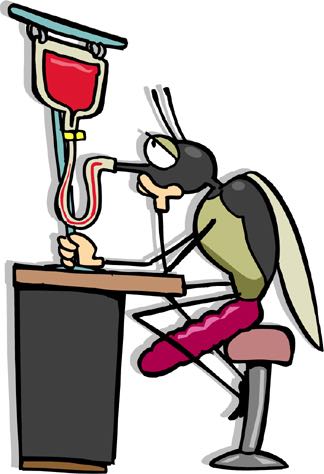

West Nile virus is present in almost every corner of our country, and this is the peak season. An analysis from the U.S. Centers for Disease Control and Prevention (CDC) on U.S. West Nile virus found that most cases were reported during July, August and September. The CDC says the mosquito-borne disease is underreported and undertreated.

West Nile virus can do nasty things to those infected with it. According to Wikipedia, one stage is somewhat like a miserable flu: “Fever, headache, chills, diaphoresis (excessive sweating), weakness, lymphadenopathy (swollen lymph nodes), and drowsiness. Occasionally there is a short-lived truncal rash and some patients experience gastrointestinal symptoms including nausea, vomiting, loss of appetite, or diarrhea. All symptoms are resolved within 7-10 days, although fatigue can last for some weeks and lymphadenopathy can take up to two months to resolve.”

That’s not something any of us would want to spoil our RV travel with — but it can be worse. Wiki says, “The more dangerous encephalitis is characterized by similar early symptoms but also a decreased level of consciousness, sometimes approaching near-coma. Deep tendon reflexes are hyperactive at first, later diminished. There are also extrapyramidal disorders. Recovery is marked by a long convalescence with fatigue.”

There are no “shots” you can take to ward off West Nile. And if you get the virus, there isn’t much your doctor can do for you — spell that: no cure — only supportive measures. Yes, some people do die from West Nile. So what’s the best thing to do? Don’t get it in the first place. The medical community, including the CDC, says the best bet is to use a bug repellent — usually the best working contain DEET. But a lot of rumors persist about DEET.

For you, here are the myths and myth busters:

Myth: Some popular skin creams and “natural” repellent products are safer than DEET.
Fact: “DEET has been shown to be an extremely safe and effective repellent,” said Lyle R. Petersen, M.D., director of the CDC’s division of vector-borne infectious diseases. (Vector: an organism, often an invertebrate arthropod [e.g., insects], that transmits a pathogen from reservoir to host.) University of Florida scientists Jonathan Day and Roxanne Rutledge wrote: “Natural is a word that is sometimes used to promote ‘safe’ products. Unfortunately, the wording can be misleading for the uninformed individual. ‘Natural’ products are usually essential oils distilled from plants.… These oils can be toxic and irritating in high concentrations. ‘Natural’ repellents are not necessarily safe repellents.” DEET is one of the most widely tested consumer products of any type and has been used reliably by consumers for more than 50 years. According to a New England Journal of Medicine article (Fradin and Day, 2002), DEET “has a remarkable safety profile.”

Myth: Garlic, bananas and vitamin B ward off mosquitoes.
Fact: “There is no scientific evidence that eating garlic, vitamins, onions, or any other food will make a person repellent to mosquitoes,” said Day and Rutledge of the University of Florida. “It is also unlikely that B-1 skin patches will work either,” Day says. DEET is regarded as the “gold standard” against which other repellents are tested.

Myth: New devices are effective against mosquitoes.
Fact: “There is no evidence that wearing devices that emit sound will repel mosquitoes,” say Day and Rutledge. “Bug zappers do not control mosquitoes and can reduce the populations of beneficial insects,” says Ken Gioeli, University of Florida natural resource agent. Some experts suggest that zappers actually attract mosquitoes to your property.

Myth: Dryer sheets and other home remedies repel bugs.
Fact: “The truth is although many home remedies and oddball uses of everyday products do serve to repel mosquitoes somewhat, they don’t work very effectively for very long,” writes Barbara Mikkelson on the popular Website, Snopes.com.

Myth: DEET is smelly and oily.
Fact: Fifty years of product development has yielded DEET-based products that are pleasant to use — they have a pleasant “feel” on the skin and fresh fragrances. Some even go on as a dry formulation similar to spray deodorant that is powder-like.

Myth: Higher concentrations mean better protection.
Fact: Higher concentrations of DEET mean longer protection, not better. A 5% product will provide about 90 minutes of protection and a 100% product protects for about 10 hours. Protection time increases as the concentration increases. So, the longer you are outside, the higher the concentration you should use. However, protecting against ticks requires at least 20% DEET, and no other repellent works as well against ticks. Most folks who are going outside for a backyard barbecue should choose a product that protects them for up to two hours, a repellent in the 10% range. It’s often fine to use a concentration below 30% for most outdoor activities. When you are exposed for long periods to hordes of mosquitoes, though, a 100% product is advisable.

Myth: I don’t need repellent unless I’m headed out into a wooded or waterfront location.
Fact: Mosquitoes can be anywhere, even in a city, and many carry disease. Most people who have contracted West Nile virus were bitten by mosquitoes lurking in their own yards. Cases of malaria have occurred in recent years in Washington, D.C., and other mosquito-borne diseases sometimes occur elsewhere in the United States.

Myth: DEET is an insecticide.
Fact: DEET does not kill mosquitoes, as insecticides do. It repels them by confusing their ability to locate humans.

Myth: DEET causes seizures in children.
Fact: Scientific reviews do not show a causal relationship between DEET and seizures (Murphy, et al., 1997; Bell, et al., 2002). This myth stems from a handful of isolated reports in both adults and children that cannot be definitively linked to DEET. Experts report that 2% of typical children have one or more seizures from unknown causes by age 10. A multi-year review of adverse events yielded a handful of neurological cases (given millions of product uses per year) that could not be tied to use of DEET-based repellents. These neurological adverse events were not more common in children than in other age groups and were not tied to concentration of DEET in the products.

Myth: Some popular skin creams and “natural” repellents work as well as DEET.
Fact: Scientifically controlled studies show very few repellents are as effective as DEET (Fradin and Day, 2002). The CDC urges consumers to pick only repellents with EPA registrations to assure appropriate efficacy. The most effective, according to the CDC, are DEET, picaridin, oil of lemon eucalyptus or PMD (recommended with limitations), and IR3535.

Endless hot showers brings luxury to your boondocking experience

2

By Curtis Carper

Camped away from the masses, alongside a gentle brook. That’s about the ideal setting every RVer hopes to find when they head out into the boondocks. Being able to take a nice long, hot shower at the end of your day hiking and exploring brings the adventure to a new level of luxury.

A good shower is what makes camping civilized. How you get one can be done in a number of ways. For the basics there is the old black plastic solar shower that lets you fill the bladder with a couple gallons of water and set it out in the sun to warm. Functional, but hardly luxury.

There are also simple pump/heater outfits that have a small battery-operated pump. They take water and send it through a coil heated by a burner, providing a modest stream of warm water. Often the water supply is a five-gallon bucket, so your length of shower is limited to the quantity of water in the bucket.

For a similar investment you can have true endless hot water from a tankless water heater that operates similar to a residential model. The Eco Temp brand of tankless water heaters operate on larger propane tanks. A 20-pound tank like what is on your RV will last the season.

You can hook up to any garden hose for your water supply, or if you are boondocking, a good option would be to buy a 12-volt RV water pump and hook it to a battery. That way you can drop the suction line into the nearest stream, and your campsite will have adequate hot water to shower an army of campers.

Add a portable shower enclosure to your gear and you can set up your shower station away from the main campsite, giving more privacy to those who prefer it.

The Eco Temp tankless water heater only heats water when there is water flowing through it. Shut off the shower head and the flame stops. This is so much more efficient and allows you to stretch your propane supply a long ways.

With your hot water output coming from the unit through a garden hose, a simple hose sprayer works great as a shower head. Not only can you use this water to shower, you can use it as the source for all your camp hot water. Wash dishes, hose off the ATVs after a day’s riding the trail, give the dog a bath.

Wherever you need hot water on demand, an endless supply is at the ready with a tankless water heater that is independent of your RV. Total cost of the water heater and the RV pump should run you less than $200. Not a bad investment to bring luxury to your out-in-the-boondocks campsite.

(Editor’s note: tankless water heaters have a generic problem starting/stopping. They work best with continuous flow.)

Be kind to your back with a lumbar support camp chair


By Greg Illes

For anyone not familiar with the term, “lumbar” refers to that portion of your back just above your waist. The spinal vertebra in that area are relatively inflexible, and they put a lot of pressure on spinal discs when they are stressed. This seemingly minor physiological anomaly leads to one of the most common ailments in the entire human species: lower back pain.

Turns out, one of the most common methods of back pain relief is some method of lumbar support — various mechanical means to take the load off the area and let those much-abused discs relax a bit. Once the discs relax, the surrounding musculature can also reduce its tension. The effects are instant, unmistakable and nearly magical for long-suffering bad-backers (like me).

Enter the lowly camp chair. Historically, these chairs are little more than scraps of cloth slung between aluminum or steel tubes — kind of a hammock for your derriere. Lumbar support? Hardly. In fact, most camp chairs can exacerbate the problem and can actually cause back pain where it did not exist. I’ve spent many hours standing around camp, rather than subject my back to the forced-curvature that most camp chairs impose.

The first manufacturer to make a big difference in this area was Strongback. Their innovative design provides solid lumbar support, and we bought two of them when we first saw the advertisement with video in an RV Travel newsletter. Absolutely everyone who has sat in one has said something like, “Wow! That is really comfortable!” And people with back pain simply went out and bought their own right away.

That was a couple of years ago and since then, other manufacturers have come up with their own designs. Do a web search for “lumbar camp chair” and you will find at least a half-dozen competitors, with prices ranging from $25 and up.

Once you try a lumbar support camp chair, you won’t ever be satisfied with anything less. Even if you don’t have any noteworthy back pain, you will find that the spinal support gives a comfort level you didn’t know you were missing.

Oh, by the way. You may not want to let camp visitors use your lumbar support chairs — they may not want to leave.

photo: Anamatography on wikipedia.com.

Greg Illes is a retired systems engineer who loves thinking up RV upgrades and modifications. When he’s not working on his motorhome, he’s traveling in it. You can follow his blog at www.divver-city.com/blog.

RV entertainment: Government-provided road signs

0

By Jim Twamley

As a long time RVer I’ve crossed the country back and forth and enjoy seeing unusual signs. We frequently see signs that say things like “Elk” or “Deer Crossing” or “Moose next 5 miles.” When I first began driving I would get excited and attentive, thinking I might actually see wildlife.

We laugh at these signs now because in our experience these signs actually mean, “There is no chance at all you’re going to see anything of the sort.” So why do states waste the metal and manpower to erect signs like these? So hunters can have a little target practice? Just about every other sign you see with a “dancing deer” has bullet holes in it. It would be more entertaining for states to put up signs like, “Road Kill next 5 miles” or “Birds” or “Armadillo Crossing.”

Granted, if you hit a moose or a large deer doing 65 mph you could get killed; but other than entertainment value, do these signs really help?


photo: rumpleteaser on flickr.com

Make your mornings peaceful with generator work-arounds


By Greg Illes

One of our recent campsites had a campground “quiet time” ending at 8:00 a.m. We could hear folks moving about the camp starting at around 5:30 — doors opening and shutting, muffled instructions to teenagers (sometimes not so muffled), engines starting and RVs departing. But the campers were obedient and not one generator was to be heard.

How in the world did those folks have their morning toast and coffee? Those two American standbys (European, too) are wonderful ways to start the day but they’re RV power hogs. In a stick house, or on shore power, you just plug in the coffee maker and toaster. But what about no hookups, or out-and-out dry-camping? Fortunately, there are some minimal-compromise solutions.

Coffee

This worldwide favorite can be prepared so many ways but many of them only with AC power. Unless you have a massive battery bank and solar array to match it, forget your espresso machine or K-cup brewer. A typical unit will draw more than 120 amps from a 12V system for 10-20 minutes, and not many coaches can sustain such a Herculean load. Here are some alternatives:

• Percolating — Stove-top percolators are easy to operate. Some folks don’t like the super-hot (burned) flavor, but some love it.
• Drip or press — You can get a really decent cup of coffee if you pick the right filters or pressing tools.
• Instant coffees — Long eschewed by anybody who really cares about their coffee, the new instants (Starbuck’s Via is one) are far better, and worth a try.

None of these requires anything but a bit of propane out of your kitchen stove, leaving your generator peacefully sleeping.

For some of us (me included), a buttery slice of hot toast, nicely browned, maybe with a dab of jam on it — okay, a big dab of jam — is a purely divine start to any day. But how to do it without AC? Some ideas:
• Pan-fry — It pre-butters the toast. You don’t get the bone-dry toast that you would from a toaster, but it’s still pretty good.
• Camper toaster — There are a variety of toasters that sit above a stove burner. These will do the job, perhaps a bit unevenly, but better with some practice.
• Toaster via inverter — Since a toaster only runs for a couple of minutes, you actually can drive one with a heavy-duty inverter. Two slices of toast will absorb only about 1-2 percent of a typical battery bank’s capacity — not so bad.

As you can see, all is not lost, and you don’t have to have your morning eggs without any accouterments. Just be a little creative and adaptable and you can be well-prepared for those “silent times.”

Greg Illes is a retired systems engineer who loves thinking up RV upgrades and modifications. When he’s not working on his motorhome, he’s traveling in it. You can follow his blog at www.divver-city.com/blog.