Home Blog Page 2200

Got a toy hauler? Get your stuff off the floor – and on the wall

0
 
By Jim Twamley

toy hauler rails detailIf you have a toy hauler you may have found a frustration issue in the “storage” area. It seems most haulers don’t have rails or cargo-fastening devices installed in the back. That’s probably because everyone wants these devices in different places, depending on what kind of cargo they are hauling.

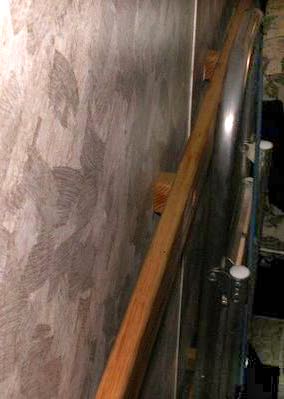
toy hauler rails overviewOne RVer we met wanted a place to strap stuff to the wall in his toy hauler, so he built and installed these “moving van”-type cargo rails on the walls. He also wanted to protect the finish on the walls and these rails are just the ticket.

These are easy to make, and I recommend building them from hardwood because softwood will not support a load as well as hardwood.

Holding tank chemicals — choose carefully


By Greg Illes

Absolutely nobody can tolerate a stinky holding tank. This newsletter and the forums are full of advice on how to eliminate odors, and it’s all for a good cause. Climbing into a stinky RV can just ruin your day.

But what about the methodology? Is it just a case of getting rid of smells? Well, yes and no. There’s a right way and a wrong way, as with so many things in life.

First off, what causes the smell? It’s not the waste in the tanks, it’s actually the bacteria in the waste. Eewww, that’s disgusting. Let’s kill all those nasty bacteria, right? Where’s my can of bacteria poison? Not so fast, pardner. Those bacteria are a natural ecological part of the waste break-down process. Waste must be liquefied in order to be properly distributed through the leach fields and absorbed into the ecosystems downstream from the leach fields. If the waste is not properly broken down, it just solidifies and clumps up. This can be disastrous not only for RV holding tanks but also for dump systems, septic tanks and leach fields. Some states and parks actually prohibit the use of bacterial toxins (usually formaldehydes or derivatives); they are actually carcinogenic as well.

So what’s to be done? “Can’t live with ’em; can’t live without ’em,” as the saying goes. Fortunately, there is a solution — actually many solutions. Providers have come up with a broad selection of environmentally friendly holding tank treatments. Amazingly, these treatments actually encourage the growth of bacteria rather than simply killing them off.

How does this work? As it turns out, the stink mainly comes from poor conditions for bacterial growth — lack of oxygen, primarily. Probiotic tank treatments change the chemistry to promote healthy bacterial growth, which rapidly and odorlessly liquefies the tank contents. This makes dumping easier, and it sure helps the dump system maintain its essential health and efficiency.

To be sure, the use of formaldehyde-based tank chemicals is very effective against odors — but at too great a cost in terms of downstream adverse effects. Try not to be seduced by the easy solution. If you are using poisonous chemicals now, go through the changeover process and be an eco-friendly RVer. Here’s how to do this.

First, select a chemical that is enzyme or probiotic based. Second, execute a very thorough flushing, perhaps several, on your existing tanks so that any residual poison is flushed out. Even a trace of formaldehyde-based chemical will kill the good bacteria needed for proper eco-friendly operation. (Most people who report poor results with enzyme products have not adequately flushed the old poisons from the system.)

When your tanks are spic-and-span, follow the manufacturer’s recommendations for the new chemical. More is not necessarily better — just use what the instructions say.

We went through this process several years ago and our results are spectacular. We used the Bio-Pak, but there are many products to choose from. We never have an odor problem, even in high temperatures and long intervals between dumps (10 days or more sometimes). And we have the satisfaction of knowing that we are doing no harm, perhaps even some good, to the dump stations and eco-systems along our travels.

Editor’s note:  Learn more or order Bio-Pak here or similar products here.

photo: Greg Illes

Greg Illes is a retired systems engineer who loves thinking up RV upgrades and modifications. When he’s not working on his motorhome, he’s traveling in it. You can follow his blog at www.divver-city.com/blog.

Get your movies without WiFi buffer blues

0

By Dave Helgeson

Do you enjoy watching movies while away in your RV, but don’t want to use up your data plan streaming them over your mobile device? Then use Netflix General Delivery. Netflix will send DVDs general delivery to any post office of your choosing.

Here is how it works: Select a movie(s) online from the Netflix website via your smart phone or other Internet-enabled device, prioritize them in their queue and enter the mailing address for the current place you’re camping.

If the RV park doesn’t accept mail for registered guests, or you are in an unstaffed government campground or are boondocking, use General Delivery of the nearest post office. You can quickly find the closest post office and address on the USPS website. Due to numerous distribution centers across the country the movies typically arrive the very next day.

View the selected movies at your leisure. The period of time you keep them doesn’t matter as long as you don’t have more DVDs checked out at a time than your plan allows (plans allow up to four max). Reuse the same envelope they were delivered in to return them. Postage is prepaid — all you have to do is find a place to drop them in the mail, be it outgoing mail at an RV park or local post office.

The returned movies practically always arrive back at Netflix the following morning. Once received, you will receive an email from Netflix letting you know they’ve arrived back at the distribution center. Then the next batch of movies you have queued will be mailed at that time — in most cases the same day. You will receive an email notifying you that they have been mailed. When in doubt, you can always check their website to see the current status of your movie selections. It’s a fast and easy way to stay up on the latest movies while enjoying the RV lifestyle.

Renting your way into RVing

0

By David and Brenda Bott, outsideourbubble.com

With all the places we’ve traveled, we’ve found that, by far, RVing is our favorite mode of transportation and an awesome way to travel the country. We like the idea of sleeping in our own bed every night, cooking our own food for meals and bringing our pets along. We didn’t just want to sightsee and be tourists, we wanted adventures —whether it was NASCAR with friends, white water rafting in the Adirondacks, kayaking in Tennessee, or zip-lining in Newfoundland. We’ve been to small town America as well as large cities. We have dipped our toes in the Pacific Ocean and enjoyed the late afternoon sun in the deserts of Arizona.

Looking back, we’ve done a lot since we started traveling in 2008. This country of ours is so vast and different that it would take a lifetime to see it all. And let’s face it, flying over the country at 35,000 feet you really can’t see a lot — other than clouds. Air travel is not what it used to be. Life is too short to only explore the small corner of the country that you call home. Here, let me say it this way … GET OUT AND SEE SOME OF THIS GREAT COUNTRY OF OURS AT LEAST ONCE VIA RV! (Did you hear me?)

So, if you are looking for a nice vacation idea and don’t want to invest in an RV for the couple of times a year you may use it, then renting is a great alternative. Then, even exploring the opposite side of the country from where you live is not out of the question. Just fly in and rent an RV from that locale. That way you can maximize your time exploring. And there’s a lot of that you can do.

Here’s another advantage of RV renting: When we started RVing in 2008, we jumped full-in. We were lucky. You see, we’ve come across many couples that thought they knew what they wanted in an RV, only to find out after being in it for a while that their rig really just wasn’t the right fit for them and their needs. They would have liked something bigger or smaller, a fifth wheel versus a Class A. Some end up losing money, trading in their RV for something that they truly wanted. Renting an RV could have saved them much frustration as well as saved their pocketbook.

We came across a novel website for those looking to rent. Called RVShare, it can help you rent another RVer’s rig. No big “RENT ME” sign on the side. (It’s worth it just for that!) You can find all shapes, sizes and types of RVs to fit your travel needs as you look to explore.

Here is an idea: If you’re considering buying an RV, renting a personally-owned one first is a great advantage to determine the type of rig that’s right for you before you spend your hard-earned money. When renting through RVShare, you talk directly with the owner of the RV that you are considering. That could prove to be a big advantage before you buy.

If you find yourself in a rental unit that is shrink wrapped with an advertisement that just screams “RENTAL,” don’t mind us staring at you. You are our entertainment for the evening when you try to park and hook up. (Come on, we all have been there.) Hopefully, you won’t be as bad as Robin Williams’ character in the movie “RV.” And if you don’t get that reference, make sure you get the movie before your trip so your family can be prepared for your own adventure.

Motion light perfect for RV applications

By Jim Twamley

I enjoy closets with automatic lighting. I’ve thought about wiring the closets in my RV to do this, but it was just too much trouble for what it was worth. Happily, my good friends at Cool RV Products (makers of Coil n’Wrap) sent me the solution.

This motion light has 10 LED lights that now light up my closet when I open the door. I applied some hook and loop tape (also available at Cool RV Products) on the bottom and stuck it on the ceiling of the closet.

You can buy a two-pack of these lights for less than $13 on Amazon by following this link. These lights are great in the bathroom, storage compartments and in overhead cabinets. The unit operates on three AA batteries. There is a three-way switch on the back that allows it to be set on constant illumination or “Auto,” which operates the motion sensor and turns the light on when the door opens.

Take your entire library on the road

0


By Greg Illes

By now, most folks know about e-books (electronic books), those microscopic packets of electrons that blossom magically into entire books in full color. E-books are sometimes embraced, sometimes hated, and nearly universally misunderstood to some extent.

For RV life, electronic books are a huge blessing, virtually eliminating any space or weight taken up by conventional tomes. So it’s worth looking at some features and details, and getting a full understanding of the virtues of this technology.

• E-books are cheaper — On Amazon, a typical e-book may sell for $5-$10, whereas a paperback, and especially a hardcover, will be more costly.

• E-books don’t require a special reader — You don’t need another piece of electronicsbecause you can read an e-book on a computer, a smart phone, a tablet or a laptop.

• E-books can be easily shared — If you share an Amazon account, you can download the same e-book to all of your shared devices. The same book can be read simultaneously on two or more devices. (However, you might not get it to open exactly where you left off.) Non-copyrighted e-books can be copied and shared by email or thumb-drive.

• There are thousands of free e-books — On Amazon, Gutenberg, and hundreds of other sites, there are far more choices of really good books than you could absorb in a lifetime, all free for the download.

• It’s super easy to share a book — If you have a free book, you can email it to a friend; if it’s a pay-for book, you can send them the link to purchase it (or send them a gift by email). It’s no longer necessary to hand over a two-pound printed copy for a friend to share your reading experience.

• E-books don’t need a reading light — No lamp required. Want to read in the dark? Not a problem. Poor light in a waiting room, or wishing not to disturb your sleeping partner, don’t impact your ability to keep on reading.

It’s pretty easy to see how the benefits of e-books fit nicely into the RV life. And so far we’ve only talked about printed-matter books. There are also extensive choices for audio books, which also take no more than a bit of disk or USB thumb-drive space. Imagine being able to “read” a new book as easily as listening to the radio while you’re driving down the road.

True, some folks just love the feel of flipping the pages of a paper book, and this merit can’t be argued. But you do get quickly accustomed to the convenience and flexibility of the electronic style, and most of us can give up a little nostalgia for the sake of carrying our entire reading library along on every trip — in our pocket or purse.

photo: Pousha sh at wikipedia

Greg Illes is a retired systems engineer who loves thinking up RV upgrades and modifications. When he’s not working on his motorhome, he’s traveling in it. You can follow his blog at www.divver-city.com/blog.

Got a smelly Dometic toilet? This could be the problem

By Steve Savage, Mobility RV Service

If by chance your new RV came with a Dometic Series 300 commode as standard equipment and suddenly your bathroom smells like a cesspool, here’s what might have happened. Unlike commodes in the past, the top and bottom halves of this appliance are sealed internally and are not to be separated. Do not attempt to separate them!

All goes well unless the seal breaks, and the rear of the commode becomes a storage container for bodily waste. When this happens the entire commode must be replaced. The Series 300 has been replaced by Series 310 at your service center.

If you choose to replace it yourself, shut off the water to your RV. Disconnect the water line at the rear of the commode. Unbolt the commode from the floor and lift it straight up. Do not tip it or turn it upside down or you will have an incredible mess. There are no parts from the old commode that will be reused on the replacement.

Editor’s note: Several RVers have commented about this problem; all have reported that Dometic was quick to respond by sending out a new 310 model toilet.

Missing or damaged roof vent? “Spacey” suggestion to the rescue!

0

By Russ and Tiña De Maris

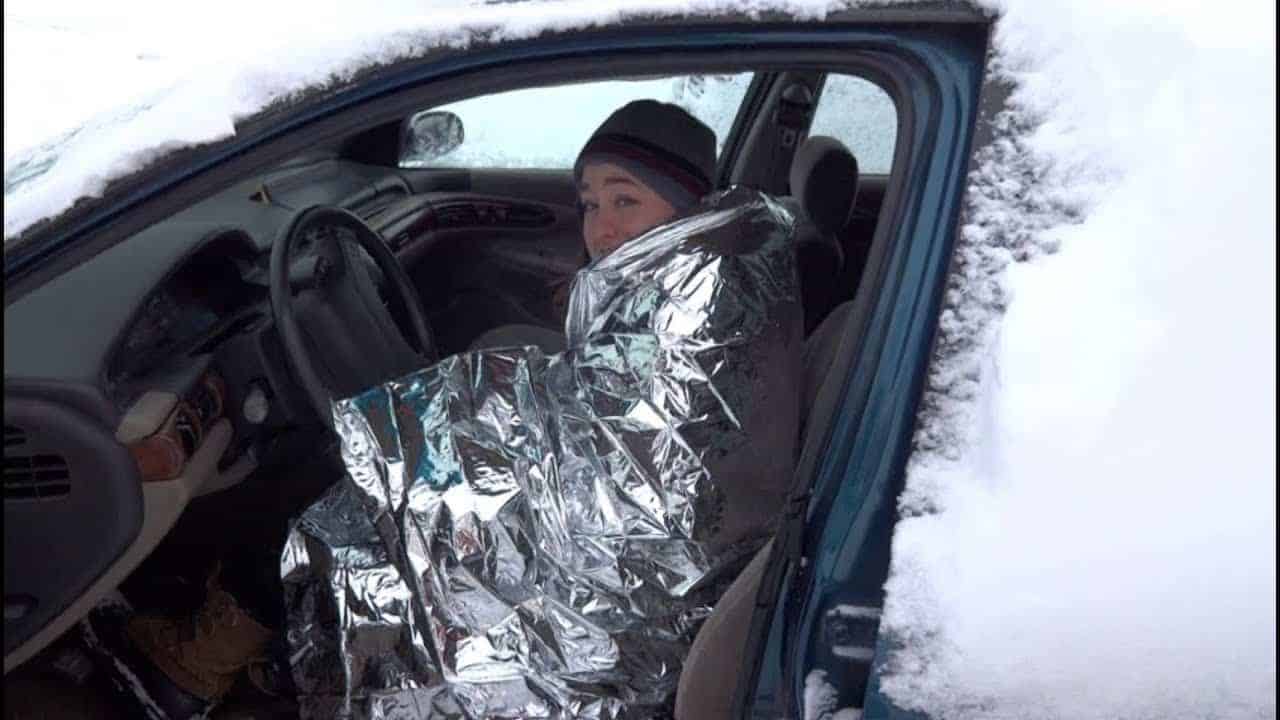
We recently told you about a video on using reflective emergency blankets. Reader Astrid Bierworth was quick to let us in on yet another use for these easy-to-store “space” blankets.

“While in Utah recently, we were hit by a sudden, damaging hailstorm. Several RVs in the park where we were sustained damage. The hail was not large, but the wind drove it almost like bullets. Several units lost their vent lids. Those of us with vent covers (like MaxxAir) were OK, but those whose vent lids were somewhat brittle from sun exposure suddenly had a problem keeping rain out of their RVs.

“Sheets of plastic became a hot commodity. I happened to have some which I gave to a neighbor, but who carries sheets of plastic around in case the vent lid gets damaged or there is some other form of water intrusion in the RV? Still, most of us carry duct tape.

“This is where I think these reflective emergency blankets could come in handy. They are very light and small, and so much easier to carry around than a sheet of plastic. They would make great temporary rain-keeper-outers!”

Astrid’s suggestion surely could have helped us some years back. Tooling down a windswept freeway outside of Portland, Oregon, we found (on a stop) that one of our roof vents had just completely “taken a powder” (left). We lost a couple of hours locating a window glass company, who cut us the properly sized chunk of clear acrylic to temporarily “plug the hole.” A well-placed, well-taped reflective blanket could have probably handled our problem with a lot less time loss — and would have been much cheaper, to boot!

You can find a wide variety of these clever blankets on Amazon.

Pick your next generator carefully

0


By Greg Illes

Before you repair or rebuild that Onan built-in generator, and certainly before you purchase another portable generator, there are some relatively new issues to be aware of and consider.

generator-736The old Onan 4KW series, and most older portable generators, use a fuel motor (gas/diesel/propane) to drive a motor-generator. This requires that the engine run at a constant 3,600 rpm in order to achieve the standard 60Hz AC voltage frequency (sine wave). The end result of this technology is a lot of weight and noise.

A typical open-frame portable (think contractors, Home Depot, Harbor Freight, etc.) will make enough noise to compete with jet takeoffs at your local international airport. Say goodbye to a peaceful campground if one of these turkeys is within a hundred yards of your campsite.

The standard of the industry, the Onan 4,000 kilowatt series, is much quieter, but still pretty audible across several campsites. But it’s also HEAVY, almost 200 pounds in a typical installation. People love their Onans because they’re built in, draw fuel from the RV tank, have a remote start and are (mostly) trouble-free. Certainly, if your RV has one already and it’s working okay, you’re not likely looking to replace it. But I’ve run into more than a few RV owners who have bought quieter, more fuel-efficient units to run in addition to their Onans.

For any major change in generator resource, new or replacement, the newest technology to be aware of is the inverter-generator. These products have created a sea change in the market, and I’m kinda surprised that Onan has not come up with a competitive offering. (Are we looking at a replay of the U.S. auto market with Japan?)

The inverter-generator also uses a fuel engine, and many are very quiet in operation. But more importantly, the engine drives a very different kind of electrical generator. This design drives a variable-frequency motor generator which powers a full-electronic inverter power supply. The electronic supply puts out 60Hz regardless of engine speed. Without going into a lot of technical detail, let me just say that the final result is that the engine only has to turn fast enough to power the existing load.

How does this work? If all you’re doing is running your lights and the TV, the inverter-generator runs just above idle, barely audible inside the RV. Fire up the AC or the microwave, and the generator leaps to life, powering up into the typical high-rpm growl (although still MUCH quieter than the open-frame models). When the microwave shuts off, the inverter-generator settles back down to a purr again.

Using one of these in a campground environment is a dream come true. At low load, these little units can’t be heard over a light breeze even in the next campsite. They barely sip gasoline, running many hours on one gallon. There are also remote-start units available, and power ratings from one to four KW and more. The 2KW units weigh about 50 pounds — that’s it.

The next time you see a fellow camper walking around his campsite and it sounds like he’s pumping up an air mattress, go check out his generator. He’s likely peacefully powering his rig with a red (Honda) or blue (Yamaha) inverter-generator, and you can thank him for his campground courtesy.

Editor: Browse through the large selection of inverter-generators available at Amazon.

Greg Illes is a retired systems engineer who loves thinking up RV upgrades and modifications. When he’s not working on his motorhome, he’s traveling in it. You can follow his blog at www.divver-city.com/blog.

Keep some essentials — and more — in your toad


By Greg Illes

Statistics tell us that 80 percent of the motorhome population tows a car behind their rig. Add to this the number of people pulling trailers and fifth wheels and you have a whole bunch of folks who use “local transportation” when they’re camped.

A lot of the time, the “ground vehicle” is just used for going to the store, visiting local sights and similar short trips. But if your travel is just a little more adventurous, you could find yourself quite a ways from RV-home, with all those home comforts and tools far out of reach.

If you are (as we are) four-wheeling capable, then the radius of day operations gets truly remote. Because of this, we’ve developed a toad-kit of day-travel accessories. We have been well over 100 miles from our RV on day trips, occasionally most of it on dirt roads, so our kit is pretty extensive. The following is actually only a partial listing.

Handy Stuff — Jackets, hats, hiking staffs, day-packs, drinking water, snacks, cameras, spare batteries, cell phone chargers. Basic first aid kit in the day-packs. Rags, ropes, flashlights, duct tape.

Survival Gear — Small tent, space blankets, rain ponchos, satellite link (InReach is our current choice), more snacks.

Recovery Gear — Tool kit, tire patch kit, air pump, winch cable extension, winch hardware, snatch strap, shovel, pickax, saw, spare gas, spare water, spare drive belt, jumper cables. A really good jack (hi-lift).

As you can see, we hate getting stuck or seriously inconvenienced. We are prepared for enjoying our excursions in comfort. We are also prepared for the occasional mishap, bad weather or even a serious breakdown without being badly compromised in comfort or safety.

You may or may not want to stock up as aggressively — but consider how your day might go if you are ten miles up a lonely dirt road when a radiator hose blows. Long, hard walk and it’s getting dark. No cell phone coverage. Hmmm … Maybe some good duct tape, spare water and a flashlight would be nice to have?

photo: Greg Illes

Greg Illes is a retired systems engineer who loves thinking up RV upgrades and modifications. When he’s not working on his motorhome, he’s traveling in it. You can follow his blog at www.divver-city.com/blog.
Cold weather RVing no-nos

0

By Steve Savage, Mobility RV Service

With winter now upon us, it is time to toss out a couple of things that are not good ideas, if you’re using your RV this winter.

Most folks try to save money on propane by using electric space heaters in their campers. Electric heaters also give some respite from those noisy furnace blowers. Yes, I know, furnaces are propane pigs, often going through something in the area of a gallon of propane per three hours of run time, and you sure don’t need to tell me how noisy they are. It’s like sitting next to a miniature jet engine in many RVs.

So what’s the problem with electric cube heaters or something similar? Two things: First, many campers, even those four-season models (a misnomer if there ever was one!), are designed with ducting that heats water lines and dump tanks. With no furnace heat, water lines can freeze and dump valves can ice up. In a worst-case scenario, in one instance I had to replumb water lines when the furnace quit and the owner switched to electric heaters for several days. If you are going this route, try to use the furnace some to help keep things from freezing and open cabinet doors to allow heat to reach water lines.

Second, to revisit a point I covered in an earlier post, placing high draw loads on wiring can be a sure-fire way to melt things. I spent part of today installing an inverter to replace one that had burned out a couple of days ago. The owners, like so many of us, did not give thought to what might happen if the inverter had to transfer power to a large microwave, an electric space heater and a coffee maker all at one time. No, the breaker did not trip. Breakers have only one job and that is to keep wiring from starting on fire. They do not protect anything that is on the line that is getting hot.

In this case, a very large diesel motorhome had every shore power item in the RV except the air conditioners and the washer/dryer running through the inverter. The load was large and long, meaning the transfer switch in the inverter got very hot. So hot, in fact, the inverter reeked of burned circuit boards when I removed it and installed a new one.

Now, if you are thinking, “Why on earth would a manufacturer route every receptacle in the coach through the inverter,” the answer is simple: The engineer who designed it was attempting to make sure there was power everywhere, all of the time, but gave no thought to what might be plugged into those receptacles and drawing power at the same time.

One final point: The term “four-season” has no real meaning when it comes to RVs, and can mean anything from tank heaters to more insulation and all points in between. If you ask a manufacturer what it means with their models, the answers you will get are likely to be all over the map and generally means the RV is suitable for use until temperatures reach about freezing. How much lower you can safely go after that varies widely, with very few rigs suitable for below-zero temperatures.

My wife and I winter camp and have done so in cold and even below-zero weather at times, but doing so requires you understand the construction of your RV and make adjustments accordingly — or, as one RV owner said to me one time, “Sure, I winter camp — just not where it’s cold!”

photo: hslphotosync on flickr.com

Shake, rattle, roll down the road — but the crystal stays put

0

By Jim Twamley

It’s often been said that by driving or pulling our rigs down the road we expose them to earthquake-like conditions. It’s a wonder more stuff doesn’t fall and break! So, how do we secure something like a crystal vase that we want to stay in one place while we travel? The answer is found in products like Museum Gel, Museum Putty and Museum Wax.

Each of these stick-’em products has a specific recommended application. We added color treatment to Museum Putty to show where it’s attached to an object we don’t want to shake loose. Here an RV dealer uses Museum Putty to hold the dishes secure on the table so they can take customers on test drives without breaking the decorations.

Museum Putty will secure most anything to keep it from falling and breaking. Museum Putty comes ready to use in a sheet. You just pull off a chunk and roll it in your fingers until soft, then stick it on the bottom of the item you are securing. Then you slightly twist the item with the putty onto the surface and “presto,” you’re done. It will not harm wood finishes and it can be used over and over again. You can purchase Museum Putty at Amazon.

Museum Gel (also available at Amazon) is another product that works best for anchoring crystal and glass objects because it is clear. You apply it the same as Museum Putty, but it takes about an hour to set. Museum Wax (at Amazon) is the best choice for more permanent placement of objects. It works well on wood shelves but can become more difficult to remove if objects are left in place more than one year.