Home Blog Page 2207

What to look for when shopping for a trailer

0
By Steve Savage
Mobility RV Service
When shopping for a trailer, as with all RVs, start by considering how you intend to use it. As a general rule it’s easier to tow a smaller RV than a large one, and obviously it’s important to be aware how much weight your tow vehicle can tow. Naturally, if you plan on staying put for long periods of time or full-timing, lean in the direction of going larger in size.
I advise staying away from any RV that falls into the entry level, i.e., the cheap price range. The only way the manufacturers market entry-level products is by “decontenting”* the product or by pushing it down the line. I have seen some of these wherein appliances were not even wired before leaving the factory. I would also advise against buying from any manufacturer that has not been in business for at least five years. Everyone needs a track record.
Once you know what size and shape you’re going to tow, attend several RV shows and do some research on the Internet, until you have a sense of differences in construction. Examine every aspect carefully and don’t attempt to buy based simply on a manufacturer’s reputation. Don’t forget to make sure everything works. After you narrow the candidate list, be sure to complete a test tow before signing on the dotted line, and try not to get caught up in modifications and add-ons until you have used your RV for several months.
* Editor’s note: “Decontenting” is a term lifted from the auto industry. It is the practice of leaving out features for the sake of price-reduction. Car/truck shopping? A “decontented” pickup may have manual door locks, instead of switched electronic locks normally found on the same model.

Take care with your RV generator

Got a “built in” RV generator? Don’t have to “plug and unplug” shore power cords when switching from shore power to the genset? Then you have an ATS (automatic transfer switch). They’re convenient, indeed, as the rest of us without them have to go outside, typically open a door, and plug the shore power cord into a special receptacle fed by the genset.

However, there are a couple of caveats you need to be aware of: An ATS is not a “perfect” device, and problems can occur. Here’s a good rule when firing up the generator when using an ATS. In fact, this is a good rule when firing up any RV generator, ATS or not: Reduce power consumption before firing up the generator. That means, make sure the air conditioner, the microwave oven, the portable electric space heater–any of those “big draw” devices are turned off.

A big surge in electrical current can actually damage an ATS, and in some cases, the genset itself. There have been cases, too, when the ATS somehow wasn’t fast enough to isolate the generator from the shore power system–with very nasty and sometimes expensive results. Take the extra moment to reduce your power consumption before you hit the start switch.

Susanville in northeast California celebrates its ranching, logging traditions; good ale

Downtown Susanville, Calif. (City of Susanville website)

Many RVers travel along US 395 on their way to and from Arizona and the Pacific Northwest or Canada.  In northeast California you’ll pass near Susanville, a small historic town nestled in a mountain valley at 4,400-feet. It sits about 90 miles north of Reno, Nevada, and about 90 miles east of Red Bluff, Calif.

This is a perfect place for RVers to stop for a few hours to visit the local historic railroad depot or pull over for the night and enjoy a Lassen Ale draft at the local brew pub–Pioneer Saloon, “the oldest operating business in northeast California.”

Here are a couple places to tempt you off the road:

Inside Railroad Deport

Susanville Railroad Depot and Visitor Center
601 Richmond Rd., Susanville, Calif.
Located at the head of the Bizz Johnson National Recreational Trail this restored railroad depot offers a visitor center and a museum. Free.
Hours: Monday thru Friday 10 a.m. – 4 p.m.
(530) 257-3252.

Roop’s Fort / Lassen Historical Museum
105 N. Weatherlow St., Susanville, Calif.
Open to the public Monday through Friday during the summer.
The
fort is the oldest structure in the town. The museum houses exhibits
chronicling the last 170 years in Susanville’s history. This small museum hass plenty of information on local history. The museum docents were helpful and informative. Take the time to stop by.
(530) 257-3292.

Pioneer Saloon

Lassen Ale Works at the Pioneer Saloon
724 Main St., Susanville, Calif.
(530) 257-7666

“The Pioneer Saloon, established in 1862, is the oldest operating business in northeast California. The bar, building and its large, exterior vintage neon sign are beloved local icons. People come in to take a seat at the 36-foot-long bar, ostensibly the longest in northeast California, and admire the display of hundreds of hand painted ranch brands representing generations of Lassen County cattlemen and women. The back room features a historic mural, one of many in Susanville, but the only one located inside a building, that celebrates the ranching and logging traditions of Lassen County,” according to the Sierra Nevada Geotourism’s website.

Lassen Ale Works at the Pioneer Saloon opened in May of 2012. The owners “dreamed of creating a warm, welcoming brew pub in a historic building that would become a community gathering spot and provide a boost to the economy. The four felt lucky to find this historic western saloon, steeped in history, with its rustic appeal still intact.”

The Lassen County Fair
Lassen County Fairgrounds in Susanville, Calif.
The summer’s biggest event comes in the form of a great old fashioned county fair. Live entertainment, 4H competition, Parades.
Third week in July.
(530) 251-8900.

For places to park your rig, check out RV Park Reviews. 

— Sources of information and photos: Sierra Nevada Geotourism, City of Susanville, Lassen County Chamber of Commerce. Lassen Ale Works at the Pioneer Saloon.

Julianne G. Crane
To read more about the RV lifestyle, go to RVWheelLife.com

How to help keep your RV fridge food fresh

The typical RV refrigerator is smaller than the one in your home and many RVers tend to overstuff it, making it difficult for air to circulate and maintain an evenly-distributed temperature. This can also cause some meat and dairy items to smell a bit after just a couple of days.

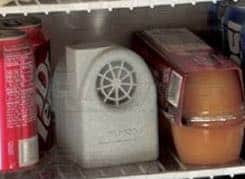
A way to help the refrigerator cool efficiently is to use a small, battery-powered fridge fan, which will move the air around. But be warned: if your refrigerator is really, really stuffed, the device may be only marginally effective. So try not to pack it like a sardine can.

A small inexpensive fridge fan from Camco (and other retailers) will operate for 30 days on two D-cell batteries and has a charcoal filter to absorb odors as it circulates the air. It retails for $22.29 but you can find it for about $14 at Dyers or Amazon. Most RVers seem to like it, although some have reported it is not as effective as promised. The biggest problem with the device, we think, might be trying to pronounce its name without wearing out your tongue. It’s called the Fridge Airator Fridge Fan Food Fresher Fridge Odor Absorber. Yeah, the word “Fridge” is in there three times. Good luck asking for the product by name.

If you want something a little easier to pronounce, the Valterra A10-2606 FridgeCool 11.28 mA Fan with On/Off Switch is about the same price and should accomplish the same mission. But, really, that isn’t so easy to say, either!

How much maintenance is required on solar panels?

The answer is “not much!” There is very little maintenance required on a well designed solar electric battery charging system. Solar panels have no moving parts to wear out, no fuel to consume and no filters to replace. All you have to do is clean them occasionally with a non-abrasive cleaner and check the mounts and fasteners to make sure they are tight. Vibration, expansion and contraction from temperature changes have a way of loosening up hardware.

Modern charge controllers also have no moving parts to wear out since most are solid state electronics. However, you might want to check the wire connections once a year to make sure they are clean and secure. A loose connection causes resistance and heat, both of which are detrimental to performance.

You should check the battery water level at least quarterly (preferably monthly) and add only pure, distilled water when necessary. The batteries and the wire connections made on or near them are where most of the maintenance is needed. This is because when batteries gas some of the sulfuric acid in the electrolyte might escape as an acid mist and land on the terminals and cause some corrosion. Inspect the wire connections and clean away any corrosion you find. Clean the terminals and make sure all connections at the battery are snug. This unpleasant task is unnecessary if you are using maintenance free Lifeline AGM batteries.

Thanks to our friends at AM Solar for this tip. Photo courtesy LiveWorkDream.com.

Simple test helps gauge if your tires are safe

Every so often, depending on how much you have driven your RV or car, or before you embark upon a long road trip, check your tires for wear and damage problems. One easy way to check for wear is by using the penny test. All you have to do is grab your spare change and follow three easy steps.

  1. Take a penny and hold Abe’s body between your thumb and forefinger.
  2. Select a point on your tire where tread appears the lowest and place Lincoln’s head into one of the grooves.
  3. If any part of Abe Lincoln’s head is covered by the tread, you’re driving with the legal and safe amount of tread. If your tread gets below that (approximately 2/32 of an inch), your vehicle’s ability to grip the road in adverse conditions is greatly reduced.

Don’t be zapped by low voltage

By Russ and Tiña De Maris

In the classic monster movies, the mad scientist zaps his new “creation” with a huge blast of electricity — and it all goes bad from there. As RVers, the wrong kind of voltage can raise all kinds of problems for us; and it’s not just any voltage to worry about, but low voltage.

Old RV parks often have an old electrical system that may well be underrated for the needs put on it by present-day RVs. If the electrical system voltage is consistently below 104 volts it can cause damage to RV electrical and electronic gear.

Your air conditioning system is one of the most easily affected. It takes a set amount of power to operate and it MUST have it. If the voltage is low, then the unit will still function but it will run hot. This puts a huge strain on the compressor motors and given enough trouble, something’s gonna break — and it won’t be cheap to fix.

HOW CAN YOU PROTECT YOURSELF? Buy, install and use a power line monitor. You can use yours as an added safety benefit against bad electrical wiring at the RV hookup. One inside the rig watches the monitor as another plugs in the power at the pedestal. The inside person verifies that the power monitor shows “good” wiring — no reverse polarity, no “no ground” situations — any of which can lead to safety issues. Other RVers take the safety a step farther: Using the appropriate adapter, they plug their monitor directly into the power outlet on the campground pedestal, getting a “read” on the power even before plugging their RV in. The latter is a smarter approach.

Camping World sells a fancy power line monitor for about $65. If you don’t want to spend that much, then use your digital voltmeter. Set the meter to monitor AC voltage and carefully plug the probes into the large, rectangular blade slots of one of your wall outlets as shown. Check the voltage that way, but don’t leave the meter probes plugged in unattended! An alternative would be to build yourself a “plug in” cord set, using a wall plug, some “zip” wire, and a set of plugs to fit your meter. If you already have a digital voltmeter — or even if you don’t (but they’re really inexpensive) — you can build your own power line monitor for a whole lot less than buying one.

Editor: Here are some digital multimeters at Amazon.

Water accessories every RV needs

by Russ and Tiña De Maris

If you’ll be camping in a park with “city water,” that is, water from a faucet, there are some good accessories to keep in your RV storage compartment. These can make your visit easier —even safer — for your rig. They’re inexpensive and you’ll bless yourself for having them when you need them.

Even before you hang the hose on the tap, there are a couple of helpful devices you might need. First, there are situations where the “threads” on the water faucet are stripped, or deliberately not there to prevent folks from hooking a hose to an otherwise good spigot. Assuming you have the right to the water, a little device known as a “water thief” can help out here.

The “thief” is a rubber sleeve (above right) that snugs over a spigot, and at the other end is a brass threaded connection which allows your water hose to hook up normally. If you’re filling up your tank, just slip the thief on the faucet, hook up your hose and fill away. If you’ll be putting any real pressure on the hose — say, hooking it directly to your “city water” inlet on the RV — you’ll need to use a hose clamp to snug the rubber sleeve end onto the faucet.

A water pressure regulator (left) can also save you lots of headaches. Typically RVers complain that the pressure they encounter in a campground or RV park is too low, but it only takes one case of over-pressurization to blow a fitting in your rig to really make your blood boil. A simple RV water pressure regulator can prevent over-pressure from doing real damage. Where do you put it? We’ve seen plenty of RVers who hook the things between the water hose and the city water inlet on the rig. But why not protect the water hose too? Hook it on the campground faucet, then to the hose, and all your bases are covered. Yes, there is a slight fall-off of water volume when you use this rig, but the peace of mind is usually worth it. Is it worth the extra money to buy the fancy “adjustable” water pressure regulators? Not from what we’ve heard — some say they simply don’t work as advertised.

Finally, a fitting you probably do want between the hose and the city water inlet is an entry elbow (right). If your water hose kinks or bends where it mates up with your water inlet, you can be sure water flow will be impaired, and a premature death of the water hose is likely. For less than $10 you can buy a metal elbow that allows the water hose to hang vertically, rather than crimped.

* * *

##RVDDT1465

Lemon pledge good for wood and the RV toilet

By Jim Twamley
Many “old school” RVers keep a spray can of Pledge in their cleaning supply closet. After all, your rig can accumulate a lot of dust on the road. But I keep a can for more than just dusting — it also helps with the toilet. Here’s why:

I was at an RV dealership and was talking to a knowledgeable RV tech about my leaking water seal on my RV toilet. I have a Sea/Land type toilet that uses a rubber gasket and a foot operated ball lever.

The plastic ball moves back and forth across a rubber donut shaped disk and is supposed to trap the water in the bowel when closed. The trapped water prevents noxious odors from entering the RV which is a very good thing. He told me that if the seal was not cut or the ball not gouged, then I may be able to clean around the rubber seal and treat it with Lemon Pledge. He says that years ago, before Dometic bought out the Sea/Land toilet company, they used to tell you this in the owners manual.

I turned off the water, opened the ball and pushed the rubber seal down about one quarter inch with my fingers (I recommend using rubber gloves for this procedure). I used the blade of a screwdriver and carefully scraped all the Arizona hard water build-up off the top of the rubber seal being careful not to puncture or tear the seal. Soaking it down with Lemon Pledge was easy, just push down on the seal and spray it. Let it set for five or ten minutes and then turn on the water and test it. Now my toiled retains water and my wood is happy to get the Lemon Pledge leftovers.

Do “gas saving” products really help?

The answer is “probably not.” Be skeptical of the following kinds of advertising claims.

“This gas-saving product improves fuel economy by 20 percent.”
Claims usually tout savings ranging from 12 to 25 percent. However, the Environmental Protection Agency (EPA) has evaluated or tested more than 100 alleged gas-saving devices and has not found any product that significantly improves gas mileage. In fact, some “gas-saving” products may damage a vehicle’s engine or cause substantial increases in exhaust emissions.

“After installing your product on my car, I got an extra four miles per gallon.”
Many ads feature glowing testimonials by satisfied customers. Yet, few consumers have the ability or the equipment to test for precise changes in gas mileage after installing a gas-saving product. Many variables affect fuel consumption, including traffic, road and weather conditions and the car’s condition. For example, one consumer sent a letter to a company praising its “gas-saving” product. At the time the product was installed, however, the consumer also had received a complete engine tune-up — a fact not mentioned in the letter. The entire increase in gas mileage attributed to the “gas-saving” product may well have been the result of the tune-up alone. But from the ad, other consumers could not have known.

“This gas-saving device is approved by the Federal government.”
No government agency endorses gas-saving products for cars. The most that can be claimed in advertising is that the EPA has reached certain conclusions about possible gas savings by testing the product or by evaluating the manufacturer’s own test data. If the seller claims that its product has been evaluated by the EPA, ask for a copy of the EPA report, or check www.epa.gov for information. In some instances, false claims of EPA testing or approval have been made.

How to safely hide valuables in your RV

0

By Peggi McDonald and Chuck Woodbury
There are many places to create ‘out of sight’ hiding places in your RV. It’s difficult to steal something quickly when a burglar doesn’t know where to look. One common ‘hideout’ is a small container buried inside food packages such as coffee, cereal, sugar, rice etc.

Another is to buy a product that looks like a common household item, but is actually a safe. BrickHouse Security, for example, has a simple and affordable solution that’s as discreet as it is clever. Its hairbrush/safe is the last place someone would look for your valuables. It looks like a normal hairbrush. But, instead, the brush opens up to a hollow compartment. It’s a good place for a valuable ring, or maybe a few $50 bills for an emergency.

Other ideas:

Screw bottle lids to the hidden underside of a cupboard, place valuables in bottles and attach to the lids. This method is time-consuming to find when in a hurry.

•Install, hide or camouflage a fire-resistant safe, or use a hollow ‘California style safe’ that resembles cleaning products/spray cans with a false bottom. When stored with other cleaning supplies, finding the ‘safe’ takes too long.

•Store valuable papers in the freezer – it’s the last place to burn.

•Attach a storage tray behind the plate of an electric plug-in socket assembly. Install to resemble a ‘plug-in.’

•Areas behind a false panel, or under a drawer make a great large secret hide-away.

But the bottom line: use caution and common sense to keep your RV secure.

Clean your RV’s interior with Baby Wipes

By Jim Twamley
Baby wipes are so powerful I don’t know why we allow them to be used on babies. Really, these things have potent cleaning power. We used to mop the floor but now we do the job with wipes. They cut through dried up, caked on spills with ease and dry much faster than mop water.

They do a great job shining up a faucet. They are also good for cleaning the shower stall and sinks. Other uses are cleaning out the inside of the microwave, leather furniture, ceiling fan blades, door knobs, dash board, window frames, drawer and cabinet door pulls, stove top, light fixtures and just about anything inside your RV.

They can also be used to lift stains out of fabric and carpet. I use them to remove grime off my hands after working on a motor, generator or under the RV. They are also handy to keep nearby for cleanup after dumping the black tank. They are great for cleaning smashed bugs off the windshield and headlamps. Try cleaning your steering wheel with wipes. You’ll be surprised at how much grime comes off and you’ll enjoy the clean feel and firm grip on your next RV outing.

Like many cleaning products, you may need to test-clean a small spot to make sure there is no discoloration before continuing. Baby Wipes are one of the most versatile and easy to use cleaning products available. It can replace many of the cleaning bottles under your sink and lighten your RV load.