Home Blog Page 2213

Will ice cubes in an RV sewer tank dislodge waste buildup?

0

A buildup of solids in an RV sewer tank is a bad thing. So getting rid of the yucky mess

Nez Perce Bear Paw Battlefield … “I will fight no more forever” — Chief Joseph

It was 137 years ago on Oct. 5, that Chief Joseph of the Nez Perce surrendered following the final battle of the four-month Nez Perce War of 1877 at the Bear Paw Battlefield.

Jimmy Smith reads about the Nez Perce War. (Julianne G. Crane)

“The 1877 flight of the Nez Perce from their homelands while pursued by U.S. Army Generals Howard, Sturgis, and Miles, is one of the most fascinating and sorrowful events in Western U.S. history,” according to the U.S. Forest Service’s Nez Perce National Historic Trail Webpage.

“Following the breakout of war in Idaho, nearly 800 Nez Perce (including elders, women and children) spent a long and arduous summer fleeing U.S. Army troops, first toward Crow allies and then toward refuge in Canada,” states the National Park Service’s Webpage. Nearly 100 died on the journey.

On Sept. 30, 1877, after traveling 1,170 miles through the mountains and only 40 miles short of the Canadian border, “400 troops and 50 scouts” surprised the Nez Perce encampment and attacked at dawn.

Battlefield marker (Julianne G. Crane)

Chiefs Looking Glass, Ollokot, and Too-hul-hul-sote along with many other warriors and Native people were killed during the five-day battle and siege in snow and freezing conditions.

The Nez Perce surrendered their weapons on Oct. 5.

“Some of the soldiers wrote in their journals that it was the coldest weather they had ever experienced,” said Bear Paw Battlefield park ranger Stephanie Martin.

It is recorded that Chief Joseph spoke the following words on abdicating:

Chief Joseph’s words. Click on image to enlarge. (Julianne G. Crane)

The battlefield is part of Nez Perce National Historical Park and Nez Perce National Historic Trail.

Battlefield sign. (Julianne G. Crane)

If you go:
– Bear Paw Battlefield from Chinook, Mont., (on Hwy. 2) travel 16 miles south on Route 240.

– Once there, walk the 1-1/2 mile self-guided trail to get a greater feel of this sacred site.

– There are picnic tables and vault toilets available.

– No charge.

To read more RV lifestyle articles by (Julianne G. Crane), go to RVWheelLife.com.


Photos from the top: Jimmy Smith reads about the Bear Paw siege. There are numerous plaques along the trail that mark significant points of the battlefield. Chief Joseph’s words on surrendering at Bear Paw Battlefield on Oct. 5, 1877. Photos by Julianne G. Crane.

Help diagnose RV’s A/C health with infrared thermometer

RVtravel.com’s technical editor Chris Dougherty shows you an infrared thermometer and demonstrates how it can be used to help determine

Park your RV on a Washington beach: Pacific Beach (video)

Finding a special place along the ocean beach is sure a rarity. Up in the Pacific Northwest, there aren’t too many places where you can take your RV right out to the beach and stay for a day or two. But north of the mouth of Grays Harbor, about center point along the north-south Washington state line, lies the little burg of Pacific Beach.

The state maintains a park in Pacific Beach by the same name. Perched on the beach, in some sites you can sit in your rig and watch the tide roll in and out. Kite fliers and beach combers spend plenty of time decorating the seascape, and overall, its a quiet, relaxing park.

Some summer visit, you may catch those occasional brilliant days of blue sky and sunshine. But Washington’s weather is notably fickle, and a two-hour stretch of sunlight can suddenly change into wind-driven rain that may hang around for weeks. Come winter, park in some of the “ocean front” sites and you can watch winter storms toss the waves around, helter-skelter.

Years back, you could come nearly anytime you liked and find a place to park your rig. But like a lot of those things we “love too much,” nowadays you’d best have a reservation year-around.

Top picks for ocean views? Sites 1 through 6 are great, non-hookup areas. Several of these back up to a bluff, and you can drag your chair up on the bluff and have almost a private outlook over the beach. Sites 7 and 8, and 17 through 30 too, have super ocean views, and offer partial utilities. The park has other non-ocean view spots, too, that cost a few dollars less than view sites.

Welcome your guests with style!
The coolest RV doormat!
You
will be the talk of the RV park with this incredibly cool doormat. This
vibrant 18″ X 30″ Rubber-Master non-slip door mat is made of 95 percent
recycled rubber bonded to a non-woven polyester surface. Unlike a
traditional doormat, this one is durable and easily cleaned with soap
and water. Ya gotta love this! Order for less than $20.

Otter Crest Viewpoint on Oregon Coast

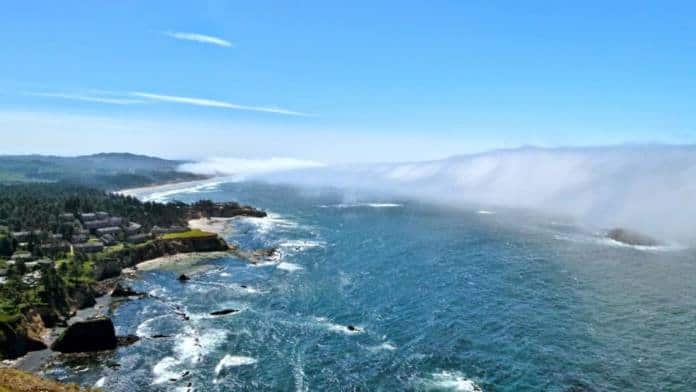
Otter Crest Viewpoint looking south on Oregon Coast. (Julianne G. Crane)

The Oregon Coast Highway has long been a favorite scenic byway for RVers who want to travel at a leisurely pace and soak in some of the most beautiful vistas in America. And, the Oregon State Parks has provided numerous pullouts for the millions of annual sightseers and photographers.

For RVers, a great time to travel this popular route is in the autumn and winter when there are fewer families on the road and camping sites at state parks are easier to come by.

On one recent trip along the northern Oregon Coast we pulled out at the Otter Crest State Scenic Viewpoint. It thrusts out into the Pacific Ocean between Newport to the south and Depoe Bay to the north. It is a beautiful place to take a few snapshots, stretch your legs or fix a bite to eat.

Looking north from Otter Crest(Julianne G. Crane).

However, there are a couple of possible downsides for folks traveling in an RV:

– Traveling north, entry to the viewpoint is on the outside curve and signage was a little confusing. We missed the first entry and turning into the second access road was challenging because of the awkward approach and heavy oncoming traffic. However, there is a protected turn lane.
– Parking is extremely tight for larger rigs and any outfit towing a trailer or boat/car. 

– Only toilet facility available the day we were there was one porta-potty that had not been service in a long, long time. (Thank goodness for self-contained RVs.)

That said, upwards of half-a-million travelers pull off the coast highway each year for the spectacular view from 500-feet “above the ocean on the breathtaking crescent sweep of white sandy beach stretching to the south (pictured above). Cape Foulweather is stunning and inspirational with its picturesque panoramic views. This popular whale watching spot also provides a good view of the Devil’s Punchbowl (to the south)” according to Oregon State Parks.

Read more about the RV lifestyle by Julianne G. Crane, go to RVWheelLife.com.   Photos: Otter Crest State Scenic Viewpoint with fog bank and Gull Rock offshore. (Julianne G. Crane)

Maryhill Art Museum & State Park = perfect family RV Short Stop, camping

Maryhill Art Museum in the Columbia River Gorge. (Julianne G. Crane)

One just doesn’t expect to run into an amazing art museum amid a green oasis in this remote, stark, dry landscape more than 100 miles east of Portland, Oregon, in the Columbia River Gorge.

But there it is–the Maryhill Museum of Art, visible for miles from Interstate 84 on the south side of the Columbia River in Oregon.

The museum and grounds comprise 5,300 acres of beautiful, wild spaces and ranch lands originally owned by land developer Sam Hill who had hoped to establish a Quaker community.

In addition to the art museum, the grounds now include the William and Catherine Dickson Sculpture Park, the Lewis and Clark Overlook (the museum is an official site on the Lewis and Clark National Historic Trail) and a Native Plant Garden.

The museum houses a “world-class collection of art ranging from early 20th century European works to an extensive Native American collection,” according to the Maryhill Museum website.
Read more about the museum’s early history by clicking here.

Peacocks at museum. (Julianne G. Crane)

If you go: 
Maryhill Museum of Art
35 Maryhill Museum Dr.
(Off of SR 14)
Goldendale, WA 98620
Driving directions, click here.
Tel: 509 773-3733
URL: maryhillmuseum.org
Hours: 10 a.m. to 5 p.m. every day, March 15-Nov. 15.

Admission to the museum:
Adults $9, Seniors (65 and older) $8, Youth (ages 7–18) $3, Family Admission (2 adults and related children ages 7–18) $25
Access to the sculpture park is free.
Also enjoy the Café, picnic grounds, and shop. The neighboring Maryhill Winery is just steps away.

Bonus: A few miles east of the Maryhill Art Museum is Sam Hill’s “full-size partial replica” of Stonehenge on SR 14 in Washington state.

Maryhill State Park (Julianne G. Crane) 

Maryhill State Park
50 SR 97
Goldendale, WA 98620
Ph: 509-773-5007

This 99-acre RV and tent camping park includes 4,700 feet of waterfront on the magnificent Columbia River.

The popular park sits just inside Washington state on Hwy. 97 between SR 14 and I 84 (Exit 104) in Oregon.

Learn more about Washington’s Maryhill State Park by clicking here.

Read more about the RV lifestyle by Julianne G. Crane — go to RVWheelLife.com.


Photos: Top: Maryhill Art Museum as seen from SR 14. Middle: Peacocks once roamed Maryhill Art Museum grounds. Bottom: Maryhill State Park has many pull-through RV camp sites. Julianne G. Crane

Top 10 national parks from Outdoor Afro

Seems like everyone loves a “Top Ten” list of great places to hit the out-of-doors. Rue Mapp, who founded Outdoor Afro has published her own list of some of America’s finer places to RV.

Judithsweet on flickr.com

1. Assateague Island National Seashore, Maryland

If wild horses couldn’t drag you away from your favorite spot, here’s one that will provide the wild horses for the test. A barrier island that shelters the coasts of Maryland and Virginia, this national seashore is 37 miles of wonder.
Public domain image, wikimedia commons

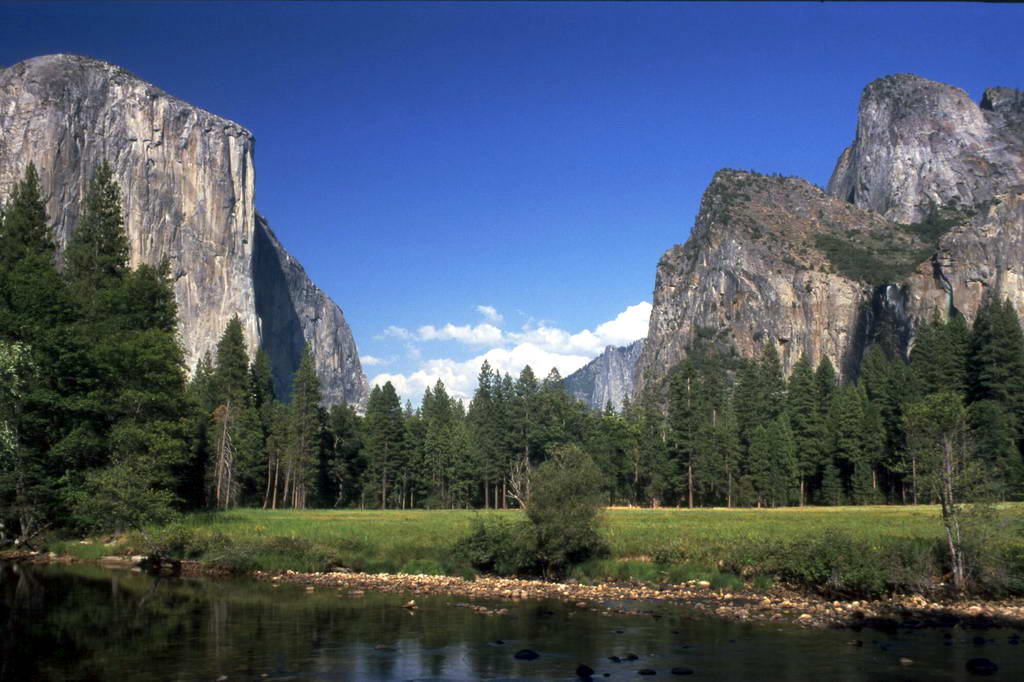
2. Yosemite National Park, California

With plenty of faithful followers, perhaps that explains why this treasure boasts 13 campgrounds. There’s lots to explore here, don’t miss an inch of the 1,200 square miles.

NPS on wikimedia commons

3. Badlands National Park, South Dakota

An archeologist’s delight, geologic deposits here are some of the world’s richest fossil-bearing strata in the world. Look out for bison, prairie dogs, bighorn sheep, and little guys — ferrets. Two “open year-around” campgrounds will put you up.

Sanjay Archarya on wikipedia.org

4.  Arches National Park, Utah

Rock formations and sunsets. Contrasts of colors and textures. Stone arches, literally by the thousands. Bring your hiking boots for the trails. The campground here is way too popular; during high travel season sites are almost always reserved in advance, but there are camping ops outside the park, and the park’s website will point you in the right direction.
vebfilm on flickr.com

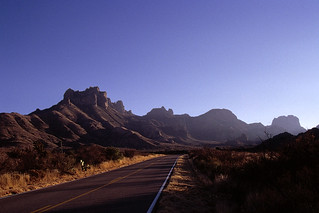
5. Big Bend National Park, Texas

A birder’s paradise, or a place where you can really see how dark dark can be as you gaze at the night sky. A West Texas special.
R&T De Maris

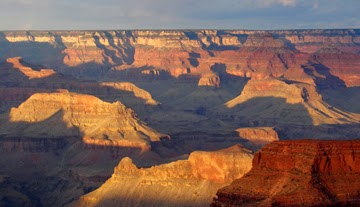
6. Grand Canyon National Park, Arizona

An undisputed national favorite, 90 percent of the five million annual visitors see the South Rim of this great park, but miss the grandeur of the North Rim. There’s plenty of beauty in both sections, but if you have the chance, take the time to explore the less-traveled North Rim.

Ken Lund on flickr.com

7. Great Smoky Mountains National Park, Tennessee

What makes this the “most visited” park in the system? Maybe its the diverse plant and animal life. Perhaps the beauty of the ridgelines that seem to go on endlessly. Maybe its the Appalachian mountain culture. Whatever it is, folks stream here every year to soak up the Great Smokies.

Nine front-country campgrounds accommodate RVs of various lengths.

 werner22brigeiite on pixabay.com

8. Acadia National Park, Maine

Recently voted America’s “favorite spot,” this island park boasts the tallest mountain on the North Atlantic Coast. Hike, bike, or just relax here.

NPS on wikimedia commons

9. Shenandoah National Park, Virginia

Less than two-hours from the nation’s capitol, the difference is night and day. Quiet woods, soothing waterfalls, you may sight deer, listen to songbirds, or just relax away from the distractions of government. Beware, no camping here in wintertime.

NPS on wikimedia commons

10. Olympic National Park, Washington

Hike lush rainforests. Comb surf-roaring beaches looking for treasures. Peer into snow-filled glaciers. A rare Pacific Northwest gem is home to three widely divergent ecosystems. Weather plays a big role in choosing your visit and campsite location.

Editor’s note: Original story listed 11 parks in The Root

Quirky, historic Idaho City …

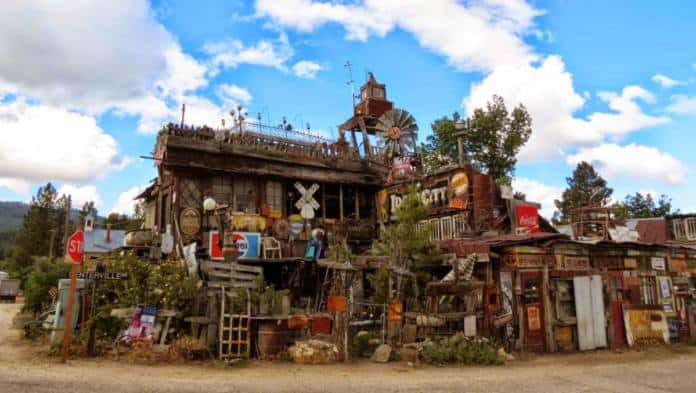
Slightly weird in Idaho City (Dar Hoch)

Fulltime RVer Thom Hoch, writing in RV Sabbatical Journal, talks about a recent meandering journey through historic Idaho City and the Boise Basin gold mining area.

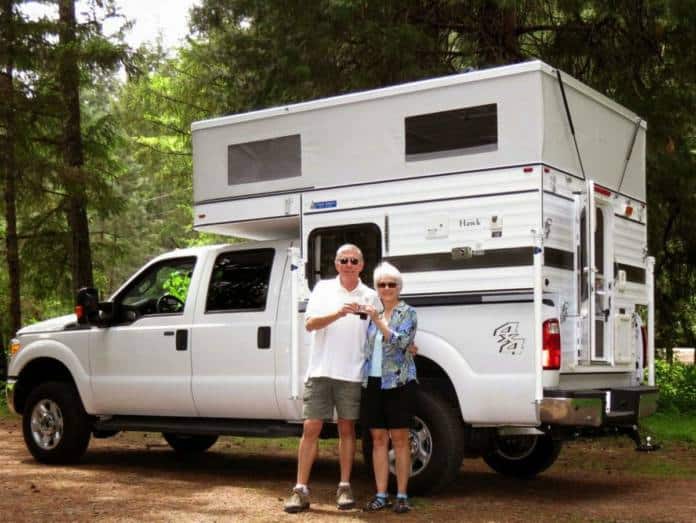
Thom and, his wife, Dar, are traveling in their Four Wheel Camper and 2013 Ford F-350 SRW (6.2L gas, short box, 4wd).

RVers Thom & Dar Hoch are their traveling rig.

For this leg of their summer travels, they were exploring State Highway 21, primarily a two-lane highway from Boise to Stanley. This scenic route, also known as the Ponderosa Pine Scenic Byway, is labeled on the maps with those little green dots and marked “May be closed in winter.” (Not recommended for big rigs.)

About 38 miles off I-84 is Idaho City, the ‘Queen of the Gold Camps,’ sitting at an elevation of 3,907 feet. Portions of the ID-21 highway originated in the 1860s, as a toll road connecting Boise with the gold mining areas near Idaho City.

“Our first stop was the NFS ranger station in Idaho City for ideas and tips, followed by a light exploration of Idaho City itself,” writes Thom Hoch. “They like to say it was once the largest town in Idaho … just after gold was discovered here in 1862. Everyone from miles around who had a notion that it might be pretty cool to get rich quick moved in. And a short time later pretty much all of them left again about as poor as they were when they arrived. Only a small handful of miners made any significant money… as well as the whores, gamblers, and purveyors of ardent spirits who found a motherlode of a different vein.”

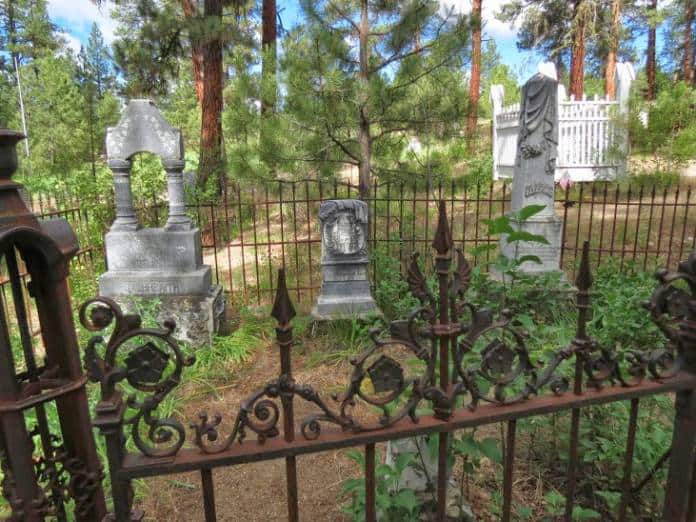
Idaho City cemetery. (Dar Hoch)

Continues Thom: “What remains today is an interesting mixture of the old and the new, dilapidated old historic buildings surrounded by a few rehab’d or new ones, modern day merchants mining tourists, a museum, self-guided tours, and an old pioneer cemetery atop a nearby hill. With a partner who’s into genealogy and looking for ancestors wherever she goes, you can guess where we spent a good chunk of time this morning.”

After a late breakfast (and a wonderful piece of home-made pie for later) at a local diner called Trudy’s Kitchen, the Hochs were back on ID-21 heading east toward Lowman.

– Learn more about historic Idaho City by clicking here.
– To follow Thom and Dar’s adventures, go to RV Sabbatical Journal
– To read additional articles about Thom and Dar Hoch in RVWheelLife, click here.

– To read more about the RV lifestyle by Julianne G. Crane, go to RVWheelLife.com.
Photos: (Courtesy of Dar Hoch).

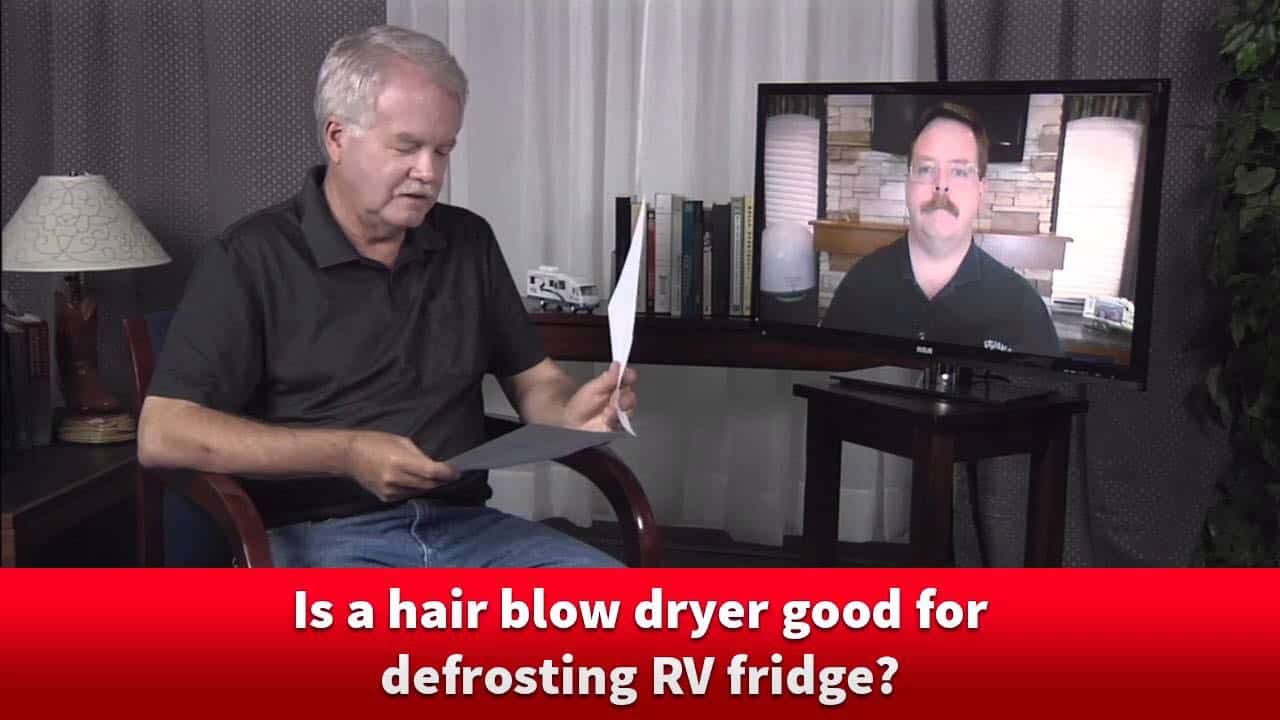
Is a hair blow dryer good for defrosting an RV fridge?

In an letter to RVtravel.com, a reader explains how he uses a hair blow dryer to defrost his RV refrigerator.

What maintenance is needed on an RV air conditioner?

In this episode of Ask the RV Expert, RVtravel.com editor Chuck Woodbury talks with technical editor and certified RV technician

What’s the best type of RV roof for preventing leaks?

RVtravel.com editor Chuck Woodbury and technical editor Chris Dougherty respond to a letter from a reader who is about to

More great spots to RV from coast to coast

Looking for an interesting destination for your next RV trip? Fox News produced a list of its recommendations. We’ve checked them out, and brought in a few thoughts of our own.

Montana: Apgar Campground (Glacier National Park)

The largest campground in the park, it’s a treed campground with shade and a bit of privacy. Don’t miss the sunsets on nearby Lake McDonald. Check out horseback riding, boat rentals, and day hiking. Bus tours take you over the Going-to-the-Sun-Road without risking your rig!

Maine: Baxter State Park

Dana Moos on flickr.com

Here’s a mountain-style trip for you. At the north end of the Appalachian Trail, you’ll find plenty of wildlife watching to be done. Moose, black bear, and white-tail deer often can be seen from roadways during the summer months – yes, stay in the rig, you don’t want any close encounters of the wildlife kind. Plenty of water too, with waterfalls to explore. Look for warm summer days, but be sure to dress warmly when you come for the fall foliage displays.

Jonas Lamis on flickr.com

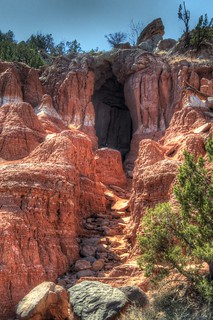
Texas: Palo Duro Canyon

Hike or mountain bike? Enjoy outdoor musicals? Canyon exploration? Appreciate natural art? Here’s what the painter Georgia O’Keefe had to say about the place: “It is a burning, seething cauldron, filled with dramatic light and color.” RV and tent sites available.

Oregon: Nehalem Bay State Park

Endless beaches to explore. Build sand castles, fly kites, beach comb. Bring your bike for a trip along a nearly two-mile bike path and don’t be surprised to spot elk, birds, even coyotes. Listen to the roar of the ocean from your RV.

Maryland: Assateague Island National Seashore

No hookups here, come prepared to dry camp. Hiking, swimming, fishing, and designated four-wheel drive tripping over some beach areas – bring your own rig. Crabbing or clam digging is close at hand.

For truly fresh seafood, try crabbing or clamming in the surrounding bays.

designatednaphour on flickr.com

South Dakota: Ingall’s Homestead

Come on Paw, Maw, grab Laura, Mary, and Baby Carrie and let’s check out the place made famous by Laura Ingalls Wilder’s “Little House” books. Covered wagon rides, pioneering activities, and at the end of a strenuous day of “pioneering,” retire to your comfortable RV with hookups available at the campground.

Arkansas: Crater of Diamonds State Park

Yep, you can look for your own diamonds while you’re here. It’s the only “open to the public” diamond-producing site in the world, offering a 37 ½ acre plowed field to dig around in. Don’t have your own search equipment? You can rent it on site.

Florida and Mississippi: Gulf Islands National Seashore

Sparkling white beach sand. Historic fortifications. Nature trails. Primitive tent camping (by permit) on the islands, or bring your RV to Fort Pickins (in Florida) on a road trip. Swimming, snorkeling, and boating.

For Fox News article, click here.