


Last month we wrote about a report published by KOA that said more and more “campers” are using artificial intelligence (AI) for trip planning. We wondered if you, RVtravel.com readers, were in the same boat. We asked your opinion in a reader poll, and a large number of respondents told us they just don’t trust AI trip planning. After we “test drove” a major feature of one AI trip planning website, we think we know why. But first, the poll results.
A whopping number said they don’t trust AI trip planning
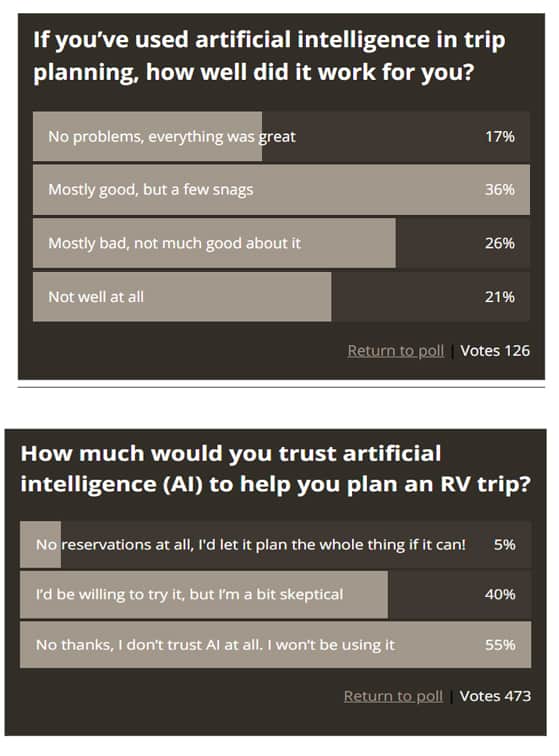
Of 126 of you who’ve actually tried AI trip planning, only 17% said the process went off without a hitch. Some 36% felt it was largely successful, with a few snags. But the balance, nearly half, said their experience was mostly bad, or just not good at all.
A larger number of our readers responded to our question, “How much would you trust artificial intelligence (AI) to help plan an RV trip?” Of 473 who responded, a mere 5% said they’d be willing to allow AI to plan their entire trip. 40% said they were willing to give it a go, but were skeptical. And a whopping 55% said they wanted nothing to do with AI trip planning.
“Confuse, lie, and intimidate”
Many readers commented. Goldie wrote, “I love playing with ChatGPT, and it does a great job at writing letters for different occasions, but I don’t trust it when it’s offering advice, facts, statistics. It’s been proved to have cited non-existent sources, or creating new ‘facts.’” Another reader, Wayne, added, “AI will confuse, lie, intimidate and soon prove untrustworthy. Even the developer testified to Congress that AI will be a bane on society.”
Some wondered if “AI” was really in play, or if perhaps KOA was just speaking of common, internet-based trip planning software. Mike W. observed, “KOA is being very liberal with the use of the term term ‘AI’, I believe, in this case. Using a trip planner, fuel locater, or RV Life to see campground reviews is not ‘AI’, but factual data input by real people.”
Here’s our take on Mike’s thought. We checked out a new site on the internet, adventuregenie.com. The site describes itself as, “The future of adventure travel planning. The most campgrounds. The best itineraries. The smartest trip planner. Everything adapts to your needs. Artificial intelligence meets RV trip planning.”
AI trip planning site features

The site offers three features, all using AI to help steer you and your rig in the right direction. The Campgrounds feature scrapes through the internet and boils down a review of each campground to a single paragraph. They then score the campground on a scale of 1 to 100, “based on our AI-powered formula.”
GenieTrips offers choices of “uniquely crafted RV adventures,” alongside trip guides and potential activities. And finally, the Trip Planner maps out a route using any number of destinations that you give it. “From choosing a campground to finding the best route, to suggesting stops along the way, to granting you GenieWishes for what you want to do and see at each stop – AdventureGenie will take you where you want to go!”
Of course, “You get what you pay for.” Anyone can go to the site and get some free information—the Campgrounds feature. GenieTrips allows you to view the AI-generated information on “specially curated GenieTrips.” There are a total of 35 of them, ranging from themes like “Civil War” to National Parks, and some based on regional travel. All of this based on AI trip planning.
These GenieTrips can be rolled into Trip Planner functions, but to do that, you have to be a subscriber. The company is offering a 50% discount to drag in users. That translates to the special rate of $49.99 a year. How soon that price will hike to the full $100 is anyone’s guess. We didn’t try out the “Pro” side of the site, but just using the “free” information made us wonder if we’d really want to shell out the big bucks. In other words, is this particular AI trip planning site up to the grade?
We take AI trip planning for a test drive
Reader MevetS seems to represent the skeptical side. “Seems that AI is just the latest buzzword. Maybe for some, it’s just another sales gimmick. It simply means that software, or call it any number of other terms, is becoming more complex. Just because someone claims it’s AI, it may just be the latest version of code that has been updated. We have to remember that there is always the old mantra of garbage in is garbage out.” We wonder if this might be the case as we started checking out the Campgrounds feature. We’ve been on the road a few weeks, so we checked out what we’d seen with our own eyes, and compared it with the site’s summaries. Here are a few examples.
“Added amenities” that aren’t really there
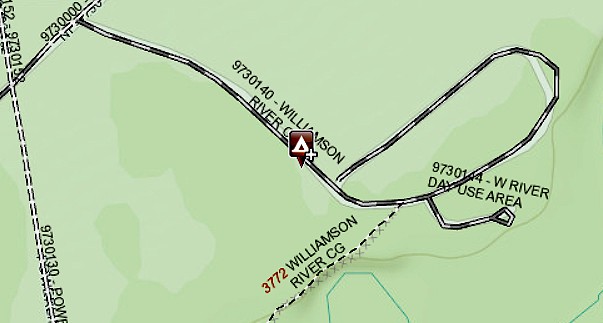
In Oregon, near the town of Chiloquin, is a Forest Service Campground called Williamson River. Here’s AdventureGenie’s summary:
Williamson River Campground is a great little campground located down a mile of washboard dirt road. The campground was spared from the Bootleg fire last year and is set in tall pines. It is a non-reservable, primitive campground with a single loop of well-spaced out sites. Each site has a picnic table and fire ring, and there are two pit toilets and multiple water spigots throughout the campground. The sites are level and can fit a big RV, and the road to the campground is flat, wide, and gravel. It is a quiet and private campground, with vault toilets and a few central water spigots. There are also two pull-through sites that are huge and for handicapped use. There is a 1.5 mile trail along the Williamson River that connects with Collier Memorial State Park, and a dump station and pump type faucet at the campground.
Correct on most accounts, but WRONG on what could easily be a major issue if you were planning on staying there. There is NO dump station. If you came in with a “full load” of black water, you’ll be sorely disappointed, and will soon be turning around to travel down that mile (actually more than a mile) of washboard road to find a dump station.
Fails on one. How about others?
Here’s another try. Above Las Vegas is the tiny mining town of Pioche, Nevada. Listed on the site is Pioche City Park. Here’s a portion of the “GenieSummary.” “This campground is a great place for those looking for a free and peaceful camping experience. It is located about 23 miles from town and offers 10 sites divided by trees and large boulders.” If you were passing by, you might “pass up” this park, because it’s “23 miles from town” description. AI trip planning misinformation. The park is about a half-mile from the town center, and definitely in town.
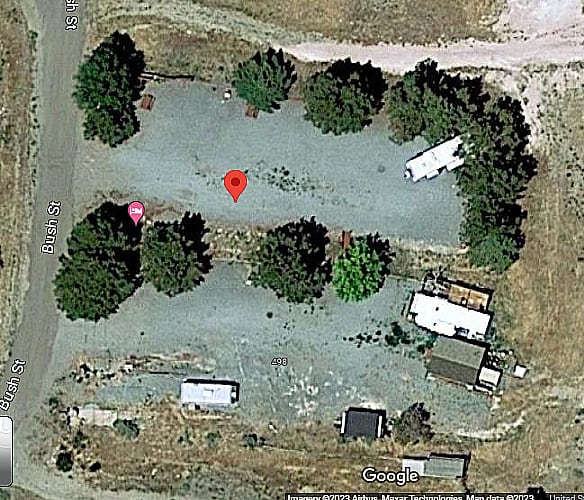
Another park in the same town, Pioche RV Park & Campground, has this information embedded in the AI trip planning summary: “The park also offers picnic tables and paved roads, as well as WiFi (but service is limited). The park is family-friendly and offers a variety of sightseeing opportunities of the historic mining industry. Rates are $100 weekly or $25 per day.” Perhaps another “garbage in, garbage out” issue, but unless sometime in the last two weeks a paving crew has shown up, the roads in this park are definitely NOT paved. And as to “rates,” AI is using stale information. The current daily rate is $35, and a week will set you back $145. Miss the mark by 40 to 45 percent?
What about “missing” parks?
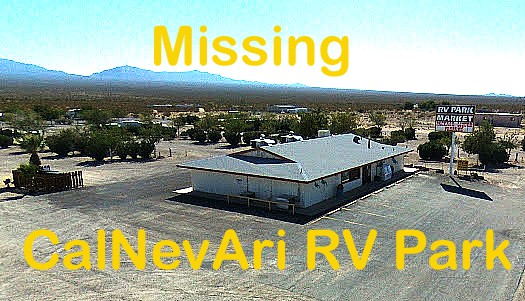 We were also intrigued by “missing” RV parks and campgrounds. Just up the highway from the California/Nevada border is the little wide-spot on the road called CalNevAri, Nevada. It’s a great place to take a day or two off the road and rest up. While AdventureGenie knows of CalNevAri’s existence, it simply fails to provide any information at all about the CalNevAri RV park. It wasn’t the only place we stayed at in the last few weeks that the AI trip planner simply doesn’t know about.
All in all, we’re still siding with those who are, at best, skeptical of AI. We won’t be part of the AI route planning cadre. Even if we do use the free summary of campsites, we’ll be sure to look to other sources as well to get the full and true story.
Make sure to read this other story on AI trip planning, too.
##RVT1114

There are several ways to help get ideas and speed up the brainstorming process. But it is wrong, often. Use it to help but validate…and don’t count on it for facts.
Not surprised at all
The key thing to remember is the first word, ARTIFICIAL! A few years ago on a trip to KS and back to TN using my handy GPS cruising across southern KS into southern MO it suddenly gave instructions to turn left in 1/2 mile. Not being familiar with this area I obeyed putting us on a county road headed north. After 9-10 miles without more input I stopped and took out the atlas. After which I found a recently combined wheat field to do a u turn and back to my original route. Don’t know why it did that but driving a 38’ motorhome w/toad is not the time to explore. So always question WHY!
AI is great in the right situation but doesn’t work when you absolutely need that human touch: RVTripMakers.com
As usual, regardless of the software used to plan a trip I always double check the entire route using Google Earth and Google Maps. Have stopped a lot of unpleasant surprises along the way.
I have a healthy fear of AI for important stuff, but I don’t get the fear for this.
Let AI plan a trip. Then tweak it. What is the harm??? It’s not like AI is going to “make” you go on it’s trip.
Worry about AI for important stuff, not for frivolous things.
We at AdventureGenie love the back and forth here. Here’s our take: AdventureGenie was built by and for RVers and campers. We’ve been RVing and camping for years — some of us for more than 20 years — and we developed Genie because we had tried everything out there and still wanted more. We’d invite everyone to try our 7 day free trial to see all of our features — from GenieStops (we find places for you to stop along the route of a long trip); GenieMatch (how well does a campground meet your preferences in atmosphere and amenities); GenieWishes (what do we want to see and do at each stop on our trip); and GenieJourney (give us a concept and we will lay out a trip for you).
I dislike AdventureGenie because it will not let you change the route around cities on the route. For instance there is a route that you can take around El Paso, TX rather than driving through the heavy traffic area. It absolutely would not let me reroute to the roads that I wanted to travel on.
Problem two, when I put in the address for a campground that was not in the AdventureGenie database it routed to a completely different part of town, no where close to the campground that I requested.
Problem three, I asked it to skip toll roads what did it do but put my route on a toll road in Austin, TX.
I canceled my subscription. I think the AI interface is mostly a sales gimmick!