

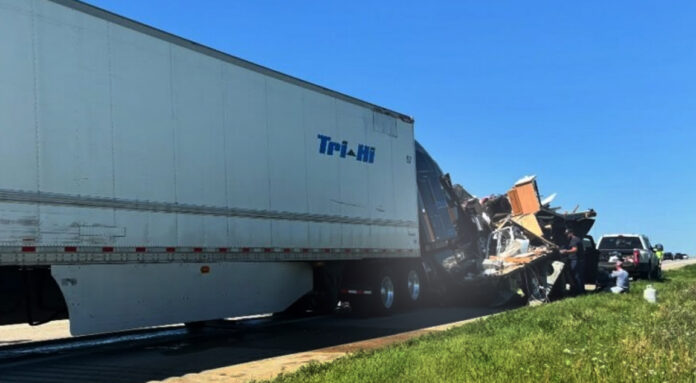
A North Dakota interstate crash involving a pickup towing a travel trailer is a reminder that one of the greatest dangers RVers face may come from behind.
The crash happened July 12 on Interstate 94 near New Salem. According to the North Dakota Highway Patrol, a pickup towing a travel trailer was traveling westbound with its hazard flashers activated because of mechanical problems when it was struck from behind by a semi-truck.
Troopers said the truck driver was distracted by eating before the collision and cited the driver for distracted driving. No serious injuries were reported despite the devastating damage to the travel trailer.
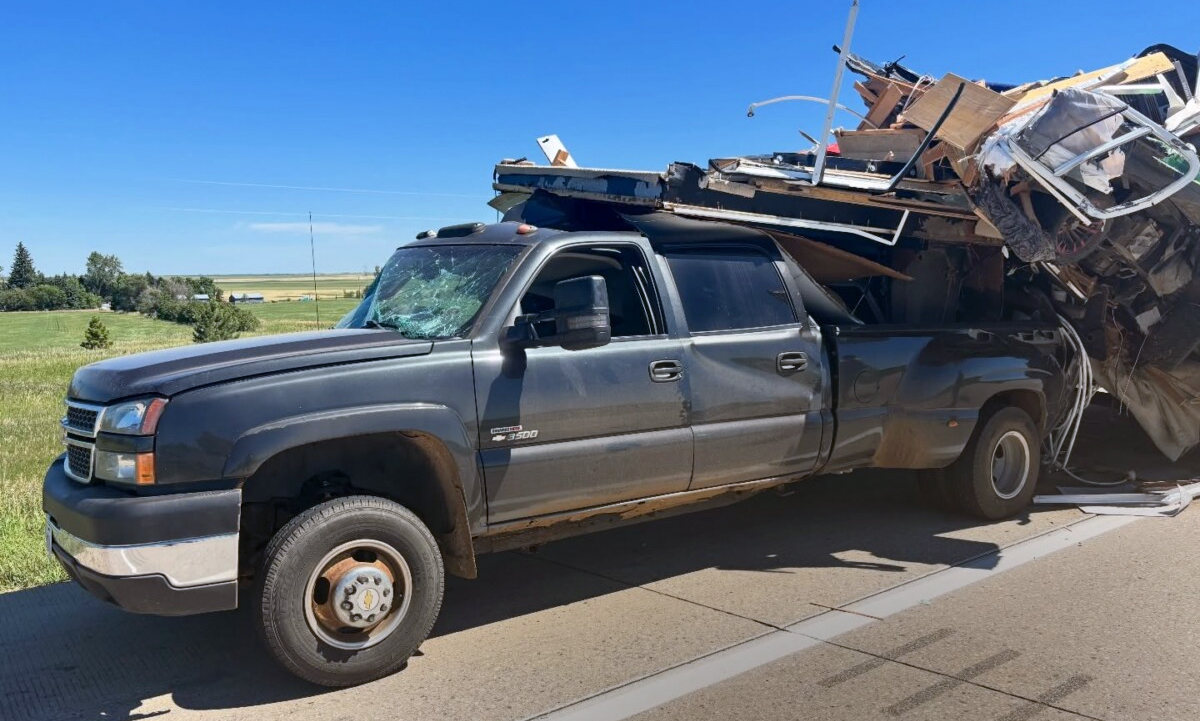
Photos from the scene show the trailer virtually demolished, with debris pushed forward onto the pickup. The extent of the damage underscores how violent rear-end crashes involving large commercial trucks can be.
When your tow vehicle develops a problem
The Highway Patrol’s report doesn’t specify whether the pickup was traveling in the traffic lane, partially on the shoulder or completely on the shoulder when it was hit. Until investigators release a final report, those details remain unknown.
Even so, the crash highlights a situation many RVers eventually face: What should you do if your tow vehicle develops mechanical trouble on an interstate?
Safety experts generally recommend:
- Turn on your hazard flashers as soon as you recognize a problem.
- If you can safely reach the shoulder or another safe location, move out of the travel lane.
- If your vehicle cannot safely maintain traffic speed, look for the first safe opportunity to leave the interstate or move completely out of the travel lane.
- Once stopped, get occupants away from traffic when it is safe to do so.
- Call for roadside assistance rather than attempting to continue if the vehicle can’t be operated safely.
The danger isn’t always your mistake
Most experienced RVers focus on avoiding crashes they can prevent.
This crash is a reminder that defensive driving also means thinking about the drivers around you.
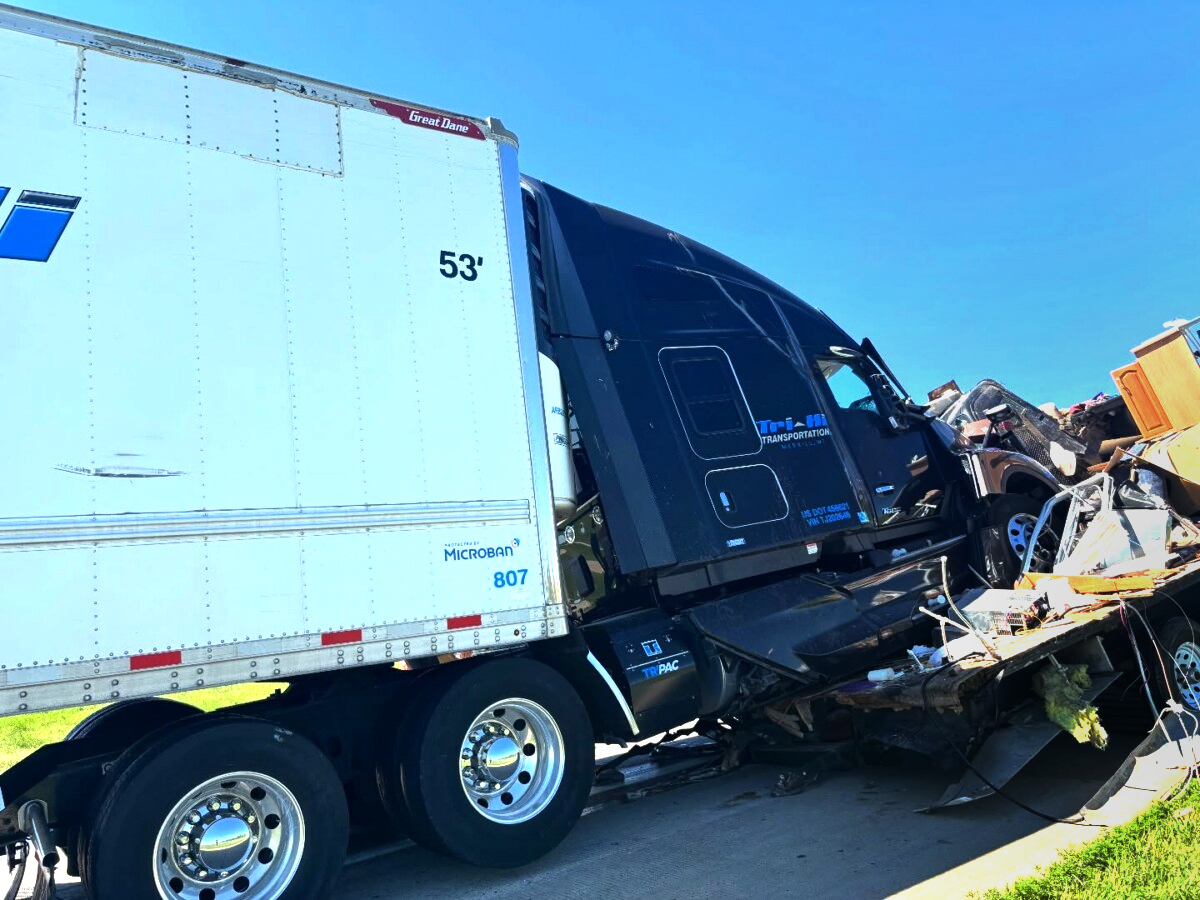
A vehicle slowed by a mechanical problem creates a large speed difference with approaching traffic. If another driver is distracted—even briefly—that closing distance can disappear quickly.
That’s why checking mirrors regularly, signaling early, using hazard flashers when appropriate and moving to a safer location as soon as conditions allow can all help reduce risk.
In this case, investigators concluded the truck driver’s distraction contributed to the crash. But for RVers, the broader lesson is simple: If mechanical trouble forces you to slow dramatically on an interstate, your attention has to extend beyond what’s happening in front of you. The greatest danger may be approaching from behind.
Sources
North Dakota Highway Patrol (via CDLLife)
Federal Highway Administration
National Highway Traffic Safety Administration – Distracted Driving
RELATED
- Blowing in the wind: Truckers’ tips for safe driving
- Watch in horror as this truck slides down the highway. Know these safe driving tips
- Tips for safe driving around big rigs
RVT1270b
