

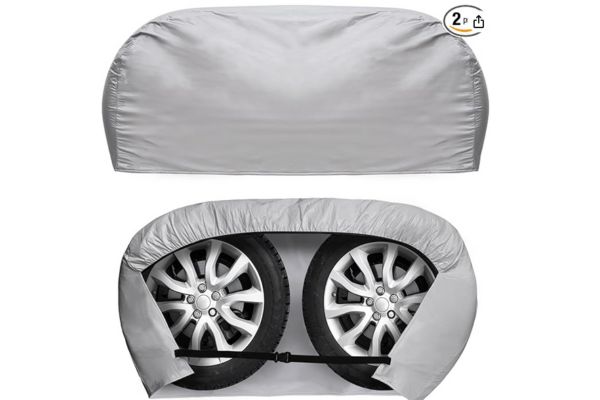
There were a few posts on the internet recently about the value of RV tire covers and the question of color was mentioned. While I have seen white, black, tan, and silver tire covers, I have only tested white and black.
For some time, I have been reading posts and advertisements about tire covers and UV protection. As an engineer, I prefer FACTS over sales PR. While I live in Ohio, we do occasionally get clear skies.
My test uses a UV Hawk 2 meter. This unit is intended to help you judge how much sun you are getting while at the beach, but I felt it would serve my purposes as we are not trying to measure an absolute value in milliwatts per square centimeter, but a gross relative level of shielding of different materials used to cover tires. Full sun gives a reading of 9, which is considered “HIGH”.
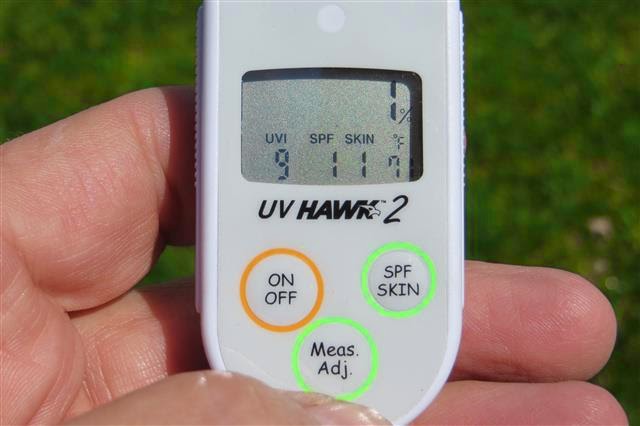
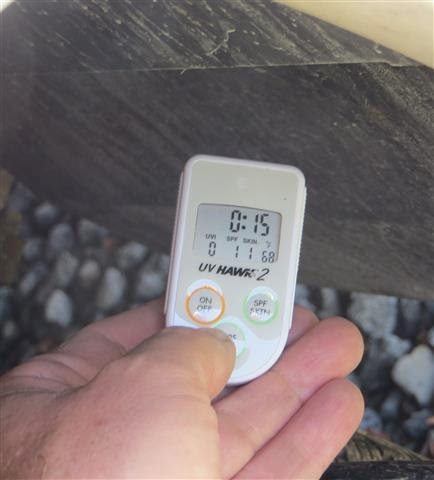
I took readings under both a white RV tire cover and a black tire cover and those readings were zero.
Using a piece of window screen as a “shade”, the screen reduced the UV Index to level 5.
UV can be reduced or even eliminated by using some form of covering.
The more important question is temperature. While the outer surface of tires can be degraded due to the effects of UV, I have never, in 50 years of working on tires, been presented with a tire that is less than 10 years old that should be taken out of service because of UV exposure. High temperatures, however, can and do affect and cause failures in the internal structure of tires.
The temperature test
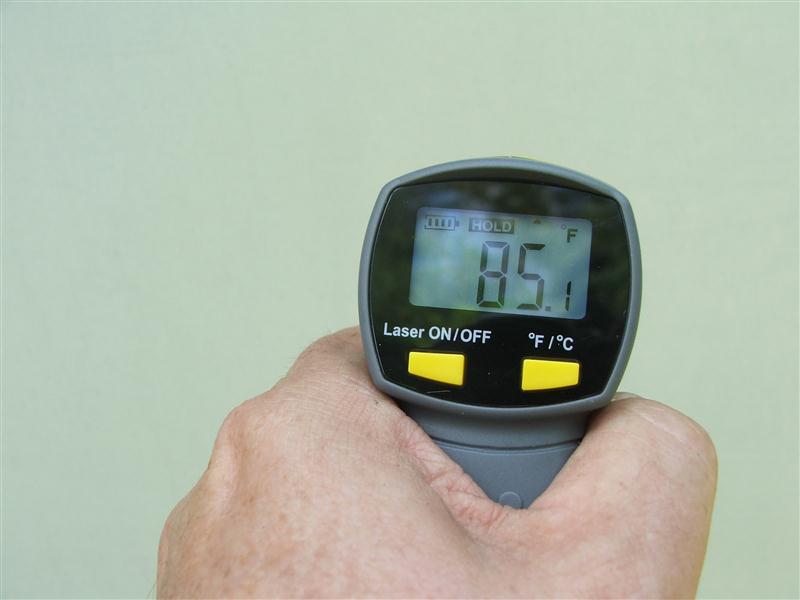
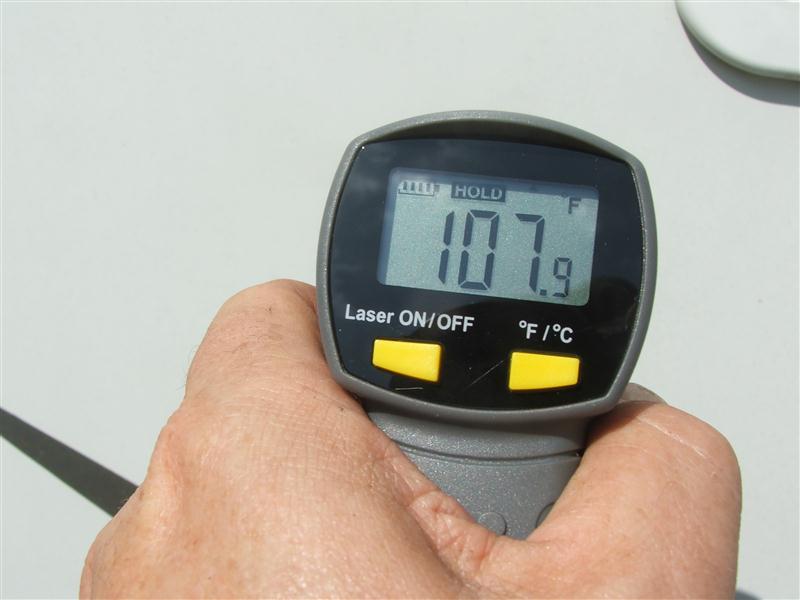
With one side of the RV in full shade, I checked the temperature of the side of the unit. You can see it recorded 85.1°F. Then I took the temperature of the side of the RV in the full sun, where we see 107.9°F.
Next, the temperature of the white vinyl tire cover in full sun is 98.6.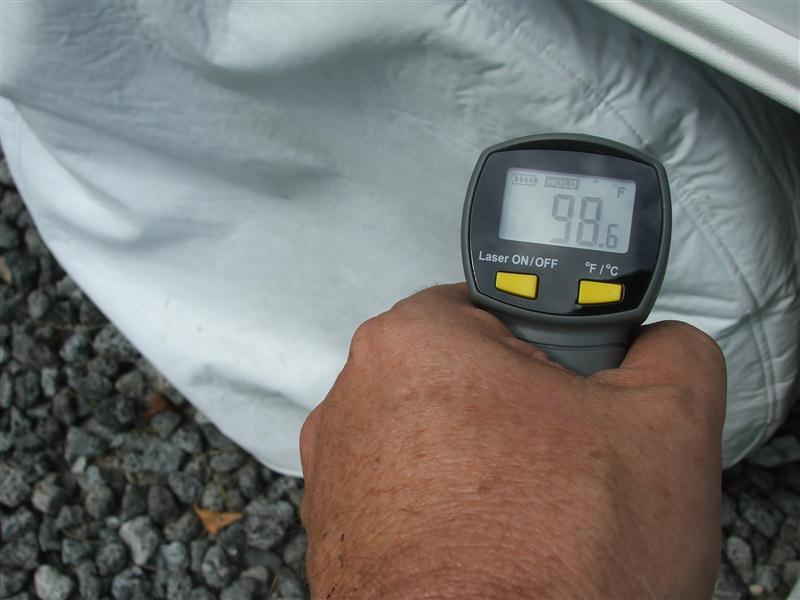 I then removed the cover to see what the tire temperature was under it, and we see 99.5°.

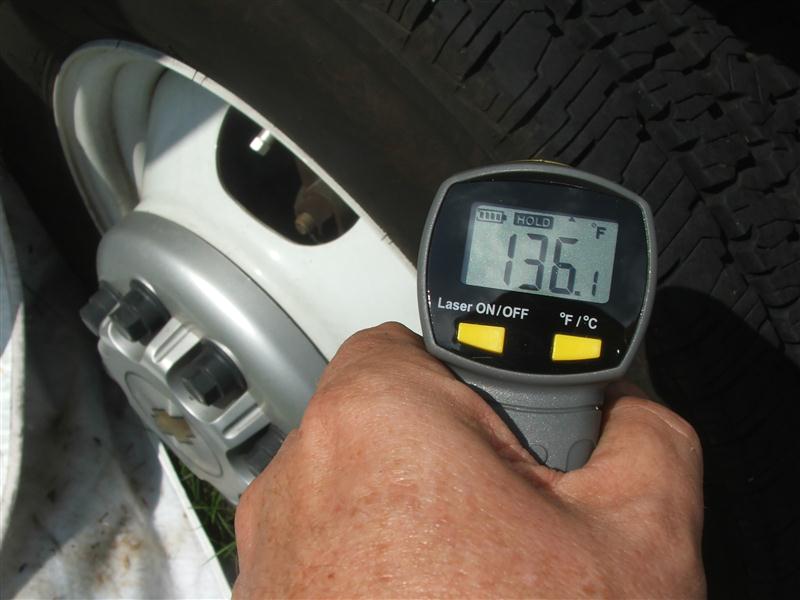
Finally, I checked the temperature of the tire that had been in full sun, and we see a reading of 136.1 F.
KEY POINT: There are three things that can “kill” your tires: ozone, UV and high temperatures. The ozone and UV directly attack the surface of the tire, making it crack when flexed if given enough time. Temperature works not only on the surface but deep down inside the tire structure.
Increased temperature causes continued and accelerated chemical reactions, which “ages” a tire faster than when the tire is cool. A rule of thumb would be that the rate a tire ages doubles with every 18°F increase in temperature. We can see the result of old rubber on the surface. What we don’t see is the more brittle rubber of the internal tire structure. As rubber gets more brittle with age, it also loses strength.
NOTE: Overload and underinflation can overheat a portion of a tire to the point where the rubber and reinforcement materials lose all their strength.
RV tire cover test conclusions
Based on my simple test, it would appear that by covering my tires, I am significantly reducing the artificial aging for all the daylight hours my RV is parked and the sun is out. If I didn’t have covers, my tires would be “aging” FOUR times faster than with the covers in place.
I also did measurements at an FMCA (now FRVA) Convention, where I found some Class A motorhomes using a black mesh material to shield the tires. While I do not have pictures as proof, I can tell you that the tires behind the mesh did not heat up above ambient temperature. I surmised that the mesh allowed air flow to keep the tires cool while the mesh shielded the tire from direct exposure to UV—a little like my measurement using a window screen.
Why is heat bad for tires?
Every increase in temperature of 18°F is effectively “aging” the tire rubber at two times its normal rate (so + 36°F is aging your tires at four times the normal rate). This is why tires that spend their life in Southern states “age-out” many times sooner than tires that spend their life in the North.
What should you do to protect your tires?
I suggest that when you are parked for more than a day, you shield your tires with a white tire cover. If you have a Class A with flat sides and can hang the black mesh as a shield, I would consider that to be an acceptable practice.
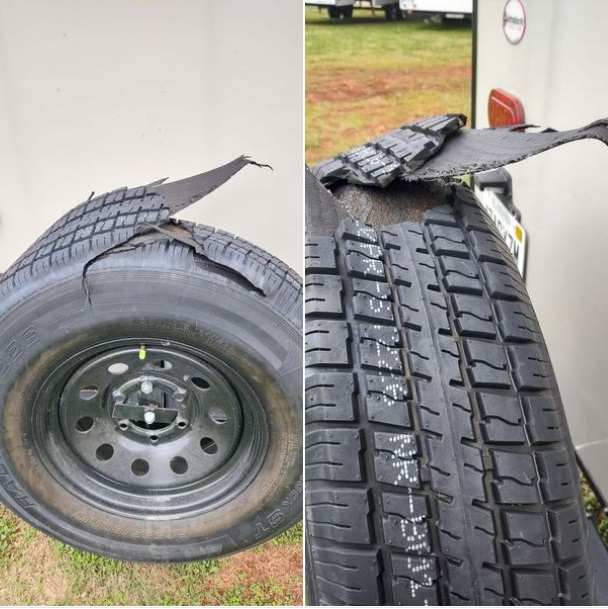
If you have a trailer and store your spare on the back bumper, then you MUST cover the tire with a white cover to avoid this.
 Read more of Roger’s articles here.
##RVDT2706


If I had written this technical article for a class, I would have been given an F for lack of evidence. I am NOT saying your conclusion is wrong
Since when does anyone have to have evidence?
not sure what you mean by evidence… to me his years of experience and what he has witnessed count a lot more than most “evidence”
How hard would it have been to do the same test with a black tire cover? Measure the tire cover temperature and then measure the temperature of the tire underneath? I’m not disagreeing that white probably works better but I’d like to see the data on the effectiveness of black tire covers
Hi Greg: If memory serves he did test white vs black a few yrs ago or so. I recall he noted there was no difference between tire temps – I guess that is the reason I remember this as I would have tho’t black would not be as temp. effective. ?
Thank you for sharing your test results, Roger! We previously used 3 days as the “tipping point” for covering our RV tires. I will adjust and now use 2, as in, if we stay somewhere for 2 nights, then the tires get covered. Have a great week and safe travels!
In 6th grade science we laid out a black paper and a white paper out on the snow. The snow started to melt under the black paper, not the white.
I don’t see an answer to the question posed in the title of the article. 🤷♂️
I don’t believe the actual color of the covering makes any real difference with that said stopping the direct sunlight on an object does effect temperature. I have always wondered why do houses in the south have dark roofs if light is better then dark?
Ultimately tires should be checked without direct sun on them.
If airing tires in the direct sun, do adjust for the added temperature.
A good rule of thumb is adding 1 psi for every 10 degrees. I use a lazer temp guage to measure tire temps.
You can also use a large sheet of cardboard to cover exposed tires prior to checking. This helps cool the tire down to ambient temperature.