


When talking about air compressors, many folks use the terms “big” or “large.” For this topic, we need to understand that people are not talking about the physical size or the maximum psi it can generate, as seen in this picture.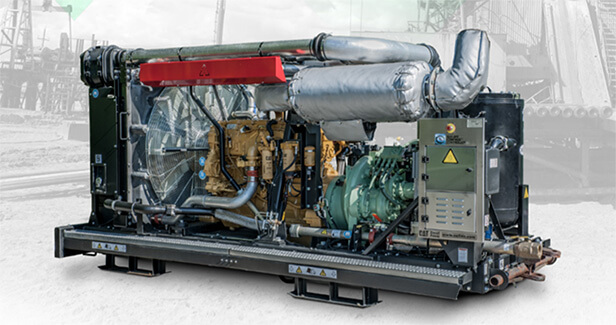
This “large” compressor can generate 500 psi and more than 1,300 CF (cubic feet per minute) of volume.
When considering your needs, you should think about BOTH of these terms or you may end up wasting money or needing to get a second compressor.
Why RV owners need air compressors
RV owners need air compressors for two purposes. First is to “top off” the inflation in their tires. In addition, many have a second need of “blowing out” the water lines when they winterize their RV.
The pressure you need for inflating your tires is easy. Simply read the sidewall of your tires and see the “MAX” PSI shown on your tires. I and others have covered the topic of “proper cold inflation” numerous times. While not everyone needs to inflate their tires to the stated “MAX”, that number may be needed in the future. So you don’t want to get the bare minimum now only to discover you need a “larger” compressor in a few years.
What size air compressor?
I suggest you need a compressor capable of generating at least 20% more pressure than the number on the tire sidewall. You need this higher pressure because for all compressors I know of, the rate of generating high pressure, measured in CFM, or cubic feet per minute of air, drops off as pressure increases.
For example, if you need 90 psi and the compressor can only generate a maximum of 92 psi, you will soon learn that getting that last couple psi as you approach your tire MAX number can take a long time. It may even seem that you will never get there.
You don’t need to do the math, as I think you will quickly see that a basic $45 “Tire Inflator” rated for 12v with output of 125 psi can inflate a tire in a few minutes. I would think this would meet the needs of RV owners with 15″ Load Range C and smaller tires.
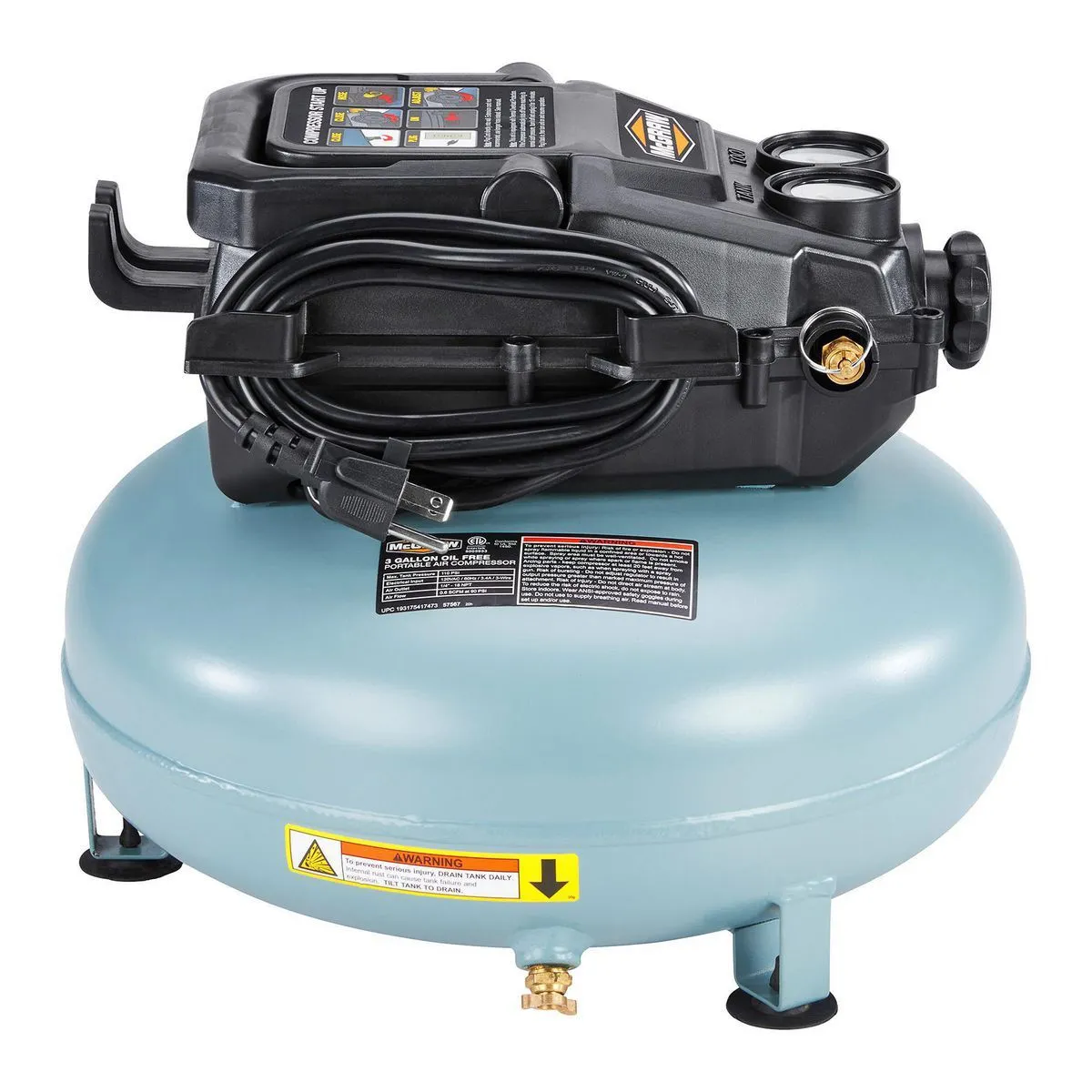
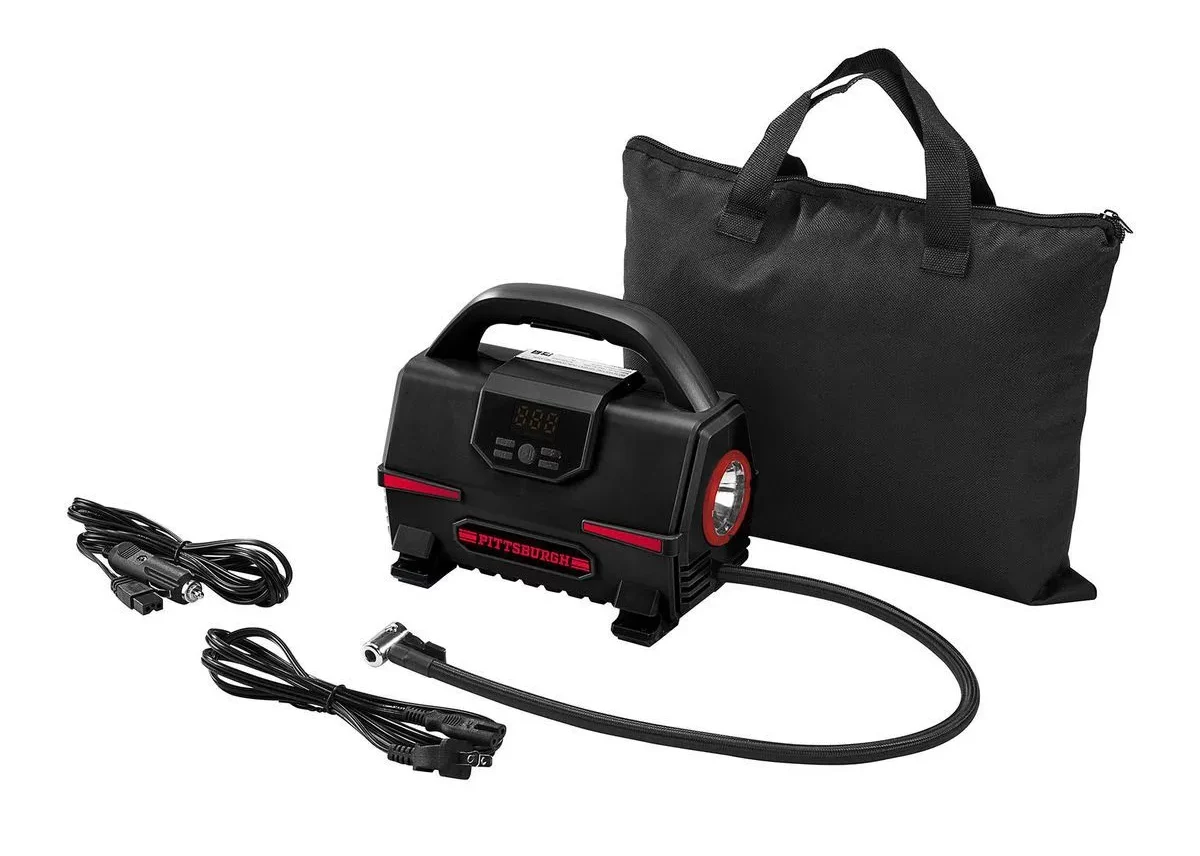 For larger or higher Load Range tires, a “pancake” air compressor at $75 similar to the one below should be able to meet your needs of topping off your tires up to 100 psi.
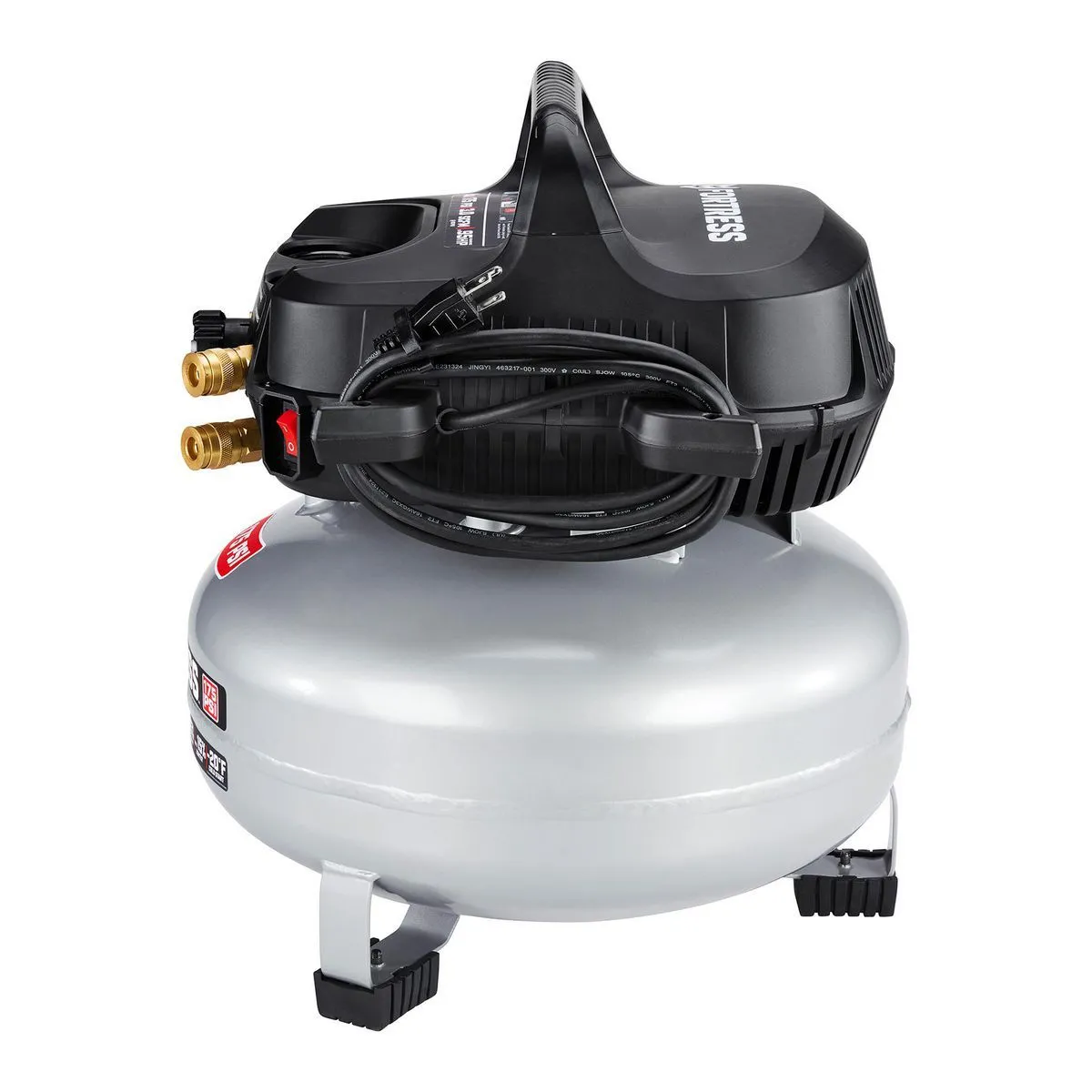
 If you need more than 100 psi, then you would need to step up to a 175 psi “high performance” compressor at $160, such as the one below.
Note: We are talking about topping off the normal 1 to 3 psi per month most tires need. If you were mounting new tires every month, then a “Shop Air” compressor with at least 8 gallon tank is called for at $150 and up.
If you are wondering, my shop compressor is similar to this one, as when I was racing, I was inflating 6 to 8 tires at a time, so a 60-gallon tank at 150 psi and 10 CFM met my needs.

For blowing out RV water lines
For blowing out RV water lines, you need to keep the psi below 40. But I think that even the smaller compressors such as those pictured above will accomplish that job. Keep all lines closed and just open one line one at a time for about 15 seconds and you should be good to go.
Dave Solberg also recently covered this topic in his article “What size air compressor should I use to winterize my rig?” (I just noticed his post after I wrote this one.)
Roger Marble
MORE POSTS ON AIR COMPRESSORS
- Powerful, quiet, portable air compressor fits in small compartments
- Quick RV Tech Tip: Reader’s critique of the VIAIR air compressor
- Every RVer should have one of these portable air compressors
- Things to consider when purchasing an air compressor
*****
If you have tire questions, check out Roger’s posts on RVtravel.com. There are hundreds of posts covering everything to do with tires.
If you still have a question for Roger after searching the above posts, send your inquiries to him using the form below.
RVT1238

We have a small Ryobi battery powered air compresser. It meets our needs on our Class C with 16″ tires. I don’t believe that it would work for much bigger tires but get mine to 85 psi easily. Swappable batteries are an excellent idea.
The compressor for blowing out water lines not only needs at least 40PSI, but it must also supply sufficient volume, around 3CFM, and maintain that pressure. during the process.
Continued:
A small portable unit will fill the tires, but is not much good for other purposes.
item will take a long time.
Even a lot of the dinky 12v compressors can get upwards of 80psi if they don’t have a pressure regulator. When blowing out water lines, the vast majority of RVs have a pressure max of 60psi – and most fixed water pressure regulators are set at 40psi. Harbor Freight sells a variety of inexpensive add-on air pressure regulators & adapters. If your compressor does not have one, I will strongly suggest using an add-on regulator to protect your RV plumbing.
I had a fairly inexpensive Slime Air Compressor. But it doesn’t really work right anymore and I am shopping for a new one. I think I’ve settled on the ViAir 400P. It is pricey, but even though it does not have an air tank, it is supposed to be able to just keep chugging until it inflates the tire to the pressure you want. So no “duty-cycle” which can seriously add a lot of time to putting in air. If I had more storage, I’d probably opt for a small air tank unit, something like the one in this article.
https://amzn.to/4rISk6m
But I’d be interested in thoughts, comparing the ViAir to this Astro AI mentioned in Dave Solberg’s article on this.
https://amzn.to/48qbmpb
You completely ignored power tool type compressors. My Milwaukee 18V does my 120psi tire just fine (150 rated), and can blowout my 35′ trailer plumbing. I hear the same from the other major tool brands.
It is slower than a traditional pancake or high end 12V. However, I find the time saved with its portability more than makes up the difference.