

By Dennis Charpentier, RVtravel.com reader
The dream of many RVers is to become a snowbird; that is, to enjoy the joys of summer in the north and drive their RV to a warm climate (Florida for us) for the worst of the winter.
Starting many years ago, we traveled about in Florida, taking in all the sights, the east coast, the west coast, the Keys, roaming free with only a general plan. We stayed in military bases, private camps, county parks, and city parks, all without advanced reservations, except for holiday weekends. And then it was COVID, and that was over.
We have found that many favored spots, especially beaches, are in high demand. The Boomer generation, of which we are members, is well-traveled. We now have a bigger rig (35’), and that also restricts our choices. But COVID drove us to a special park for a month on the Southwest coast, where we made friends. We love the area, and we wanted to go back.
This is the story of our third year in Bonita Springs.
You’re leaving your home unattended for four months. The water needs to be drained, and the heat set to at least 50 degrees. Disconnect all the appliances you can, seal all your packaged food, and lock it up. If you have an extra car, disconnect the negative terminal of the battery. If you can have a neighbor keep an eye on your home or have a relative visit occasionally, it will help with your peace of mind.
The drive south
The ride down and the ride back need to be an adventure to be tolerable. Leaving in late December, the concern is the weather and the support you may need if troubles find you along the way. So, we chose the most direct route. We look for a five-day window of clear weather and then hook up with our travel partners and launch.
We average 300 miles and about six hours per day. We drive around or through: Connecticut, New York, New Jersey, Delaware, Washington, D.C., Virginia, North Carolina, South Carolina, Georgia, and an entire day in Florida. Yes, it’s long, stressful at times, and can test your mettle. But if you don’t force the issue, cruise along, take breaks, and enjoy the stops, it’s not that bad and worth it once you’re there.
Do I make mistakes? Sure, one wrong turn into a Dollar General parking lot instead of the entrance ramp; and I was in the wrong lane to take I-295 in Washington, D.C.; and we went through the city on I-395 instead of I-495 around the city.
Once you arrive
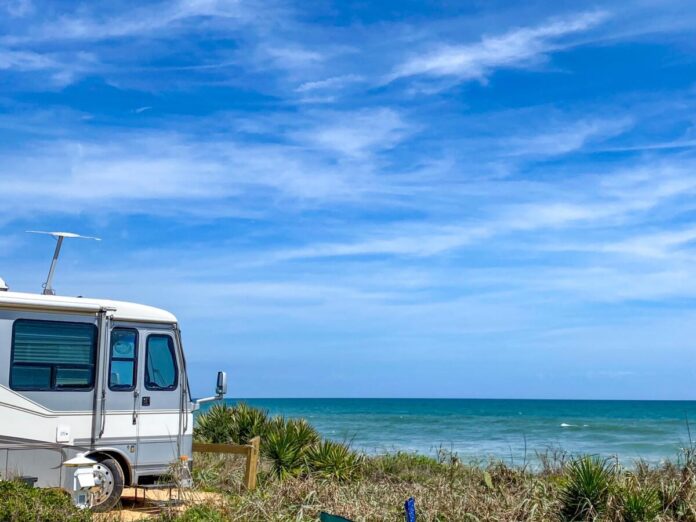
Once established in Southwest Florida, the RV is parked for four months and gets excellent gas mileage. People are in the park when you arrive, and activities have begun. Cribbage, Horseshoes, Mahjongg, Shuffleboard, Bingo, Park Band, games with neighbors, ROMEO (weekly guy lunch), and aquacise are all organized and ongoing… all you need do is join in. You can help run them, too.
So many things to do!
Of course, there are other activities in and out of the park that beckon: dining (I count 38 different restaurants last year), dances, variety shows, block parties, activity parties, Valentine’s Dance, St. Patrick’s Day, Park Picnic, and the Pétanque Dinner. Really, you need a calendar to keep track!
Of course, meeting old and new friends is the highlight of the season. Dining out with two, four, six, or ten is enjoyable and challenging. Enjoyable for the people and places and challenging in making reservations and trying to talk to everyone.
We also attend a wonderful church in Florida that hosts shows in their sanctuary. Free tickets are available or you can buy a subscription for the season. This year featured: Motown-Soul, Sounds of the ’60s, Messiah Project, Celine Dion, and Sinatra music. Great stuff for little cost in a great venue.
But it’s not all fun and games, although that is what stays in your memory. There is weekly shopping at Walmart and an occasional Amazon shipment, along with medications for us both—some through the mail and some through the local pharmacy. There are federal and state taxes to be filed. I bring along all the documents (most available online) and the tax software on my laptop; I also have a small printer. Our mail is handled by my daughter, who lives nearby at home… I do a temporary change of address with the post office. I also have my USA Today sent to Bonita Springs.
Keeping track of your finances is so much easier with mobile banking apps, and my bills are automatically withdrawn from my checking account. So are my pension deposits automatic. I remember the days of Traveler’s Checks… ugh!
The RV itself was good to me in that no major problems occurred on the way down or the drive back. A few trim pieces came loose (glue), washing the RV and car, dumping the tanks, the towing lights died on the car (Amazon), cleaning the grill that is used frequently, new light bulb for the fireplace (Ace), killing weeds on the RV site (Ace), and the slide was binding and needed adjustment due to the bumpy roads (plenty of help).
Medical needs are taken care of
Fear of injury and seeking health care, if needed, is a concern. All our doctors’ appointments are scheduled for before we leave or after we get back. While in Southwest Florida, there are urgent cares (several), dentists (on every street corner), and a large hospital nearby that is covered by our medical plan. My wife turned her ankle, banged her head and elbow in separate incidents. She was seen and diagnosed in minutes with just a phone call to the local facilities. There is also excellent trauma care if you need it.
Day trips
We took some side trips, as well. The ESPN Sports Center at Disney, to watch my granddaughter dance; a boat trip in the Everglades; met old friends from other parts of Florida twice; visited a wolf preserve; and I attended hockey games with my neighbor.
Downtime, too
If all of that isn’t enough to keep you busy or you don’t want to be that busy, there is plenty of downtime, as well. Enough time for me to write a three-page biweekly journal and send it out to friends and to draft a new novel, which I am in the process of editing for publication.
How much does this all cost?
The big question on your mind is, “How much does all of this cost?” Not as much as you might think. Remember, we are living in our own RV and only renting a campsite. We may eat out twice per week, but other than that, we cook our own food, which we would do at home anyway, so I can’t really count either of those as an expense.
Most of the activities and shows are free or low-cost. The shows at the church are a free-will offering. Park activities are counted in dollar bills and only exist to make it interesting. ROMEO lunches are about $15, including beer. Card games are $1 or $2. Dominos is for quarters… win some, lose some. But there are some savings to not being in the North as well.
Here is a summary:
- $1,600: Gas and propane for the RV (-$1,000 savings on heating)
- $6,000: RV lot rent ($50/day) (-$400 savings on electricity)
- $250: Campgrounds (-$300 savings on water and sewer)
- $500: Owning an RV (4-month maintenance cost)
Total = $6,650. For four months in Florida, that equals about $55/day. But 120 days in Paradise = priceless!
Being a snowbird is affordable and may have a mountain of health benefits as well. The climate, the people, the lush surroundings, and the overall feeling of euphoria each day will keep you young at heart and active.
Coming back up North and spending a season camping with my friends in places that we enjoy is always something to look forward to. And there is the joy of planning next year’s snowbird adventure and summer camping schedule.
Thank you for submitting your story, Dennis!
RELATED
- Can you afford to snowbird?
- Everything to know before becoming a Florida RV snowbird
- What to do when RV snowbirds leave you behind
RVT1263
Our four months in Florida cost about half of what yours does. (trying not to brag). The further south one travels in FL the more expensive, so we winter in northern Florida. Our rig is a tag-along that we purchased used twelve years ago, and it is stored while we are not there. With the increased cost of fuel our projected 2026-2027 season will more than likely run $6k. Like you we drain our house water system, but do not heat the place when away. I constructed an insulated box using 2” rigid insulation where anything that might freeze gets stored, and supply heat using thermostatically controlled chick warmers.
Texas Hill Country winter (RV park), Michigan Lake Superior summer (house). We can monitor/control interior temp and monitor (wishing for control) exterior weather remotely. Peace of mind. It has been several years since I did the math, but when we started, we saved ~$400/month by not living in our house during the winter. No it doesn’t cover all our expense of moving and living south, but it is a huge offset. And as we get older and less able, not moving snow is probably saving us hospital bills.
Our sympathy for your route selection south. There are much better ways south than I95.
You are paying more than double our lot rent in the Rio Grande Valley. The average for five months is around $2000. There over 300 RV Parks in the Valley. Travel is longer. From CT, according to a neighbor, is about 2100 miles. He took seven days each way plus tourist visits. The RV parks run activities from mid October through early April. Dances, beanbag baseball, shuffleboard and the mandatory swimming pool exercise classes.
Being in the Rio Grande Valley also can lead to exploring Northern Mexico. Excellent food choices inexpensive doctor and dentist, many US trained.
We’re full time RVers and now we winter in Tucson, Az for about $1200/month resort rent (not the cheapest place). I’m glad Bill in the comments like the Rio Grande Valley in Texas, but we found it very windy there (no place is perfect). For what it’s worth, I’ve heard/experienced FL is the most humid, Texas (Gulf coast) is middle for humidity and Az has the least humidity. With a relatively low figure like $6K-$7K for several winter months, some newbies might think that’s all it will cost them. But underneath this is some assumptions about owning and knowing how to use an RV. It’s a great lifestyle! But it comes with a learning curve that involves costs. Thanks for sharing, Dennis!
Our snowbird prep and trip was not nearly as complicated or burdensome as the author’s. Took just a few hours to prep the house. Didn’t drain any water, set the heat to 50, didn’t worry about power outages (whole house standby genny). I’st night out was in a hotel, 2nd night in the RV. 4-weeks to get to AZ, 1-week stays in 4-parks along the way (Baton Rouge, Houston or Kerrville, Tx, Las Cruces and Benson). As for cost…budgeting and planning during the year took care of that.
Thank you, Dennis. All very interesting. Our winter and early-spring weather in the SE corner of Tennessee is sufficiently mild that we lack your motivation to relocate. Enjoy and safe travels!
With regard to costs, a couple things I noticed are missing. First is insurance. Our insurance is about $400 per year. The other is payment. Many folks have financed their RVs, so the monthly payment would need to be included. Just my 2 cents…
AL