

Manufacturers build what sells—and right now, cheap wins.
What’s the best-selling RV in the U.S.? Nope, nope, not that. No, not that either. You may be surprised to know it’s the Coleman brand of campers, many of which are wood-framed, aluminum-skinned, entry-level travel trailers. Maybe that’s not a surprise after all.
They are inexpensive—very much so—and they’re only sold new at Camping World. That’s it.
So if I were a corporate shareholder-y type, what that would tell me is that people really prefer inexpensive campers that are sold primarily on price alone. And, by extension, if I were some manager type, I’d have to build these to make those shareholder-y types happy. And build ‘em quick and as cheaply as possible to compete.
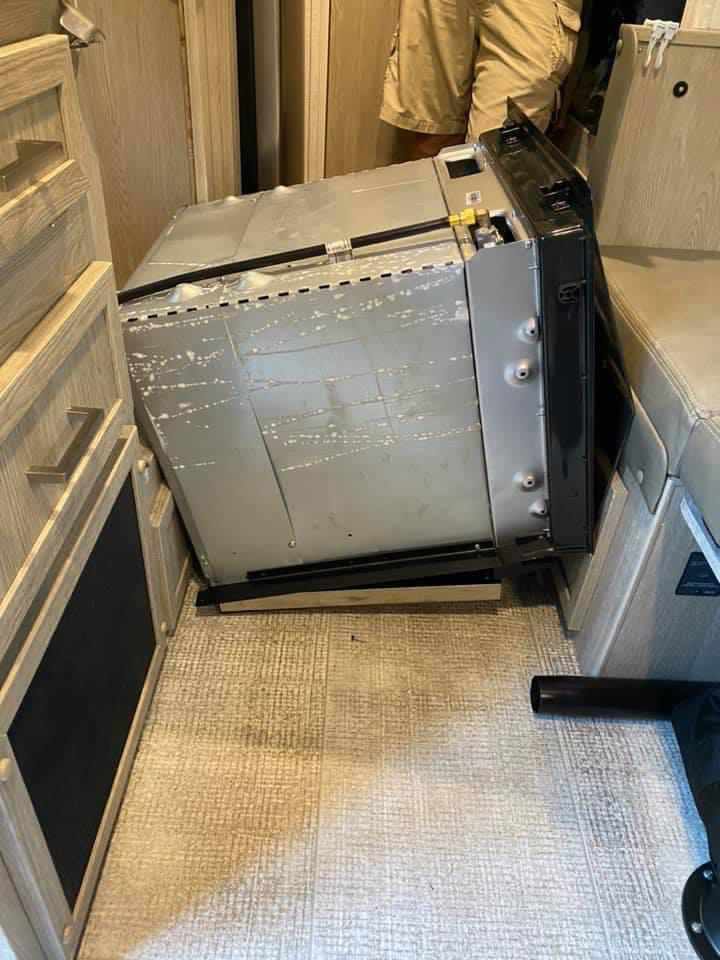
That way, people who did little-to-no research could buy them and then go on social media and complain about how poorly they’re built. With the inevitable plumbing leak in a place that’s difficult to get to and, perhaps, cabinets that come off the walls, aided by those low-budget leaf spring suspensions I dislike so much. In fact, I know of a couple of people whose stoves in their RVs literally came off the cabinet as they were driving down the road. Yikes! Rough rides indeed.
My point in all this is to share that the RV industry is very happy to build whatever the customer wants. While so many of us complain about what we have and how poorly it’s made, know that the RV industry is just doing what we ask of them.
RV plumbing
Let’s look at a prime example: RV plumbing.
Something no good plumber will ever do is use PEX clamps on a PEX fitting clamped with a flexible plumbing line because it’s a guarantee of failure. That flex line, well, flexes, and, eventually, that fitting leaks. Some might even ask why there are flex lines in RV plumbing, but that’s actually code. You have to have flex lines on some fittings like water pumps, for example.

There are better ways to do flex lines, which some RVs have done. But a simple PEX clamp on a flex line is cheap and fast. And few people know any better. I certainly didn’t.
In fact, I had fixed these leaky fittings over and over in multiple RVs to the point where I now carry a PEX tool and a bunch of extra clamps and such. I have also learned that there are appropriate fittings for this type of thing.
But along comes someone like Jacob Rigor whose YouTube channel very loudly points out this misbehavior.
What happened is that customers started to ask RV dealerships about this plumbing, and the dealerships told the manufacturers, and the manufacturers are taking notice.
In fact, I know of several RV companies that have totally changed their fittings to be much better. At least one company that I know of actually invited Jacob Rigor to their factory to look at their revised fittings after he called them out in a video on YouTube.
Basically, we customers created enough of a demand that some of the RV companies have made changes.
I was walking by a line of RVs yesterday, and there was a big red sticker on them that read, “Brass Fittings.” Imagine?
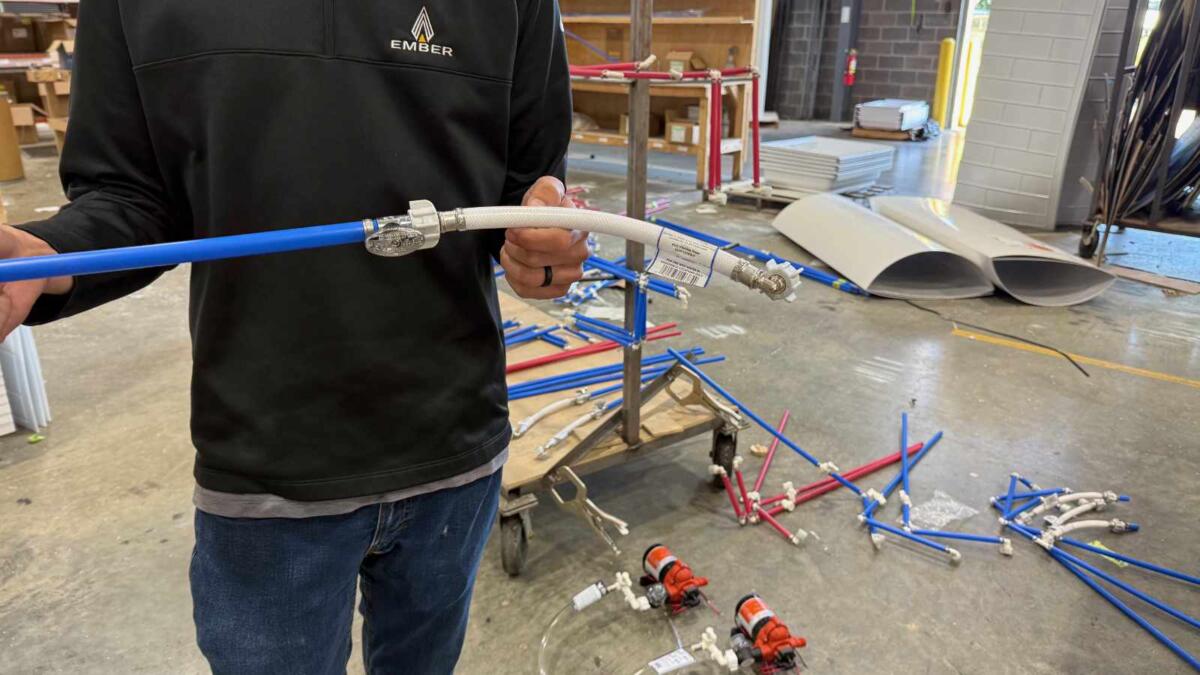
Other companies are now putting shut-offs at all the major fixtures—another plus. For example, Ember RV is putting the shut-offs in but also having an outside company make appropriate plumbing connections. So they basically buy completed and correct parts. Alliance is putting a manifold system in their trailers that lets you shut off any individual fixture.
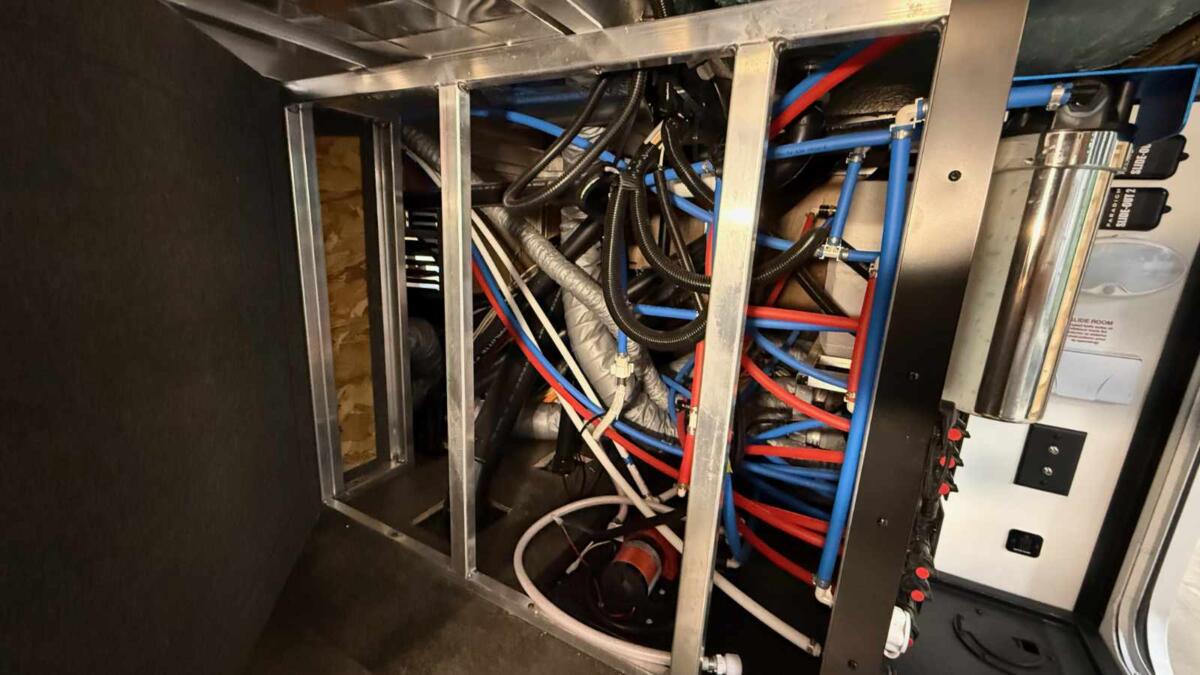
In other words, demand is creating a better product.
By us RV buyers asking for better, we’re getting it. The RV industry is very responsive to what we ask, but enough people have to actually ask.
There are other things, too, but we do have the power to demand better RVs, and the RV industry will build those better RVs. They build what we demand.
So, yeah, a lot of people are still buying cheap, slapped-together RVs. But some RVers, probably RVtravel.com readers, are asking for something that won’t fall apart the day after the warranty expires.
That’s my goal in my RV review column: to point out the good and the bad. You have to determine the ugly yourselves because we each see the world through our own eyes.
After all, beauty is in the eye of the beer-holder.
RELATED
- Are RVers responsible for poor quality RVs?
- What can a dinette cushion tell you about RV quality? Lots!
- RV show reflections: Can we trade gimmicks for quality, please?
- Who is Tony Barthel, the RV expert behind the reviews? (Plus, his new tips column)
RVT1244

I’m far from convinced water manifolds with individual valves make an RV’s plumbing better.
Valves bring in that many more moving pieces with that many more seals to deteriorate and leak and that many more connections to vibrate loose.
I honestly figure if a builder truly thinks individual shut off valves are of value, he should ask why he thinks the RV is going to have that many leaks to need all those valves. Might as well have a fire extinguisher for every power outlet…..
I do agree with the fact that a manifold or individual shut-offs are added complexity but I have also found that many plumbing fixtures (faucets, etc.) in RVs aren’t great so it’s good to be able to disable a leaky faucet until you can repair it without having to disable the whole water system or head back for repairs.
I hear ya Tony. All that extra piping, connections and complexity just strikes me as all sizzle, no steak, extra weight, extra risk.
And you’re 100% with your observations on the fixtures.
Instead of manifolds, I think OEM’s should offer a couple 1/2” plugs and caps with the owner’s manuals. Heck, call ‘em “spare low point drain plugs” to avoid mentioning weak confidence in the faucets….
If a faucet leaks, you turn off the water pump or main supply. Cap the lines at the faucet and then turn the water on again. Bammo, everything else works and you don’t even have to worry about the disconnected lines leaking when you get around to resealing the faucet!
Regardless, great article!
From a Plumber- Manifolds, home runs and individual shut-offs are all parts of a well thought out plumbing system. The one part of that system NOT listed is WORKMANSHIP. All contracts I have signed have this phrase in them “Work to be done in a uniform and workman like manner to generally accepted industry standards”. When the industry we are talking about-RV- has NO standards and is racing to the lowest bottom line to their benefit; you get what you ask and pay for it.
Vince, I see your point, but you’re assuming a level of DIY competence that relatively few RV owners posses. Some will learn, but many will not or simply not be capable of learning. That’s a shame, but it’s a fact.
It also effectively lets the manufacturer off the hook for shoddy work. To paraphrase your earlier comment, it’s like providing extra fire extinguishers because you assume that there will be a fire.
Vince, I think you are making a good point; this addresses the symptom, but does it truly address the problem? However, since the RV-buying public seems to make decisions based on emotion rather than knowledge, this does give the RV builder a way to say, “See, we’re addressing this issue,” even if they are only addressing the effects instead of the causes. Still, I appreciate the efforts of people (such as Tony, Jacob, and you) to educate us on what is bad and why.
“We have met the enemy, and he is us!” Pogo
I think examples of customer demand recently impacting RV quality can be seen in new suspensions, tire pressure monitoring systems, air conditioners, and backup cameras. When we bought our first travel trailer, Rockwood/Flagstaff were about the only brands offering non-leaf spring suspensions. We now have a few RV companies that have independent, multi-link suspensions with multiple shock absorbers, as well as very inexpensive “big teardrops” with torsion axles. TPM systems are now available on many RV brands of all price categories (thank you, Tony!). The Chill Cube AC units used on many new RVs are revolutionary, as are backup cameras on even some low-priced RVs!
I couldn’t agree more. I think social media and YouTube creators with good ideas are absolutely affecting the RV industry.
I don’t think it’s just with RVs that today’s younger generation is impatient and impulsive in their buying style. You want proof, pay attention at any grocery store to the young 30-something shopping for meat or produce. They don’t look and pick, they just pick up and throw it in the cart. No awareness of price, just quick and get on with their “busy” day.
These same fine young folks have discovered RV’ing. They buy RVs the way they buy meat, that’s nice, how much are the payments, not how much does it cost, where do I sign?
Ok Boomer, meats a commodity, very little price variability in a store, my time is valuable and I’m not going to spend it examining the price of everything going into my shopping cart.
And no, it’s not how any of my friends buy expensive toys – we research, weigh the attributes, and find the best price. No one I know is saying “where do I sign”, stop stereotyping a generation you clearly know nothing about except what you hear on your filtered news.
I disagree – when I was selling RVs the tendency to shop based on floor plan was universal. In fact yesterday I gave a talk in the Quartzsite Seminar Tent about RV shopping and asked what’s the first thing you look at when shopping for an RV and almost everyone there answered “floor plan.” Bzzzzzt, nope. Nobody in that seminar was born after the early 1970s from my perspective so…
There are crimp clamps made for flexible tubing. They look similar to a pex clamp.
The biggest problem is the manufacturers use PEX fittings on the flexible tubing instead of barb connectors. Pex and flexible pvc or vinyl have a different ID and OD.
The barb connectors pretty much seal when installed.
A standard worm type hose clamp will hold the connector in place without leaks.