

If you travel with your RV to the Pacific Northwest, a new state proposal could affect you. Washington State Parks want to cut how long you can stay in the park system. The numbers don’t seem to add up with many other public campground systems.
Under Washington’s current policy, guests can stay in a given state park between 10 and 14 consecutive nights. Individual park managers make the decision on the actual number, and they apply the limits during the high season from April 1 to September 30. The rest of the year, October 1 through March 31, campers can stay up to 20 nights, then vacate the park for three consecutive nights, and stay up to 40 nights total in a 60-day time period.
New guidelines would cut how long you can stay in Washington state parks
 Under its proposed new guidelines, the state wants to chop those numbers down. According to a media release, the goal “is to make camping stay limits clear and consistent for our visitors. It also aims to improve equity by shortening the number of days campers can stay annually to accommodate more recreational use of these facilities.” How much “shortening” does the state have in its new recipe?
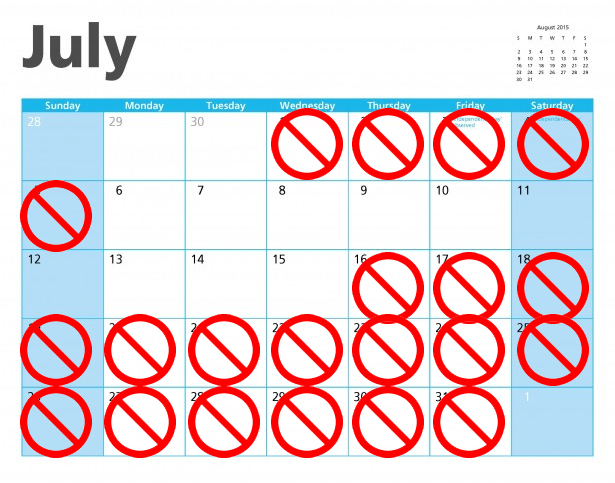
Guests could stay no more than 10 nights in any one park, within a 30-day period. There is no allowance for longer stays during the off-season. What about transferring between different state parks in Washington? “Total nights stayed,” says the proposal, “cannot exceed 90 days per calendar year in all state parks.”
How long can you stay in other states and on federal lands?
Washington wants to cut how long you can stay, but how does that stack up with other public campground systems? We reviewed other state and national practices and found these results.
- Bureau of Land Management (BLM): “Camping stay limits vary by location but are generally about two weeks within a month period.” Typically, campers can move on to another BLM site immediately, provided the new site is outside a 25-mile radius of the previous campground or dispersed area.
- United States Forest Service (USFS): “Camping or overnight occupancy in any dispersed areas by any person or group for more than 14 consecutive days within a 30-day period is prohibited. Dispersed camping is allowed throughout the forests year-round with the same 14 consecutive days stay limit.” Again, camp elsewhere the same day if you wish, outside of a 25-mile radius.
- National Park Service: We couldn’t find a system-wide policy, but this did pop up for one popular park: “There is a 30-night camping limit within Yosemite National Park in a calendar year; however, May 1 to September 15, the camping limit in Yosemite is 14 nights, and only seven of those nights can be in Yosemite Valley or Wawona.”
- U.S. Army Corps of Engineers: “Camping is limited to 14 consecutive days during any 30-day period.”
- North Carolina State Parks: “A site can be reserved for a maximum of 14 consecutive nights within any 30-day period. No camper is allowed to camp in a park for more than 14 nights in a 30-day period.”
- Illinois Department of Natural Resources: “A campsite may be reserved for a maximum of 14 nights.”
Washington appears to be unique
Of the states and federal agencies we reviewed, most provide for a 14-day stay limit. California breaks the mold. “For most of our parks, there is a 30-night maximum stay limit per customer in a calendar year; please check individual park policy limits,” says a California State Parks website. Evidently, some have tried a work-around, but it’s not California’s first rodeo. They add, “Creating multiple user IDs to bypass the 30-night rule is not acceptable. Reservations made under individual unique multiple user IDs will not be honored.”
Washington state appears to be unique with its 10-day maximum stay limit. The proposed new administrative code reads, “In order to afford the general public the greatest possible use of the state park system, on a fair and equal basis, and to prevent residential use, continuous occupancy of facilities by the same camping party shall be limited.”
Want to comment?
This is a proposal, and it’s presently open for public comment. After the comment period closes, if park administrators agree, the new rules will go into effect on August 18. If you’d like to have your voice heard, you may comment from now until July 18. Click here to access the site, then under the planning project drop-down menu, select “Proposed Camping Stay Limits WAC Update.”
##RVT1160b


And they want to raise fees!.Who are these folks?
Some close to Washington states charge excessive fees for Washington folks to camp in their states. How about doing the same before messing with us if they feel they need more $$$$$$?
It’s bad enough with gas prices over $5.00 a gallon, I’m retired and I want to hit the road while I can.
Aaarg Mateys!
Shiver me timbers, make em Walk the plank!
I moved to WA from OR and I am full time in my RV. I go back and forth in the summer and since moving from Eastern to Western WA, I find it hard to get a camp spot for a few days. Many book reservations at several parks while deciding which to go to. That needs to stop. With this limit, it will help with that. There are pros and cons to this proposal but in the end, it is better for equality. Oregon charges 3% more to those that live outside of OR. It’s very expensive. I get a disability a nice discount with my resident WA disability pass. They have other discounts available for seniors, veterans, special needs etc.
Thank you, Russ and Tina! I had a lay-over in Seattle in 1981 on a Delta flight to Portland, Oregon from Chattanooga, Tennessee. That may turn out to be the solitary time I’ll ever be in the state, so I’ll stay on the sidelines for this deal. Whatever y’all Westerners decide is fine by me. 🙂 Thanks again, Russ and Tina, have a great week, and safe travels! 🙂
According to the update, https://parks.wa.gov/sites/default/files/2024-04/Stay%20Limits_4-10-24-FINAL.pdf “Total nights stayed not to exceed 120 per calendar year in all state parks.” Not 90. Which adds up, as 10 nights in a 30-day period times 12 months equals 120 nights total–a third of a year. Far in excess of California’s 30 days per year–THAT seems draconian!
Update: Although the PDF referenced above says 120 days, elsewhere it says 90 days, so 90 may be the accurate figure.
It’s close to what WA does right now for owned RV lots. They call it RV lots but you can build a home on them. There is a 90 day limit for the whole year and have to go to the police department to get the permit for when you begin and they keep tabs. Ocean Shores is one such area. All year long you have to pay taxes, etc. but can’t use it after those 90 days. They put in a vote to the people to allow 120 days and it’s not tallied up yet. I think it will be bunched together for July with the park proposal as well. I camp host and the pdf is correct but different parks have loop holes to so speak. This proposal will have all the same across the board.