


Dear Dave,
Have you heard of lithiumbatterypower.com? According to Coastal Angler Magazine, it just won a best energy award for it’s Powerbox 2.5KW/solar panel lithium battery charging system. Maybe it can be useful for RV use? —Phillip
Dear Phillip,
I had not heard of lithiumbatterypower.com; however, these companies are popping up overnight with the lithium craze. Companies like LiTime and WattCycle are advertising like crazy, and the prices are getting very attractive.
I had an attendee at my Phoenix seminars last spring ask about WattCycle, and I was very cautious. However, six months later he has had no issues, and the cost was only about $250 for a 100 Ah battery. But keep in mind that he is located in the Southwest with virtually no exposure to cold weather and only does occasional boondocking.
Lithium Battery Power website
So I went to the Lithium Battery Power website to do some research. I was initially surprised they were able to secure that domain name! The company is based in Clearwater, Florida. It seems to have started and specialized in the marine/boating industry. And just like so many others, it is expanding to other markets, especially the RV sector that saw such an explosion with COVID. If you click on the RV section under Industries in the top menu on its website, it has the same products as the marine/boat. The description even talks about trolling motors and such.
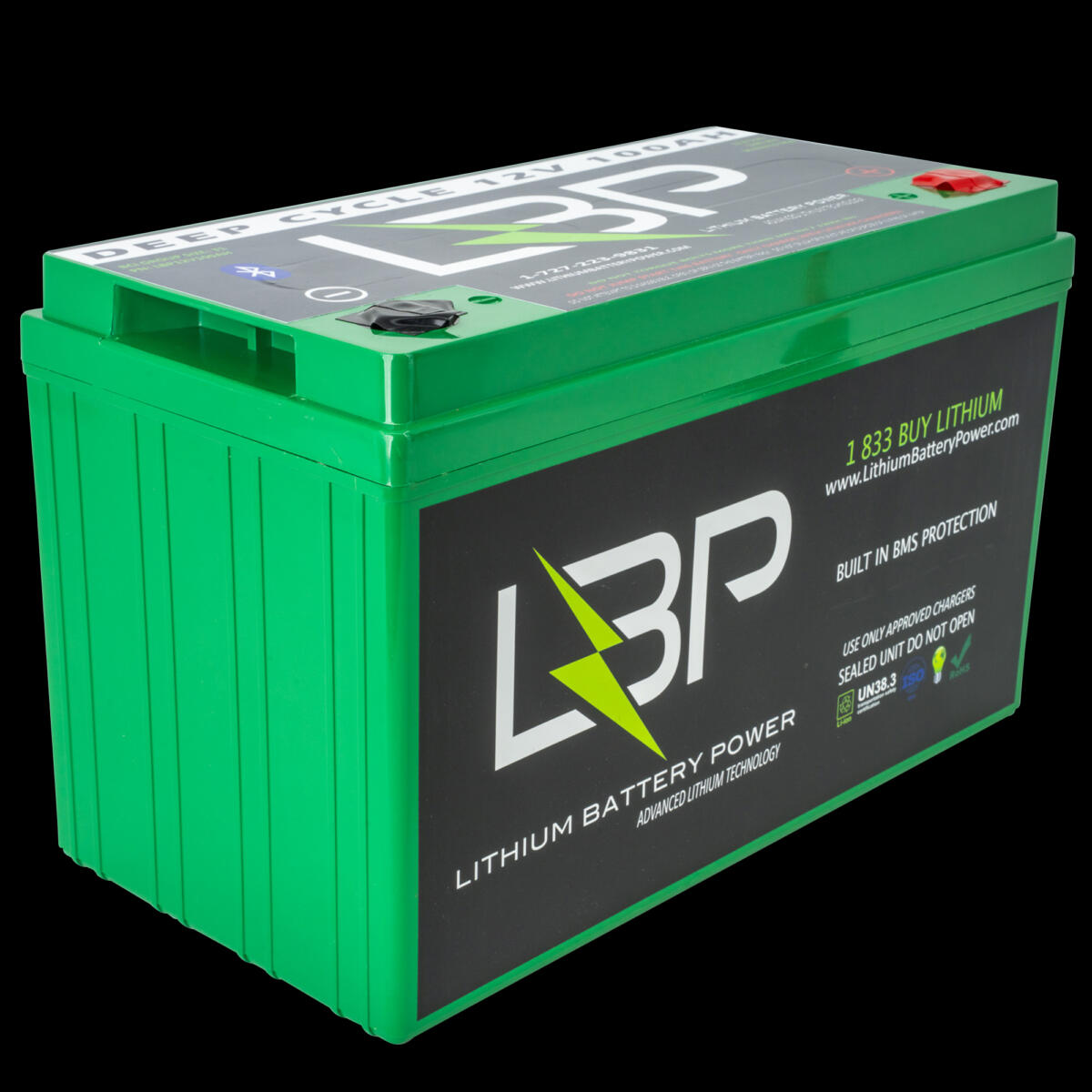
One of the challenges when researching lithium batteries is you can’t tear them apart to find out what type of cells are being used, how they are fastened, and if they have a battery management system (BMS). So we have to rely on the information they provide. It does state the cells are cylindrical but nothing about UL listings, fastening technique, or a BMS. It does have a 10-year warranty but only boasts 4,000 charge cycles, which is less than half of some of the others we have reviewed.
They show an operating charge voltage of 32 degrees F – 105 degrees F. That indicates there is no internal heater for cold weather charging, but it does talk about BMS in the FAQs. It also shows a normal charge of 12.8 volts versus the 14.4 volts in others.
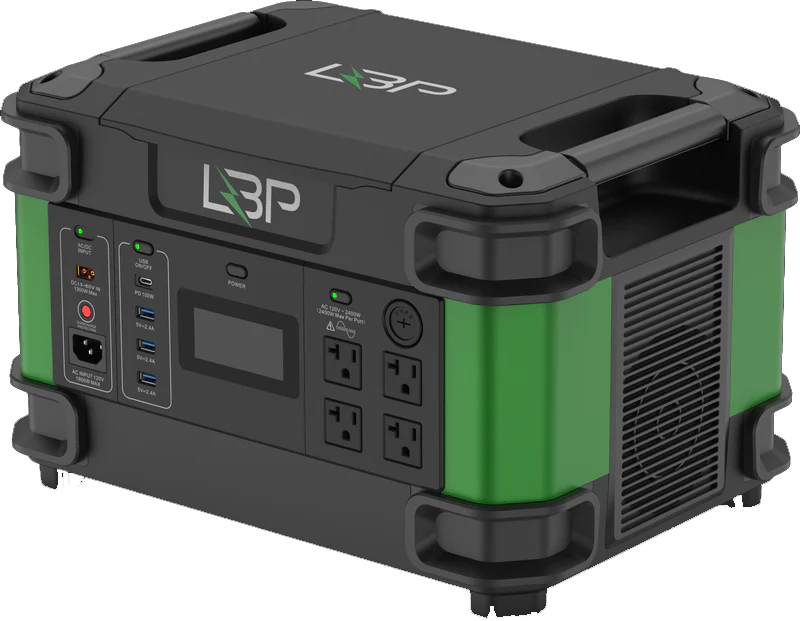
The LBP Powerbox
The Powerbox is similar to other “solar generators” that are very popular with van camping and boondocking. It is basically a lithium battery packaged with an inverter. Lithium Battery Power has no product listing on Amazon, so there are no reviews to look at.
The price is not as attractive as the WattCycle and LiTime. So I feel it might be a little premature to jump into that price point without more favorable reviews or a personal review of the product(s).
If any of our readers have any experience with this company, please comment. I have reached out to the company via their website and have heard nothing yet.
You might also enjoy these posts from Dave
- What monitor do you recommend for lithium batteries?
- My RV’s “larger” batteries are dead. Can I replace them with lithium?
- Can different type and age RV batteries be mixed? Can I add a lithium battery?
- Will RV’s house batteries ‘play nice together’ if I replace chassis battery with lithium?
- Will my RV’s charger be sufficient for new lithium batteries?
- Will WFCO Auto Detect charge RV’s lithium batteries?
- Will WFCO Auto Detect charge RV’s lithium batteries? —Part 2
DAVE HAS ANSWERED MORE THAN 1,000 readers’ maintenance and repair questions. Read a directory here. There is so much to learn!
Dave Solberg is a leading expert in the RV industry and the author of the “RV Handbook.”
RVDT2766

Thank you for putting the term “solar generator” in quotes. A ridiculous misnomer. They don’t generate squat. It’s a battery with controls for power going in, generated somewhere else, and power going out. The solar panels generate the power.
Tom Morton has a video that shows his testing of 4 or 5 different LiFePO4 batteries, then opening them up to view the cells, BMS, and internal construction. One of the batteries he tested was the LiTime.
And, yes, the price of no-name Li batteries have dropped so much that some are cheaper than AGM batteries. But how safe are they? I would want to know that before putting them in a $20K trailer, much less a $200K motorhome!
LiFePO4 batteries are inherently safe, and are not prone to thermal runaway, unlike other lithium battery technologies. You’re actually at much greater risk from the batteries in your phone, tablet, laptop, portable power pack, or E-bike, which are not LiFePO4 and are prone to thermal runaway and fires if damaged or overcharged.
Dave,if you are interested in what’s inside the LiPo batteries Will Prowse does reviews where he tears the batteries down and comments on the build quality. I have found it very informative. He may not have the battery you are interested in but worth a check. Keep up the good work. Mike
Mike, you forgot to mention that Will’s battery reviews are on YouTube.There are many others there, as well. Just search for the battery’s brand and “review” to see what’s available.
Dave, I think you’d be pretty hard-pressed to find a LiFePO4 battery without an internal BMS, as it’s a necessary component of the battery which controls charging, discharging, and cell balance, among other things. All BMSs aren’t created equal, and some may not have low temp charging protection, over-current protection, or other features, which are what you need to look for when battery shopping. The same is true if you need internal heaters for cold weather use.
The only LiFePO4 batteries I know of that don’t have an internal BMS are made by Victron, and they’re specifically designed to use their external BMS.
If you want to be educated on lithium batteries, watch Will Prowse on Youtube. He has many reviews wherein he tests and dissects lithium batteries, judging their performance, BMS components and cell quality.