


Dear Dave,
With Azdel construction, do the windows and doors need to be caulked or is the foam seal enough? —Billy, 2025 KZ Connect C241RLK
Dear Billy,
For years, RV sidewalls and roofs have been manufactured with a sandwich of materials with either fiberglass or aluminum outer skin, lauan for structure, block foam insulation, and an interior paneling.
About lauan
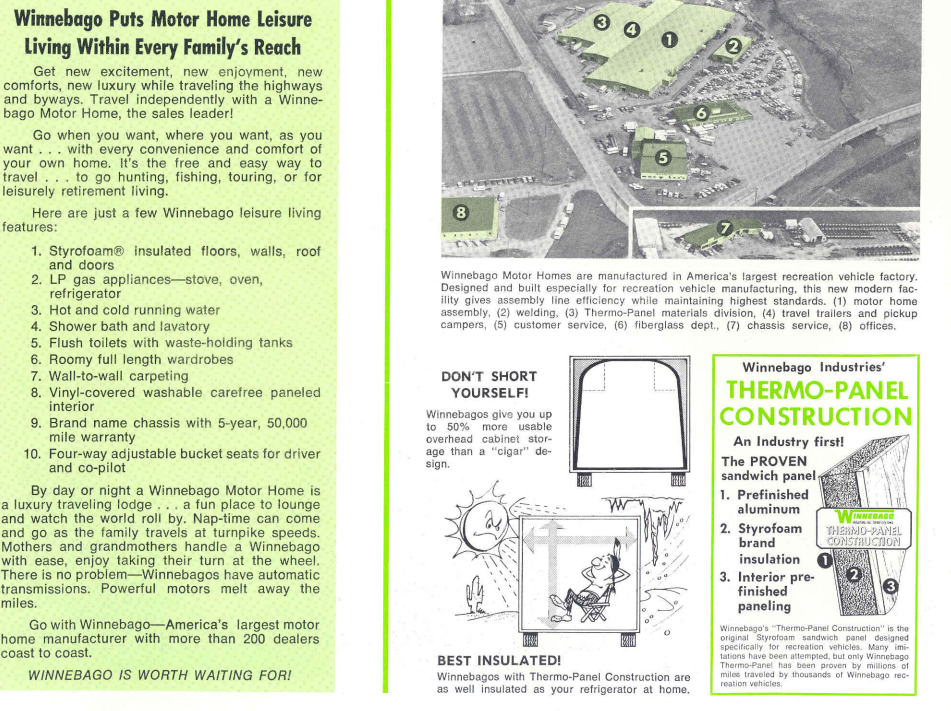
According to the Wood Database website, lauan is a wood paneling that comes from Southeast Asia and can be many species of wood but predominately from the Shorea variety. The combination of the outer skin and the lauan for structure makes for a stronger sidewall design, which I believe was actually patented by Winnebago Industries back in the early 1970s. They called it Thermo-Panel design. It started with the truck topper models and moved into the motorhomes.
Here is an early ad featuring the product. The first design did not have the lauan between the outer skin and block foam, but eventually incorporated it into the sidewall for structure.
The downside of using lauan is the panel is like typical plywood that is made up of several layers of wood and fibers. If moisture penetrates the sidewall, the wood will absorb the moisture and cause delamination. That is a separation of not only the different panels, but also the wood itself.
Replacing lauan
Over the years there have been attempts to replace the lauan with other materials such as MDF Mende Board, used in 1988-89. It was a fiberglass outer material with a particle board adhered to the inside. It came from Germany and was touted as “THE” best material to resist moisture. Tests proved it could sit in a pool of water for more than a year without any delamination or deterioration.
In theory, it sounded good, as the particle board had resin that was impervious to moisture. However, the material was subject to road vibration and would separate at the floor level and window cutouts. When moisture penetrated the sidewall, the particle board would swell up like my behind! [TMI, Dave.🤣 —Diane] It was only used a couple of years, and then everyone went back to lauan.
Fleetwood tried a solid composite that was similar to countertop vinyl, commonly referred to as “Formica.” But it was too brittle and shattered in most cases—so back to lauan.
Azdel
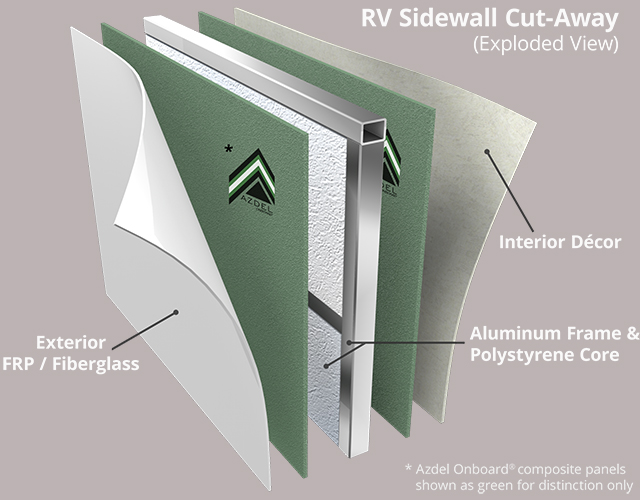
Azdel entered the market in 2006. It is also a composite material that most are using to replace lauan, not only because of the rot-resistant capabilities, but much more. Here is the description of the material from the Azdel website.
Azdel Onboard composite panels have been used in RV exterior and interior sidewall, ceilings, and more since 2006. They are produced using a patented blend of polypropylene and fiberglass to create a strong, lightweight, quiet, weather and temperature resistant, odorless and environmentally friendly wall that will increase the life of your RV.
With over three times the insulation value, excellent strength, superior sound reduction, and half the weight of wood, our composite material increases durability, comfort and lightens your adventure. The reduced weight helps keep fuel costs down, and the interior noise reduction helps provide a quieter and more peaceful stay.
Another plus is the fact it is manufactured in the USA and not subject to the up-and-down tariff issues. Their production plant is in Forest, VA.
However, I think Azdel is being marketed as the be-all and end-all of delamination in the sidewall. In my opinion, it is not. Granted, it will not swell or separate like lauan or Mende Board if there is moisture penetration. However, the moisture can affect the adhesive that binds the Azdel to the outer skin and the block foam. Therefore, it can still delaminate by separating from the materials.
Inspection and maintenance necessary
There is no substitute for thorough inspection and maintenance of the seams on the roof, sidewall, and windows.
If your windows and doors are sealed properly with butyl tape, then you don’t need any additional sealant. Butyl tape is a putty-like material that is applied to the flange of the window and seals between the frame and the sidewall. Some companies add a “cap seal” of silicone to the top of the frame. However, I think this just attracts dirt.
Over time, the butyl tape that is exposed to the sun can get dried and brittle. I typically just trim the dried part and inspect the area for any gaps that might allow moisture in. Then I use a small amount of Dap Dynaflex, which you can find on Amazon here.

If the gap is large, or if there are several areas that have dried up, I would remove the window and apply new butyl tape.
You might also enjoy these posts from Dave
- Can I seal my RV’s windows without taking them out?
- Should I seal around RV’s windows before looking for a leak?
- Time to reseal your RV roof seams? Here are caulking tips
DAVE HAS ANSWERED MORE THAN 1,000 readers’ maintenance and repair questions. Read a directory here. There is so much to learn!
Dave Solberg is a leading expert in the RV industry and the author of the “RV Handbook.”
HAVE A QUESTION FOR DAVE?
Send your inquiries to him using the form below.
RVDT2897


Thanks for the info Dave. Looking closer at our doors and windows they appear to have a foam gasket with no caulking but things look tight. While the edge trim does have caulking. So I pulled a screw and there is Butyl. Regardless what you have it’s best to keep it inspected. Thanks again.
Wondering why if the glue is the issue with delaminate why not just use a waterproof glue or some other type of water proof structural adhesive! I bet ya gonna say it costs more, so that’s why it’s not used!
Snoopy