


Dear Dave,
Why are trailer manufacturers moving to 12-volt refrigerators? How long will two Group 24 batteries run a 12-volt fridge? —Randy, 2015 Keystone Cougar
Dear Randy,
This has been a question I get at almost every seminar I do at the shows! It seems everyone is going with the 12-volt compressor-driven refrigerator. I believe it is due to the issues that the absorption refrigerators have experienced. You read the forums and it seems like there frequently reports of a catastrophic failure of inefficient cooling all the way to rigs starting on fire.
Why RV absorptions refrigerators fail
We have discussed this earlier and I believe it is a combination of operator neglect and rumor mill. Absorption refrigerators need to be level three degrees side-to-side, six degrees front-to-back. This is normally not an issue as most owners level the unit to be comfortable when sleeping. However, when they bring the rig to their house and plug it in the garage to get ready for the camping trip, they do not think about leveling it on the driveway. So the unit runs for a day or two out of level and the coolant can’t zigzag back down the cooling unit and starts to get hot and harden.
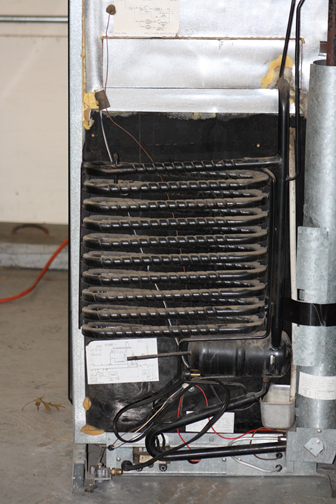
Once the cooling unit starts to get blocked it is less efficient, gets blistering hot at the blockage, which can actually darken insulation and wood framing, and eventually stops cooling. Then a new cooling unit with labor is approximately the same as a new refrigerator at about $4,000!
Residential refrigerators in RVs
So, owners were replacing the expensive refrigerator with a residential unit from a box store for about $1,000, but were not satisfied when it came to dry camping.
There are several other issues such as lack of maintenance, poor air circulation, and high ambient temperatures that provided more “fuel” for the internet chatter—with several calling their old unit a “Nevercold.”
Then came the 12-volt compressor-driven units like Everchill. Both Norcold and Dometic jumped on the marketing bandwagon offering units with the Danfoss compressor. They would run much more efficiently than a residential unit that had to go through an inverter and house batteries if they wanted to dry camp.
I am still a fan of the absorption refrigerator if the burner assembly and flue is cleaned out on a regular basis, the roof vent is cleaned, door gasket tight, and unit is always level when the refrigerator is running.
How long will a 12-volt refrigerator run?
There are many variables that come into play when trying to figure out how long the house batteries will run a 12-volt compressor-driven refrigerator. First is the size or Amp Hour rating of the batteries and what condition they are in.
Let’s assume the Group 24 you suggested are rated at 100 Ah. That means if you have two, they would provide 200 Ah of power. However, FLA (flooded lead acid) batteries should only be drained 50%, so that means 100 Ah if they are at 100% and not sulfated.
The second factor is ambient temperature, which will affect how often the refrigerator will turn on or “cycle,” as it will hopefully not run all the time. And then there is the size of the refrigerator: 6, 8, or 10 cubic feet (CF).
Another factor is what else inside the rig is drawing 12-volt power such as lights, roof vents, water pump and any LP appliance. The furnace blower motor will drain a battery really fast.
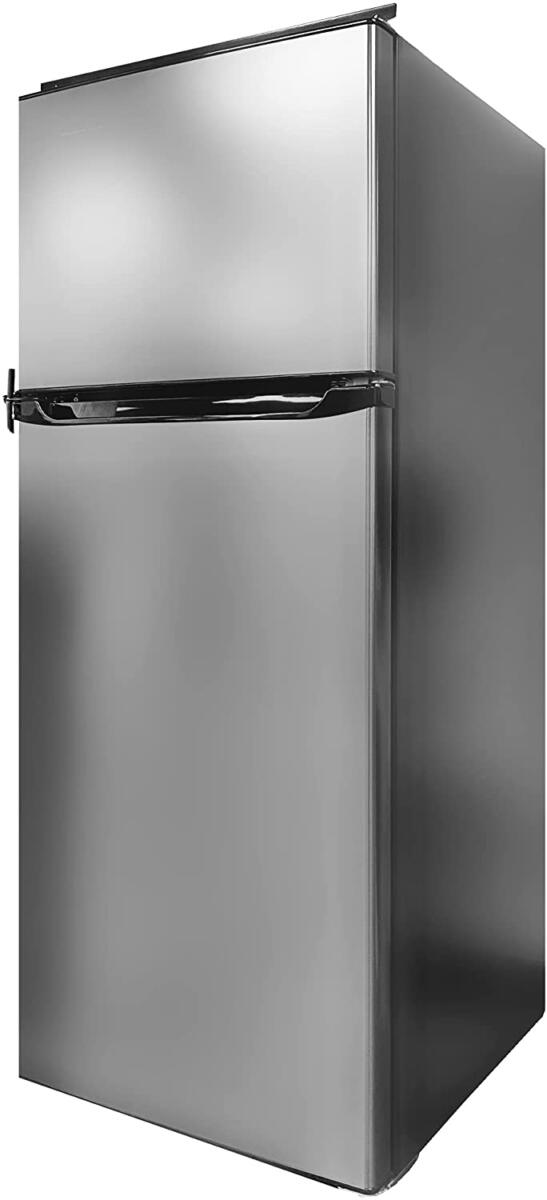
Mike Sokol conducted a controlled test on a residential refrigerator versus an 8 CF, 12-volt compressor-driven one in a 70-degree room with a 100 Ah lithium battery, which can be drained down to almost 100%. The 12-volt model ran for almost 40 hours, which would be comparable to using two 100 Ah FLA batteries.
However, most posts that I have found stated that most only get about 20 hours. You can supplement this with solar panels, as well.
I have not had the opportunity to test a 12-volt model but have done some dry camping with a residential model running on 200 Ah FLA batteries through an inverter and only got about 10 hours. It seems the inverter is also a 12-volt power hog.
You might also enjoy this from Dave
Why does RV 12-volt refrigerator noisily cycle hourly?
Dear Dave,
On our first trip with this new-to-us travel trailer, the 12-volt refrigerator cycled on and off every hour or so, with a whirring, whiny noise and a soft thud, all night long. We finally had to turn it off so we could sleep. This was on battery power. Is this typical, or is something wrong? We’ve never had a 12v before, so we aren’t sure. Also don’t know how it behaves on shore power. Thanks! —Rebecca, 2022 Sun Lite Sport
Dave Solberg is a leading expert in the RV industry and the author of the “RV Handbook.”
Read more from Dave here.
HAVE A QUESTION FOR DAVE?
Send your inquiries to him using the form below.
##RVDT2536

Let’s RV article 12-volt RV Refrigerators: The Truths You Need to Know Before Buying One
Published on November 2nd, 2023 by Dave Helgeson provides some good information on 12 volt refrigerators.
Thanks, mrpavet. And here’s a link to Dave Helgeson’s article on this subject from a couple of years ago on RVtravel.com: Is a 12-volt refrigerator right for you? Have a great day. 😀 –Diane at RVtravel.com
About 3 years ago I replaced my absorption fridge with a 7.5 cu ft 120 volt fridge from Sam’s Club for $140 at that time. Now they are about $300. I installed a 1000 watt inverter to run the fridge while driving. Not only did I gain more room inside it has worked perfectly and fit in the same hole with very little modification. We don’t boon dock so the longest the inverter has run on the batteries is around 2-3 hours while stopping to eat and or shop. I installed a 3-way light switch to switch it from inverter power to shore power.
I did a similar thing when our RV fridge died. I was in the hospital when this occurred and Wifey was left to fix the problem. She got a 120v fridge from Lowe’s and had our fave mobile techs do the replacement. It fit exactly in the space. Best move ever! Fridge is colder, has a ton more space, and easily runs from our 2000 watt pure sine wave inverter. Lots of solar on the roof and two 100ah Lithium batteries. It was a hair over $400. We do a lot of boondocking and this was a blessing in disguise.
We don’t regularly dry camp with either of our two TTs. Both have absorption frig/freezers. And experience has shown this is what we should have. Our larger, mostly stationary TT has been through two Texas winter storms with periods of shore power outage. Solar only helps during bright days. You have to have 12v for the control board regardless whether AC or propane cooling. But that board uses a heck of lot less battery than a coolant compressor. And as Dave said, the furnace fan uses quite a bit. Likewise, we have been forced due to weather to park without shore power with our small TT during travel.
Another problem with running an absorption refrigerator is that many RV manufacturers don’t install them properly. My 2011 trailer had a large open space above the fridge which did not help with the airflow, hence poor performance. I installed some baffles which did help some, but I’m still contemplating the installation of a 12volt unit.
When our absorption fridge finally bit the dust we replaced it with a 12V model. With a 400 Ah LiFePO4 battery bank and 500W of solar panels we’ve had sufficient power to run the fridge; during the day the solar panels keep the batteries charged and at night the total drawdown, including fridge, is around 10% (40 amps). The primary benefits we’ve found are (1) temperature control is much better and (2) the interior storage space increased by about 1/3. We were also able to convert the headspace above the fridge into a storage space. All in all the effort was worth it.
Lots of people run their refrigerators while on the road. Given that roads are a lot of up, down and tilts, it would seem that would have an effect on an absorption refrigerator that is sensitive to not being level – while on the road, they would be out of level for many hours every day. It seems to me that might contribute to the problems of absorption refrigerators, but it is never mentioned in articles like yours, and the “I run my refrigerator all the time while traveling” folks deny that doing so could cause problems or shorten the life of the refrigerator. What do you think?
Just jumping in, but I think all the vehicle movement would compensate completely for off level driving. (Just hang a pendant from your visor to visualize all the movement).
I for one don’t ever travel with the fridge running on propane, I’ve actually seen 2 rigs semi toasted from fridge fires while driving. Lance camper came with a 3 way that could run on 12v while driving .. that was cool🙄
I use 2-6 Volt FLA Glassmat (Lifeline) batteries, 100 Ah, wired in series for 12 volts. I can run my 12 Volt fridge (in my RV garage without the help of my 200 W solar panel) for about 48 hours with a drawdown to 65%. I didn’t go any longer than that so as not to hit the 50% mark. The fridge stayed at 41 deg and about 10 deg freezer. On travel days, even on a cloudy day I can go 6 hours and the batteries have yet to get below 85%. Very happy with the 12Volt fridges. Last one was an Everchill, this one is a Furrion.
Good test. What was the ambient temp in your garage?
Thank you, Dave! Interesting and clearly self-interested response by the RV refrigerator manufacturers. The 12-volt refrigerators seem less susceptible to operator-error damage, unlike the absorption version. Happy new year and safe travels! 🙂
I am one of those RV’ers who thought a fridge fire could never happen to me, until it did!
The propane line had jarred loose from a long day of travel and when the fridge called for propane and a spark, it got both! Long story short, I got the fire out, but the fridge was toast, pun intended.
I had JC Refrigeration convert my Norcold – “No-cold” – to a two compressor 12V fridge, and I cannot emphasize enough how happy we are now. Consistent temps, and Ice cream cold freezer at last!
This all happened a few months after the warranty expired, lol.