


Dear Dave,
When the water pump comes on it shakes everything. I changed the water pump but it still rattles everything. Please help. —Joseph, 2014 Forest River Salem 29QBDS
Dear Joseph,
This has been a long-standing issue with onboard water pumps for years. I would believe that the original pump installed in your Forest River Salem was a very inexpensive model and they did not design the installation to be quiet. There’s a wide variety of on-demand water pumps available as well as a wide variety of prices.
I personally like the Shurflo brand and even it has a good, better, and best lineup to choose from. The basic model is a 2.8 gallons per minute (gpm), 12-volt model that typically has low flow and is fairly noisy. The next step up is the Whisper King model in a variety of gpm flow rates. It uses a low rpm magnet motor and is advertised as the quietest pump on the market. The “best” model is the Smart Sensor 4.0 pump that is variable speed and controlled by microprocessors that deliver a silent 4.0 gpm and 50 psi. So the first step is to get a pump that has been engineered to run quiet and smooth. However, there are things you can do in the meantime to make your pump quieter.
Add a cushion
Most RV manufacturers simply install the pump on the wood floor or side of a compartment. Even the quietest pump will have some vibration and the thinner the floor, the more it will resonate the vibration and even amplify it. While I was at Winnebago, we tested a variety of pumps and applications and found that adding a hard rubber or foam platform underneath the pump helped quite a bit in reducing the vibration throughout the floor.
Later, the engineers used the Whisper King version and mounted it in several applications on the side of the compartment. Since it had redesigned rubber pads already on the mounting tabs, no additional foam was required. Plus, being mounted under the insulated floor helped reduce almost any noise the pump would make. You can find a generic version on Amazon here.

Use a soft, flexible hose
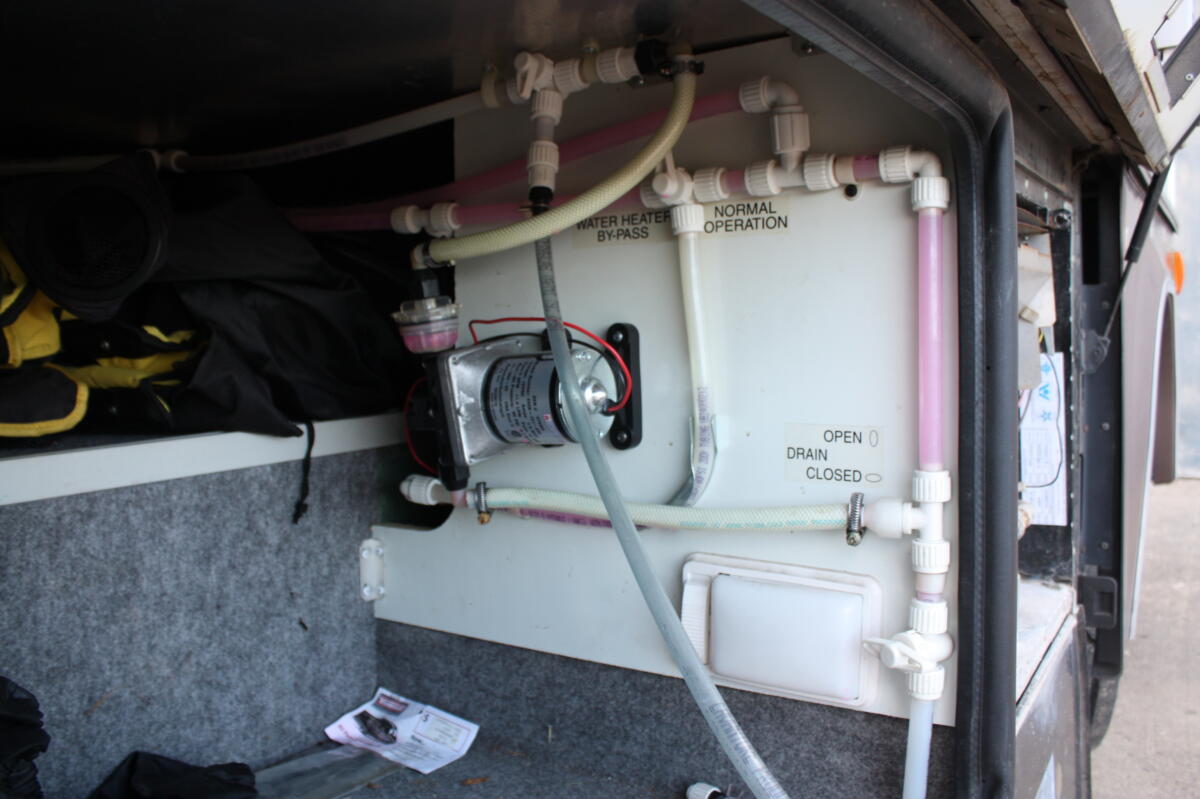
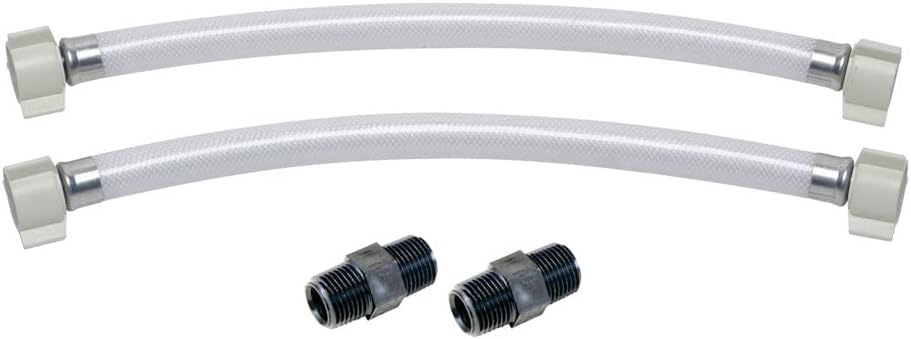
Even the quietest pump will create a flexing of the incoming and outgoing hose. The hard plastic “PEX”-type hose will vibrate and flap against the floor, which will also create a noise that can resonate through the floor. I don’t know if Winnebago came up with the idea first, but back during the push to make the unit quiet, the designers chose to use a flexible 1/2” supply hose coming into the pump and going out. They could not eliminate the vibration during start-up demand and shutting off. However, the flexible, braided hose produced very little noise when it vibrated and was strong enough to hold in excess of 70 psi.
Today, Shurflo sells a water pump silencing kit which can be purchased on Amazon here.
You might also enjoy this from Dave
My RV’s water pump is noisy. What can I do?
Dear Dave,
My RV’s water pump was very noisy so I replaced it with a Quiet Pump, with no change. I still have the water hummer noise. What do you suggest? —Donald, 2019 Greyhawk
Dave Solberg is a leading expert in the RV industry and the author of the “RV Handbook.”
Read more from Dave here.
HAVE A QUESTION FOR DAVE?
Send your inquiries to him using the form below.
##RVDT2342


I did not like the constant hammering of the water pump. I researched a fix and installer the controller manufactured by IRVWPC. This product once installed allowed me to reduce and just about eliminate the hammering being caused by the water pump. I’ve been using it for 2 years now without any issues. You might want to take a look at this product to help reduce or even eliminate the annoying sound of the water pump. I can highly recommend this product. https://www.irvwpc.com/
Thank you, Dave! 🙂 Thank you especially for the information about the Shurflo water pumps. It may come in handy in the future, in the event our present pump gives up the ghost. Meanwhile, thank you and safe travels! 🙂
As always, good advice Dave.
Hearing the water pump isn’t always a bad thing so I like to ask folks why they want silence.
Hearing it run tells you your system isn’t at pressure which means the pump is trying to make flow. Hearing it triggers the question of should it be running:
Is there a leak somewhere?
Is the freshwater tank low and the pump’s cavitating?
Is the pump bypassing internally?
If connected to city, did we forget to turn it off?
Learning your pump sounds and flows can not only tell you it’s condition but also your filter restriction. I actually prefer a purring pump. It’s the quiet ones that make me nervous….
You’re right Vince – see above comment.
I solved this problem on my Winnebago Class A Vectra. They mounted it right in the center of the aft compartment – impossible to get to!!! I moved it to the street side and mounted it on a piece of 5/8″ plywood with a rubber base on both sides and screws mounted thru rubber grommets. The only problem: I have now made is it is too quiet!!! I can barely hear it and as I get older – well….. (See Vince S’s comment following this – he is right; on the other hand, I do have red lites to show when it runs, but I have to see them – from bed?).
The first spring trip a couple of years ago my camper developed a very loud water hammer whenever the water pump was on. It had never done this in previous years. I took it to my trusted RV repair shop and he “fixed” it by having his helper spray the orange expando squirty foam any place he could find a plumbing line. What a mess! And… it did not fix the problem. After much research online I found out that the cause of water hammer is air in the plumbing lines, and the fix was to hook up to city water, open the farthest faucet until it quit sputtering, then progress toward the water pump opening each faucet along the way until each quit sputtering. It worked like a charm!
I then realized that I had winterized my camper that year by blowing out the lines rather than using the pink stuff.
The water pump in our 2014 Coleman trailer doesn’t make enough noise to bother me, but the banging of the PEX pipes against various wooden surfaces is what’s really annoying. I’ve used folded up pieces of paper towel wrapped around places I can reach where the PEX touches the wood and it worked well. The remaining problem is due to places I can’t reach.
Absolutely! When I put foam pipe insulation around the PEX where it was in-contact, or close to contacting the shelves or walls, that cut most of the noise.
We installed a Shurflo with an accumulator, which takes out the “banging” from the PEX lines. Super quiet now!