


Dear Dave,
What’s the difference between a lithium ion battery and a lithium iron battery? Is one safer than the other for a 33′ 5th wheel? —Troy, 2005 Alfa See Ya
Dear Troy,
This is a very timely question as it seems “lithium” is being used generically to describe a wide variety of non-flooded lead acid products. Originally I thought lithium ion batteries (Li-ion) were the type being used in electronics such as cell phones, laptops, e-bikes and other applications and have had issues. If you have ever flown commercially, you are required to remove them from laptops and other electronic devices before buckling your seat belt and putting up your tray table. And I thought that lithium iron phosphate (LiFeP04) batteries are the type you should be using in your RV.
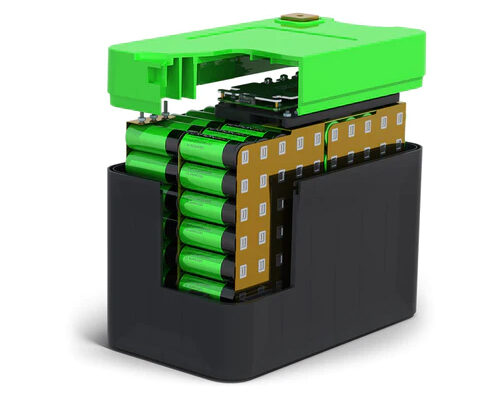
I have done quite a bit of research on the LiFeP04 batteries the past few years as they have become more affordable and are a hot button item with dry camping. However, I have not done much research on the lithium ion batteries so I thought I would dig a little deeper.
Lithium ion batteries
According to Wikipedia, lithium ion (Li-ion) batteries could have had the greatest impact in the history of all human technology as recognized by the 2019 Nobel Peace Prize for Chemistry. And yet my cell phone and laptop don’t seem to make it through a day.
Here is an interesting technical description from Wikipedia:
A lithium-ion or Li-ion battery is a type of rechargeable battery that uses the reversible intercalation of Li+ ions into electronically conducting solids to store energy. In comparison with other commercial rechargeable batteries, Li-ion batteries are characterized by higher specific energy, higher energy density, higher energy efficiency, a longer cycle life, and a longer calendar life. Also noteworthy is a dramatic improvement in lithium-ion battery properties after their market introduction in 1991: over the following 30 years, their volumetric energy density increased threefold while their cost dropped tenfold.
The history of the Li-ion battery is also very interesting as it was initially developed by NASA in 1965, perfected in 1974, and Exxon tried to commercialize it in the late 1970s. That seems ironic as the fossil fuel conglomerate is fighting the e-vehicle wave currently.
More info from the U.S. Department of Energy
This is from www.energy.gov:
The Basics
A [lithium ion] battery is made up of an anode, cathode, separator, electrolyte, and two current collectors (positive and negative). The anode and cathode store the lithium. The electrolyte carries positively charged lithium ions from the anode to the cathode and vice versa through the separator. The movement of the lithium ions creates free electrons in the anode which creates a charge at the positive current collector. The electrical current then flows from the current collector through a device being powered (cell phone, computer, etc.) to the negative current collector. The separator blocks the flow of electrons inside the battery.
Charge/Discharge
While the battery is discharging and providing an electric current, the anode releases lithium ions to the cathode, generating a flow of electrons from one side to the other. When plugging in the device, the opposite happens: Lithium ions are released by the cathode and received by the anode.
Information from Expion 360
I contacted a few of my lithium iron phosphate technical gurus and got a surprise from Tim at Expion 360:
Hi Dave,
Thank you for sharing this interesting question—it’s a great opportunity to clarify the distinctions between Lithium-Ion (Li-ion) and Lithium Iron Phosphate (LiFePO4) batteries, especially as the term “Lithium” is often used generically and can cause confusion.
Lithium-ion is a broad category that encompasses several chemistries, including those used in small electronics like laptops and cell phones, as well as EVs. LiFePO4 is a specific type of lithium-ion battery that is typically the standard in industries such as RVs, marine, and off-grid power due to its durability and safety.
For an application like the reader’s 2022 Keystone, LiFePO4 is the superior choice due to its longevity, safety, and ability to handle deep discharges repeatedly without significant degradation. The chemistry’s ability to withstand vibrations, temperature extremes, and demanding usage conditions aligns perfectly with the needs of RVers.
You’re correct that many manufacturers, including Battle Born, use the term “Lithium-Ion” generically, as LiFePO4 technically falls under the lithium-ion category. However, it’s important to note the chemistry differences when discussing battery applications to ensure the right solution is chosen.
Thanks, Tim. So lithium ion is correct as a generic description. Who knew?
You might also enjoy this from Dave
Will RV’s house batteries ‘play nice together’ if I replace chassis battery with lithium?
Dear Dave,
It’s just about time for a new battery in the truck portion of my motorhome. I’ve been thinking of upgrading to lithium. I added a second house battery wired in parallel about two years ago when I replaced the factory battery. They are both in great shape. Question is: Is it OK to have a lithium truck battery and regular house batteries? Will they play nice together? —Judith, 2018 Coachmen Freelander Micro
Dave Solberg is a leading expert in the RV industry and the author of the “RV Handbook.”
Read more from Dave here.
HAVE A QUESTION FOR DAVE?
Send your inquiries to him using the form below.
##RVDT2519

I have two Expion 360 100ah batteries in our trailer. They are awesome and easily supply all the power we need to run all the usual stuff, plus our 120v AC fridge. We have a 2000w pure sine wave inverter that runs all the AC stuff (except for the air conditioner, of course).
Excellent summarization of battery chemistry.
LifePo4 is an absolute must for those who want to boondock in a power hungry RV.
They can discharge down to 5% whereas flooded lead acid (FLA) starts taking damage if discharged below 50%. That means a 100aH LifePo4 technically has double the usable reserve capacity.
The other plus is they can recharge at amperage that would destroy a flooded lead acid. Mine recharge at 150 amps which cuts my recharge time by over 75% compared to FLA. That’s less wear and tear on the generator plus fuel.
LifePo4 don’t gas like FLA so you can install them inside and not worry about explosion, toxins or corrosion. Most LifePo4 can even be installed sideways and stacked.
Thank you for the careful explanation Dave! Have a great day and safe travels!