


Dear Dave,
I am 73 and my wife is 69. We are retired and ready to hit the road. I want to travel for a once-a-month long weekend, and for a couple of 2-3 week trips for the next 5-6 years. I have done hours of research and have fallen in love with the Navion. We have about a $90,000 budget to purchase one. However, after reading the many articles in RVtravel.com, I am concerned about the Sprinter versions and the V6 turbo diesels and the many recalls and problems with several named issues. Is the V8 Ford a better selection vs. the Mercedes-Benz diesels?
Can you suggest a few models in the 24-foot motorhomes we could feel comfortable with and that we shouldn’t have any major troubles with for 5-6 years of traveling, other than the normal maintenance and upkeep.
Thank you for your reply. —Phil
Dear Phil,
This is a topic that I cover quite often in my RV Buyer’s seminar, as it seems the Mercedes Sprinter has become one of the hottest units in both Class C and Class B van models. The Winnebago Navion has been one of the most popular Class C units.
Class C vs. Class B van
Just to clarify, a Class C unit starts with a cutaway chassis like the Mercedes, Ford Transit, or Ford E350/450. Then the motorhome company builds the box which is identified by the 6” bump-out behind the driver and passenger doors known as the “wing wall”.

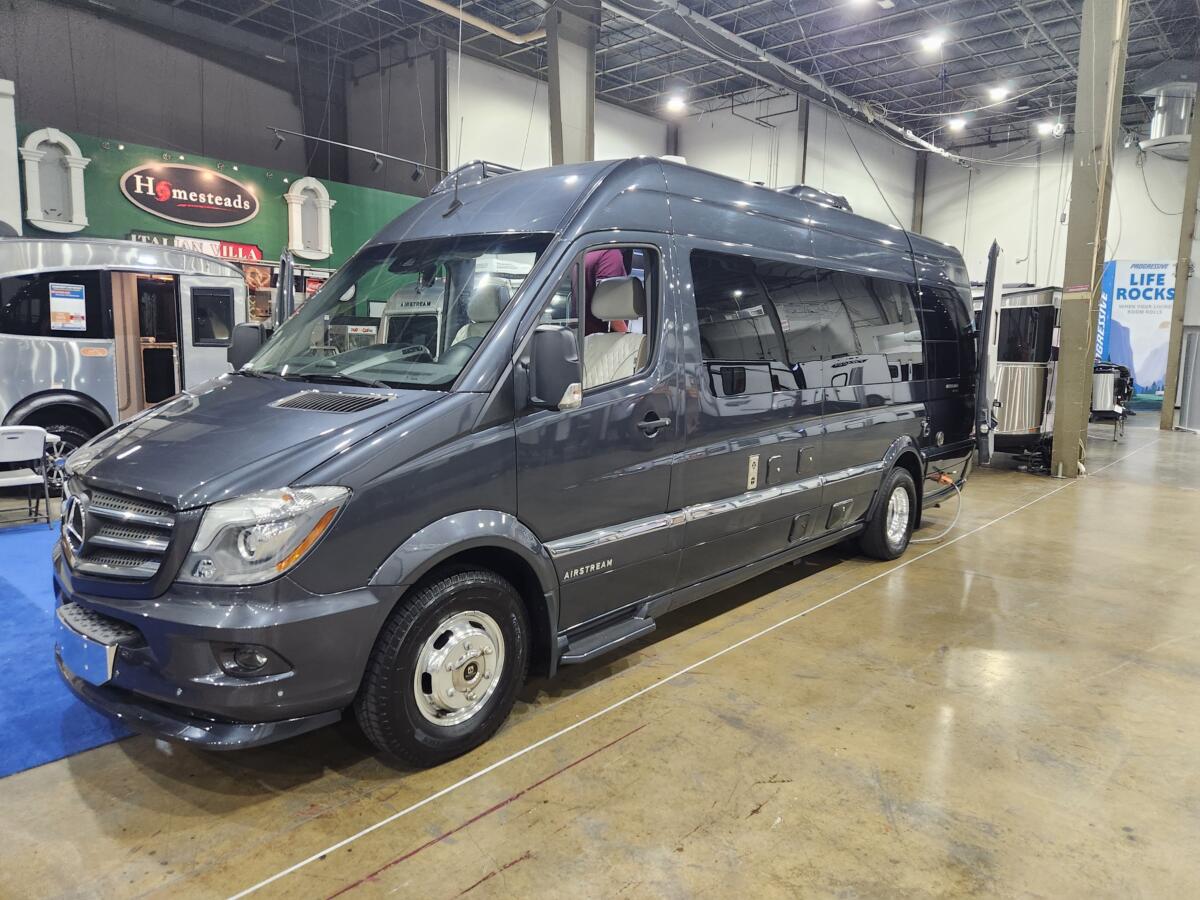
The Class B van is a shell unit that the chassis company builds not only the cab but also the sidewalls and roof, and the RV company customizes the inside. Here is an example of a B van. Even though it is almost as big as a smaller Class C, notice no wing wall.
What is comfortable for you
The first question you need to ask yourself is “what” is comfortable for you. If you are going to use the unit mostly for camping, the B van is a real compromise in space. Most have a fold down “Murphy” bed that has to be put up and down every day and there is very little stand-up room. However, if you are going to use the rig as a second vehicle running errands and occasionally camping, the Class C is a little too big for that.
There is quite a bit of confusion in the market as companies are calling the same unit a Class C, a B van, and a B+! The Recreational Vehicle Industry Association (RVIA) developed the classifications and there is no B+. However, you will see some that claim if it has a bunk it is a Class C. If it doesn’t have a bunk but has slide rooms, it is a B+. There are even some that state anything without a bunk is a B or B+.
Once again, the wing wall indicates the chassis is a cutaway and the RV manufacturer built the box making it a Class C—whether it has a bunk or not. Here is an example of a Class C that is often referred to as a B+.

One other advantage of a Class C over a Class B van is the availability of slide rooms that give you more room in a bedroom or lounge area.
What is your budget
The next issue is your budget! I went to the Winnebago website, and the Navion starts at $217,000, with the 24T starting at $254,000! Mercedes is very proud of their chassis. So I went to RV Trader to look at what was listed for used units, and there were several 2017 units available that were in your budget. That means they are eight years old and probably have some high mileage.
Personally, I believe that Winnebago makes a quality product and has a great dealer service network. However, there are several other units that I think are worth considering. Keep in mind, even the best company can have a bad run and it really depends on how the unit was maintained. I would recommend getting an inspection and taking a good look at the chassis and engine maintenance.
The advantage of the Mercedes Sprinter is the 3.0L diesel engine is a workhorse and gets great mileage, with some even getting close to 18 mpg. I owned the 3500 Sprinter Van and it did get great mileage. However, the disadvantage was getting service from an authorized Mercedes dealer. We had to drive 120 miles just to have the oil changed, if we wanted to keep the warranty and certified vehicle status!
Also, we had issues with the check engine light and the NOx (oxides of nitrogen) sensors while on the road, and had a difficult time finding service centers that would work on it. We had a similar instance last year with an RV Travel reader from Wichita. We had to get Mercedes corporate involved and have it towed to Kansas City for a recall. You can read the article here.
Make sure you can get the RV serviced
I am not saying that I would not consider a Mercedes; but rather that I would make sure I know where to get the unit serviced. That is also why I lean towards buying from a dealer that has a good working relationship with a service center and a national network for those longer trips.
I also think that Mercedes has ironed out most of the recall issues. We found our problem was that after 100,000 miles, the exhaust chamber had gotten extremely hot so many times that the metal was actually giving off a chemical reaction. That made the NOx sensors think the exhaust was not treated.
More suggestions to consider
I would also suggest taking a look at the smaller Class C on an E350 or E450, such as the Coachmen Freelander, Winnebago Minnie Winnie, and others. Granted, it will not get 18 mpg, but you can buy a lot of gas for the difference in price. Gas is an average of $1 less per gallon than diesel throughout the country.
I have personally used the 24’ Coachmen Freelander many times. I love the floorplan with the corner bed that also provides a good size dinette.
The Winnebago Minnie Winnie 22M actually is 24’5” and has a slide out full-size bed.
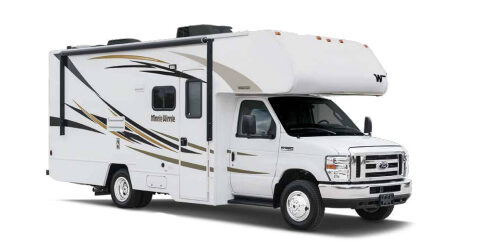
I found a 2021 Winnebago Minnie Winnie with 39,000 miles listed on RV Trader for $68,000. Also, I found a 2024 Coachmen Freelander 23FS for $88,900. It has a full slide on the driver side which allows it to have a full queen bed and a U-shaped dinette in a 25’10” unit. That might be a little longer than you are looking for.
Make sure you do your homework as some of the units are on the E350 chassis and others are on the heavier GVWR E450. I do not feel the shorter units in the 22′ range need the larger chassis, but everyone wants to go bigger. So make sure you know the weight ratings for what you can carry and tow.
However, I have found that many people shopping for RVs limit their choices to a specific length as they don’t feel they can drive anything longer. You will not be able to tell the difference in a unit 2-3 feet longer unless you have a storage facility that will only accommodate a 24’ unit.
Model numbers don’t necessarily refer to length of RV
This also brings up a good point in the marketing of RVs: Do not trust the model number to be the actual length of the unit! The Coachmen 23FS would make you think it is only 23’ long, when it is actually almost 26’. I’m not picking on Coachmen, as they all do it, e.g., the Minnie Winnie 22M is actually 24’5”. So look at the specifications to see the actual length. I guess they can state the 23FS is only 23’36” long? 😉
So, you have several choices. I would recommend renting a few units to determine the space you need and how comfortable you feel driving it. There are several options such as RV Share, Outdoorsy, and even dealers. Spending long weekends in several floorplans will help you decide what is comfortable and what compromises you are willing to make.
You might also enjoy this from Dave
What advice would you give to someone buying a used RV?
Dear Dave,
We are about to purchase a Starcraft Launch Ultra Lite travel trailer to go full-time. We’re in our 60s. We need alllllll the information on what to know before buying this used unit, please. What are the most important things to check out in order to buy this RV? Thank you! —Lynn
Dave Solberg is a leading expert in the RV industry and the author of the “RV Handbook.”
Read more from Dave here.
HAVE A QUESTION FOR DAVE?
Send your inquiries to him using the form below.
##RVDT2546

If I were looking, I’d lean towards the Ford Transit chassis. Mostly Bs out there, but there are some C’s being built on that chassis now. AWD and a gasoline engine. No diesel worries. Far more service options. Probably still above the OPs price range as they’re a fairly recent addition to the RV space. Still, a very worthy consideration though.
Some excellent advice, Dave. I think that “standard” class C’s on the Ford chassis carry a LOT more value than the hyper-expensive van chassis units, for camping. For 1/2 the MSRP of a van chassis unit, one can have a nice, usable class C.
For the amount of travel that you want to do, renting may be a cheaper option in the long run, plus you won’t have to worry about any maintenance. Dave suggested several options for renting. On our trip out west this year, we met a couple from Sweden that had rented a Class C from RVAmerica (I think) and were on their way to the Grand Canyon.
Agree with Chuck; renting might be more economical for you in the long run. Which raises the question “how long is your long run?” My wife and I are in our early 80’s and started rv’ing in our 70’s. We chose a Winnebago View (sister of the Navion) and in the 9 yrs we have had it, have put on nearly 80,000 mi and over 2-5 mo. a year. It has been a great vehicle for us, and as you talk to other View/Navion owners while on the road, you will find most have been very pleased with their vehicles, and like us, have no intention to trade in. Two considerations not mentioned: 1-try a variety of vehicles for your first renting experience; see what you like/dislike about each. Cont.
cont.
2. Who will be driving? The easier it is to drive, probably the happier your wife will be to drive it, and both of you need to know how to drive it for a lot of reasons you can easily find in other online discussions. We each drive it, probably split 60/40% and my wife is comfortable driving it; it is an easy vehicle to drive.
Thank you, Dave! Great answer! Happy new year and safe travels! 🙂