

RVtravel.com recently asked our readers to respond to a poll question: What keeps you from boondocking? A surprising number of readers lamented the fact that boondocking in the Eastern U.S. is next to impossible due to the lack of available sites.
Makes sense
On an RVing blog that I follow, a gal named Jan provided her explanation for the disparity of boondocking sites between the Eastern and Western United States. She said, “New England has lots of people and little open public space. Some large landowners have closed access because of liability concerns. People with ATVs and off-road bikes have abused the land and ruined the boondocking opportunity for everyone.”
Well, you can’t really blame landowners. I imagine a liability claim would factor into my decision to allow boondockers, too.
Go West, young man!
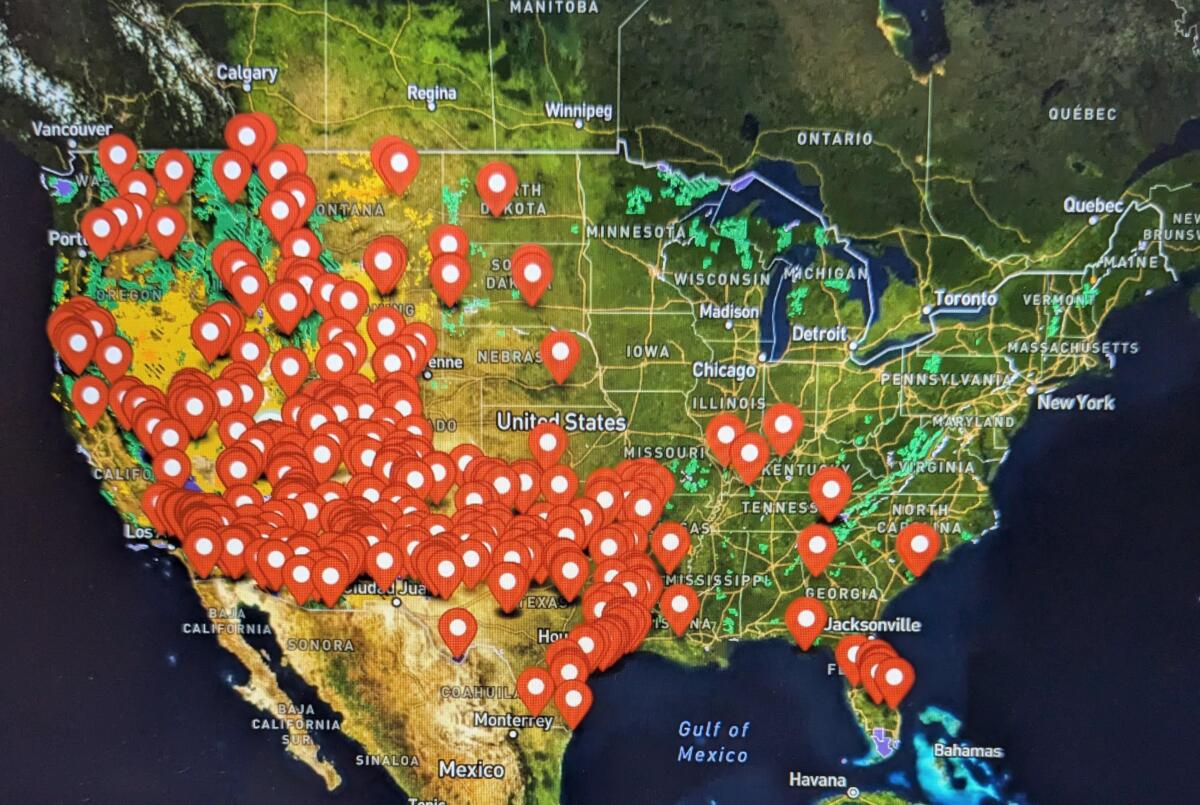
A quick check of a boondocking map seemed to indicate that folks east of the Mississippi lacked boondocking spots. The northeastern states seem to not have any sites at all!
So, what do you do if you live in, say, New Hampshire, or any of the other eastern states and want to boondock? Do you have to drive across the country to find places off-grid where you can boondock with your RV? Read on.
Options
Another blogger reported, “There are boondocking spots in the northeast. No one wants to share the locations for fear of others taking their favorite spots or worse, ruining the sites for the rest of us.”
A little research will reveal some of these few-and-far-between sites where you can boondock or (more likely) find dispersed camping spots. Just keep a few things in mind.
- Research regulations beforehand. Regulations vary by location. Some areas require permits, even for dispersed camping. These permits are often free but help rangers manage the land responsibly.
- Check road and weather conditions. Roads to dispersed sites can be rugged and weather-dependent. High-clearance or four-wheel-drive vehicles may be necessary. As many poll responders noted, unimproved roads may cause damage to your RV unless it’s equipped for off-road travel.
- Use technology but verify information. Apps and websites like FreeCampsites.net and AllStays provide reviews and tips for accessing dispersed camping areas. However, rules and conditions can change, so always verify with local ranger stations.
- Leave no trace. Practice “Leave No Trace” principles by packing out all trash, minimizing campfire impact, and respecting wildlife to preserve the environment for future campers.
Northeast boondocking/dispersed camping spots
Vermont
The Green Mountain National Forest has several dispersed camping areas, particularly in the southwestern part of the state. Contact local ranger stations for up-to-date information.
New Hampshire
In the northern reaches of the White Mountain National Forest, you can find dispersed sites near Randolph, Gorham, and Kilkenny, as well as across the border into Maine.
Maine
The northwestern region of the state features tracts of public forest offering dispersed camping opportunities.
New York
Adirondack Park and the Finger Lakes National Forest have designated areas for free camping. These locations provide beautiful landscapes and access to hiking trails.
Pennsylvania
State forests throughout Pennsylvania are excellent for dispersed camping. Permits are often required but are free. Stop by ranger offices to learn about the best spots and receive maps.
Boondocking/dispersed camping in the Mid-Atlantic and Southeast
Virginia
Both the George Washington and Jefferson National Forests offer dispersed camping. Nearby Shenandoah National Park provides opportunities for exploration before retreating to quieter forested campsites. Some wildlife management areas allow camping with a permit for a small fee.
North Carolina
Western North Carolina’s Pisgah and Nantahala National Forests have designated primitive camping areas. Coastal regions like Uwharrie and Croatan National Forests also allow dispersed camping, though steep or rough roads may require a sturdy vehicle.
Tennessee
The Cherokee National Forest near the North Carolina border and Great Smoky Mountains National Park is ideal for dispersed camping with serene mountain views.
Georgia
The Chattahoochee-Oconee National Forest in northern Georgia offers picturesque sites close to the Appalachian foothills. Nearby Chattanooga, TN, provides an urban escape when needed.
Florida
The Apalachicola and Ocala National Forests are excellent boondocking destinations. These forests are conveniently located near major cities like Tallahassee and Orlando.
Camper’s insight
Melissa Goldman, a seasoned camper van traveler, shares: “I’ve traveled extensively along the East Coast and haven’t had trouble finding dispersed campsites. North Carolina, Tennessee, West Virginia, New York, and Maine are especially friendly to free camping.”
Boondocking in the Eastern U.S. offers a perfect blend of adventure and solitude. With proper planning and respect for nature, you can enjoy these beautiful public lands while keeping your camping costs minimal.
Have you boondocked in the Eastern U.S.? Tell us about it in the comments below.
RELATED
- What’s stopping you from boondocking?
- How to start boondocking; everything you need to know
- Best boondocking RV coffee makers—no hookups required
- The two types of RVing boondockers: those who like solitude and those who don’t
- Campsite security: Protect yourself and your gear even when boondocking
- Here’s how to make boondocking fun for the partner who hates it
##RVT1193

Adirondack Park rules:
I found one website listing 20 free camping areas in the Adirondacks. Two of those mentioned RV’s (maximum 15 ft). The remaining 18 are listed as “car camping” for which you must follow the first rule when setting up your tent.
We have found “hunting camps” are excellent places when camping in the off season, when there are no hunters. They are usually large enough for our fifth wheel
We had a nice discussion with a park ranger in the mountains of PA. He gave us maps of so many places to dry camp. But warned that access could be dicey with an RV. Walk in before you drive. And the maps included areas he marked of special interest for short hikes with the dogs. He also told us which areas were “active” for bear so we could avoid them.
Normally in Pa the black bears won’t bother you. Just keep your dog away from them. I have property that bears come thru and never had a problem. The only time I don’t see bears is when I’m hunting them.
Thank you for the review, Gail! Many more dispersed camping opportunities in the southeast than I imagined. We have traveled to Cherokee National Forest, but stayed in one of the campgrounds there. Have tailgated sans utilities, but never boondocked. Our house is surrounded by forest and fields with numerous wild animals and birds. Our travels haven’t the urgency “to be in nature” via boondocking that others may have. Have a great day and safe travels!
Yep. Don’t look for “parks”. Instead look for State and National Forest campgrounds. They offer no or minimal fee camping. Some even have amenities like an outhouse and/or a muscle-powered well pump.
Many of the Eastern States mentioned by Gail, such as the Finger Lakes Nat’l Forest which I have been to, are walk-in tent sites, not RV accessible wide open ranges found out West on BLM lands.
I’ve heard so many rvers say there are no boondocking sites in Florida. Not true. There are the national forests mentioned here, but Florida also has five Water Management Districts spread throughout the state that offer free boondocking. You just need to get a free permit online. Some have designated sites & others have just a large open field. There are also numerous other boondocking sites along certain rivers, in preserves, etc.. Freecampsites.net lists many places.
After reading the article, it makes us glad that we live in the northwest part of our country as we can find lots of BLM and USFS dispersed camping in beautiful areas. We can also understand why so many rvers head west in their travels as we would do the same if we weren’t already out here.
Being a life long NH resident, I can tell you can make the trip north 100 times and not get a spot at the places listed. You have to be driving by as someone is pulling out. You can do 2 week stays and switch spots after that. There are a group of locals that basically live there all summer, They will coordinate moving day over and over. Maine is much easier but you have to travel old logging roads and hope that they are passable. Out west is a dream for us.
Gail,
I was always told that there was no boondocking east of the Mississippi. Once I researched it, like you did, I found there are many opportunities. Not as many as out west, but still plenty of options. I presented a seminar on how to find boondocking sites on public land at the Hershey RV Show last fall and the seminar room was standing room only. My wife and I will be presenting the same seminar at the upcoming Knoxville RV Show and Birmingham RV Show next month (Feb 2025). Any readers that want to learn how to know which public lands offer boondocking and how to find the exact location of campsites on these lands, in advance of arriving should plan to attend.
Cool! Thanks, Dave. I have you and Cheri on my list of upcoming seminars (along with Dave Solberg and Neal Davis) so that we get them listed in the appropriate newsletters (in addition to our big list of RV Shows). Have a good night (and stay warm). 😀 –Diane
This may be true, but it is a bit deceiving. These “boondocking sites” are either for tent campers, truck campers, or vans. They generally will not accommodate RVs (like a 30ft 5th wheel) whereas out west RVs and 5th wheels have plenty of options to choose from. There are a few boondocking spots for RVs on the East Coast, but very limited.