

Has your RV’s air conditioner been running so much you’re starting to wonder if it’s earning overtime?
If the summer heat has you dreaming about cool mountain mornings, windows-open sleeping, and actually enjoying an afternoon hike without feeling like you’re walking through an oven, it might be time to head somewhere a little… higher, farther north, or closer to the water.
Not every campground in America is roasting right now. There are still plenty of places where daytime temperatures stay in the 60s or 70s, evenings call for a sweatshirt, and you can sit around a campfire without sweating before you even light it. (If campfires are allowed, of course. There are many fire bans in the West.)
10 of our favorite places to escape the heat
1. Yellowstone National Park (Wyoming, Montana, Idaho)
- Typical summer highs: 68–75°F
Thanks to the park’s elevation—most of the park sits between 6,000 and 8,000 feet—it stays surprisingly comfortable throughout the summer.
While many parts of the country are flirting with (or stuck in) triple digits, Yellowstone mornings often begin in the 40s, and sometimes even the 30s. Just don’t forget a jacket. You’ll probably need one before breakfast.
2. West Yellowstone, Montana
- Typical summer highs: 70–74°F
Can’t find a campsite inside Yellowstone? Don’t panic. West Yellowstone is one of the best gateway towns in the country, with plenty of RV parks, restaurants, ice cream shops, and easy access to the park. You’ll enjoy the same cool mountain air without having to book your campsite six months ago. Well, if you’re lucky…
3. North Cascades National Park, Washington
- Typical summer highs: 75–80°F
Sometimes called “America’s Alps,” the North Cascades remains one of the least-visited national parks in the country—which is hard to believe once you see it.
Jagged mountains, turquoise lakes, waterfalls, glaciers, and forests make it feel like you’ve wandered into a postcard. Best of all? It rarely gets oppressively hot.
If you like your hikes with fewer crowds and more scenery, this place deserves a spot on your bucket list.
4. Olympic National Park, Washington
- Typical summer highs: 65–75°F
Olympic National Park gives you options. Want to camp beside the Pacific Ocean? You can. Prefer towering evergreens and moss-covered rainforests? It’s got those, too. Looking for cooler mountain temperatures? Yep, those are here, as well.
Thanks to the nearby ocean, temperatures stay comfortable even when much of the Pacific Northwest is warming up.
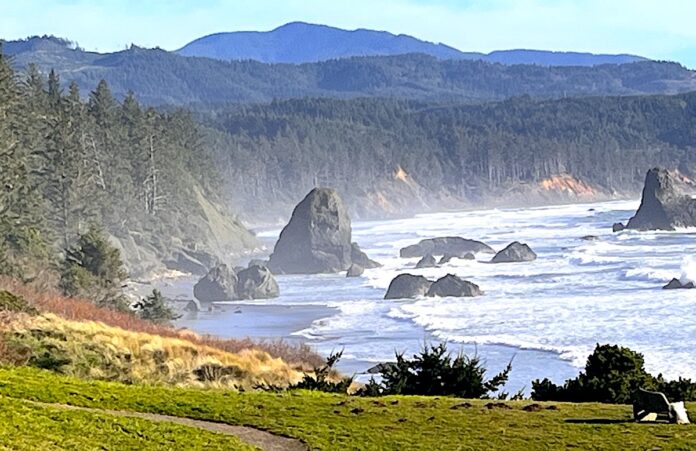
5. The Oregon Coast
- Typical summer highs: 60–68°F
If you’re one of those people who says, “I don’t mind wearing a hoodie in July,” the Oregon Coast was practically made for you.
The Pacific Ocean works like a giant natural air conditioner. Inland cities may be sweating through 95-degree afternoons while coastal campgrounds are enjoying cool breezes, ocean views, and temperatures in the 60s.
Don’t be surprised if you need a sweatshirt for your evening beach walk.
6. Acadia National Park, Maine
- Typical summer highs: 70–75°F
Acadia proves you don’t have to head west to beat the heat.
Ocean breezes, rocky coastlines, scenic drives, and beautiful hiking trails combine to create one of the most comfortable summer camping destinations in the Northeast.
Sunrise over Cadillac Mountain? Worth the early alarm. Just, again, pack a sweatshirt.
7. Michigan’s Upper Peninsula
- Typical summer highs: 70–76°F
The Upper Peninsula doesn’t always get the attention it deserves, but maybe that’s part of its charm.
Surrounded by the Great Lakes, the U.P. stays noticeably cooler than much of the Midwest. Add in waterfalls, forests, rugged shorelines, and excellent campgrounds, and you’ve got a recipe for a fantastic summer getaway.
Be sure to check out Pictured Rocks National Lakeshore, Tahquamenon Falls State Park, or the Porcupine Mountains if you’ve never been.
8. Colorado’s high country
Typical summer highs:
- Estes Park: 72–77°F
- Grand Lake: 70–75°F
- Leadville: 68–73°F
Elevation is your friend for cooler temps. Once you climb above about 8,000 feet, summer takes on a completely different personality. Warm afternoons are followed by cool evenings.
Just remember that mountain weather likes to keep you guessing. Packing a rain jacket is never a bad idea.
9. Minnesota’s North Shore
- Typical summer highs: 72–78°F
If you’ve never camped along Lake Superior, you’re in for a treat.
Communities like Grand Marais and Two Harbors enjoy cool lake breezes that help keep temperatures comfortable all summer long. Between waterfalls, scenic overlooks, hiking trails, and rocky shorelines, it’s easy to see why so many campers return year after year.
10. Vermont’s Green Mountains
- Typical summer highs: 72–78°F
When much of the Northeast is sticky and humid, Vermont’s mountains offer a refreshing change of pace.
Shaded campgrounds, scenic backroads, covered bridges, and cool evenings make it an easy place to slow down and enjoy summer without constantly looking for the nearest air conditioner.
Honorable mentions
These destinations also tend to stay pleasantly cool during the summer:
- Grand Teton National Park, Wyoming
- Black Hills, South Dakota
- White Mountains, New Hampshire
- Mount Hood National Forest, Oregon
- Idaho’s Sawtooth Mountains
- Allegheny National Forest, Pennsylvania
- Custer State Park, South Dakota
Before you hitch up…
A couple of things to keep in mind before pointing the RV toward cooler weather.
First, Mother Nature doesn’t always stick to the script. Even these destinations can experience an occasional heat wave.
Second, you’re probably not the only one looking for relief. Campgrounds in these cooler areas often fill quickly during July and August, so making reservations ahead of time is a smart move.
Finally, don’t underestimate what a few thousand feet of elevation—or a giant lake or ocean—can do. It’s not unusual to find places that are 20 or 25 degrees cooler than cities just a few hours away.
Your air conditioner (and your electric bill) will thank you.
Now it’s your turn
Where do you head when the temperatures climb? Do you have a favorite campground, mountain town, lakeshore, or hidden gem that always seems to stay cool? Tell us in the comments (if you’re willing to share, of course).
RELATED
- Poll: Would you rather… Have a cool, shady campsite with no hookups, or a hot, sunny campsite with full hookups?
- How to choose a cool campsite in the hot summer
- Your tow vehicle may be hotter than your RV. Here’s how to cool it faster
RVT1269
