


Dear Dave,
Can Flex Seal Liquid Rubber or Flex Caulk be used to seal cracks or small holes on a Winnebago roof without damaging it? —Dan, 2021 Winnebago Voyage
Dear Dan,
I am not a big fan of Flex Seal in either the liquid, caulk, or tape form. I have used all three on houses and RVs and have not had much luck with longevity. The spray will disintegrate foam insulation immediately, and the tape eventually hardens and cracks.
However, just like almost any product on the market, you will find some that have applied it and 10 years later it is still doing well. Most of that depends on the application as well as the environmental circumstances.
It’s the same with EternaBond. Many have used it and years later it is holding strong. However, Dustin Simpson at California RV Specialists has written articles about the disasters he has encountered with the product in the California heat.
The type of roof material makes a difference
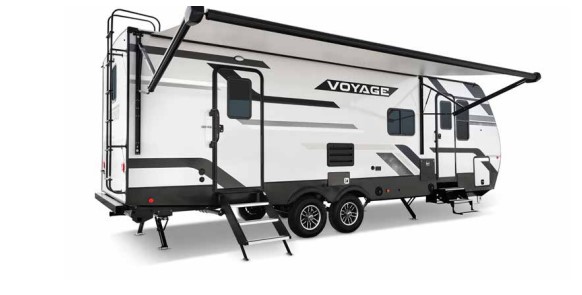
You did not provide the model of Voyage. According to the Winnebago website, they had both travel trailers and 5th wheel models with that brand name. The Voyage trailer lists brochures for 2020 and then a gap until 2023. The 2020 brochure is a 2-page sheet with very little information. The 2023 brochure has all the specifications and lists a TPO fully walkable roof.
The Voyage 5th wheel only lists a 2020 model. It is also just a 2-page information sheet with no reference to the roof material.
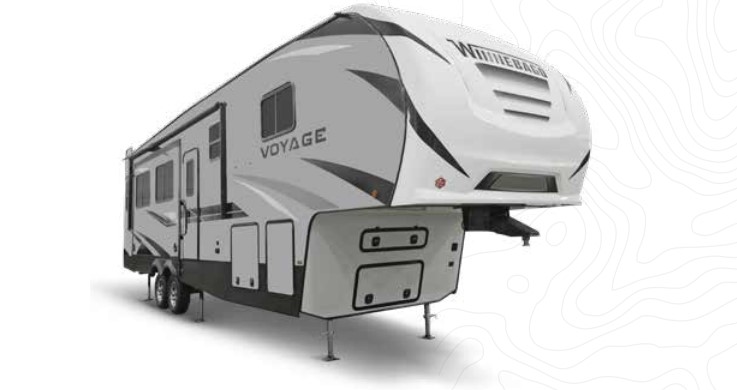
However, if you search RV Trader you will find both 5th wheel and bumper pull models all claiming to be 2021. So I would suspect the COVID years had something to do with not putting out much information.
Necessary to identify roof material
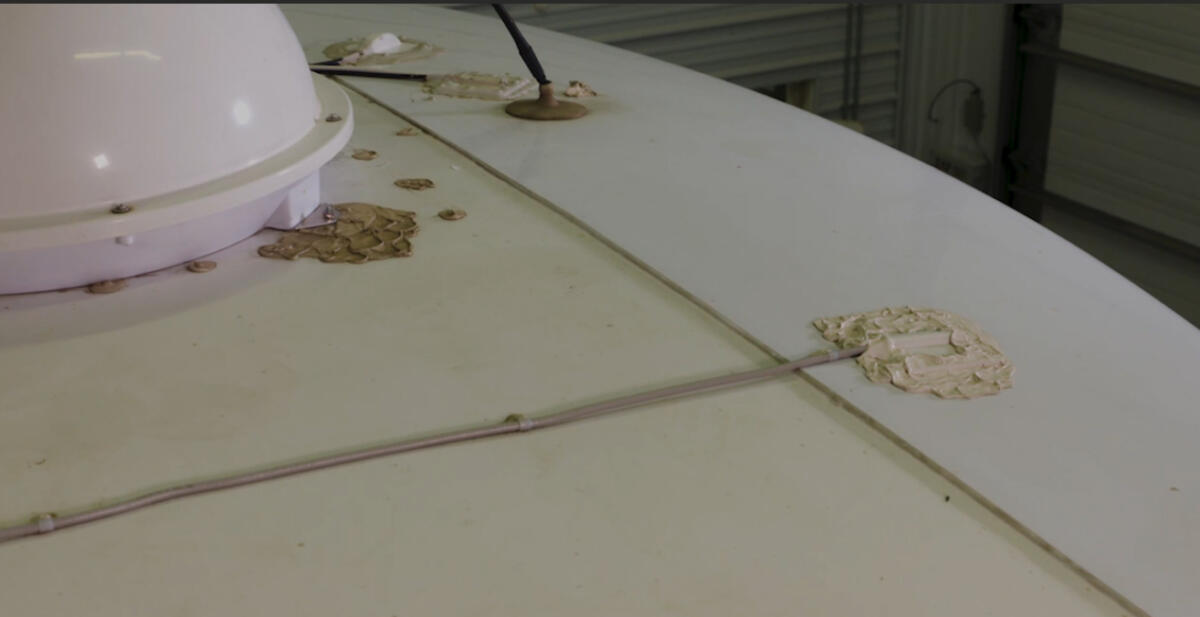
The reason I mention this is because it is important to identify the type of roof material to get the correct product to seal it. I assume it is TPO. You can verify this by removing a roof vent shroud from the inside and looking at the backing of the material. If it is black, it’s EPDM. If it’s the same color as the top, it is most likely TPO. There are other materials such as Alpha and the new PVC type. However, I do not believe they were used on trailers back in 2021.
There are a lot of good products on the market; however, there are some not so good, as well. I believe Russ De Maris has used the Henry’s product with great success and longevity, and Dustin Simpson uses Kool Seal Tundra.
RVRoofMagic
I personally am a fan of RVRoofMagic, having applied it twice. I was impressed with how easy it is to apply and the finished product. It is a solvent-based product and has a 10-year warranty. I first was introduced to the product by a reader asking my opinion on it and contacted the company to research. We had some of the product shipped to Cheri Sicard, one of the RVtravel.com writers, and she did an application on her trailer.
Last year at the North Carolina RV Dealers Raleigh Show, I talked a man who had purchased a gallon of RVRoofMagic the year before to touch up his RV’s seams, and he loved it. His roof material was in good shape, and he just needed to apply something on the edges. The dealer at the show selling parts recommended RVRoofMagic instead of scratching off the old sealant and reapplying.
I don’t know if I would recommend this, as there are two considerations when it comes to roof treatment: the roof material and the seams. I think it is best to visually inspect the sealant that has been applied to the front and back cap as well as the sides. Remove anything that looks cracked or compromised and reapply the recommended sealant.
RVRoofMagic has a butyl sealant that works well with the finished product. After you verify the seams are good, you can apply the RVRoofMagic product over that, as it is UV-protected and will help with the longevity of the sealant.
RELATED
You might enjoy this from Dave
I clean my RV roof regularly but now it has black spots. Roof vendor wants $7,500!
Dear Dave,
We have a 2019 Grand Design 337RLS which we’ve been living in full-time since October 2020. This is our second straight winter in NE Pennsylvania, so the “four season” RV structure has definitely been put to the test. I’ve been told by Grand Design that the roof is a TPO Alpha Systems material. …
Read the rest of Jeff’s question and Dave’s answer.
Dave Solberg is a leading expert in the RV industry and the author of the “RV Handbook.”
Read more from Dave here.
HAVE A QUESTION FOR DAVE?
Send your inquiries to him using the form below.
##RVDT2469

Thank you, Dave! 🙂 Very helpful and informative discussion! Thanks again, have a great day, safe travels, and safe stays! 🙂
Whatever the material you use, I will suggest doing an edge treatment. That is where delamination starts. For Eternabond patches on a rubber roof (there are IMO few other places where I would use Eternabond), I use self or non-leveling lap sealant as appropriate to seal all the patch edges. I have used Gorilla duct tape for bottom patches, but always apply a thin seal of silicon to cover the edges. These patches have held for years because delamination of the patch nearly always starts at the material edge.
I’ve tried a few Flex-Seal products, and each has been disappointing.
Flex seal must be stopped! The industry should have a media blitz stopping, mostly elderly people unfortunately, from ruining their campers with it. It cost them a sack of $$ when it comes time to fix it.
I used on my unit. It didn’t stay flexible or seal for long.