

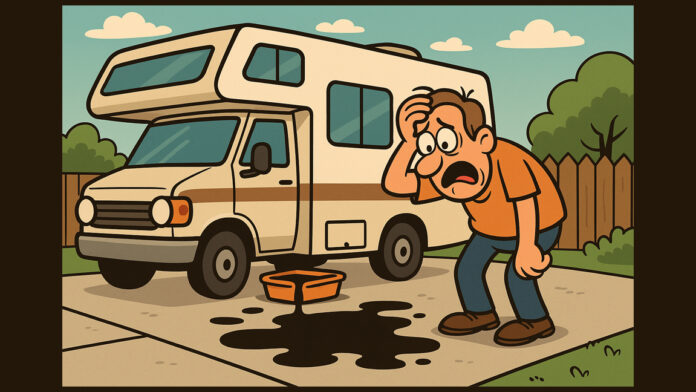
A lot of RVers are DIYers, do-it-yourselfers. Face it, with the build quality and reliability of today’s RVs, you have to defend yourself somehow! Part of the DIY process may include an oil change for the motorhome or tow vehicle. But what happens when, yikes!, oil spills on your concrete driveway or garage floor? Here are some winning tips for oil-on-concrete cleanup.
Oil on concrete—a lot like pet stains
Oil stains and “pet stains” have a lot in common. If you have a Fido or a Fluffy, you know the drill. Both tend to soak into porous surfaces, be it carpet or concrete. They both leave behind stubborn residues that won’t wash out with water alone. And time is of the essence! The longer these interlopers remain, the deeper they penetrate and the more permanent the damage can become.
Motor oil, by its nature, is made to resist breakdown and repel water. The latter quality is a curse when concrete comes into play—oil sticks hard and seeps deep, making it harder to get out.
So what’s to be done?
First, don’t muck about—Get to that oil-on-concrete spill quickly. If you have a Fluffy, you probably have your first line of defense at hand: kitty litter! Spread the feline waste absorber on the oil spill, and put it on thick. Grab a broom and agitate the litter into the oil. Then let the kitty litter sit there for several hours, even longer, before sweeping it up and tossing it.
No cats in the household? Trot into the kitchen double-time and grab the liquid dish soap and the baking soda. Dump the baking soda on the stain and let it sit for a half hour or so. Next, dump on some dish soap and scrub the daylights out of the mess with a stiff-bristled nylon brush. This trick is best for smaller spills, and even on spots that you may have missed from some time back.
Bigger guns from the chem lab
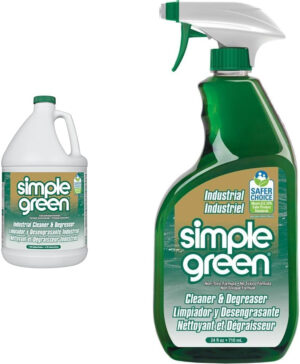 Need bigger guns? “Better living through chemistry,” the 1960s advertisements used to read. Trisodium phosphate (TSP) is often used on old walls before painting or papering. TSP can make your oil stains go away. But read this disclaimer: TSP is very strong and slightly caustic, so it should be used with gloves and rinsed thoroughly. Many regions restrict its use because it contributes to water pollution, so phosphate-free substitutes are available. A more eco-friendly product might serve. Simple Green Industrial Cleaner & Degreaser touts itself as being environmentally safer, and also goes after oil.
Or do your best to keep oil in its place
If you do oil changes in your garage, consider sealing the concrete floor with epoxy. There are a number of brands that offer roll-on protection that forms an oil-resistant floor coating. Nevertheless, even if you have an epoxy armor on your floor, getting the oil up quickly can save a lot of hassle, including cartoon-like falls.
 Stopping spills before they become an issue is really the best. Make sure your oil drain pan is big—both in capacity and in surface area. We put down cardboard before doing an oil change because, well, stuff happens.
When doing the change, double-check your oil filter and oil pan drain plug for security after the job is “completed.”
Stubborn oil stains don’t have to be permanent
Ultimately, oil stains are a nuisance best kept from happening in the first place—but when they do, fast action and the right tools can make all the difference. Whether you reach for kitty litter, dish soap, or something stronger, it’s reassuring to know that even stubborn oil spots don’t have to be permanent.
A little preparation, like using a bigger drain pan, laying down cardboard, or sealing your floor, can go a long way toward avoiding messes entirely. In the end, the same DIY spirit that drives you to change your own oil can also help you outwit oil on concrete cleanups.
MORE STORIES YOU MIGHT LIKE:
- Cadie Stubborn Stain Remover laundry stick: Rub on and stains are gone!
- Tips for removing stains and odors from plastic food storage containers
- How to get rid of rust spots on a stainless steel sink
RVT1213

Kitty litter is a great first step in cleaning up oil spills. I have used a number of other cleaners over the years including Simple Green and Awesome. But the one that outshines all the rest to by far is Purple Power. Spray it on liberally, let it sit a while, and then rinse it all away. Every time I use it I can’t believe it does such a great job of cleaning the stain!
If you’re gonna chance an oil spill get some Oil Dry or kitty litter ready before you start. Then pour enough on the spill to cover it and start doing the Oil Dry Shuffle. Grind the material into the spill and watch the mess disappear. Sweep it up and enjoy the rest of the day. I also have it ready when one nephew visits. No matter what he is driving it leaks.
After working in many diesel shops years ago I found the easiest way is to brush some used parts washer solvent on the stain and use floor dry to soak it up…also brake cleaner works well.
A rancher I worked for used kitty litter on a fresh oil or grease spill and after the kitty litter had soaked up the spill and had been swept up, he spread a thin layer of dry Portland cement (the kind that comes in bags) on the spill. Then days later swept up the cement during a shop clean up and the stains disappeared completely
Thank you for the information, Russ and Tina! An alternate to kitty litter that sometimes might be cheaper is Oil Dry (https://www.walmart.com/ip/994603204?sid=a6aaa5fc-7cc1-4473-a008-0926d3eca6d3). I used this a few times after changing the oil in our cars. It is effective. But, as you noted, the best remedy is to avoid the problem entirely. Have a great week and safe travels!
As I’ve gotten older, and own the property today, large sheets of cardboard and news paper are my first line of defense. Also keep old wraps and either brake clean or acetone to immediately clean up concrete. Have also begun using 20” x 30” pet pads in case of wind blowing the last drops from the drain plug and filter swap.
After the 1989 Alaska oil spill, animal rescue groups experimented and eventually settled on Dawn Dish Soap as it could save 95% of animals coated in crude oil. And of course its safe for skin contact.
https://www.npr.org/2010/06/22/127999735/why-dawn-is-the-bird-cleaner-of-choice-in-oil-spills