

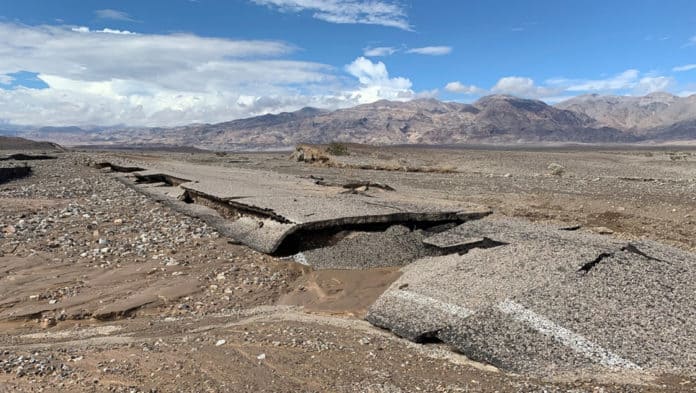
The hottest place on earth and driest place in North America—that’s Death Valley. The world record highest air temperature of 134° F (57° C) was recorded at Furnace Creek on July 10, 1913. But Death Valley is setting some other weather records, and they aren’t exactly welcome. Flooding in the popular California national park has turned it on its ear, making travel through the park nearly impossible.
“Unprecedented amounts of rainfall”
August 5 marked the start of Death Valley’s deluge. What the Park Service initially described as “unprecedented amounts of rainfall” turned out to be a park record-setter. Some 1.7 inches of rain crashed down on the park in one day—three-fourths of Death Valley’s average annual rainfall.
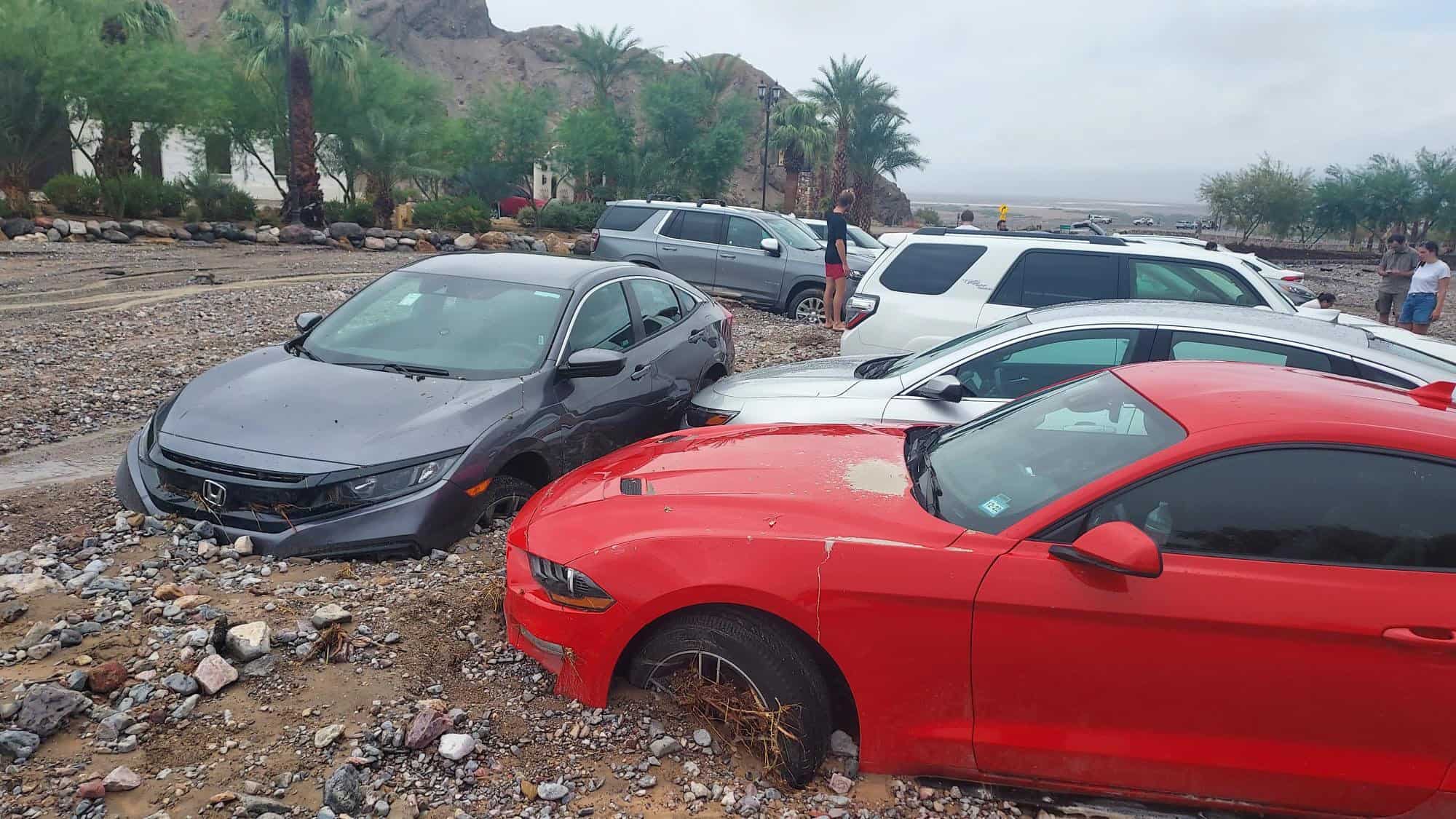 The results were catastrophic. All roads in and out of the park were inundated, some completely washed away, leaving 1,000 people stuck inside the park. Guests at the Inn at Death Valley (the old Furnace Creek Inn) were no doubt startled when debris rushed into the parking lot, burying 60 cars. Flood-driven dumpsters started chain reactions, smashing into cars, then causing the cars to pile into yet others. Flood waters rushed into guest rooms and offices.
Post-Labor Day surprise
Four weeks later, access to the park had reopened, but many of the park’s interior roads were still impassible. With Death Valley staff anticipating a Labor Day weekend rush of visitors, warning notices were up. “Drivers should not assume that directions from map apps are accurate for traveling through Death Valley at this time,” was one advisory. Another: “Travelers should not drive past ‘road closed’ signs. This is especially dangerous during heat waves, such as the 120- to 124-degree temperatures forecasted for Labor Day weekend. There is no cell phone coverage in most of the Park to call for help in case of vehicle problems.”
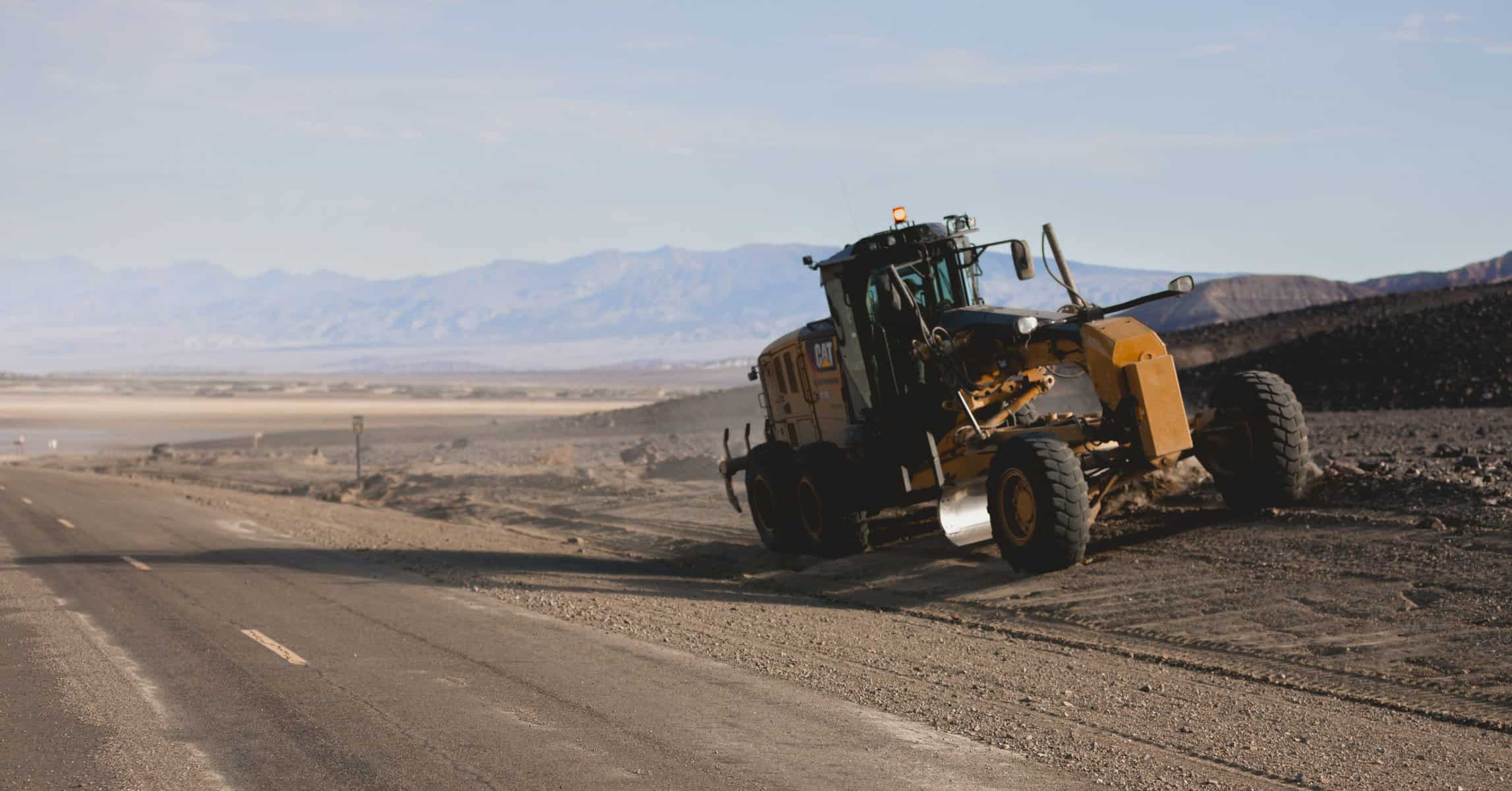
While Highway 190, Dante’s View, Badwater Road, and Artists Drive were reopened, other major roads were out of business. The federal government put out a hurried contract to get road crews to clear debris and fill in washed-out sections of roadway. The Park Service optimistically reported, “This work will allow the NPS to open Beatty Cutoff Road, North Highway, Badwater Road (from Badwater to Shoshone), and Mud Canyon Road. No timeline is available yet. These initial repairs will allow standard passenger cars to drive on the roads, which will have gravel sections where pavement is missing.”
Kate makes a visit
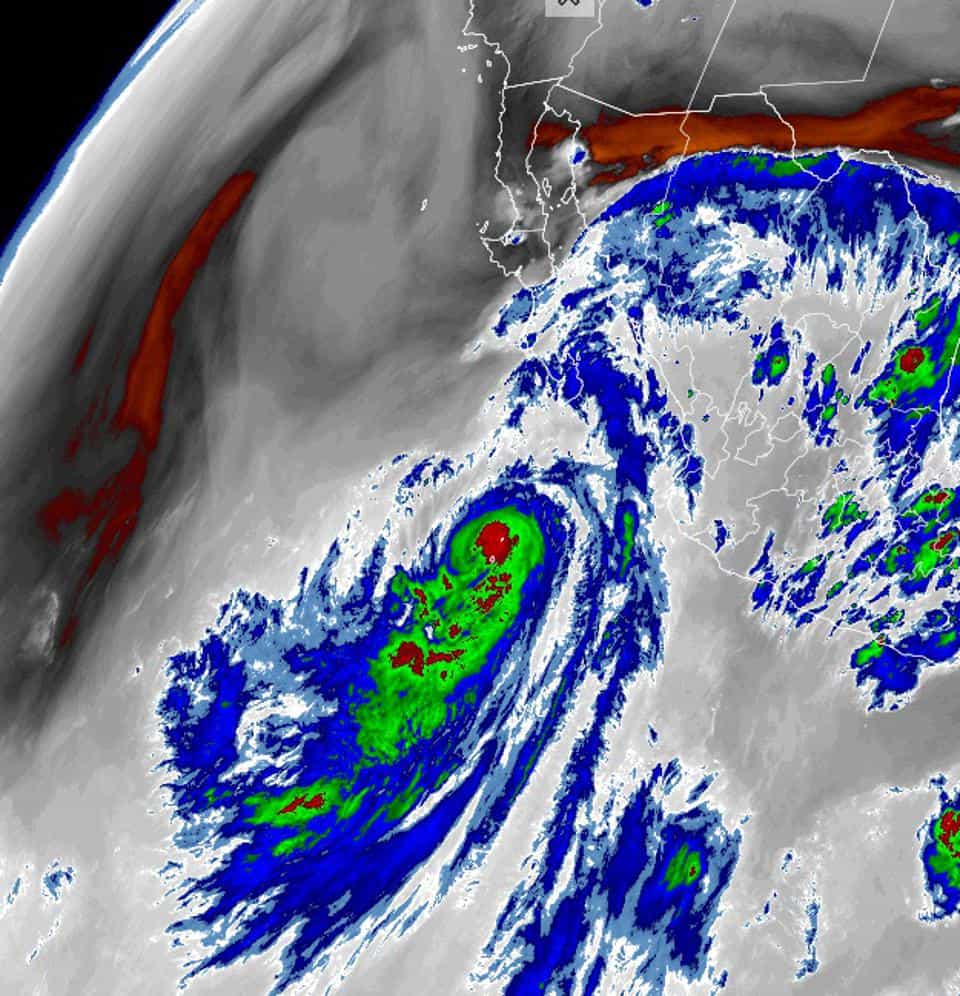 But nature has a way of dashing optimism. Barely had the Labor Day visitors cleared the park, a very unwelcome visitor arrived. Call her “Kate.” Hurricane Kate, which rampaged up the Pacific Coast, cast its tendrils inland, creating waves of water-bearing storms. On Saturday afternoon, September 10, more flooding blasted into Death Valley.
Kate’s dastardly downpour once again shut down main roads, including California Highway 190 and Badwater Road—a major park arterial. The Weather Service got the word out prior to the rain’s arrival, and rangers fanned out to warn guests of the incoming weather. Six miles of Badwater Road were not ill-named: The waters created major issues. One RVer was stuck until Sunday, when a Park Service road crew cleared debris from a single lane, allowing the rig out. Must be quite a story they have to tell.
Others must also have vivid memories. On Saturday afternoon, 40 passenger vehicles found themselves shutdown by blocking floods on Highway 190, west of Towne Pass. While rangers were attempting to respond to that situation, a tour bus ran afoul on the same highway, east of Stovepipe Wells. In an ill-fated attempt to turn around, the bus got off the pavement, and promptly got stuck in soft sand. While the wheels on the bus would no longer go round-and-round, the rest of the rig blocked both lanes of the highway, forcing motorists to squeak by on the shoulder. One RVer, however, was too big for the work-around, and ended up waiting for the bus to get popped out of its “sand trap.”
Advances dashed yet again
With rangers and road crews “coming up for air” early this week, the rains came yet again. Last Tuesday (September 13), “spotty” but heavy rains descended on Death Valley. California 190, west of the park, which had been open for a few scant hours, suddenly closed up again. The damage this time was far more serious than what had been visited earlier. As of Thursday, highway officials had no idea when it will reopen.
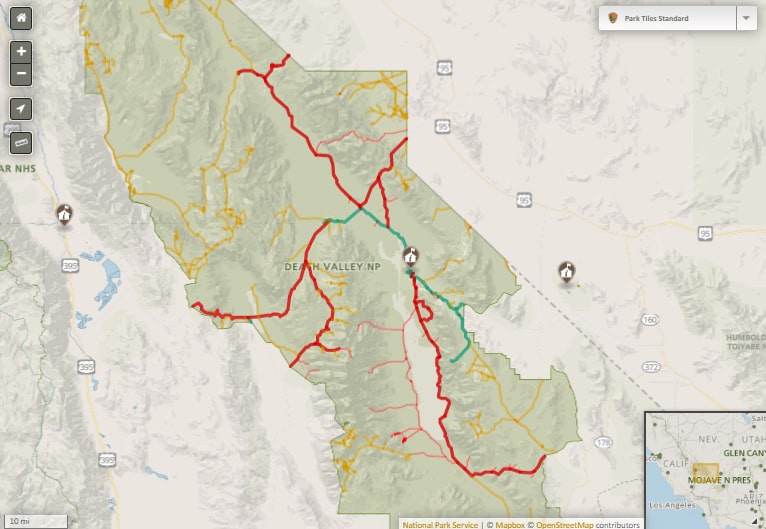
What does this all mean for visitors? Most paved roads into the Park are closed. The only route into the Park is from the east, via Death Valley Junction and California 190. Visitors can drive only to Dante’s View, Zabriskie Point, The Oasis at Death Valley, Furnace Creek Visitor Center and Campground, Harmony Borax Works, Mesquite Flat Sand Dunes, and Stovepipe Wells. Everything else is off limits to the common man.
Planning on a little camping? Great, if your campground choice is Furnace Creek. These other campgrounds are shut down or inaccessible: Mesquite Springs, Sunset, Texas Spring, and Stovepipe Wells Camprounds, Emigrant, Wildrose, Thorndike, and Mahogany Flat. If you have plans to visit in the next few months, check ahead on the park’s home page.
“An exciting few weeks”
“It’s been an exciting few weeks of rain, record-setting heat, and even a hurricane remnant!” said Superintendent Mike Reynolds. “There aren’t any more storms in the forecast. Hopefully we can make real progress getting more of the park open soon.”
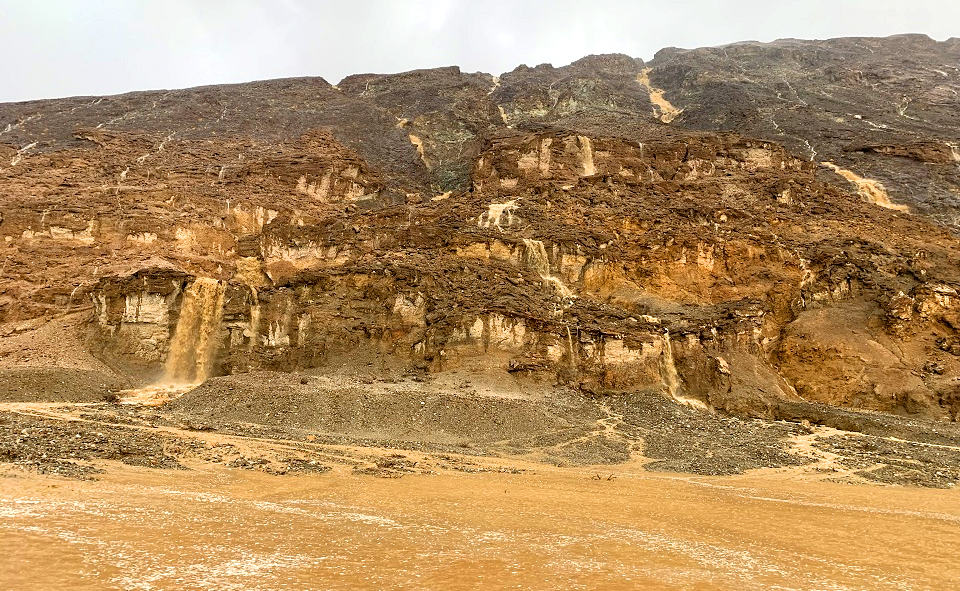 Exciting, indeed. One thing “new” out of all the devastation is something you’ve probably never seen in Death Valley. Last Saturday, a park ranger must have gotten the shock of his career. He took this photo of waterfalls in the normally parched Death Valley National Park. This image is from Badwater Road, south of Natural Bridge.
Just how long a return-to-normalcy at Death Valley will take is anyone’s guess. And probably much of it is up to nature.
##RVT1070b


All those California Climate Change activists should be happy keeping people in their cities, not trampling on nature.
Is Death Valley a mecca for the Global Warming crowd?