


Dear Dave,
You explain that the exhaust from a heater warming up the inside of an RV is contaminated with carbon monoxide. With that said, do my propane stove and propane water heater contaminate the inside? If not, why is it all right that these two can operate without exhaust and burn within the confines of an RV? Thank you. I await your reply. —James, 2021 Cruiser RV Shadow Cruiser
Dear James,
Carbon monoxide (CO) is a byproduct of the incomplete combustion (non-burning) of carbon-based fuels like gasoline, natural gas, wood, and propane—such as in an RV appliance. It is odorless and deadly and needs to be vented or exhausted outside the RV.
RV furnace
Your RV furnace has an exterior vent that draws in outside air that is circulated through the closed burner assembly and captures the CO and exhausts it outside.
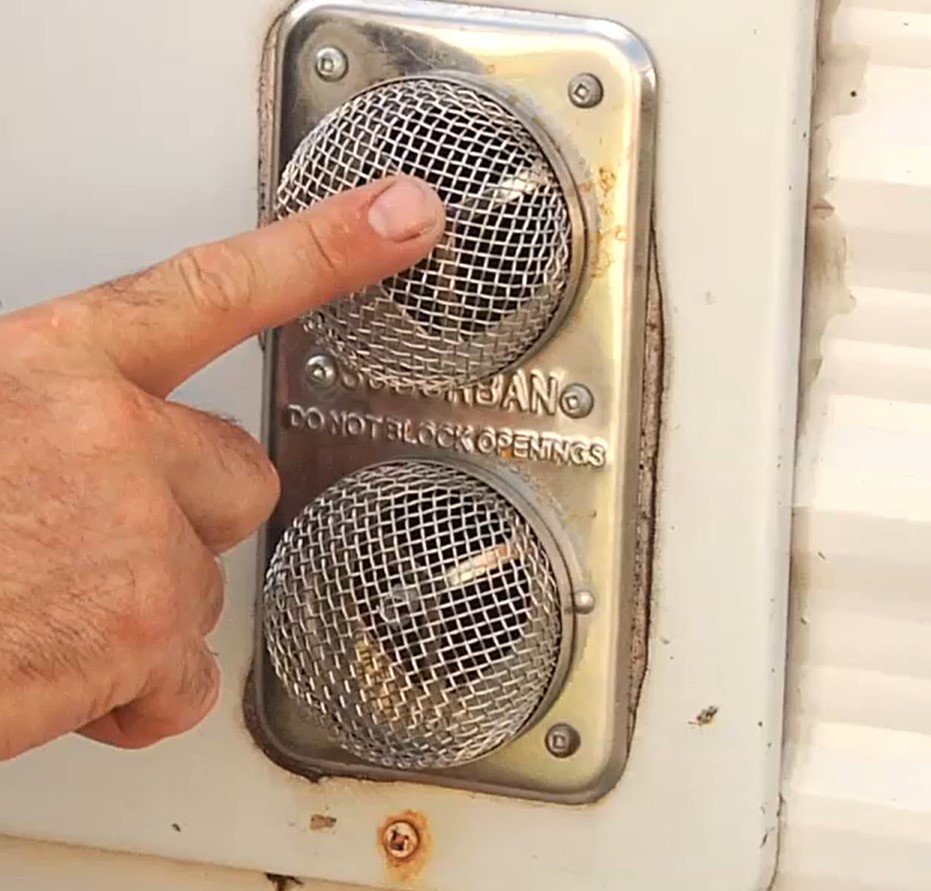
The air drawn in through the intake and exhausted out is in a closed system. It does not get into the interior of the coach—unless there is a crack in the tubing or burner assembly. This is why it is so important to have a carbon monoxide alarm in the rig.
RV water heater
Your water heater is designed with a similar air intake and exterior exhaust. It is also a closed system.
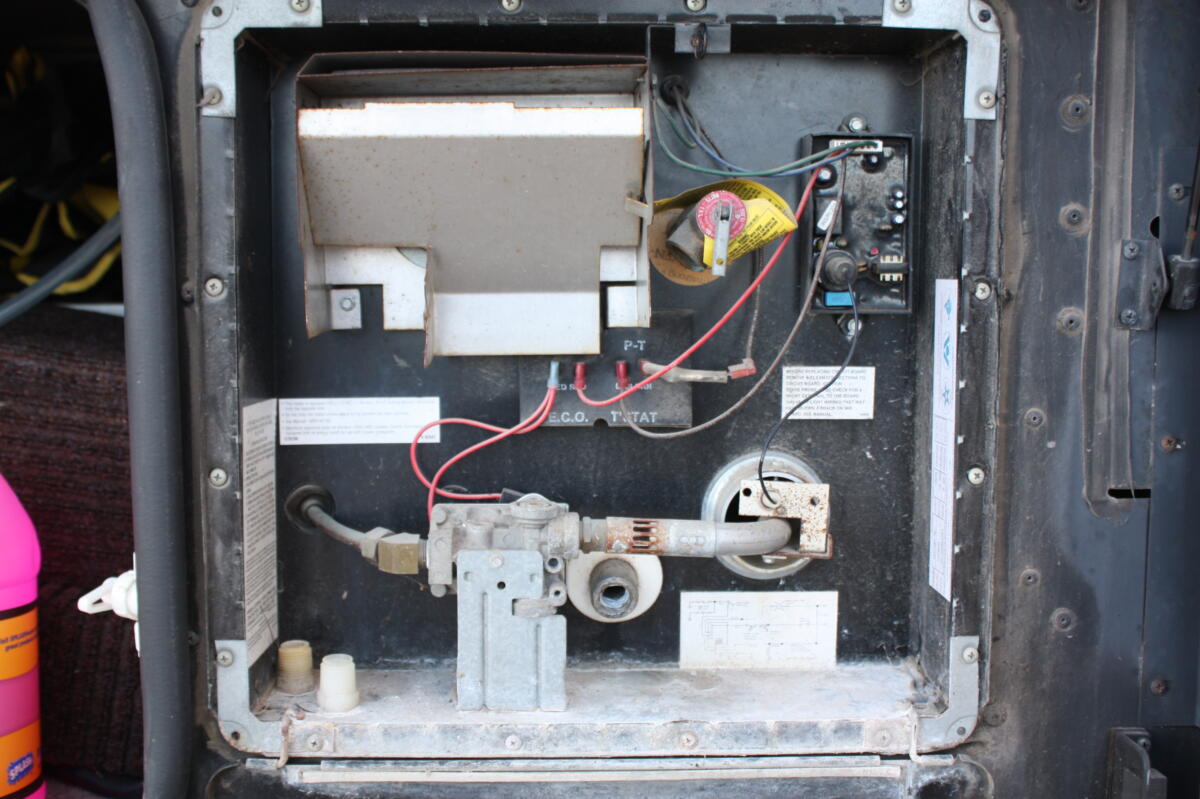
The flame to heat the water tank is at the lower right of this photo. It heats the water and circulates the air back to the outside at the flap, which directs the hot air and CO outside. Nothing makes it into the rig unless there is a malfunction in the tubing, just like the furnace.
RV stove
The stovetop burners are an open flame that produce CO when burning, as you indicated. They produce a very low volume and are usually not running for a long period of time. Typically, there is a side vent above the stovetop to exhaust what is produced. However, it is important to limit the amount of time the stovetop is burning and make sure the vent is working. Since inside the RV is a relatively tight space, venting is important, as well as a CO detector.
Due to the limited exhausting capacity of a stovetop or oven and the CO potential, it is critical that you do not use them to heat the interior of the rig!
Here are several combination LP and CO leak detectors available on Amazon.
You might also enjoy these posts from Dave
- Your smoke alarm: Meet new code? Maintained properly? Critical info
- Fifth wheel’s LP leak detector beeps only when being towed. Truck exhaust?
- Is a combination LP and CO detector effective?
- My LP leak detector is beeping. What should I do?
DAVE HAS ANSWERED MORE THAN 1,000 readers’ maintenance and repair questions. Read a directory here. There is so much to learn!
Dave Solberg is a leading expert in the RV industry and the author of the “RV Handbook.”
HAVE A QUESTION FOR DAVE?
Send your inquiries to him using the form below.
RVDT2821

Good article Dave.
I shudder when I watch YouTubers in schoolies, vans, campers or conversions heating their rig with a wood burning stove. Unless their rig “breathes” as good as a tent, it seems awful risky.
“Your RV furnace has an exterior vent that draws in outside air that is circulated through the closed burner assembly and captures the CO and exhausts it outside.”
Our Dometic only has an outside exhaust, it draws in air from the inside of the RV. I don’t like the design because it allows dust, dog hair, and other debris to contaminate the blower as there is no filter.
Hi Lee: This sounds like a return air to the outside of the burner assy for redistribution thru the warm/heated air vents. Are you sure there aren’t two vents on the outside? One intake and one exhaust – as shown in Dave’s article. I have an unfiltered “return air” vent, under my kitchen cabinets and yes – it does take in all the dust etc., from the floor; but not to the burner.
This is the same as your home furnace if it’s less than 20 years old. The combustion air is not the same air that is circulated through the ducts.
No matter how you look at it the dirty air is pulled into the furnace fan.
The combustion exhaust uses a separate fan.
Plus, the manual tells you not to add a filter.
Only the exhaust vent is on the outside. I’ve owned the trailer 8 years and have removed the furnace 3 times for repairs. It has no outside access door, so it has to be removed from inside, which is a PITA! The furnace is mounted on the floor under the kitchen countertop, which is where the air is drawn into the furnace….no filter. I have 2 friends who have the same setup with a different manufacturer.
The home and RV furnaces I’m familiar with bring air in from the outside for combustion, then exhaust that same air with combustion byproducts back outside. There is a separate “closed loop” that draws interior living space air into the furnace, over the hot metal heat exchangers, and then pushes it back into the living space, to repeat until the desired temperature is reached.
How many millions of people cook dinner on gas ranges in homes much tighter than a camper?
Those homes are also much larger and should also have a vent fan to take any CO outside. Also, whether inside or outside if the flame is properly adjusted it is producing CO2 which can still asphyxiate you but isn’t as bad as CO which actually will displace the oxygen in your blood.
There are detailed studies of indoor pollution that point out that exact issue. CO and other stuff are definitely a health hazard! Some states are regulating gas stoves more tightly. Homes are also more tightly sealed than 50 years ago. But overall the risk is small.
Not many home kitchens that are tighter than a campers.
When I am using the stove (cook top) I always open the overhead roof vent and run the fan in it to exhaust the combustion gasses and the steam from that which is being cooked. This is to protect the interior environment.