

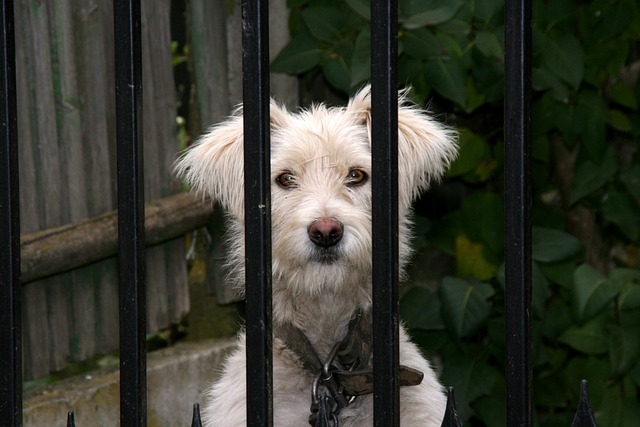
You want your entire family to go RVing with you! I understand. What if one important part of your family is a dog? What kind of dog fence for RVing is best?
Note: Dog trainers agree that an outdoor fenced area should never take the place of regular outdoor exercise for your dog. Take him on walks and let him release pent-up energy at the RV dog park. If a dog park is not available at your campground, consider local dog parks or Sniffspot.
Why fence?
Some RVers choose to simply tether their pup outside the RV. For non-reactive dogs, this may work—until it doesn’t. While the tether keeps your dog in check, it does nothing to protect your pup from other dogs or wild predators who choose to attack.
A fence, however, does both! A fence keeps your pup close while protecting her from many outside-of-the-fence dangers.
Note: Always stay with your dog when it’s outside. As the owner, it’s your job to ensure your dog’s safety. A fence will not protect from all dangers. Snakes, scorpions, and other potentially dangerous critters can slither or crawl through almost any kind of portable fencing.
Which fence?
There are several characteristics to look for when choosing a dog fence for RVing.
- Portability. Look for a fence that is easy to set up, take down, and transport.
- Size: Ensure the fence is large enough for your dog to move around comfortably. Consider the size and breed of your dog when selecting the dimensions of the fence.
- Material: Choose a fence made from durable and weather-resistant materials. This is important, especially if you’ll be camping in a variety of weather conditions.
- Height: Opt for a fence with an appropriate height to prevent your dog from jumping over. This is especially crucial for active or large breeds.
- Visibility: A fence with mesh or panels that allow your dog to see outside can help reduce anxiety and provide a sense of security.
- Security: Check if the fence has a secure latching system to prevent accidental openings and escapes. Some fences come with built-in gates for easy access.
- Ventilation: Ensure that the fence provides adequate ventilation to keep your dog cool, especially in hot weather.
- Weight: Consider the weight of the fence, especially if you have limited carrying capacity in your RV. Lightweight options are preferable for easy handling.
- Compatibility: Check if the fence is suitable for different types of terrains, including grass, gravel, or pavement, to accommodate various camping locations.
- UV resistance: Choose a UV-resistant material to prevent fading and deterioration from sunlight exposure.
- Visibility and aesthetics: Some campgrounds may have specific rules about the appearance of temporary fencing. Check for any guidelines and choose a fence that complies with them.
Note: Remember to check local regulations and campground rules regarding the use of dog fences to ensure you are in compliance during your RV travels.
Recommendations
- Amazon. There are hundreds of dog playpens and fences on Amazon. Look through a few of these and you’ll see top-rated ones for a worth-it price.
- Chewy. The online retailer of pet food and other pet products ranks the Frisco Wire Dog & Small Pet Exercise Pen as its top pick. This fence includes a double-lock doorway for safety and its panels easily fold up for transport. Note that for larger dogs or more than one pup, you may want to connect two pens together. Snap hooks are included for this purpose. Note: Popular Science also chose Frisco’s pen as their top pick.
- People Magazine. This widely read magazine recently reviewed portable dog pens and chose Yeheetech’s Heavy Duty Pet Pen as the best overall pen for larger dogs. If yours is a large breed or you have several pups, this may be the right choice for you. Note that you can order the number of panels your pet requires. Check out the other top picks from People Magazine here.
- Fellow RVers. One of the best ways to find recommendations and choose the right dog fence for RVing is to talk to fellow RVers. Take a walk around the campground. Note the distinct types of enclosures and ask owners about the pros and cons of their fence. After gathering several recommendations, you’ll have a much better understanding of the dog fence that’s best for your RVing travels.
Do you use a dog fence for RVing? Share your thoughts in the comments below, please.
RELATED
- Gadget Review: High-tech portable wireless dog fence – Good for RVers?
- Top 8 dog trainer tips for RVing with dogs
##RVT1140

Begs the question, “does this imply it is ok to leave a dog unattended ?” I think we may have all experienced the yapping, barking dog left outside in a fence enclosure while the oblivious owners putter around inside or outside the campsite. This is not only annoying, but frequently in violation of both formal and informal rules. EVERY single campground we stayed last year -from county parks to class A only resorts- had incessantly barking dogs. 🤔
As a post script. My comment was not directed at the author (she does a wonderful job, and I enjoy reading her column). Instead, it was opinion that fences shouldn’t be used to babysit your unattended dog.🙂
I do believe that Gail made the case that no pet restraint negates the responsibility of a pet owner to leave a pet outside unattended.
Some CGs insist that the fenced area be frequently moved, some prohibit fences on any mowed area, some prohibit fences altogether. Check park rules before you put one up to only have to take it down. Makes for grumpy campers.
Also, for those of us with mid-sized to large dogs, a fence is often impractical due to the needed size and sturdiness. Something that works with a Yorkie might barely be big enough for a lab to chase its tail. And if you do use a tieout (while in attendance!) it needs to be short enough to keep the dog within your site.
Unfortunately some pet owners IGNORE the campground rules and claim they were not aware of the rule if challenged. I have worked front desk at a specific campground where 2 copies of all rules were reviewed with the camper and signed and dated by both sides as part of the check-in process. Pet fences were NOT ALLOWED. Then the camper setup included putting the pet fence up. Really?
We travel with dogs. We have trained them to be content INSIDE our motorhome. They get plenty of walks, but if we’re sitting outside, they are generally inside happily just laying around.
Too many people walking their dogs around allow them way too much leash (also a violation) letting them go well into others’ campsites. That just invites potential trouble even when the dogs in the campsite being encroached upon are leashed or fenced.
There is no reason to leave a dog unattended outside, either in a fence or tethered. Too many bad things can happen. From youngsters wanting to pet your dog to roaming dogs attacking yours. But this is also uncalled for and happens all the time.
Thank you, Gail! No, no fence. Instead, we tether doggy #3 to the picnic table and sit outside with him. Ideally the tether keeps him well within the boundaries of our campsite. We usually take the dog for two or three leashed walks through the campground each day we are there.
We’ve used a Frisco fence system for 15 years. It’s lightweight 2 of them provide enough room for the dogs and us to sit comfortably inside the fence. Our fiver has fold down steps and the fence goes behind the steps. This is great because we have a senior JRT that has to go at 3 am every morning. He has a dog door at home so he doesn’t wake me up there, but in the RV he walks across me so I will open the door for him. With the fence I don’t have to get dressed and go outside with him.
Our favorite Forest Service campground no longer allows small pens to be set up. Our puppy now lives in our laps or inside. She gets lots of walks.