

By Dave Helgeson
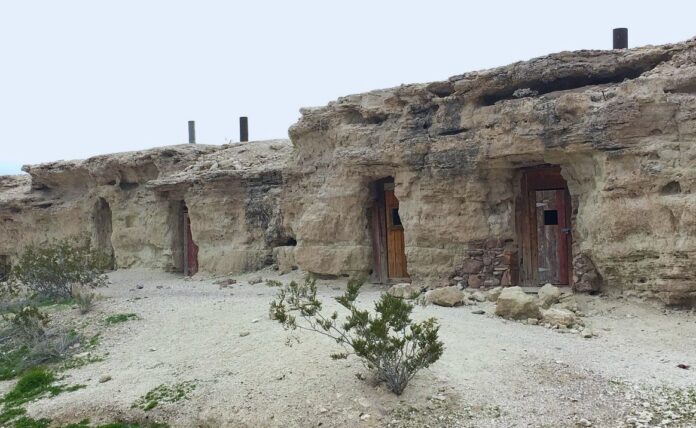
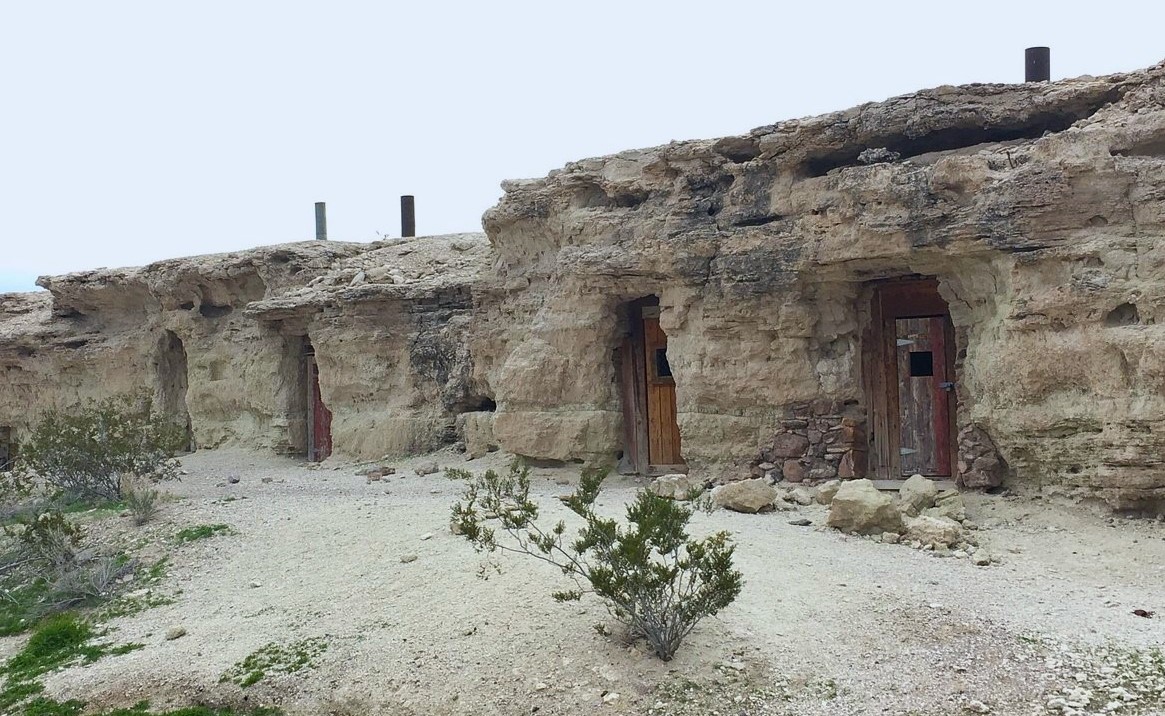
In this entry of Ghost Town Trails, we are visiting Dublin Gulch, located in Shoshone, California. You might consider Dublin Gulch a “ghost neighborhood,” rather than a ghost town, as the main portion of Shoshone is still inhabited by 22 souls, according to the 2020 census, and open for business. What makes Dublin Gulch so interesting is the fact that most of the residences are still intact, yet there are no standing buildings. You see, the residents of Dublin Gulch lived underground.
The History of Shoshone, California, and the enigmatic Dublin Gulch dugouts
Shoshone, California, founded in 1910 by Ralph Jacobus “Dad” Fairbanks, is a quiet desert town nestled in the eastern reaches of the Golden State, offering a serene contrast to the bustling cities and popular tourist destinations that California is known for. Despite its small size and remote location, Shoshone boasts a rich and intriguing history, with one of its most unique features being the enigmatic Dublin Gulch dugouts. These subterranean homes, carved into the soft clay hillsides, tell a compelling story of resilience, adaptability, and human ingenuity in the face of a challenging desert environment. Join me as we delve into the fascinating history of Shoshone and the development of the Dublin Gulch dugouts.
Shoshone’s roots in Native history
Long before European settlers arrived, the region that is now Shoshone was home to the Native American Shoshone people, from whom the town takes its name. The Shoshone people lived in the area for generations, sustaining themselves through hunting, gathering, and trade.
Shoshone’s history as a settlement began with the arrival of European Americans and the establishment of the Tonopah and Tidewater Railroad, which connected the Mojave Desert to Death Valley. This significant transportation link brought economic activity and development to the region and helped Shoshone grow from a remote outpost into a thriving community.
The rise and fall of the Tonopah and Tidewater Railroad
The construction of the Tonopah and Tidewater Railroad, completed in 1907, played a pivotal role in the development of Shoshone and the surrounding areas. The railroad was primarily built to facilitate the transport of ore from mines in Rhyolite, Nevada, to the smelters in Needles, California. It also supported the transportation of borax, which was mined in Death Valley, helping to boost the local economy.
However, the Tonopah and Tidewater Railroad had a relatively short-lived existence, as it was eventually abandoned in the 1940s. The discontinuation of the railroad service marked a significant turning point for Shoshone and prompted a shift in its economic dynamics.
The birth of the Dublin Gulch dugouts
One of the most intriguing and iconic aspects of Shoshone’s history is the creation of the Dublin Gulch dugouts. These underground dwellings were fashioned by miners, railway workers, and other transient laborers during the early 20th century. The term “dugout” refers to the method of excavation used to carve out these remarkable underground structures.
The construction of the Dublin Gulch dugouts was an innovative response to the challenges of living in the harsh desert environment. Workers would dig into the soft, clay-rich hillsides, creating unique living spaces that offered shelter from the extreme temperatures and harsh weather conditions of the Mojave Desert. The clay-rich soil of the area naturally provided excellent insulation, maintaining a stable interior temperature despite the scorching heat above.
The dugouts vary in size and complexity, with some featuring a single room while others boast multiple rooms, ventilation shafts, and even chimneys. The structures are a testament to the resourcefulness and adaptability of the individuals who constructed them. These dugouts stand as a living tribute to the resilience of those who worked and lived in this arid landscape. In the early 1970’s, “Papa Jim” Standing was the last known resident of Dublin Gulch.
Click here for a more in-depth history of Dublin Gulch, including the colorful characters that occupied the underground dwellings.
Click here to view a short video on Dublin Gulch and surroundings.

Our visit
My wife and I stopped by Dublin Gulch on one of our many visits to Death Valley National Park. We enjoyed walking among the dugouts marveling at the determination it must have taken to scratch a home out of the earth. The level of detail shown in many of the residences is a testament to the pride the homeowner took in construction. Given the layer of earth overhead, the doors facing north and the fireplaces many of the homes were equipped with, I expect they were fairly comfortable during the hottest desert summer days and chilly winter nights.
Dublin Gulch is an easy stop coming or going from the south entrance of Death Valley National Park. Even if you don’t consider yourself a ghost town buff, it is a great place just to stop and stretch your legs.
Getting There
From the junction of I-15 and CA Hwy 127, drive 56 miles north on Hwy 127 to reach Shoshone, California. Shoshone is known as the southern gateway to Death Valley, as many roads converge in the area. It also offers the last services available before the Furnace Creek area in the park. While fuel and supplies are “cheaper” than in the park, you will still experience sticker shock! Best if you stock up in Baker, where selection is better and the prices won’t leave you gasping for air!
Visiting Dublin Gulch
There is a large parking area suitable for dozens of large RVs just northwest of the junction of highways 127 and 178 at N35° 58.422 W116° 16.245 at the southern edge of Shoshone.

From the given coordinates, it is another 1,200 feet west to the dugouts of Dublin Gulch on a graded road across an area of desert dry wash. If there haven’t been any recent cloud bursts, this road is suitable for most any two-wheel-drive vehicles including medium size RVs. After travelling the 1,200 feet, you will find a designated parking area at N35° 58.405 W116° 16.454, where there is room to turn around medium-length RVs. From the designated parking area, it is just a short walk to the dugouts. Dublin Gulch is located on private property. Please respect signs and barriers protecting these historic dwellings.
Camping
RV parks and campgrounds:
Shoshone RV Park is located about half a mile north of Dublin Gulch.
Tecopa Hot Springs Resort is located 8 miles south of Shoshone, CA.
Boondocking:
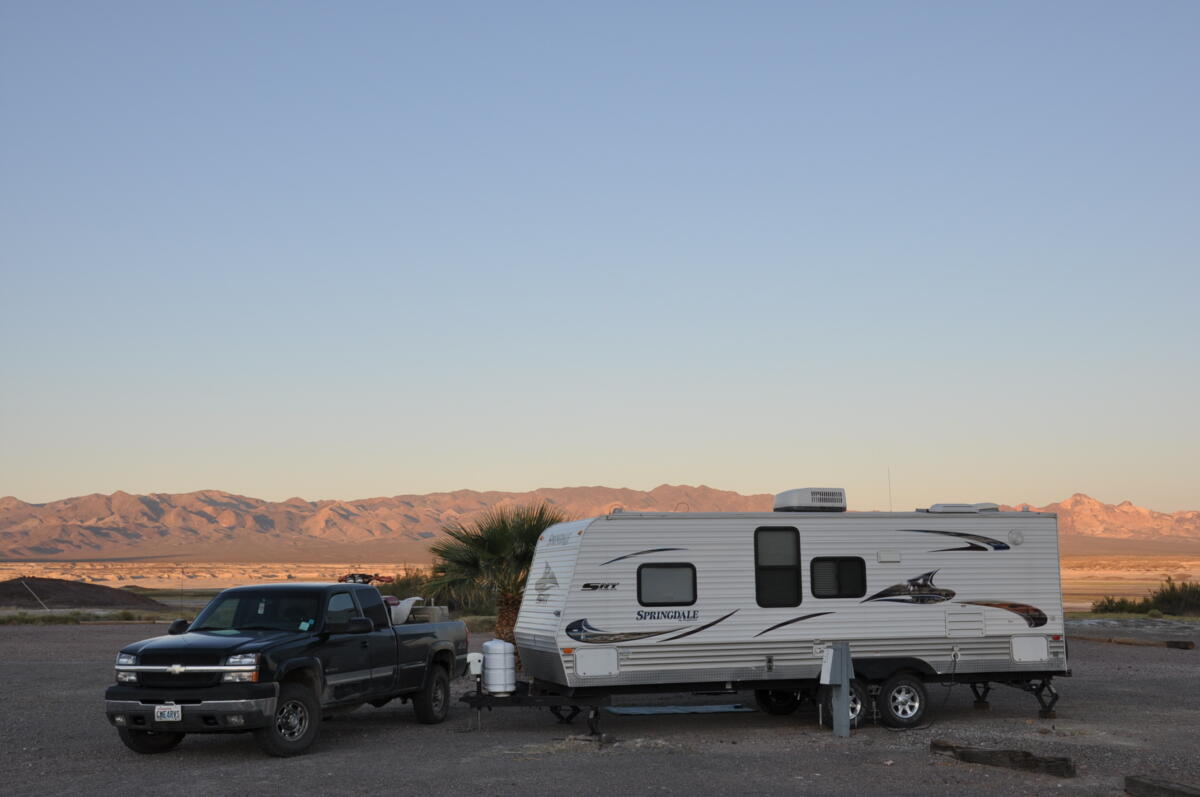
There is a plethora of BLM land along the east side of Hwy 127 open to dispersed camping for those willing to make the effort to seek them out. For those that need a little help or are heading into Death Valley National Park, you will find free dispersed camping (boondocking) on BLM land along Furnace Creek Road at this location.
Past installments of Ghost Town Trails you may enjoy:
- Ruby, AZ – Southern Arizona’s ‘best-preserved’ ghost town
- Berlin, Nevada: Ghost town with ancient marine creatures
- Rhyolite, Nevada – An easy ghost town for RVers to visit
- Deadwood Mine, Idaho and its mysterious vault
- Eureka, Utah – Visit easily accessible old mining town
- Silver City, Utah – Heartbreak and thanksgiving
- Fort Macomb, LA – Does this picturesque Civil War-are fort look familiar
- Castle Dome City, Arizona – Perfect for nearby snowbirds
- Fort Selkirk, Yukon Territory
- Coolidge, MT – ‘Montana’s Mystery Camp‘
- Ballarat, California
- Greenhorn, OR – Oregon’s smallest incorporated city
- Elkhorn, Montana – The cover photo of popular “Ghost Towns of the West” book
- Tunnel Camp, Nevada
- Bonnie Claire, Nevada
- Tumco, California
- Mackay’s Mine Hill, Mackay, Idaho
##RVT1131
Good article. Thanks.
Thanks for this interesting write-up, including the parking info! So much of Death Valley is restricted to 4WD or standard-length vehicles, this would be a good site to visit.
Wanderer, You are correct that many of the ghosted places in Death Valley require 4WD under normal conditions and Dublin Gulch is easily accessible. I was going to write about one of the 4WD sites this month, but due to the floods earlier this year in Death Valley the roads are closed and waiting repair by the park service. There are thousands (some estimate up to 10,000) abandoned mine sites in Death Valley. Sadly I will never have the time to visit them all.
Thank you, Dave! This is a fascinating series. Thank you for sharing this information! 🙂 Safe travels!
Thank you, Dave, for noting this fascinating place! Were the ceilings and walls shored-up with lumber and posts? If not, was anything used to maintain the structural integrity of the “homes?” Reminds me of the sod houses that were erected in the plains states. Have a great day and safe travels!