


Dear Dave,
I see LP tanks sitting out in the hot sun. Is this safe? And what is the best way to transport them for refilling? —Dan
Dear Dan,
Thanks for the great questions. Here are some important safety tips on DOT cylinders, the type you would find on travel trailers and 5th wheels.
Do not leave DOT cylinders in direct sunlight
Leaving a DOT cylinder on the front tongue of your rig in direct sunlight for several hours will cause the LP inside to get hot and it will expand. If it reaches a temperature of 120 degrees or higher, the pressure valve will release raw propane and any open flame such as a grill or even ignition of a water heater could result in a fire.
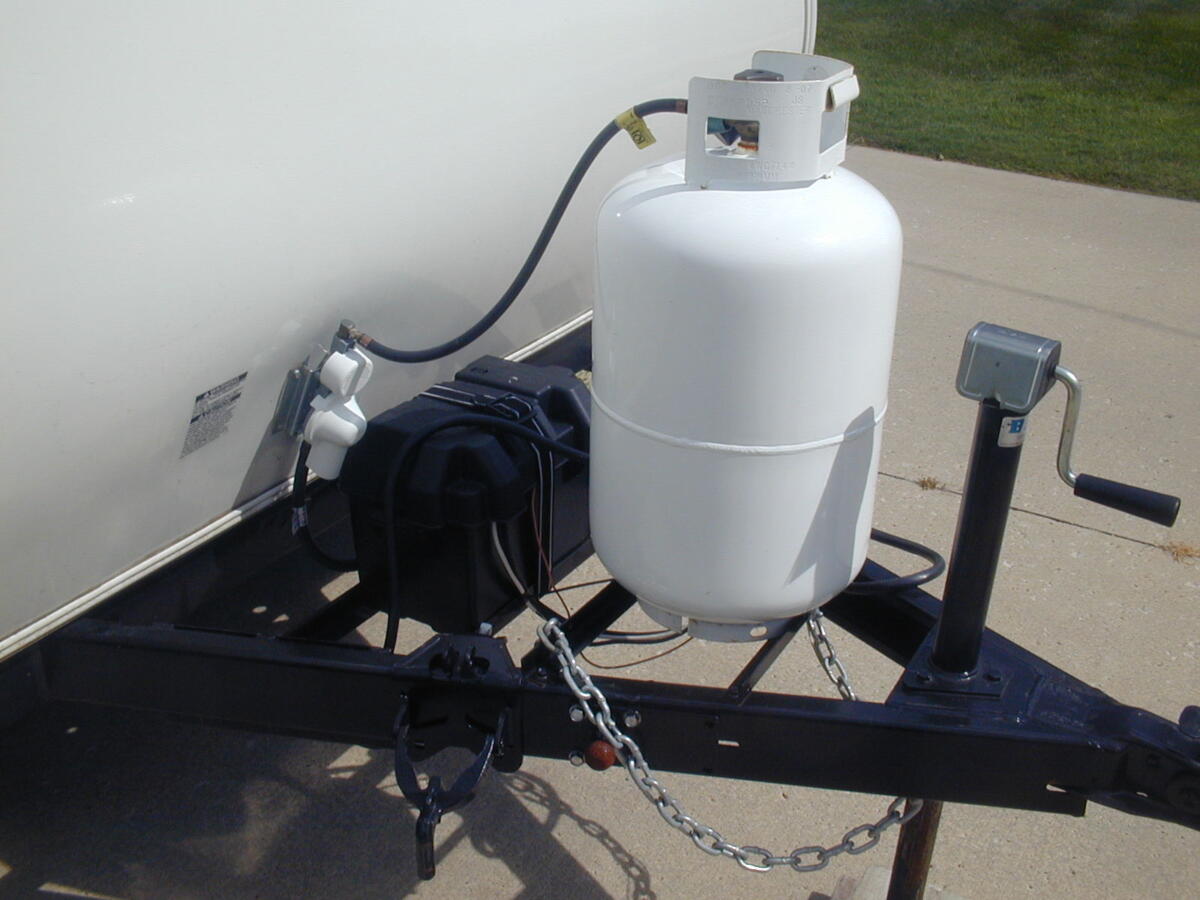
Try to find a location where the tanks are not exposed to the sun during the heat of the day. If not, use a cover or shade tarp or hose them down to reduce the interior temperature.
If you suspect a leak, have it checked immediately
LP in its original state is odorless and a chemical (ethyl mercaptan) is added to give it a rotten egg smell. If you suspect a leak by either smell or hissing sound, shut off the LP valve at the container and get it checked.
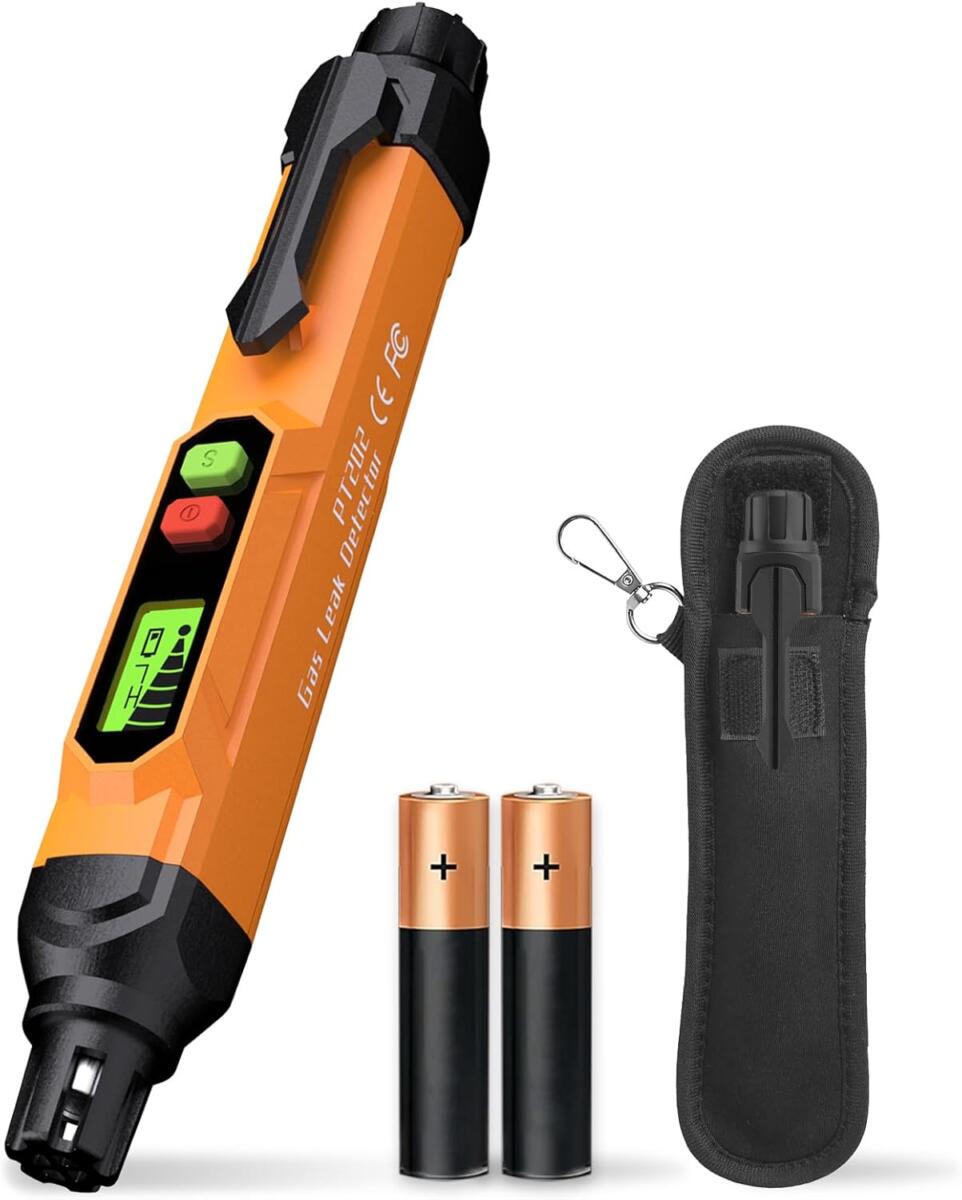
A certified professional will typically use a water column tester. However, a quick test can be performed with a handheld “gas sniffer.” Even a small leak is dangerous, as your LP appliances will have an open flame that can ignite. Inhaling LP fumes can also cause asphyxiation while sleeping. You can find an LP leak tester on Amazon here.
Happy Birthday!
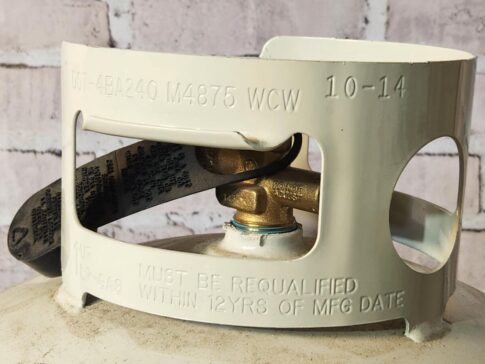
According to the Code of Federal Regulations for DOT Requalification of Propane Cylinders, 49 CFR 180.209(e), DOT cylinder types 4B, 4BA, 4BW, and 4E must be recertified 12 years after the manufacture date. Most filling stations will not fill a tank that is more than 12 years old.
Do not store an LP cylinder on its side
The valve of the DOT cylinder is built with a pressure relief safety valve that is designed to vent or release vapor if the LP gets hot and expands. This relief valve is located at the top of the valve assembly. Laying the cylinder on its side allows liquid LP to be in contact with the relief valve rather than the vapor and will not vent properly. Always store the tank in the upright position so the relief valve can detect vapor pressure and work as designed.
Proper transportation
Most RV owners fill the DOT cylinders by pulling into a propane filling station with the cylinders properly mounted to the tongue or secured inside a compartment of a 5th wheel. However, if you are taking a longer trip or staying in a camp spot for a long period of time, it is not convenient to pack everything up and drag everything to the nearest LP station just to fill a cylinder or two.
It is important to secure the cylinder in an upright position when taking it off the rig and going to the filling location. As stated earlier, it is not recommended to lay the cylinder on its side, even for a short trip.
Make sure the cylinder is secure and not inside a vehicle. I use an old milk crate to set the cylinder in, or you could invest in a Mr. Heater Tank Foot Stabilizer.
Many RVers are using golf carts or eBikes for transportation. Make sure the cylinder is secured, as a sharp turn or bumps in the road can be dangerous!
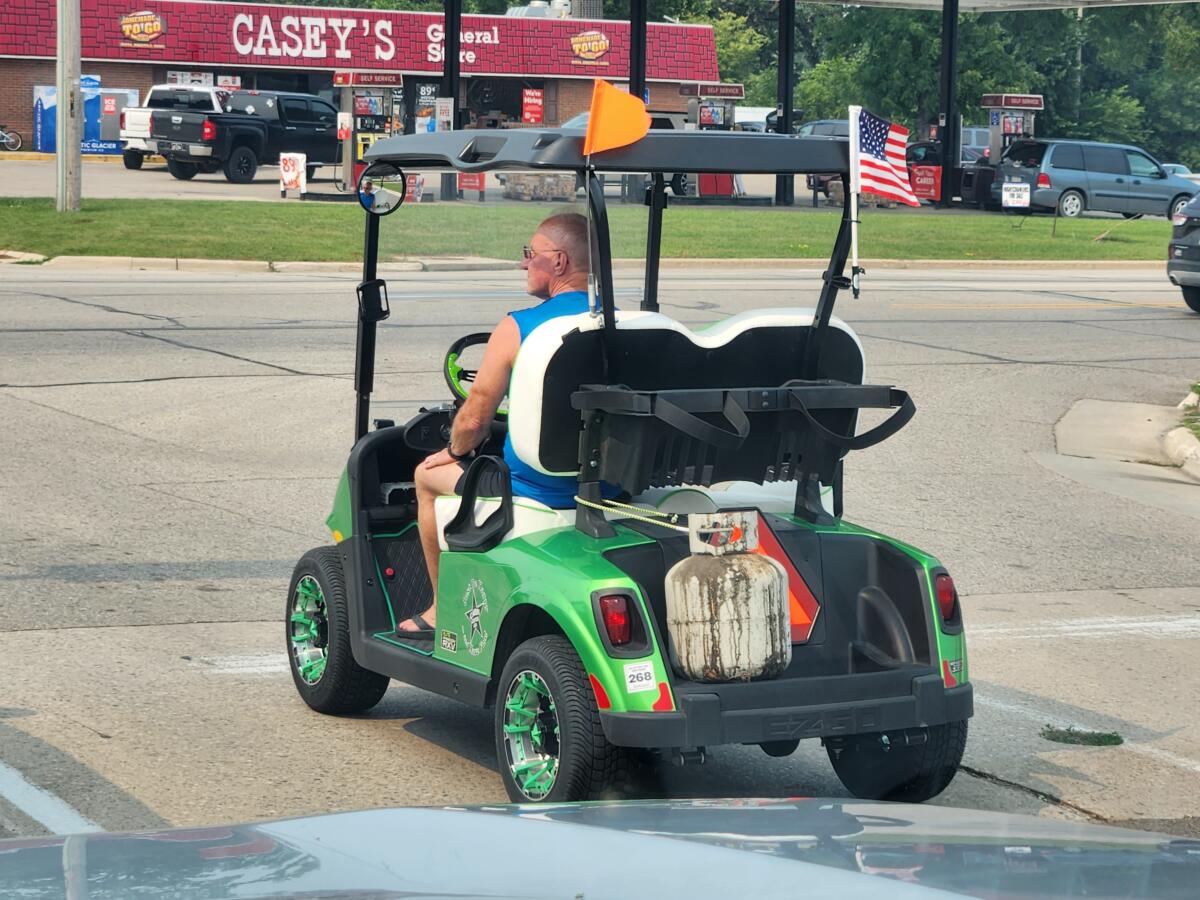
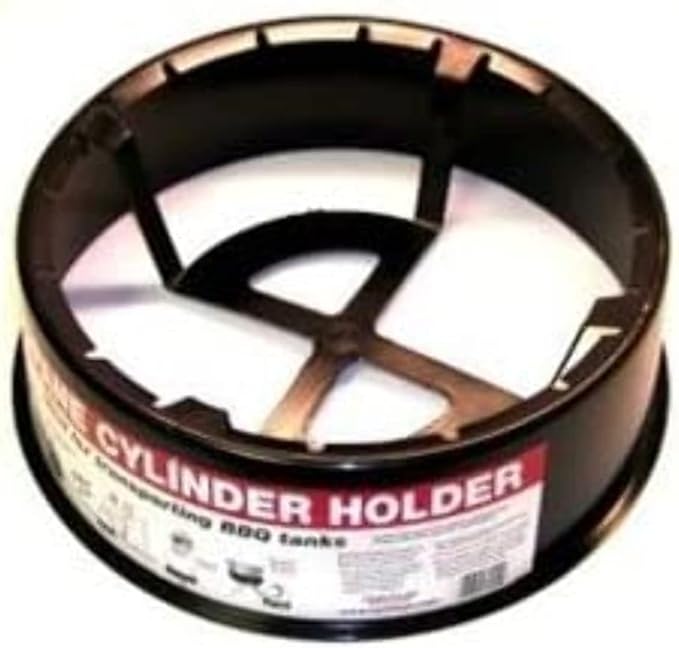
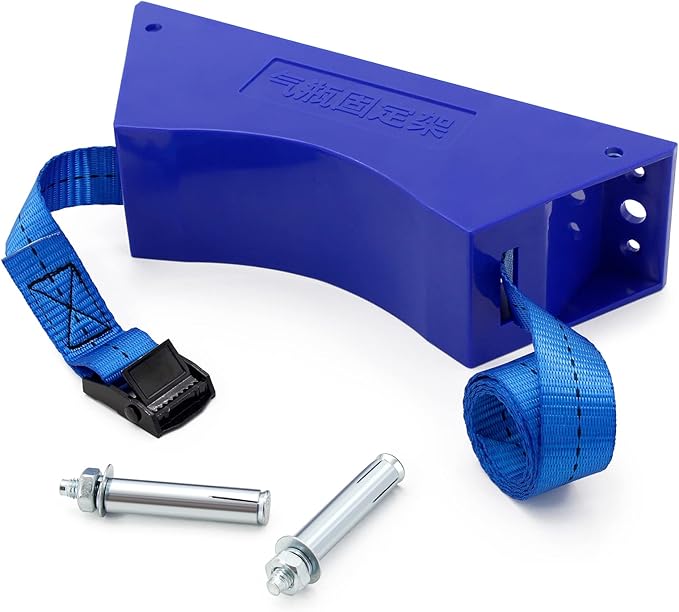
If you plan to transport your DOT cylinder in this manner, it would be best to get a hold-down bracket like this one on Amazon.
MORE POSTS FROM DAVE ON LP CYLINDERS
- Readers’ comments on refillable LP cylinders and legality of transporting them
- The ultimate guide to liquid propane (LP) systems
- How do I know when my LP tank is at 80 percent?
- I’m told my LP tank needs recertification so can’t be filled, but I’m getting conflicting advice
- Why can’t anyone fill my RV’s LP tank?!
Dave Solberg is a leading expert in the RV industry and the author of the “RV Handbook.”
Read more from Dave here.
HAVE A QUESTION FOR DAVE?
Send your inquiries to him using the form below.
RVDT2667

I carry mine in a milk crate in the back of my truck. However, I also use a ratcheting bar in the bed to keep it from moving forward. You never know when you will have to hit the brakes.
Even in the milk crate, it can flip forward.
“old milk crate” – if truly a milk crate with a dairy logo, unless you can show it was decommissioned by the dairy (typically meaning it is now junk), you could be charged with theft.
The rugged 13″ crate design is great for 20 or 30 # cylinders (typical RV sizes) – and you can buy them legally – often at a lower cost than cylinder stabilizer foots – from many big box home supply stores. Here is an example. And between cylinder transit uses, the crates are handy for other short term transit uses.
The Propane coppers will be knocking on your door.. Don’t answer… 😉 ..
Thank you for the safety recommendations, Dave! Have a great weekend and safe travels!