


Dear Dave,
This is more of a general RV/propane question. When I fill my onboard propane tank I know it is only filled to 80%. The info panel says 100%. Is that 100% based on it only being 80% filled, or is it a true indication? In other words, if I use some propane (5%–10%), will the info panel drop to three lights since the tank is 75% or below? Thanks for all the great info! —Geoff, 2007 Winnebago/Itasca Cambria 26A
Dear Geoff,
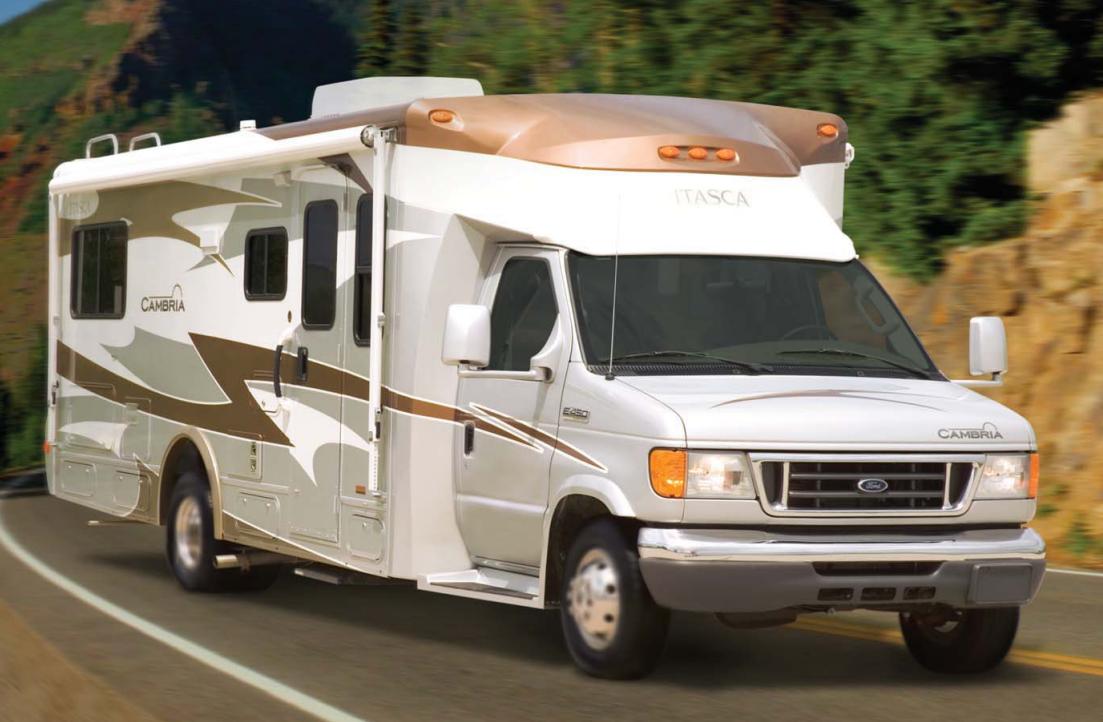
That is a good question and a common misconception with RV owners. Your Cambria has a permanently mounted ASME tank that sits horizontally mounted to the frame.
Overfill Prevention Device (OPD)
According to the online information, it has a 100% capacity of 18 gallons. Since LP weighs 4.23 lbs. per gallon, it can hold 76.14 lbs. at 100% capacity. However, since October 1998, all DOT cylinders were required to have an Overfill Prevention Device (OPD) valve. This valve limits filling the container to only 80%, since LP will expand when temperatures rise. The DOT cylinders which are used on travel trailers and 5th wheels have a triangle-shaped handle for the open/close valve. Your unit has a horizontally mounted ASME tank, which has the older style handle, but does have the OPD valve.
If your LP container does have a capacity of 18 gallons and 76.14 lbs. of LP at full capacity, then it could hold 14.4 gallons of LP, or 60.92 lbs., with the OPD valve at 80%.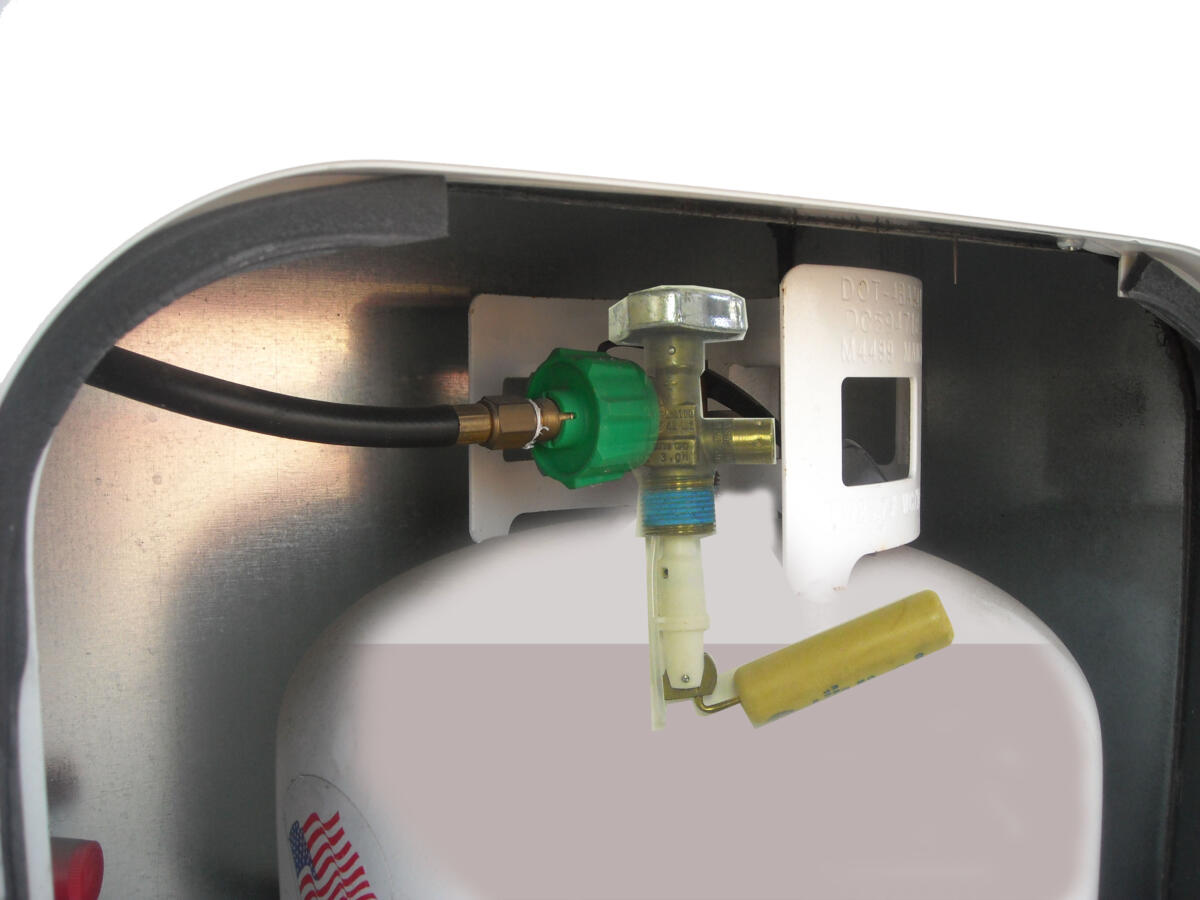
The monitor panel for your Winnebago, which they called the “One Source,” does have a reading for the LP, and it does take into consideration of the 80% OPD. Keep in mind the lights are not a very accurate read of the level.
You might also enjoy this from Dave
I’m told my LP tank needs recertification so can’t be filled, but I’m getting conflicting advice
This question about LP tank recertification came from our RV Repair Tips & Tricks Facebook page and it has generated quite a debate with over 350 comments:
My mother-in-law is looking at a camper and this is the propane tank. I was wondering if you guys had any advice. I’m being told that I can’t get it filled up, but I wanted to know what other people thought. —Matthew
Dave Solberg is a leading expert in the RV industry and the author of the “RV Handbook.”
Read more from Dave here.
HAVE A QUESTION FOR DAVE?
Send your inquiries to him using the form below.
##RVDT2336


Even though my RV has a panel of leds for indicating tank levels, I always have considered them a approximation.
Thank you, Dave! Safe travels! 🙂
I have always used the tried and true method of pouring hot water down the side and where condensation forms is where the gas is.
You’re confusing volumetric and design capacity. Filling either a DOT portable or an ASME fixed tank to its design capacity results in it being 80% full of liquid and 20% full of gas by volume. This IS 100% of the design capacity of the tank. Any tank that stores liquefied gas will have some portion of its volume available for the expansion of the liquid with temperature.
If a tank were to be filled 100% by volume with liquid, then be warmed, the liquid would expand slightly with temperature and the resulting pressure increase would be tremendous and would likely result in the tank rupturing. The unfilled 20% of volume allows room for the liquid to expand into gas space.
The 80% by volume, ‘full capacity’ of ASME (fixed) tanks is achieved by the vent being placed in a location where the liquid will be expelled out of the vent at the point where it is 80 % volumetrically full.
Portable tanks have the vent valve located in tank valve at the top of tank, a different method is needed to prevent overfilling beyond 80%. ‘Old Style’ (pre OPD) valves were equipped with a tube that descended to the 80% volumetric fill point and similar to the ASME tank, would allow liquid to be vented if filled beyond 80%. Because portable tanks can be tilted, this was not reliable and OPD valve, with a float valve were created to more reliably achieve the desired fill ratio.