

Many RVers use the “off-season” to plan their upcoming adventures. Themed travel allows you to dig deeper into topics that interest you most. Here are some historical trail routes to consider.
Each journey offers a unique peek into America’s past and is loaded with educational stops, amazing landscapes, and plenty of RV-friendly spots. Here’s a rundown of what to expect on each trail, plus some tips for making the most of your historical RV adventure.
Lewis and Clark Trail

The Lewis and Clark Trail is one of the most legendary routes in U.S. history. It traces the famous 1804 expedition that aimed to explore lands west of the Mississippi. This route runs more than 3,700 miles from St. Louis, Missouri, to the Pacific Coast in Oregon.
RVers on this path can expect a blend of historical sites, natural beauty, and a touch of adventure, perfect for history enthusiasts and nature lovers alike.
Highlights along the trail
Some key stops along the Lewis and Clark Trail include the Gateway Arch in St. Louis (which marks the starting point of the expedition), Fort Mandan in North Dakota (where Lewis and Clark spent a winter with the Mandan people), and Fort Clatsop in Oregon, where the explorers spent their final winter. You’ll find visitor centers, historical reenactments, and museums all along the route to bring their story to life.
RV tips for the Lewis and Clark Trail
The route crosses multiple states, each with its own scenic RV parks and camping options. Be sure to plan ahead, as certain spots can be more remote, especially through the Rockies and the vast Plains. Also, stock up on supplies and double-check park and campground availability, especially in national parks along the route.
Oregon Trail

Step back to the 1800s on the Oregon Trail, a route that millions of settlers used in hopes of starting a new life in the West. The trail spans approximately 2,000 miles, starting in Independence, Missouri, and ending in Oregon City, Oregon. This route has evolved into an exciting road trip opportunity, with several accessible stops that showcase the hardships and triumphs of early pioneers.
Highlights along the trail
Popular stops on the Oregon Trail include Chimney Rock and Scotts Bluff in Nebraska, which were major landmarks for travelers on the trail. In Wyoming, Fort Laramie offers a preserved look at a 19th-century trading post, while the National Historic Oregon Trail Interpretive Center in Oregon gives you a deeper look into what the trail experience was like. Many of these stops have preserved ruts from the original wagon wheels and markers that reveal just how grueling the journey was.
RV tips for the Oregon Trail
Due to the rural nature of parts of the Oregon Trail, you’ll want to plan RV stops carefully. There are a variety of historical RV parks that allow you to be close to major trail landmarks. While much of the trail is RV-friendly, some sections can be tricky, so keep an eye out for weather changes and narrow roads, particularly in mountainous areas.
Civil Rights Trail
 The U.S. Civil Rights Trail offers a profound journey through some of the most significant sites of the Civil Rights Movement. This trip spans from Topeka, Kansas, to key locations in the Deep South. This trail commemorates the struggles, bravery, and pivotal moments that shaped the fight for racial equality in America during the 1950s and ’60s. With stops in Alabama, Georgia, Mississippi, and beyond, this route is a powerful way to reflect on a vital chapter of U.S. history.
Highlights along the trail
Some of the most impactful stops along the Civil Rights Trail include the 16th Street Baptist Church in Birmingham, Alabama, the site of a tragic 1963 bombing that galvanized the Civil Rights Movement, and the Edmund Pettus Bridge in Selma, where the 1965 “Bloody Sunday” march for voting rights took place. The National Civil Rights Museum in Memphis, located at the Lorraine Motel where Dr. Martin Luther King Jr. was assassinated, offers comprehensive exhibits and powerful reminders of the movement’s legacy.
Additional stops in Atlanta, including The King Center and Dr. King’s birthplace, allow travelers to explore Martin Luther King Jr.’s life and contributions to the movement. From museums to memorials, each site along the trail provides a glimpse into the sacrifices and victories that defined the Civil Rights era.
RV tips for the Civil Rights Trail
Many of the Civil Rights Trail stops are in major cities, so RVers need to plan ahead. There are several campgrounds and RV parks near cities like Birmingham, Atlanta, and Memphis, allowing easy access to major sites while providing a comfortable spot to return to at night.
For smaller towns, local RV parks can also make great bases as you explore nearby historical sites. Be prepared for some emotional moments along the trail, as many of the stops are powerful reminders of the movement’s challenges and triumphs.
Learn more about RVing the Civil Rights Trail in this article by Nanci Dixon.
Trail of Tears
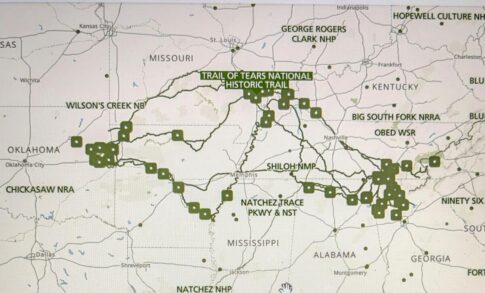
The Trail of Tears commemorates one of the most painful chapters in U.S. history. That is the forced relocation of Native American tribes from their ancestral lands in the Southeast to designated “Indian Territory” west of the Mississippi.
In the 1830s, thousands of Cherokee, Muscogee, Chickasaw, Choctaw, and Seminole people endured this harrowing journey. They faced starvation, disease, and extreme conditions. Spanning more than 5,000 miles and crossing nine states, the Trail of Tears offers a somber reminder of resilience and survival.
Highlights along the trail
Significant sites on the Trail of Tears include the Trail of Tears National Historic Trail in places like Tennessee, where Red Clay State Historic Park marks the last council grounds of the Cherokee Nation before their removal. Fort Smith in Arkansas serves as a historical checkpoint where many endured severe hardships, and Mantle Rock in Kentucky is a beautiful yet somber natural arch where groups took shelter from winter conditions.
The Cherokee Heritage Center in Tahlequah, Oklahoma, the new home of many relocated Cherokee, is a deeply moving stop. Here, visitors can learn more about Cherokee history, traditions, and the legacy of resilience that emerged from this painful period.
RV tips for the Trail of Tears
Many of the Trail of Tears stops are located in rural areas or smaller towns, making them accessible and RV-friendly. Numerous national and state parks along the route provide both camping and historical insights.
Be sure to check for weather updates, as some areas can be remote, and prepare for a deeply moving experience as you navigate the trail. Because the route is long and covers varied landscapes, planning overnight stops in advance will help ensure a comfortable journey.
Final thoughts
With an RV, you have the chance to visit these powerful historic sites at your own pace, allowing for a journey that’s as reflective as it is educational. We’ve found these RV travel routes to be both inspiring and meaningful. They make the past come alive and can teach truths that remain relevant today.
Whether you’re retracing the steps of Lewis and Clark, experiencing the Oregon Trail’s pioneering spirit, exploring the Civil Rights Trail or the Trail of Tears, these historic trails offer unique and immersive road trip opportunities.
Each route is designed to make history come alive, with something to offer both kids and adults alike. So, fuel up the RV, gather your maps (or GPS), and get ready for an unforgettable historical adventure!
##RVT1188

In addition to the Oregon Trail Interpretive Center in Baker City, there is a fantastic National Trails Visitor Center in Casper, WY. This location is on all three Westward Expansion Trails–Oregon Trail, California Trail, and Mormon Trail. It has a terrific “light show”, narrated program, as well as histories and artifacts from each trail. Well worth a few hours stop in Casper, the 3rd largest city in WY!
Thank you for the suggestions, Gail! 🙂 Happy new year and safe travels! 🙂